

Reverse Psychology: Nudging Toddler Autonomy
Your toddler stands firmly with arms crossed. You asked them to put on their shoes five minutes ago. Now, you feel the heat of frustration rising. Most parents see this as a battle of wills. You issue a command, and your child perceives a threat to their freedom. They push back to reclaim their sense of power. According to research from Dominican University, this reaction occurs because a child perceives a direct order as a cage. This strategy moves the goalposts of the struggle and changes the interaction.
This approach works by speaking to a child’s natural urge for independence. Parents often struggle because they rely on logic or authority. Toddlers operate on emotion and the need for agency. Offering a path that feels like their own idea can lower their defenses. Instead of fighting for control, you guide their need for autonomy toward a helpful result. Learning how a child’s brain handles choice allows you to stop the screaming matches before they start.
Why Reverse Psychology works on toddlers
Toddlers crave a sense of self. They recently learned that they are separate people from their parents. This realization leads to constant testing of boundaries. When you use Reverse Psychology, you align your goals with their internal drive to lead. You stop acting as a wall and start acting as a guide.
The drive for autonomy and the need for control
Social psychologist Jack Brehm introduced the Reactance Theory in 1966. He found that when something eliminates a person's freedom of behavior, they experience psychological reactance, which feels like an unpleasant wave of energy. Toddlers feel this wave every time someone tells them what to do. They scream "no" because it restores their feeling of control. As reported in PubMed, this drive for independence signals striking developmental changes and healthy cognitive growth. Your child wants to know they have an influence on the world around them.
Finding the starting points of resistance
Resistance usually appears during periods of change. Getting dressed, leaving the park, or stopping a game serves as a starting point for a toddler’s fear of losing agency. These moments require a shift in communication. You must recognize that the "no" often has nothing to do with the task itself. The child simply wants to prove they can make a choice. Finding these starting points helps you apply the right strategy at the right time.
Using strategic noncompliance to encourage cooperation
Parents often think they must always appear perfect and capable. Ironically, showing a little struggle can invite a toddler to help. You use strategic noncompliance; this involves intentionally acting like you cannot finish a simple task. This tactic flips the script on the power interaction.
When you fail at something simple, your toddler sees an opportunity to display their skills. For example, try putting a toddler’s sock on your own hand. Act confused when it does not fit. Your child will likely laugh and try to show you how to do it correctly. When they finish showing you, they have the sock on their foot. You achieved the goal because you allowed them to be the "expert" in the room.
This method removes the pressure of an order. The child no longer feels like a subordinate following a command. Instead, they feel like a helpful leader assisting a confused parent. Strategic noncompliance transforms a chore into a moment of shared humor and accomplishment.
The clinical roots of paradoxical intervention in parenting
Therapists use a technique called paradoxical intervention to break stubborn patterns. This clinical method involves encouraging the very behavior you want to change. It sounds counterintuitive, but it effectively moves a behavior from "accidental" to "intentional." Why does reverse psychology work on kids? It works because it uses a child’s natural urge to assert independence, turning a potential power struggle into a moment where the child feels they are making their own choice.
As noted in research from MDPI, Viktor Frankl appears to be the first to set the bases for these concepts in the mid-20th century, alongside the Palo Alto Group. They discovered that "prescribing the symptom" often stops the problem. If a child insists on being loud, you might tell them to "scream as loud as you can for the next three minutes." The study also suggests that once the screaming becomes a requirement, it no longer serves as an effective way to rebel. The child often stops because the fun of resisting the parent has disappeared.
Perfecting the art of the Reverse Psychology nudge
Successful parents use subtle nudges rather than heavy-handed tricks. These nudges rely on the child's natural curiosity and desire for status. You must keep your tone light and playful for these methods to succeed.
The forbidden fruit technique for quick wins
Humans naturally value things they cannot have. A 1981 study published in Springer showed that people find unattainable objects more attractive than those that are easily accessible. You can use this by labeling a mundane task as a "big kid job" that the toddler might not be ready for yet. Tell them they definitely shouldn't help you fold the napkins because it requires very steady hands. Suddenly, folding napkins becomes the only thing they want to do.
I bet you can’t challenge
Competitiveness drives many toddlers. They want to prove they are fast, strong, and capable. Instead of telling them to put their toys away, challenge their speed. Tell them you bet they cannot get all the blocks in the bin before you count to ten. This redirects their focus from the work to the "win." They comply with your wish while believing they are winning a game against you.
Applying Reverse Psychology to the dinner table
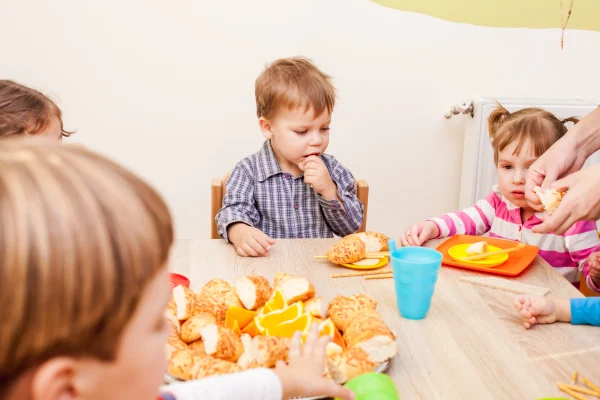
Mealtime often becomes a battlefield over vegetables. Hovering over a child or pleading with them to eat only increases their resistance. They see your desperation and realize they hold all the power. Is reverse psychology good for toddlers? When used as a gentle redirection tool rather than a means of deceit, it is a healthy way to bypass unnecessary friction and build a child's confidence.
To change the dinner interaction, try "under-selling" the food. Place a small portion of a new vegetable on your own plate and label it "grown-up food." Mention that the toddler might find the flavor too bold or special. Research published in ScienceDirect indicates that children eat significantly more when they are not pressured; thus, applying pressure to eat only increases their resistance. Instead of you pushing the food on them, they start asking to try yours. This shift puts the child in the role of the curious explorer rather than the defensive eater. Reverse Psychology at the table requires patience and a calm, nonchalant attitude.
Bedtime routines and Reverse Psychology strategies
Bedtime struggles usually center on the fear of missing out. Toddlers think the world continues to have fun while they sleep. Direct orders like "go to sleep right now" rarely work because sleep occurs as a physical process rather than a voluntary action. How do you do reverse psychology on a child? To execute this effectively, a parent suggests the opposite of the desired goal or frames the task as something the child might not be "ready" for yet.
As described by research in PMC, bedtime resistance typically manifests as bedtime delay through behaviors such as refusal, stalling, or "curtain calls." The study also found that the consistent use of a regular bedtime routine, as part of good sleep hygiene, is associated with less bedtime resistance. Instead of fighting for sleep, try using a paradoxical intervention. A study in the Journal of Sleep Research suggests telling your child they can attempt to remain awake as long as possible, provided they stay in their bed with the lights low. This removes the pressure to fall asleep. When the battle over the act of sleeping ends, the child’s body can finally relax. They often drift off much faster because they have stopped fighting your authority. You focused on the location (the bed) rather than the physical state (sleep), which gave the child a sense of victory.
When to avoid using Reverse Psychology on your child
While these tools offer great relief, you must use them with care. Over-reliance on these methods can backfire if your child feels manipulated. You want to build a relationship based on trust, not constant trickery.
Distinguishing between playfulness and manipulation
The best applications of these techniques feel like play. If you use them to constantly deceive your child, they will eventually notice. This can lead to a trust deficit. Use these strategies for routine friction points like brushing teeth or putting on coats. Save direct communication for deep emotional moments and heart-to-heart talks.
Maintaining safety boundaries through direct communication
Never use Reverse Psychology in dangerous situations. If a child runs toward a busy street, you must issue a direct, authoritative command. Paradoxical suggestions have no place in safety-critical moments. Your child needs to know that when you use your "serious voice," compliance is non-negotiable. Clear boundaries ensure that your child stays safe while they explore their independence in other areas of life.
Winning the toddler years with Reverse Psychology
Perfecting these techniques requires a shift in your own perspective. You must stop seeing resistance as a personal attack. Every "no" from your child represents a step toward their own identity. Using Reverse Psychology respects their need for power while maintaining the flow of your household. You move away from being a drill sergeant and become a clever collaborator.
These methods encourage a more harmonious home by reducing the frequency of meltdowns. Your child learns that they can have an influence without needing to scream. They grow in confidence because they feel like they are making their own choices. Eventually, the need for these tactics will fade as the child matures and develops better self-regulation. For now, enjoy the peace that comes from working with your child’s nature rather than against it.
Recently Added
Categories
- Arts And Humanities
- Blog
- Business And Management
- Criminology
- Education
- Environment And Conservation
- Farming And Animal Care
- Geopolitics
- Lifestyle And Beauty
- Medicine And Science
- Mental Health
- Nutrition And Diet
- Religion And Spirituality
- Social Care And Health
- Sport And Fitness
- Technology
- Uncategorized
- Videos