

Danone Huel Deal: Inside the €1bn Nutrition Push
When giant food corporations swallow trendy startups, they usually buy the exact customer base that previously swore off giant food corporations. The recent Danone Huel acquisition demonstrates exactly how massive conglomerates secure their future survival in a rapidly shifting retail market. Consumers constantly seek faster ways to consume fewer calories while maximizing their daily health. Corporate giants heavily struggle to invent these modern solutions organically within their own walls. They heavily rely on nimble disruptors to test the market, build the brand identity, and secure the extreme loyalty of exhausted professionals.
Once the startup proves the financial model, the multinational checkbook resolves everything else. A traditional dairy and water business realizes its core legacy products face a permanent sales plateau. Meanwhile, a modern powdered food company swiftly captures the wallets of health-obsessed millennials and busy executives. The resulting merger creates a striking clash between holistic health promises and industrial food reality. Danone needs cultural relevance, and Huel requires raw distribution power. This massive financial transaction firmly finalizes the shift of a scrappy internet brand into a rigid corporate asset.
The Billion-Euro Handshake Behind the Danone Huel Acquisition
Massive corporate buyouts frequently expose a glaring weakness in the buyer. They rarely represent sheer financial dominance. Danone desperately needed an immediate entry into the digital-first retail space. CEO Antoine de Saint-Affrique publicly recognized that his legacy dairy brands severely lacked superior online technical strengths. Buying Huel solved this pressing digital problem instantly. The acquisition cost the French multinational a staggering €1bn. Financial reports list the British pound valuation at either £864m or £870m, depending on the exact currency exchange records during the final negotiation week.
According to a report by Reuters, the complete nutrition market currently holds a massive $5.9bn valuation for 2025. Danone wants a dominant piece of that rapidly expanding financial pie. Huel CEO James McMaster firmly argues that the general public suffers from a major deficit of adequate dietary elements. He loudly claims his brand exists solely to provide a permanent resolution to this severe nutritional deficiency.
The corporate buyout provides Danone with several distinct strategic advantages:
- Immediate market expansion into entirely new, younger demographics
- A massive R&D boost for their existing dairy product lines.
- Enhanced distribution channels combining online data with physical retail power.
A corporate statement from Danone confirms their primary brand objective prioritizes wholesome, accessible nourishment for the modern worker. This aggressive goal aligns perfectly with their broader corporate push toward widespread dietary wellness. Acquiring a fast-moving competitor absolutely guarantees instant market share without the painful process of launching an untested product.
How a Former Manual Laborer Built a Nutritional Empire
High-growth tech companies usually start in Silicon Valley garages. In stark contrast, this global brand launched from a quiet Buckinghamshire town with a school leaver at the helm. Julian Hearn left school at 16 and worked strictly as a manual laborer for several years. He eventually entered the digital technology sector and founded a successful startup called Mash Up Media. He sold that specific company to Internet Brands in 2011, securing his first major financial victory. A few years later, he aggressively pivoted his attention to the booming wellness sector.
From Manual Labor to Tech Acquisitions
Hearn officially founded Huel in Buckinghamshire in 2015, though official launch records heavily indicate a 2015 public debut alongside certified nutritionist James Collier. The company originally operated out of a small facility in Aylesbury before moving its current corporate headquarters to Tring, Hertfordshire. Hearn identified a massive, highly profitable gap in the global food industry. He realized modern workers wanted maximum convenience without sacrificing their physical health. He created a simple powdered solution to solve this difficult modern problem. This humble beginning culminated in a massive corporate payday. Hearn walked away with a staggering payout of approximately £400m following the Danone buyout. The company grew rapidly over a single decade, eventually employing around 300 dedicated staff members. Media personality Jonathan Ross backed the company financially, appearing in some financial reports as a current investor and in others as a previous backer.
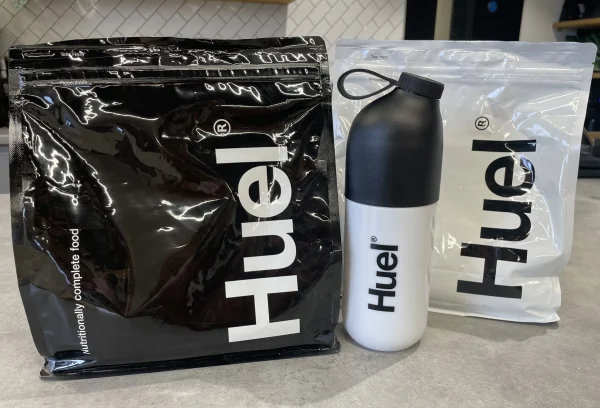
Image Credit - by Ethanmackenzie1, CC BY-SA 4.0, via Wikimedia Commons
The Recipe Driving the Danone Huel Acquisition
The modern pursuit of physical optimization often leads consumers straight into a concoction of heavily processed plant powders. As stated by Huel, the brand confidently promises nutritionally complete food, claiming every shaker bottle provides a balanced mix of all 27 essential vitamins and minerals. The company also notes that a standard serving relies on a precise blend of gluten-free oats, brown rice protein, pea protein, sunflower oil powder, and ground flaxseed, along with artificial sweeteners like sucralose and stevia. These specific components provide a standardized macronutrient profile for busy individuals who lack the time to cook proper whole meals. The acquisition hinges completely on the immense popularity of this exact ingredient profile. The modern corporate workforce demands rapid, thoughtless caloric intake. Time-poor urban professionals form the absolute primary customer base for these meal replacements.
A newly emerging demographic also heavily fuels this sustained growth. Users of GLP-1 weight-loss drugs frequently turn to Huel to ensure they consume enough vital nutrients while experiencing dramatically reduced appetites. These specific medical treatments strip away the desire to eat large meals. Consequently, patients require extremely dense, drinkable nutrition to prevent severe muscle loss. McMaster clearly points out that consumer desire for quick, holistic nourishment shows a steep, permanent upward trajectory. He frequently expresses immense pride regarding his team's collective achievements over the past decade. He also strongly maintains deep enthusiasm for their future path under the massive Danone corporate umbrella. The integration of artificial sweeteners with plant proteins creates a highly profitable margin that multinational buyers eagerly want to control.
Questionable Claims and Watchdog Interventions
Aggressive online marketing frequently outpaces regulatory reality, forcing government watchdogs to play a nonstop game of legal catch-up. Selling powdered food requires highly aggressive persuasion tactics. Huel initially relied entirely on a purely online strategy to build its incredibly loyal customer base. The marketing team constantly pushed boundaries to convince harsh skeptics to drink their daily meals. This aggressive approach eventually attracted strict and damaging regulatory scrutiny.
The Cost of Aggressive Advertising
According to rulings by the Advertising Standards Authority (ASA), the watchdog directly intervened and banned several campaigns, demanding their removal because they featured misleading claims implying that replacing traditional diets entirely with Huel would be cheaper. Regulators strictly monitor exactly how health companies present financial savings to highly vulnerable consumers. Entrepreneur Steven Bartlett heavily promoted the brand across his massive social media platforms.
The authority also issued a formal ban in 2024 specifically because Bartlett completely failed to disclose his commercial relationship with the company in his Facebook promotions, leaving consumers entirely unaware of his financial interest in the brand's performance. Brands operating primarily on the internet heavily depend on influencer endorsements to build public trust. When regulators force these companies to pull their ads, it severely damages consumer confidence. Despite these legal hurdles, the brand continued its massive global expansion. The marketing controversies barely slowed their momentum, proving that sheer convenience heavily outweighs corporate transparency in the eyes of the modern buyer.
Toxins in the Powder: The 2025 Contamination Report
Products engineered for optimal health can accidentally accumulate the very environmental elements consumers desperately want to avoid. Health experts consistently voice heavy doubts regarding the actual effectiveness of nutritional drinks. Research published in a peer-reviewed study strongly argues that liquid meals absolutely cannot fully replicate the biological benefits of chewing whole foods, presenting strong evidence that drinkable calories elicit significantly weaker appetitive and dietary responses. A major corporate scandal recently validated some of this intense health skepticism.
Corporate Quality Control Failures
According to a 2025 Consumer Reports study, researchers detected alarming levels of heavy metals inside popular Huel products, specifically finding 6.3 micrograms of lead and 9.2 micrograms of cadmium inside a single serving of the Black Edition plant-based protein powder. Heavy metals naturally occur in soil and frequently end up heavily concentrated in plant-based ingredients like oats and pea protein. Consumers drinking three or four of these shakes daily easily compound their heavy metal exposure to highly dangerous levels. People paying a massive premium for ultimate health absolutely expect clean, heavily vetted products.
Ironically, the acquiring company faces its own severe quality control disasters. As reported by the UK Food Standards Agency, Danone initiated a massive 14-batch recall of their popular Aptamil and Cow & Gate baby formula brands because the presence of a toxin called cereulide made the products completely unsafe to consume. The massive corporation executed the urgent recall due to severe toxin contamination fears. Both companies now face intense public pressure to radically overhaul their quality assurance protocols immediately. Blending heavily processed crops into global food products creates inherent safety risks that massive corporations must constantly manage. The shocking presence of lead and cadmium challenges the basic health promises that drive the entire complete nutrition market.
Retail Shifts and The Demographics of the Future
An internet-first company inevitably reaches a sharp growth ceiling that only physical supermarket shelves can permanently break. Huel started with a strict direct-to-consumer model. The founders strictly controlled their profit margins and collected highly valuable customer data through direct sales on their proprietary website. This highly focused strategy worked perfectly during the initial startup phase. Eventually, digital growth naturally slows down. To reach the absolute next level of global revenue, internet brands must physically conquer traditional retail spaces. Huel successfully moved from the internet to the high street, firmly securing highly competitive shelf space in over 25,000 global stores.
The acquisition drastically accelerates this physical retail expansion. Danone commands one of the absolute largest global distribution networks on the entire planet. The French multinational can easily place Huel products in virtually any supermarket, convenience store, or local pharmacy worldwide. Huel specifically targets time-poor urban professionals who urgently need grab-and-go options during their frantic lunch breaks. Expanding into physical retail stores provides a perfect channel for the brand to capture impulsive buyers who completely forgot to pack their lunch. Danone instantly gains a trendy, high-margin product to place right next to their traditional yogurts and bottled waters. This obvious retail pairing formed a core financial rationale for the billion-euro buyout.
Financials and ESG Branding in the Complete Nutrition Market
Corporate ethical certifications frequently act as a highly effective public shield against growing consumer skepticism regarding mass industrial production. The sheer financial numbers clearly explain exactly why Danone aggressively wanted this specific brand. The complete nutrition market continues to explode globally, and Huel commands a massive, highly profitable share of that global revenue. How much revenue does Huel generate? The company reported a substantial revenue of £214m in 2024, yielding a pre-tax profit of £13.8m. Some financial reports slightly round this impressive revenue figure to simply state it exceeds £200m.
Securing the Supply Chain
Direct competitors are also experiencing massive financial growth. Applied Nutrition recently reported a massive 50% sales increase. This massive spike clearly signals intense corporate competition across the entire dietary supplement space. Global conflicts also severely threaten future financial stability. The ongoing Iran conflict presents a severe future trade disruption risk for companies relying heavily on widespread international supply chains to source their raw agricultural ingredients. To maintain consumer trust amid these intense global challenges, Huel heavily promotes its Environmental, Social, and Governance (ESG) initiatives.
The company successfully secured a highly coveted B Corp certification in 2023. Corporate statements from Huel announce they also established a strict strategic partnership with Tony’s Open Chain to ethically source their cocoa ingredients and completely overhaul cocoa sourcing practices. The brand notes this specific partnership strictly guarantees fair compensation for farmers and actively works to eliminate slave labor from the vast supply chain. The acquisition allows the French giant to legally absorb these valuable ethical credentials, immediately polishing their own corporate image in the highly critical public eye.
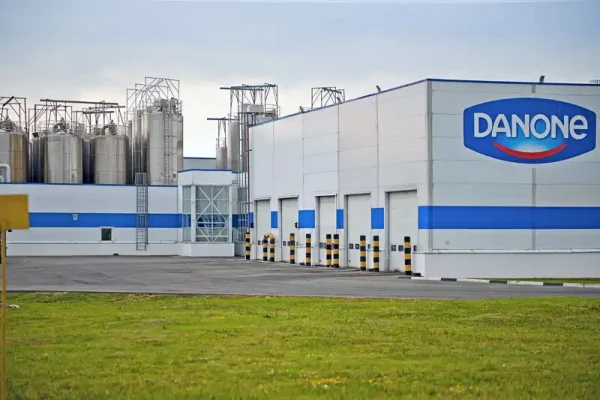
Image Credit - Danone Россия, CC BY 2.5, via Wikimedia Commons
The Global Effect of the Acquisition
Absorbing a smaller competitor allows a multinational giant to dominate a new category without risking capital on unproven product development. The acquisition radically alters the entire global food market. Danone firmly secures a highly profitable asset with an established, cult-like following. Huel instantly gains the massive financial muscle to expand aggressively into entirely new emerging international markets. The £864m purchase price fully validates the massive modern demand for liquid meal replacements. Corporate giants know perfectly well that modern living constantly accelerates. People genuinely have less time to prepare whole food, yet they experience immense societal pressure to maintain perfect physical health. Powdered food solves this exact modern dilemma.
The careful combination of plant-based proteins, oats, and artificial sweeteners creates a highly profitable margin for the manufacturer. While controversies surrounding heavy metals and banned advertisements pose temporary public relations setbacks, the overall financial trajectory remains sharply upward. Consumers prioritize extreme convenience above almost everything else. Danone clearly recognized this reality and quickly opened their massive corporate checkbook. The final integration of these two distinct companies will severely test whether a highly disruptive startup can successfully maintain its edgy consumer appeal while operating deep inside a massive, traditional corporate structure.
The Real Cost of Complete Nutrition
The Danone Huel acquisition perfectly finalizes the inevitable move of a scrappy startup into a rigid industrial food asset. Massive corporations heavily rely on ambitious founders to take the initial financial risks and painstakingly build the consumer market from scratch. Once the concept proves highly profitable, the multinational buyout entirely replaces the original vision. Julian Hearn successfully turned a simple idea about powdered oats and proteins into a massive £864m empire.
Consumers entirely dictate the future of the complete nutrition market. As long as time-poor professionals and modern weight-loss drug users heavily demand rapid, drinkable calories, massive companies will continue to blend these highly processed concoctions. Regulatory bodies and health experts will continually challenge their bold advertising claims, and severe quality control issues will inevitably surface. Yet, the relentless demand for absolute convenience ultimately drives the global food industry forward. Danone bought a highly effective solution to a modern problem, firmly securing their financial relevance in a rapidly shifting dietary market.
Recently Added
Categories
- Arts And Humanities
- Blog
- Business And Management
- Criminology
- Education
- Environment And Conservation
- Farming And Animal Care
- Geopolitics
- Lifestyle And Beauty
- Medicine And Science
- Mental Health
- Nutrition And Diet
- Religion And Spirituality
- Social Care And Health
- Sport And Fitness
- Technology
- Uncategorized
- Videos