

Jamini Sen: The Pioneer Who Changed Medical History
Institutions build massive walls to keep power concentrated among a select few. When someone finally breaches those barriers, they usually possess wealth, royal connections, or overwhelming political leverage. Jamini Sen lacked all of these advantages when she shattered a three-century streak of male dominance at the Glasgow Royal College. Pursuing a medical degree in the late 19th century required a person to walk straight into intense social hostility. She confronted that hostility daily, perfected advanced clinical procedures, and transformed maternal care across entirely different continents.
History books frequently dedicate their pages to loud revolutionaries, leaving quiet disruptors to fade into obscurity. Sen simply changed the rules from the inside. She weaponized her academic brilliance to force traditional medical establishments to acknowledge her exceptional skill. Her life exposes the steep professional toll placed on early female medical pioneers. Through rigorous competence and relentless study, she dismantled deeply entrenched prejudice and forced a global institution to permanently alter its legacy.
The First Defiance of Jamini Sen
Families often block ambition out of a misplaced desire for protection, forcing innovators to fight their initial battles at the dinner table.
Fighting Family and Tradition
According to a report in Science and Culture, on June 20, 1871, Jamini Sen entered the world in Barisal, located within the Bengal Presidency. She grew up in a progressive Brahmo family, yet even this forward-thinking environment presented massive obstacles. Her father, Chandicharan Sen, strongly opposed her desire to study medicine. He viewed the medical field as an inappropriate and dangerous path for a young woman.
Research published in Postscriptum notes that while her sister, Kamini Roy, chose a culturally accepted route and eventually became a famous poet, Sen refused to abandon her scientific aspirations. She possessed an unyielding drive to understand the human body. She knew that rural areas desperately needed female physicians. The societal prejudice against unconventional female roles ran deep, slowing the alteration of national customs. Sen recognized that she had a heavy duty toward her female compatriots, believing that medical advancement remained absolutely vital for her homeland sisters.
Breaking Through Societal Walls
Navigating a period heavily restricted by gender norms required immense psychological endurance. Sen shared her household with seven siblings, meaning she constantly had to justify her unique path amidst a large, opinionated family. Dr. Robert Harvey, a prominent voice during that period, noted the extreme societal backlash that women faced when pursuing science. Sen ignored the noise. She channeled her energy into rigorous academic preparation, eventually wearing down her father’s initial resistance and securing her path toward medical school.
Conquering the Science of Survival
Grading scales strip away subjective bias, leaving raw data that forces authorities to confront undeniable talent.
Topping the Global Charts
Sen enrolled at the Calcutta Medical College, determined to outwork every peer in her cohort. She achieved a first-class grade in Materia Medica, proving her elite comprehension of pharmacology and therapeutics. Her academic performance impressed local professors and instantly commanded global attention. She secured the second-highest marks globally, placing just behind another brilliant student, Rachel Cohen.
Historical records present a slight contradiction regarding her exact graduation timeline. Mainstream archives list her graduation year as 1897. Meanwhile, supporting historical papers indicate she earned her LMS and MB qualifications slightly earlier, in 1896. Regardless of the exact date, her academic triumph represented a monumental breakthrough.
The Burden of Brilliance
Earning top marks placed a massive target on her back. As one of the earliest female medical pioneers in India, Sen faced immense pressure to perform flawlessly. Male colleagues constantly scrutinized her methods, waiting for a single mistake to validate their prejudices. She responded by maintaining a flawless academic record and securing an elite foundational knowledge of medicine that would protect her throughout her grueling career.
Erasing Boundaries in Kathmandu Palaces
Transporting clinical science into heavily guarded royal spaces requires intense diplomacy rather than sheer force.
Clinical Science Meets Traditional Spaces
A study in Science and Culture states that in 1899, Sen relocated to Nepal to tackle an unprecedented professional challenge. Readers frequently ask, what hospital did Jamini Sen work at in Nepal? The same source notes she managed operations at the Kathmandu Zenana Hospital between 1899 and 1909. During this decade, she brought rigorous clinical methods directly into traditional palace wards. She provided exclusive medical treatment to the Nepalese royal family, earning their trust through her precise, modern techniques.
The Choice to Leave Nepal
Her departure from Nepal in 1909 carries conflicting historical narratives. Mainstream articles suggest that political unrest and a fierce personal ambition drove her back to Calcutta. However, supporting historical diaries reveal a different motivation. Sen wrote that she felt her personal medical knowledge had grown outdated. She recognized the rapid scientific progression occurring globally in modern surgical and gynaecological methods. Serving homeland women properly required her to observe English hospital practices firsthand. As highlighted in the RCPSG Heritage Blog, she voluntarily left a comfortable royal appointment to plunge herself back into intensive medical education, driven by a deep sense of responsibility toward the women of her country.
The 1912 Breakthrough of Jamini Sen
Prestigious medical fellowships use archaic rules to maintain exclusivity, making a successful application a political triumph.
Crossing Oceans for Better Science
In 1911, Sen secured vital financial support from the Lady Dufferin Fund and traveled to the United Kingdom. She quickly earned her medical license in Dublin, proving her competence to European authorities. The following year, she traveled to Berlin to conduct clinical research on tropical diseases. She refused to settle for basic qualifications, constantly hunting for advanced specialized knowledge.
Shattering a 313-Year Tradition
In 1912, Sen targeted the Royal College of Physicians and Surgeons of Glasgow. College founders established this institution in 1599, and for over three centuries, administrators exclusively admitted men. Many historians investigate, who was the first female fellow of the Glasgow Royal College? According to an announcement by the Royal College of Physicians and Surgeons of Glasgow, Jamini Sen secured this historic admission in 1912, becoming the first female fellow and destroying a 313-year tradition of male dominance.
Despite granting her the fellowship, the system still fought back. Another RCPSG Heritage Blog post confirms that officials explicitly denied her any office-holding privileges, ensuring she could not influence institutional policy. It took eleven full years before the college admitted its second female fellow, Margaret Hogg Grant, in 1923. Sen pushed the door open, but the establishment fought desperately to keep it shut.
Battling Discrimination in British Hospitals
Institutional hierarchies exploit top performers by piling on workloads while actively denying them equal compensation.
The Cost of Being Capable
Returning to India, Sen joined the Women’s Medical Service (WMS). The narrative surrounding her time in the WMS features severe contradictions. Some accounts claim she steadied local tensions and became a universally trusted figure. In reality, supporting documents reveal a workplace saturated with extreme racial discrimination.
In 1914, administrators stationed her in Agra and handed her a punishing professional reality. Supervisors forced her to solely manage the combined workload of three English doctors. She handled this crushing patient volume with absolute precision, yet authorities rewarded her competence with hostility.
Financial and Geographic Punishment
Rather than recognizing her massive contributions, officials orchestrated a sudden winter transfer to Simla. During this abrupt relocation, administrators explicitly denied her a standard 100-rupee rent allowance. They paid her significantly less than her British peers, weaponizing her race and gender to suppress her career trajectory. The systemic abuse continued into the summer of 1916, when supervisors transferred her to Shikarpur before the facility even officially inaugurated. She survived these brutal conditions through a total focus on her patients.
Advancing Maternal Health and Practical Medicine
True innovation happens when practitioners abandon rigid academic theories to solve actual bedside crises.
Standardizing Obstetric Care
Between 1921 and 1929, Sen relentlessly expanded her expertise. She earned a Cambridge DPH and studied at the London School of Tropical Medicine. Armed with this advanced knowledge, she returned to India to lead the Buldeodas Maternity Home in Kolkata and later assumed hospital leadership in Puri. She directed her massive intellect toward eradicating maternal sepsis, a condition that slaughtered countless women during childbirth.
Medical students still wonder, what medical handbook did Jamini Sen write? She authored a comprehensive maternity theory text called 'Prasuti Tattwa'. This groundbreaking publication standardized obstetric care and gave rural practitioners practical tools to save mothers' lives. In her private journal, Sen expressed quiet satisfaction over her obstetric progress, noting that maternal cases finally reached peak recovery rates under her new clinical guidelines.
A Subtle Wardrobe Rebellion
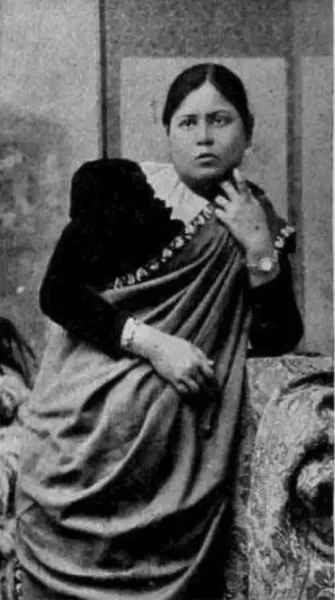
Medical modernization requires practical adjustments alongside scientific advancements. Sen introduced a subtle rebellion through her daily hospital attire. She abandoned restrictive traditional clothing in favor of practical mobility, adopting a pinned sari paired with a lace-collared blouse. This deliberate wardrobe choice allowed her to move quickly through emergency wards. She prioritized patient survival over rigid cultural expectations, proving that every aspect of her life served her medical mission.
The Slow Recognition of Jamini Sen
Archives hide the most important stories until dedicated historians deliberately dig through centuries of neglected paperwork.
Reclaiming a Stolen Legacy
Jamini Sen passed away unmarried in Kolkata on January 22, 1932. Following her death, historical erasure quickly consumed her monumental achievements. The medical establishment forgot her massive contributions to maternal health and her historic breakthrough in Scotland. Historians possess only two surviving photographs of her, highlighting the severe neglect of her legacy.
This obscurity finally shattered during the 425th anniversary of the Glasgow College. On August 21, 2024, curators unveiled a striking portrait of Sen, painted by artist Grace Payne-Kumar. The college archives finally brought her face back into the light.
A Global Influence Acknowledged
During the unveiling, medical leaders reflected on her career. Mike McKirdy noted the intense prevalence of gender bias throughout medical history, highlighting the massive three-century gap before the college accepted a woman. He expressed proud celebration of the diverse global community Sen helped establish. Grace Payne-Kumar designed the artwork as a visual representation of professional mobility despite severe obstacles, hoping to spark motivation for future medical generations.
Claire McDade emphasized that recognizing past female medical pioneers remains essential for the institution's integrity. She stated that the South Asian community forms an integral part of their history, promising continued future advocacy for women's value in science. Deepta Roy Chakraverti beautifully summarized her legacy, declaring that Sen's bravery laid the permanent foundation for future female medical professionals across India and Britain.
The Enduring Triumph of Jamini Sen
Systemic prejudice relies on exhaustion to defeat its challengers. Institutions place administrative roadblocks, financial penalties, and social isolation in the path of innovators, hoping they simply quit. Jamini Sen refused to surrender to that exhaustion. She absorbed the outright discrimination of the British medical system, countered the hostility of her own family, and conquered the rigorous academic standards of multiple continents.
Her life proves that elite competence can slice through the heaviest historical bias. She wrote standard-setting maternity textbooks and treated royal families with the exact same clinical precision she offered to rural mothers, permanently altering the literal fabric of modern healthcare. The Glasgow Royal College took centuries to let a woman through its doors, but Sen ensured they could never close those doors again. She remains a towering figure of resilience, intelligence, and unwavering professional defiance.
Recently Added
Categories
- Arts And Humanities
- Blog
- Business And Management
- Criminology
- Education
- Environment And Conservation
- Farming And Animal Care
- Geopolitics
- Lifestyle And Beauty
- Medicine And Science
- Mental Health
- Nutrition And Diet
- Religion And Spirituality
- Social Care And Health
- Sport And Fitness
- Technology
- Uncategorized
- Videos