
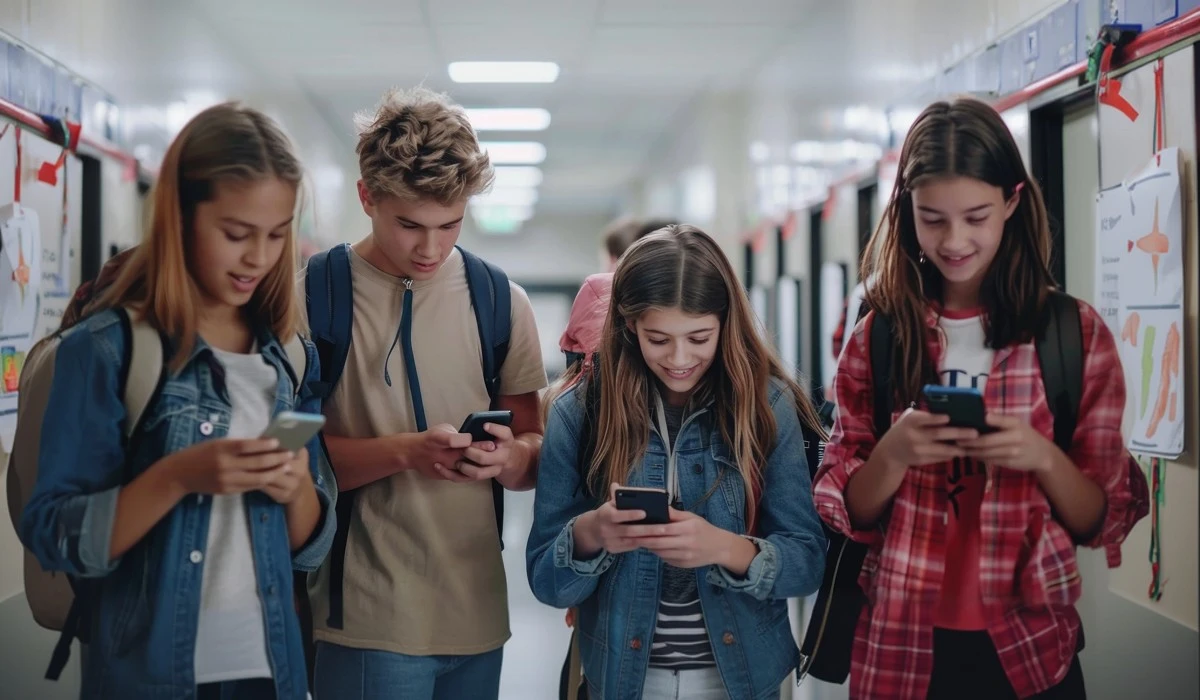
School Smartphone Bans Fail to Stop Student Distraction
Lock away a teenager's phone at 9 AM, and you simply schedule their digital binge for 4 PM. We treat hardware confiscation as an instant cure for digital addiction. Strict school smartphone bans act as a physical dam, temporarily holding back the water until the final bell rings.
A massive study involving over 1,200 students across 30 secondary schools just shattered our basic assumptions about screen time. The Department for Education pushes headteachers to eliminate phones to boost concentration. Politicians relentlessly demand stricter rules. Campaigners widely celebrate device enclosures.
Yet, the hard data reveals a massive flaw in this overarching strategy. Confiscation looks like massive progress on paper. Behind closed doors, completely out of sight of teachers, total daily screen hours stubbornly refuse to drop.
The Illusion of Erasing Screen Time in School Smartphone Bans
Confiscating a device removes the distraction from the classroom, yet the overall daily screen hours remain stubbornly identical. We treat physical separation as the ultimate fix for bad habits. At Brownhills Ormiston Academy, Principal Ross Doodson introduced device enclosures last October to add an extra tier of security.
Placing phones in physical pouches eliminates the immediate lure of notifications. Teachers finally experience pure concentration in their lessons. Face-to-face socialization increases dramatically during lunch breaks. From the perspective of school staff, the problem vanishes completely.
Meanwhile, the reality outside the school gates tells a completely different story. A recent Lancet Regional Health Europe study tracked 1,227 students across 30 secondary schools. Funded by the National Institute for Health and Care Research (NIHR), researchers spent more than 12 months collecting data.
They officially concluded the study in November 2023. They compared 20 schools with restrictive policies against 10 schools with permissive policies. The findings shocked child safety campaigners. According to the abstract of the Lancet Regional Health — SMART Schools study, strict policies reduced in-school phone usage by roughly 40 minutes. The research also indicates that they cut in-school social media consumption by a mere 30 minutes.
You might wonder, how do phone bans in schools affect daily screen time? Banning phones on campus only reduces total daily usage by a fraction, as teenagers quickly make up for the lost hours at home. The average daily smartphone usage remained between four and six hours across the board. The regulations simply displaced the screen time to the evening.
What the Data Actually Says About School Device Policies
Measuring test scores and sleep schedules across different policy environments reveals a surprising flatline in results. Most people assume a tech-free school day automatically leads to healthier, smarter kids. According to a UK study reported by The Guardian, simply banning mobile phones on campus fails to boost students' academic performance or overall wellbeing, a conclusion supported by Professor Miranda Pallan, the senior author of the Lancet study, who found zero outcome improvements for youth under restrictive measures.
The research team looked for statistical differences in mental wellbeing, anxiety, depression, sleep quality, and physical activity. They also checked Maths and English attainment. The study found absolutely no statistical difference between strict and relaxed policy environments.
Many parents ask, do school smartphone bans improve student mental health? Current research shows zero statistical difference in anxiety, depression, or sleep quality between students in schools with strict bans and those with relaxed rules. The overarching daily usage reduction matters far more for health than campus-specific regulations.
A Recognized Societal Crisis
This severe lack of difference stunned groups like Smartphone Free Childhood. Director Joe Ryrie called the study outcomes a mild surprise. As noted in a report by About Manchester, he pointed to a broad academic consensus showing that increased device usage correlates with diminished mental wellbeing, reduced physical activity, poorer sleep quality, and lower academic achievement, which ultimately ruin focus and safety. He views this as a societal crisis requiring urgent multi-stakeholder intervention.
The daily usage duration remains horrifying for modern teenagers. Prof Victoria Goodyear, the chief investigator, clarified the situation further. She stated that claiming policies eliminate digital harms is entirely false. Campus rules only alter the timing and manifestation of phone use. Students hold off during the day and scroll heavily at night. Schools desperately need a multi-contextual strategy. A strict beyond-school approach becomes absolutely necessary to protect children.
The Pouch Method and Immediate Relief
Placing a physical barrier between a student and their screen solves the immediate symptom while leaving the root habit entirely untouched. Teachers face a brutal daily reality regarding digital distraction. According to recent data, 58% of secondary pupils use their phones in unapproved ways during at least some lessons.
For Key Stage 4 students, that number jumps to an alarming 65%. A DfE spokesperson recently declared the presence of devices in classrooms completely unacceptable. The absence of distraction leads directly to superior educational outcomes.
To combat this, schools deploy practical models like locked pouches. Year 10 pupil Thomas noticed the difference immediately. He praised the real-world companionship that easily replaced his usual screen time. He experienced a massive improvement in classroom attention due to the restrictions. Clare Fernyhough, co-founder of Generation Focus, fully agrees with this approach. She views devices as a massive child protection hazard and claims concentration is impossible when phones are present.
Enforcing Zero Exceptions
Education Secretary Bridget Phillipson fully supports total device exclusion from campuses, allowing zero exceptions. She mandated Attendance and Behaviour Hubs to assist institutions struggling to enforce the rules. The immediate classroom relief is undeniable. Teachers can actually teach their subjects. However, the relief remains strictly geographical. Once the pouches are unfastened at the end of the day, the digital floodgates open.
How Homes Bear the Brunt of School Smartphone Bans
When a campus restricts digital access entirely, the evening hours absorb the full weight of the delayed scrolling. The end of the school day causes a massive behavioral shift. Thomas admitted he compensates for his lost device minutes the second he gets home.
The screen time refuses to disappear. The scrolling simply moves to the living room and the bedroom. This home screen time escalation completely nullifies the physical and mental benefits gained during school hours. Permissive policies carry their own unique flaws. Allowing phones reduces immediate isolation for some kids.
Unfortunately, permissive environments also cause severe distraction and online conflict escalation right in the middle of the school day. Year 10 pupil Freya offers a highly practical compromise to this issue. She reported a slight uptick in her display duration after school but noted zero interference with her daily routines.

The Power of Prerequisite Tasks
Her secret involves a highly structured home environment. Her parents established regulations that provide a beneficial framework for her daily life. Freya faces mandatory completion of assignments and must participate in physical groups prior to gaining device access.
She actively notices the psychological wellness benefits she gets from daily exercise. The home environment acts as a massive mitigating factor. When parents require prerequisite tasks before screen time, the delayed scrolling becomes manageable. When parents hand over free reign at 4 PM, school smartphone bans achieve virtually nothing.
Government Directives vs. Legislative Reality
Politicians demand total compliance through strict inspections, missing the reality that teenagers easily outsmart rigid geographic boundaries. The UK government continues to tighten its grip on digital regulations. Last January, the DfE officially enhanced its non-statutory guidance regarding device policies.
Last month, the House of Lords actively endorsed an amendment pushing for a statutory smartphone ban. Campaigners desperately want a nationwide law. People frequently search, will the government make school phone bans a legal requirement? The Education Secretary rejected a statutory ban, labeling it a headline-grabbing gimmick, and prefers strong guidance enforced by Ofsted instead.
The government expects total consistency across all schools without passing new rigid legislation. As stated in an Ofsted Education Inspection blog, Chief Inspector Sir Martyn Oliver granted total authorization for headteachers to implement immediate device prohibition, giving his full backing for schools to become mobile phone-free environments by default. He cited severe attention span erosion, academic distraction, and psychological detriment as his primary concerns. Ofsted enforcement mandates now require mandatory policy evaluations during every inspection. Staff must also strictly adhere to a personal device prohibition in front of pupils.
The Limits of Hardware Bans
Despite this top-down pressure, the core problem remains completely unsolved. Government tech research, led by Cambridge University, focuses heavily on the effects of social media upon youth wellbeing. They constantly debate consultation topics like elevating the digital consent age, imposing device curfews, and creating dependency-inducing design restrictions. The government knows the hardware ban alone fails to protect children.
The Parental Framework Trap and Online Safety
Relying entirely on caregivers to enforce digital discipline assumes every household operates with identical rules and resources. Technology Secretary Liz Kendall explicitly stated that digital safety legislation serves as an initial step only. Parental anxieties persist regardless of internal school policies.
The government desperately wants to optimize tech's potential while assuring strict youth protection. Kendall strongly prefers digital enrichment over harm. The Online Safety Act currently drives massive changes across the web. The law led to 8 million daily adult site age verifications.
According to Similarweb data reported by Sky News, pornography site traffic across the top 100 sites plummeted by a staggering 33%. Age verification encounters jumped from 30% to 47% almost overnight. Furthermore, as detailed by The Guardian regarding enforcement under the Online Safety Act, Ofcom rapidly launched investigations into 92 online services.
Bridging the Safety Gap
These sweeping internet restrictions work alongside school smartphone bans to create a much safer digital environment. Yet, Joe Ryrie warns that strict platform regulation remains an absolute necessity for safety and non-addiction. He strongly advocates for the parental delay of device provision entirely.
If a 12-year-old possesses a smartphone with unregulated access to social media, a locked pouch at school offers very temporary protection. The real danger waits for them on the bus ride home.
The government expects media literacy skill enhancement through curriculum reforms to bridge this exact gap. Unfortunately, teaching a teenager about algorithms rarely stops them from scrolling endlessly at 2 AM.
Rethinking the Rules for Digital Harms in Schools
Treating a digital dependency as a purely geographic problem guarantees the issue will simply move to a different zip code. Schools proudly present their device policies as a massive victory. Currently, 90% of secondary schools and a staggering 99.8% of primary schools have device policies actively in place.
The numbers look absolutely phenomenal on paper. The reality requires a much deeper investigation. Confiscation succeeds at enhancing face-to-face interaction during the lunch hour. Restrictions succeed at giving teachers a break from policing digital behavior in the back row. These rules fail completely at reducing overall daily screen time. They fail at improving sleep schedules. They fail at raising test scores. We need to move past the illusion of the quick fix. Taking away a phone at school functions as a temporary band-aid.
The heavy lifting falls squarely on parents setting firm boundaries at home. Lawmakers must also force tech companies to alter their dependency-inducing designs.
The Final Verdict on School Smartphone Bans
Locking away devices during math class brings undeniable peace to teachers. Expecting that same locked pouch to cure a generation's digital dependency ignores the data entirely. School smartphone bans serve a vital purpose for academic focus, yet they spectacularly fail as a standalone health intervention.
We spent years celebrating headteachers for confiscating phones, completely ignoring the four-hour scrolling sessions happening in childhood bedrooms every single evening. The responsibility extends far beyond the school gates.
True digital safety requires strict home frameworks, aggressive platform regulations, , and an honest admission about tech addiction. Moving the screen time to a different hour of the day achieves absolutely nothing.
Recently Added
Categories
- Arts And Humanities
- Blog
- Business And Management
- Criminology
- Education
- Environment And Conservation
- Farming And Animal Care
- Geopolitics
- Lifestyle And Beauty
- Medicine And Science
- Mental Health
- Nutrition And Diet
- Religion And Spirituality
- Social Care And Health
- Sport And Fitness
- Technology
- Uncategorized
- Videos

