
Smart Soil Defense: Solid Waste Management Era
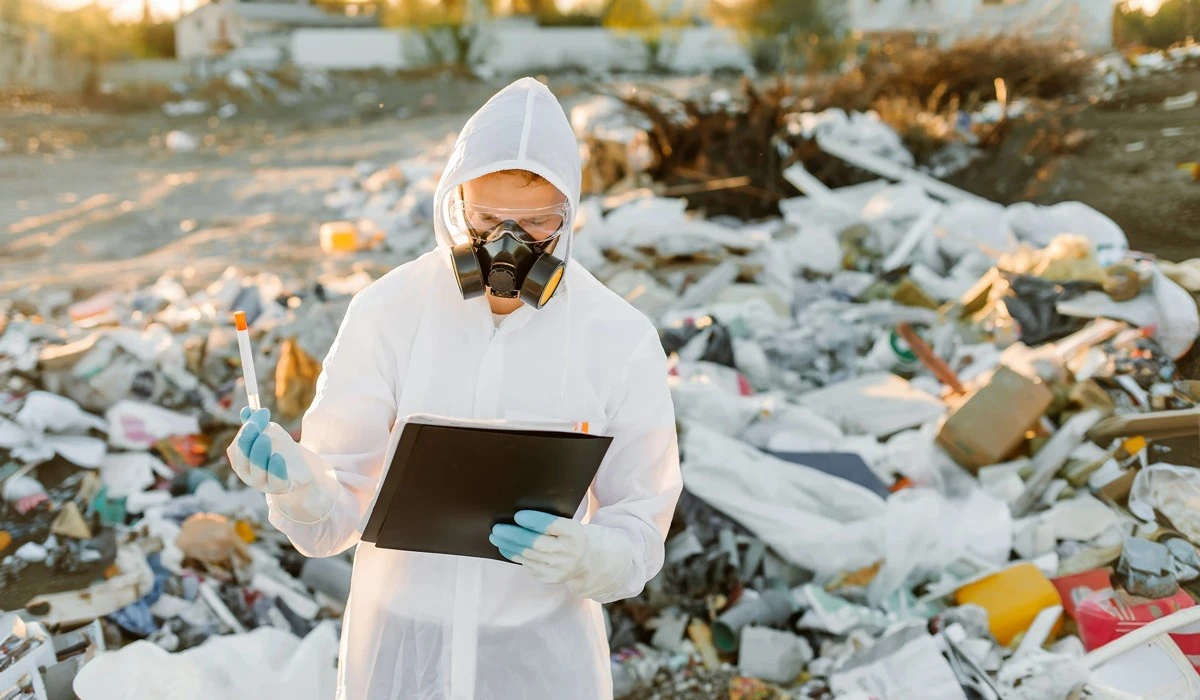
When you toss an old battery into a standard trash can, you start a chemical chain reaction that eventually reaches the dinner table. Rainwater hits that battery in a landfill, dissolves the lead and mercury, and carries those toxins deep into the earth. This liquid poison kills the tiny microbes that keep plants alive and turns healthy ground into a sterile wasteland. Most people look at a garbage pile and see a mess, but they miss the toxic seepage destroying the dirt beneath their feet.
As noted in a report by Frontiers in Environmental Science, traditional landfills fail because they only hide the problem, eventually leaking substances like arsenic, lead, and mercury that accumulate in the ecosystem and saturate the soil. Modern Solid Waste Management changes this reality with technology that stops the leaks before they start. We now use integrated waste management systems to act as a physical and digital shield for our ground. This approach moves beyond simple disposal and focuses on keeping the earth clean and productive for future generations.
The unseen link between Solid Waste Management and soil health
Rainwater acts like a solvent when it moves through untreated trash. It picks up dissolved organic matter and inorganic salts like sodium and calcium. Experts measure this chemical cocktail using Chemical Oxygen Demand (COD) and Biochemical Oxygen Demand (BOD). These levels tell us exactly how much "poison" is moving toward our soil. High COD levels mean the liquid will strip oxygen from the ground, suffocating the natural life in the dirt.
Meanwhile, heavy metals like lead, mercury, and arsenic begin to permeate the earth. According to the Soil Quality Factsheets, when the dirt loses its "cation exchange capacity"—the measure of its ability to hold positively charged ions—it can no longer support healthy crops. The sheets also note that this capacity determines the soil's ability to hold onto vital nutrients. Farmers then face lower yields and contaminated food. People often wonder, how does solid waste affect the soil? When waste decomposes improperly, it releases acidic liquids that dissolve heavy metals, so they permeate deep into the earth and kill essential microbial life. These acidic liquids act like a key that releases toxic metals, letting them flow freely into our water and food supplies.
Understanding the anatomy of leachate
Research published in the Journal of Ecological Engineering notes that leachate forms when moisture reacts with decomposing waste, creating a liquid that contains dissolved organics, salts, and ammonia. As observed by the Environmental Protection Agency (EPA) of Ireland, non-hazardous landfills should at least set trigger levels for chloride and ammonia to monitor this liquid. If this liquid touches the ground, it completely alters the soil's chemistry. It increases the presence of harmful salts that prevent seeds from sprouting. In reality, a single leak can ruin acres of farmland for decades.
How soil toxicity enters the food chain
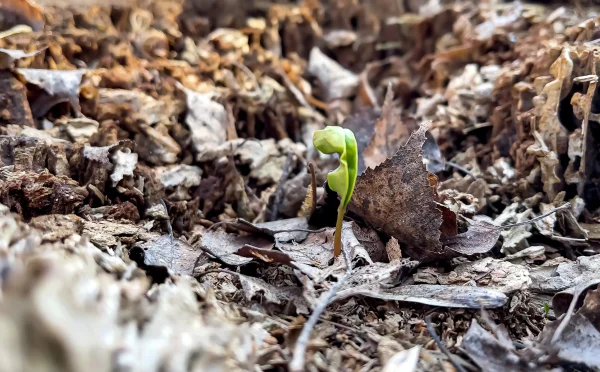
Toxins move from the soil into plants through a process called biological magnification. As stated in research published by PubMed, food chain contamination by cadmium is the most significant exposure route for the general population. A study in ScienceDirect adds that cadmium is easily absorbed into the edible parts of plants due to its high bioavailability in soil. Furthermore, research hosted by PMC/NCBI shows that raw leachate reduces the reproduction of key soil-dwelling species like Folsomia candida by nearly 50%, with juvenile numbers decreasing by 49.8%. This loss of biodiversity makes the soil weak and prone to erosion.
Precision sorting tools within integrated waste management systems
Prevention starts at the sorting center. Modern integrated waste management systems use Hyperspectral Imaging (HSI) to see things the human eye cannot, which PMC/NCBI identifies as a method for improving the detection of contaminated compostable materials. These sensors analyze light spectra to identify the exact chemical makeup of plastics and resins. The study indicates they catch hazardous materials with up to 99% accuracy. This ensures that a toxic plastic jug never reaches a landfill where it could degrade and poison the earth.
Irony exists in the fact that one small battery can ruin tons of clean soil. To stop this, facilities now use high-speed robotics. According to AMP Sortation, delta robots use AI to scan conveyor belts and pull out hazardous items in milliseconds, with systems achieving speeds of 110 "picks" per minute. This speed ensures that heavy-metal-rich components like PVC or treated wood stay out of the ground. The early removal of these items protects the soil from the source of the pollution.
AI-driven optical sensors for hazardous materials
As reported by ZenRobotics, AI cameras now identify an unlimited number of heavy waste material classes in real-time. They specifically look for lithium-ion batteries and paint aerosols. These items cause spontaneous fires in landfills, which bake the soil and destroy its structure. AI-driven sorting ensures these items go to specialized recycling centers instead.
Robotics and the removal of soil-contaminants
Manual labor often misses small, toxic parts. Robotic arms do not get tired or overlook small details. They use computer vision to isolate pollutants that would otherwise leak chemicals into the dirt. This technology creates a "cleaner" waste stream that reduces the overall toxic load on the environment.
Advancing Solid Waste Management with IoT monitoring
High-tech waste management now uses the Internet of Things (IoT) to watch the soil 24/7. Operators bury subsurface probes around waste sites to monitor moisture and pH levels. These probes provide an early warning for liner failures. If a leak starts, the system sends an alert to a mobile device immediately. This allows workers to fix the problem before the toxins spread deep into the earth.
In cities, smart bins use ultrasonic sensors to measure how full they are. This data helps trucks optimize their routes. When bins don't overflow, organic waste doesn't sit on the pavement and rot. This prevents localized soil acidification in urban parks and gardens. You might ask, what technology is used to monitor soil pollution? Modern facilities utilize subsurface IoT probes that monitor pH levels and chemical markers in real-time to alert operators of potential liner breaches. These probes act as the first line of defense against groundwater contamination.
Smart bins and optimized collection routes
Smart bins communicate using LoRaWAN networks. This technology connects thousands of sensors over long distances with very little battery power. Trash collection at the appropriate time allows cities to reduce the deposition of heavy-metal-laden soot from garbage trucks. This keeps roadside soils much healthier.
Real-time soil toxicity sensors around facilities
We call this "Smart Fencing." These sensors create a digital perimeter around a waste facility. They look for specific chemical markers that indicate a leak. Leak detection within the first hour allows operators to save the surrounding land from permanent damage.
Bio-remediation and organic recovery technology
Solid Waste Management also involves turning "bad" waste into "good" soil. Industrial-scale anaerobic digestion takes organic waste and turns it into energy. This process happens in a sealed tank, which prevents acidic liquids from reaching the ground. The result is a nutrient-rich digestate that farmers can safely use as fertilizer.
Another breakthrough involves pyrolysis. This tech heats waste to between 400 and 900 degrees Celsius to create biochar. Biochar is a carbon-negative soil amendment. It has a massive surface area that sucks up soil-polluting phosphorus. Instead of poisoning the earth, the waste actually helps the soil hold more nutrients and water. This turns a waste problem into a farming solution.
Industrial-scale anaerobic digestion
Thermophilic digestion operates at high temperatures to kill pathogens like E. coli. This technology ensures that human and animal waste does not introduce diseases into the soil. It transforms a potential biohazard into a stable, clean product for land application.
Converting waste into high-grade biochar
Biochar stays in the soil for hundreds of years. It acts like a sponge for toxins. Utilizing integrated waste management systems to produce biochar actively cleans up historical pollution while managing new waste.
Digital twins for integrated waste management systems
Software now creates a "virtual twin" of every waste facility. These digital twins use Monte Carlo simulations to predict how pollutants might move through different soil types over 50 years. If the simulation shows a high risk to the groundwater, engineers change the design before they ever start digging. This data-driven approach prevents environmental disasters before they happen.
Geographic Information Systems (GIS) also play a massive role. GIS analyzes the permeability of the soil and the depth of the water table. This ensures we never build a waste site on top of porous soil or near a sensitive aquifer. The selection of the correct spot allows us to use the earth's natural geology to help contain any potential spills.
Predictive modeling of leachate pathways
Digital twins account for local weather patterns. They calculate how much rain will hit the waste and where that water will go. This allows for the design of better drainage systems that keep the soil dry and safe.
Optimizing facility placement through GIS tech
GIS tools use "weighted overlays" to rank potential sites. They look at soil health, proximity to farms, and slope. This technology ensures that Solid Waste Management facilities sit in the geologically safest locations possible.
Next-generation liner systems and containment hardware
Modern landfills are high-tech fortresses. They use Geosynthetic Clay Liners (GCL) made of sodium bentonite. When this clay gets wet, it swells to 18 times its dry size. This creates an impermeable seal. If a rock punctures the liner, the clay migrates into the hole and seals it automatically. This self-healing property provides a fail-safe against human error or mechanical wear.
To check these liners, engineers use Electro-leak location (ELL) technology. They apply a high-voltage current across the liner. Any change in the electrical flow tells the operator exactly where a microscopic hole exists. This allows for repairs that are impossible to see with the human eye. Critics might ask, how do landfills keep pollutants out of the ground? They utilize multi-layered containment systems consisting of high-density polyethylene and compacted clay to create an impermeable barrier between waste and the earth.
Self-healing geosynthetic clay liners
These liners provide hydraulic conductivity as low as 1 x 10⁻¹¹ cm/s. That means it is almost impossible for liquid to pass through them. This level of protection keeps the soil beneath the landfill as clean as the soil miles away.
Electro-leak location (ELL) technology
ELL testing follows strict ASTM standards. It finds holes as small as one millimeter. Repairing these tiny gaps prevents long-term "slow leaks" that often go unnoticed for years until the soil is already ruined.
The economic incentive for clean Solid Waste Management
Cleaning up contaminated soil costs millions of dollars. Avoiding this expense is a huge win for city budgets. When a city invests in integrated waste management systems, they protect their future tax base. Clean land is valuable land. Toxic "brownfields" sit empty and produce no revenue, but tech-managed sites can eventually become parks or housing.
The circular economy also creates new jobs. Sorting facilities and bio-recovery plants need skilled workers. The treatment of waste as a resource keeps the soil clean and the economy moving. High-tech waste management turns a liability into a profitable asset.
Reducing long-term municipal liability
Cities that ignore soil health eventually face massive lawsuits and cleanup bills. Proactive Solid Waste Management eliminates these risks. It ensures that the ground remains a safe asset rather than a financial drain.
Circular economy and the value of "clean" land
Pneumatic waste transport systems illustrate the future. These vacuum pipes move trash underground at 70 km/h. They completely bypass the soil, preventing any leaks from trucks or bins. This keeps urban soil pristine and increases property values.
Securing our ground through smarter Solid Waste Management
Soil pollution, rather than being an unavoidable part of living in a modern city, indicates the use of outdated methods. Through the implementation of AI sorting, IoT monitoring, and self-healing liners, we can stop the toxic seepage that threatens our food and water. These integrated waste management systems offer a way to handle our trash without sacrificing the earth.
The future of our environment depends on the ground beneath our feet. Investing in advanced Solid Waste Management today prevents the sterile wastelands of tomorrow. We have the tools to protect the soil; we simply need to use them. Smarter waste tech ensures that the earth remains a living, breathing resource for everyone.
Recently Added
Categories
- Arts And Humanities
- Blog
- Business And Management
- Criminology
- Education
- Environment And Conservation
- Farming And Animal Care
- Geopolitics
- Lifestyle And Beauty
- Medicine And Science
- Mental Health
- Nutrition And Diet
- Religion And Spirituality
- Social Care And Health
- Sport And Fitness
- Technology
- Uncategorized
- Videos

