
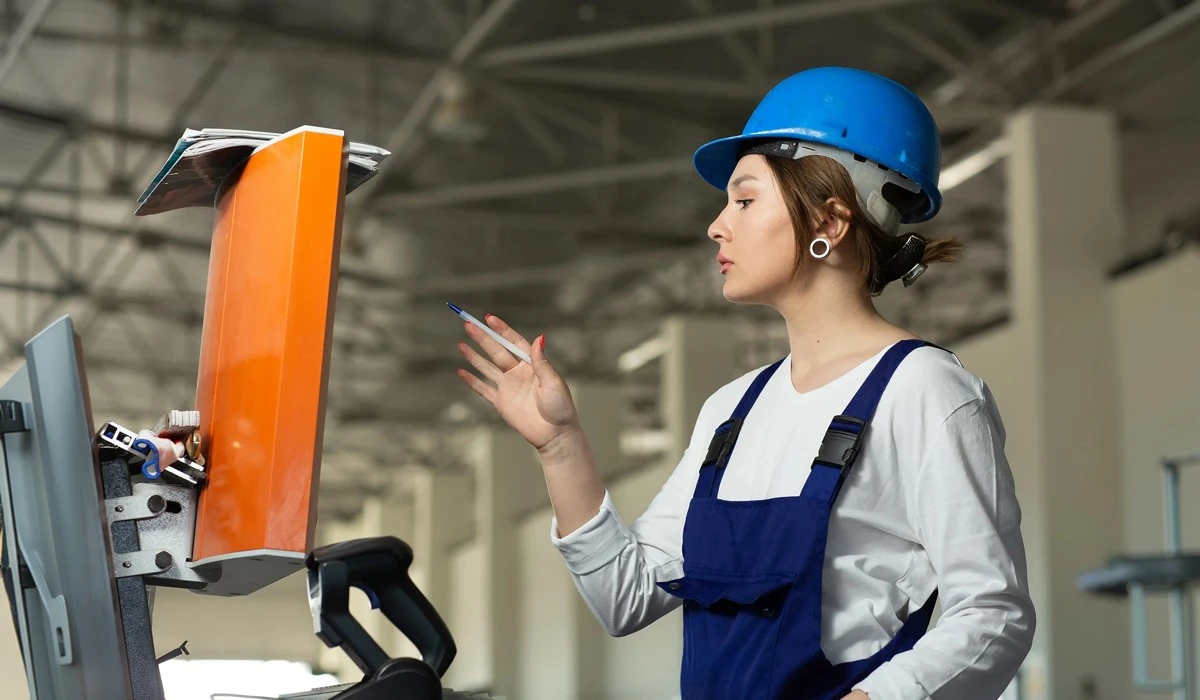
Hierarchy of Hazard Controls Reduces Workplace Risks
When a factory floor runs smoothly, a sense of calm takes over. Workers move with rhythm, and the heavy metal gear performs its tasks without a hitch. This steady hum often tricks the brain into feeling completely safe. You stop seeing the danger because the danger has stayed quiet for so long. However, a single moment of distraction can turn a productive shift into a tragedy. Accidents happen when people rely on luck instead of a plan.
Occupational Health and Safety provides the essential framework for finding these dangers before they strike. It forces us to look past the routine and see where a finger might get caught or where a belt might snap. Relying on "being careful" rarely works because humans make mistakes. Instead, we must use the hierarchy of hazard controls to build a workplace that protects people even when they lose focus. Application of these rules ensures every worker goes home in the same condition they arrived.
The High Stakes: Why Machine Safety is Not Negotiable
According to a report by the UN Global Compact, which cites International Labour Organization data, an estimated 2.78 million workers die from work-related accidents or diseases every year. These figures show the massive scale of the problem. The report also notes that 374 million non-fatal injuries happen annually. Research published by the AIHA explains that these tragedies cause immeasurable human suffering for families and communities. The UN Global Compact further states that workplace-related deaths exceed the average annual deaths from road accidents (999,000), war (502,000), violence (563,000), and HIV/AIDS (312,000).
Beyond Compliance: Protecting Your Most Valuable Asset
A company succeeds because of its people. While many leaders focus on meeting legal standards, true leaders prioritize the well-being of their team. Dr. Alice Hamilton, a pioneer in industrial medicine, proved long ago that factory conditions directly cause physical illness. As noted by the AIHA, occupational disease actually accounts for 86 percent of work-related deaths. Common machine hazards include entanglement in moving parts, crushing between surfaces, and shearing from sharp edges. Protecting people from these risks builds trust and loyalty within the workforce.
The Unseen Costs of Machine Downtime and Litigation
Poor safety practices carry a heavy price tag. Employers in the United States pay nearly $1 billion every week for direct workers' compensation. This figure only scratches the surface of the total cost. Research from the AIHA suggests the cost of workdays lost to accidents equals nearly four percent of the world’s gross domestic product. Ironically, indirect costs like training new staff, repairing equipment, and legal fees are often four to ten times higher than insurance payouts. Using Occupational Health and Safety standards helps companies avoid these financial disasters.
Identifying the Shadows: A Systematic Risk Assessment
You cannot fix a problem you do not see. A systematic risk assessment helps managers find every possible way a tool could cause harm. As outlined in the ISO 12100 standard, following specific terminology and principles allows teams to identify hazards, estimate risks, and evaluate how to reduce them. The standard specifies that these principles are based on gathered knowledge and experience regarding incidents, accidents, and risks associated with machinery. According to these guidelines, a machine risk assessment involves identifying potential hazards, estimating the likelihood of an injury, and applying safety measures to lower that risk.
Point of Operation vs. Power Transmission Hazards
Dangers usually exist in two main areas. The point of operation is where the tool actually cuts, bores, or shapes the material. This area poses the most direct threat to hands and fingers. Meanwhile, power transmission hazards involve the parts that move the tool, such as belts, pulleys, and gears. Both areas require specific guards to prevent accidental contact.
Environmental Factors: Noise, Vibration, and Light
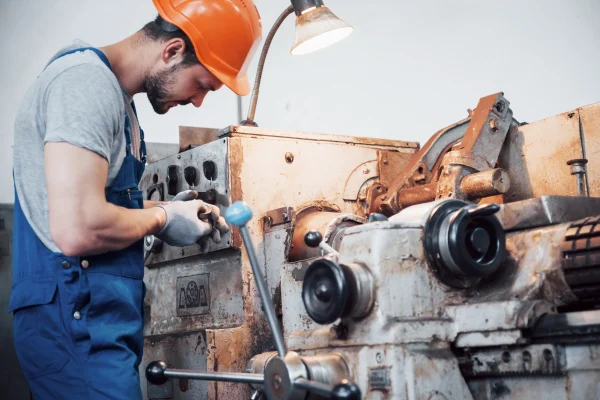
Machine risk includes sudden injuries as well as long-term health concerns. For instance, long-term exposure to loud noise causes permanent hearing loss. Constant vibration can lead to "white finger" disease, which damages blood vessels and nerves. Proper Occupational Health and Safety planning includes checking lighting levels and noise dampening to protect workers from these slow-moving dangers.
Strategy First: Using the Hierarchy of Hazard Controls
The hierarchy of hazard controls acts as a roadmap for safety. It ranks ways to fix risks from most effective to least effective. This system tells us that physically removing a danger works much better than just asking people to wear gloves. According to the ILO Starter Kit, elimination is the most effective way to control machine risks because it involves removing the hazard entirely so it can no longer hurt anyone.
Elimination and Substitution: The Most Effective Methods
The ILO Starter Kit describes elimination as the total removal of a hazard. If a task is too dangerous for a human, a robot should do it instead. The same documentation notes that substitution involves replacing a high-risk tool with a lower-risk version. For example, replacing high-pressure hydraulic systems with electric servos reduces the risk of injection injuries. These methods top the hierarchy of hazard controls because they don't rely on human behavior.
Engineering Controls: Building Safety into the Hardware
When you cannot remove a hazard, you must guard it. Engineering controls include physical barriers that keep people away from moving parts. These are highly effective because they work even if a worker is tired or distracted. Integrating these steps into the design phase of a project saves money and lives.
Engineering the Risk Out: Advanced Safeguarding Solutions
Modern technology offers powerful ways to keep workers safe. We no longer rely on simple cages alone. Today, sensors and logic controllers monitor equipment in real-time. These systems provide a layer of protection that functions without human intervention.
Fixed vs. Interlocked Guarding
Fixed guards are permanent barriers that stay in place. They require tools to remove, which prevents workers from taking shortcuts. Interlocked guards are different. They connect to the power source and stop the machine the moment someone opens the gate. This ensures that no one can reach into a moving part while it is still on.
The Role of Presence-Sensing Devices
Light curtains and laser scanners use infrared beams to create a safety zone. If a worker’s hand breaks the beam, the system sends an instant stop signal. These devices work well in areas where workers need to load and unload materials frequently. They provide safety without slowing down production.
The Human Factor: Strengthening Occupational Health and Safety Culture
Even the best guards fail if people do not value safety. A strong Occupational Health and Safety culture starts at the top and spreads to every worker. When employees feel empowered to report dangers, the whole workplace becomes more secure. Safety is a shared responsibility that requires constant communication.
Effective Training Beyond the Onboarding Manual
Standard safety videos often bore workers and lead to forgotten information. Effective training uses hands-on practice and real-world scenarios. Workers need to know why a rule exists, not just what the rule says. When people understand the consequences of a machine failure, they respect the safety protocols more.
Administrative Controls: Signs, Signals, and SOPs
Administrative controls change the way people work. This includes clear signage, warning lights, and standard operating procedures (SOPs). While these are less effective than engineering controls, they provide vital information. They remind workers to stay alert and follow the established safety path.
Maintenance and Monitoring: The Occupational Health and Safety Lifecycle
Safety is not a "one and done" project. It requires an ongoing loop of checking, fixing, and improving. Machines wear down over time, and safety parts can fail just like any other component. Regular maintenance ensures that every guard and sensor still works as intended. Occupational Health and Safety protocols must include a schedule for these checks.
Preventive Maintenance as a Safety Safeguard
A well-maintained machine is a predictable machine. Parts that are oiled and adjusted correctly are less likely to break or seize up. Sudden mechanical failures often cause the most severe injuries. Addressing small issues during scheduled downtime prevents catastrophic accidents during production.
Auditing and Feedback Loops
Regular safety audits help find gaps in your plan. These audits should involve the people who actually run the machines every day. They often see risks that managers might miss. Using a system like Lockout/Tagout (LOTO) prevents 120 deaths every year by ensuring gear cannot start up while someone is repairing it.
Building a Safer Future with Occupational Health and Safety
Fixing machine risks requires a dedicated and systematic approach. You cannot simply hope for the best in a high-speed industrial environment. Utilization of the hierarchy of hazard controls facilitates a move from reactive fixes to proactive protection. This strategy ensures that the most effective methods, like elimination and engineering, take priority over simpler steps like PPE.
A commitment to Occupational Health and Safety improves a workplace. It moves the focus from sheer output to sustainable success. When workers feel safe, they perform better and stay with the company longer. Safety pays for itself many times over through lower insurance costs and higher productivity. Every guard installed and every training session held acts as an investment in the future of the business.
Keep your eyes open for new hazards as technology changes. The work of safety never truly ends because new equipment brings new challenges. Stay vigilant, follow the data, and always put the person before the machine. This mindset creates a culture where excellence and safety exist together. Adherence to these principles protects your team and ensures the long-term health of your entire organization.
Recently Added
Categories
- Arts And Humanities
- Blog
- Business And Management
- Criminology
- Education
- Environment And Conservation
- Farming And Animal Care
- Geopolitics
- Lifestyle And Beauty
- Medicine And Science
- Mental Health
- Nutrition And Diet
- Religion And Spirituality
- Social Care And Health
- Sport And Fitness
- Technology
- Uncategorized
- Videos