
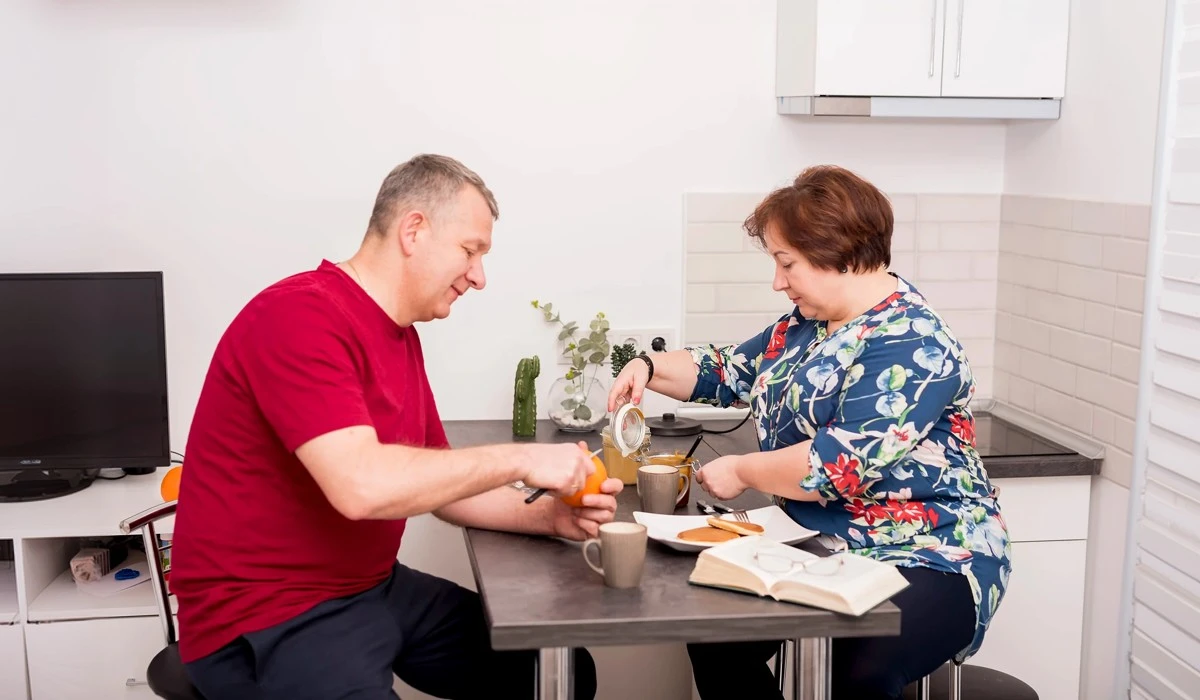
Reablement Support Makes Daily Living More Manageable
When a loved one struggles to reach for a glass or stand from a chair, your first instinct tells you to grab their hand and pull. While you might think you are helping, you are actually telling their muscles to quit. Every time you "help" through the assumption of a task, you accelerate a person's physical decline. This well-intentioned assistance creates a trap where the body forgets its own strength. You accidentally train the person to become more dependent on you.
According to a report published by the National Library of Medicine, reablement breaks this cycle by restoring self-care skills and enabling people to be as independent as possible. This approach favors active participation over passive care, ensuring that the person remains the lead actor in their own life rather than having tasks performed "for" them. Research in Frontiers in Psychology highlights that this approach recognizes how the human body maintains its ability to learn at almost any age, as learning new motor skills causes the brain to change its structure and function. When focus is placed on what a person can do, this process restores the dignity of self-reliance.
The Philosophy of "Doing With" Not "Doing For"
The Social Care Institute for Excellence notes that traditional home care often relies on a "doing for" model, which can lead to a person becoming dependent on care packages. A worker enters the home, cleans the kitchen, prepares a meal, and leaves. While this keeps the house tidy, it leaves the individual’s skills to wither. In contrast, reablement utilizes a "doing with" philosophy.
The National Library of Medicine highlights that in this model, a professional stands alongside the individual and guides them through the motions. They encourage the person to scrub the potato or stir the pot. This shift in focus changes a simple chore into a training session. How long does a reablement program last? The same source specifies that these programs are intensive and time-limited, usually lasting up to six weeks to help you regain your footing. This specific timeframe creates a sense of urgency and progress.
Who Benefits Most from These Services?
As noted by the National Library of Medicine, people recovering from hospital stays find the greatest value here, as the service is designed for individuals returning home after acute medical episodes. When someone returns home after surgery, they often feel fragile. They might fear falling or causing further injury. As described in BMC Health Services Research, this program targets individuals who want to stay in their own homes but feel overwhelmed by daily life, focusing on helping them resume their usual activities. It specifically helps those with a high potential for improvement. Professionals look for people who show a desire to reclaim their old routines. Early intervention ensures the service prevents a temporary injury from becoming a permanent disability.
Breaking Down Involved Movements

According to methodologies shared on ResearchGate, professionals use a technique called Hierarchical Task Analysis to make chores manageable; this involves treating a single chore, like making a cup of tea, as a series of tiny, logical steps. The trainer observes where the person struggles. Perhaps the individual can hold the kettle but cannot find the strength to tilt it. Activities of daily living retraining focuses specifically on that one weak link. Fixing the specific movement makes the entire task possible again. This granular focus removes the frustration of "failing" at a chore.
Occupational Therapy Integration
Research published in Health and Social Care in the Community indicates that occupational therapists drive the success of this retraining, as they are usually the primary providers of these interventions. They look at the person and the environment as one single system. They might suggest moving frequently used pans to a lower shelf to save energy. What is the difference between reablement and rehabilitation? The Ocupa Occupational Therapy blog explains that while rehabilitation focuses on clinical recovery and returning to a previous functional level, reablement is specifically centered on adjusting to new abilities and regaining the functional skills needed for independent home living. Therapists use forward and backward chaining to build confidence. In backward chaining, the therapist performs the start of a task, but the individual completes the final step. This ensures the individual experiences the satisfaction of finishing the job every single time.
Rebuilding Muscle Memory and Coordination
The brain possesses a remarkable ability to rewire itself through repeated movement. According to Frontiers in Psychology, when a person practices a specific reach or grip under professional guidance, they stimulate neural plasticity, which changes the brain's physical structure. This repetition turns a difficult, conscious effort into an automatic habit. Reablement sessions focus on these functional movements. Soon, the participant no longer thinks about how to balance while reaching for the milk. Their body simply remembers the rhythm. This physical "remembering" reduces the physical strain of every chore.
Reducing the Cognitive Load of Housework
As observed in the Journal of Frailty and Aging, fear and anxiety make chores feel much heavier than they actually are, often leading to a cycle of inactivity and loss of confidence. Learning safe techniques lowers this mental burden. Activities of daily living retraining teaches participants how to move effectively. Ironically, using more brainpower during the training phase leads to using less brainpower later. The study further suggests that as individuals trust their own balance, the fear and activity restriction are significantly reduced. Chores feel easy because the mind no longer treats them as threats.
Safe Meal Preparation Techniques
The kitchen often presents the most significant challenges for someone regaining their strength. Trainers teach the "4 Ps": Pacing, Planning, Prioritizing, and Positioning. An individual might sit on a perching stool while chopping vegetables to save their leg strength for the actual cooking. As suggested in energy conservation guides from St. Joseph’s Healthcare Hamilton, individuals learn to slide heavy pots along the counter rather than lifting them. These small changes in positioning protect the joints and prevent exhaustion. Activities of daily living retraining ensures these energy-saving habits become a permanent part of the cooking routine.
Smart Use of Adaptive Equipment
Sometimes, the body needs a specific tool to bridge the gap to independence. Participants learn to use kettle tippers, which allow them to pour boiling water without lifting the weight of the kettle. They might use rocker knives that cut food with a simple rocking motion instead of a downward press. These tools do not replace the person’s effort. Instead, they calibrate the task to match the person’s current strength. Professionals ensure that the individual learns to use the tool so it feels like a natural extension of their hand.
Navigating the Bathroom Safely
The bathroom represents a high-risk area due to slippery surfaces and tight spaces. As noted by the Denver Region Network of Care, retraining focuses on safe transfers, such as getting in and out of a shower chair or using a raised toilet seat, which is highly recommended for safety. Professionals analyze the "travel cost" of the bathroom layout. They might suggest moving towels closer to the shower to prevent unnecessary reaching. This logical approach to movement reduces the chance of slips. It turns a stressful morning routine into a predictable, safe series of actions.
The Psychological Boost of Self-Reliance
Losing the ability to wash or dress yourself often causes deep emotional distress. Regaining these skills through reablement restores a person’s dignity. When an individual uses a button hook or a sock aid to dress themselves, they eliminate the need for a witness to their private moments. This privacy builds a powerful psychological momentum. The confidence gained in the bathroom quickly spreads to other areas of life. A person who can dress themselves usually feels more capable of walking to the mailbox or calling a friend.
Delaying the Need for Permanent Care
This intervention serves as a powerful shield against the need for long-term social care. Research in BMC Geriatrics shows that an investment of six weeks into intensive training helps people avoid years of dependency, as many participants require fewer long-term care services than those receiving standard care. Reablement keeps people in their own homes where they feel most comfortable. It prevents the "spiral of decline" where a small loss of function leads to a total loss of independence.
Staying Socially and Physically Active
When chores take up all of a person’s energy, their social life suffers. They become too tired to visit neighbors or attend community events. Improving effectiveness in the home frees up physical and mental energy for the things that make life joyful. Activities of daily living retraining gives people their time back. Because they can manage their own laundry and cleaning without exhaustion, they have the stamina to stay involved in the world. According to The Lancet Healthy Longevity, this social connection is vital for long-term cognitive health and happiness because isolation is a modifiable risk factor for decline.
The Assessment Process
The NHS notes that access typically begins through a referral from a doctor, hospital staff, or a local social services department. A professional visits the home to observe the individual performing daily tasks. They don’t look for what is "wrong" with the person. Instead, they look for opportunities to improve the environment or the technique. Is reablement free of charge? In many regions, the initial period of reablement is provided at no cost by local authorities because it reduces the long-term need for expensive social care. This initial investment by the community pays off through the improved health of the citizens.
Setting Realistic and Rewarding Goals
Success depends on setting goals that actually matter to the individual. A trainer might ask, "What is the one thing you miss doing for yourself?" For one person, the answer might be making a Sunday roast. For another, it might be tending to the garden. These personal goals drive the motivation needed for the difficult work of retraining. Reablement turns these desires into a concrete plan of action. Every small win, like successfully opening a jar, provides the fuel for the next challenge.
Embracing Reablement for a Brighter Future
Independence provides the basic foundation for a high quality of life. When you learn the skills of your own home, you reclaim your status as an independent adult. Reablement offers a path away from the trap of "helpful" dependency and toward a life of self-sufficiency. It proves that with the right guidance, the home remains a place of empowerment. You do not have to settle for a life where others do the work for you. When you engage in activities of daily living retraining, you invest in your own strength and your own future. Every chore successfully learned is a victory for your freedom.
Recently Added
Categories
- Arts And Humanities
- Blog
- Business And Management
- Criminology
- Education
- Environment And Conservation
- Farming And Animal Care
- Geopolitics
- Lifestyle And Beauty
- Medicine And Science
- Mental Health
- Nutrition And Diet
- Religion And Spirituality
- Social Care And Health
- Sport And Fitness
- Technology
- Uncategorized
- Videos

