
Sport Performance Analysis Using Elite GPS Data
A star winger tears a hamstring in the 88th minute of a scoreless game. To the fans, it looks like a sudden stroke of bad luck. To the coach, the player seemed energetic just moments before the snap. But on a computer screen in the back room, a jagged line on a graph tells a different story. Five minutes before the injury, that player’s stride length dropped by exactly ten percent. His feet spent a few milliseconds longer on the grass with every step. His body was screaming for a sub, but his face showed nothing.
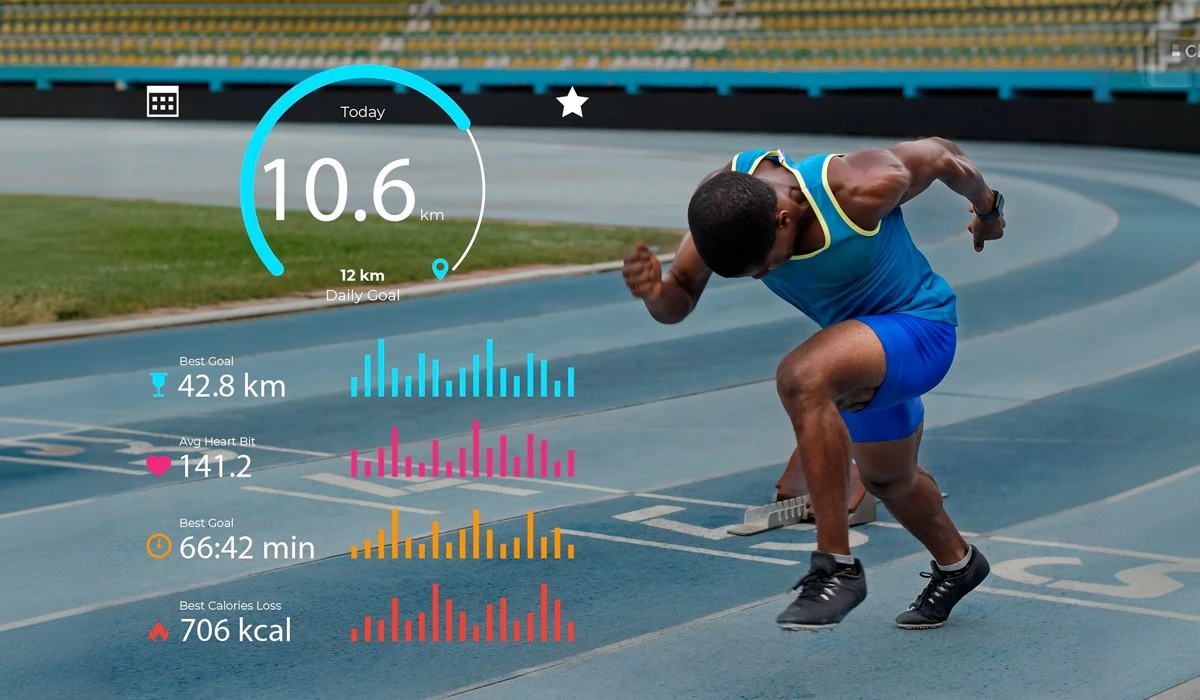
This is the reality of Sport Performance Analysis. It turns a coach’s "gut feeling" into a hard number. Today, GPS tracking in elite sports acts as a constant pulse check for every athlete on the field. It allows teams to see the physical cost of a sprint before the player even feels the burn. This guide explores how you can use this data to turn raw effort into a calculated, winning strategy.
Redefining Victory Through Sport Performance Analysis
Winning used to depend on who had the best scouts and the loudest whistles. Now, the advantage goes to the team that reads the data fastest. Sport Performance Analysis has moved far beyond just re-watching game film. It now involves building detailed models of how the human body moves under pressure. Beyond simply counting goals, analysts provide explanations for why those goals occurred and how to repeat them.
Studying the work done behind the scenes allows teams to find edges that others miss. For example, a player might cover a lot of ground but do very little "high-intensity" work. Without data, that player looks like a hero. With data, you see they are just jogging in circles. What does a GPS tracker do in sports? These devices monitor a player’s exact location, speed, and total distance covered to quantify physical workload during training or competition. This clarity changes how coaches value their roster.
The Technical Mechanics of GPS Tracking in Elite Sports
The technology inside a modern sports vest is a far cry from the navigation system in your car. Standard GPS is often too slow for the lightning-fast movements of a professional athlete. Instead, according to a report in Frontiers in Sports and Active Living, elite teams use Global Navigation Satellite Systems (GNSS), which track multiple satellite systems simultaneously. As noted by Eurisy, this multi-system approach achieves accuracy through multi-constellation configurations, ensuring the signal never drops even in a stadium with 80,000 screaming fans and high concrete walls.
Reliability is the basis of any good Sport Performance Analysis setup. If the data drifts by even a meter, a coach might think a player is out of position when they are actually standing exactly where they should be. The use of high-end sensors allows teams to get a true picture of every lateral shuffle and sudden stop. This precision is what allows teams to trust the data when the game is on the line.
Satellite Connectivity and Sampling Frequency
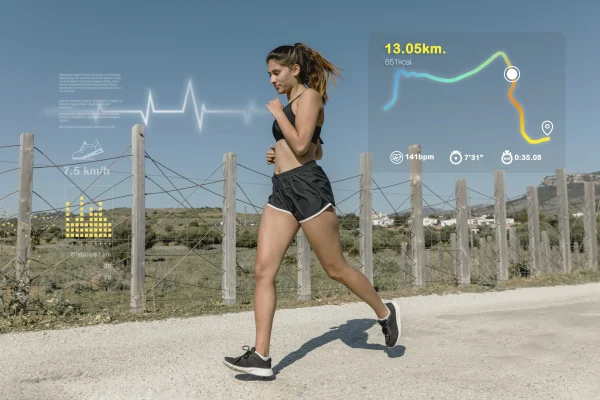
Sampling frequency is the heartbeat of data quality. Research from Catapult indicates that a sampling rate between 10Hz and 18Hz is the ideal balance for professional sports. The study explains that this frequency allows the device to communicate with satellites up to 18 times every single second. Catapult warns that using a lower frequency, such as a 1Hz smartphone chip, causes the system to miss "zig-zag" movements because the device only captures one location update per second.
High-frequency tracking captures the "micro-moments" of a match. When a basketball player crosses over, or a football player cuts toward the end zone, those movements happen in fractions of a second. Using GPS tracking in elite sports with an 18Hz refresh rate ensures that every calorie burned and every inch gained is accounted for. It prevents the data from "smoothing out" the significant parts of the performance.
The Intersection of Accelerometers and Gyroscopes
GPS tells you where a player is, but it doesn't always tell you what they are doing. To solve this, analysts use Inertial Measurement Units (IMUs). Frontiers in Sports and Active Living states that these units feature integrated 3D accelerometers and gyroscopes. While the GPS tracks distance, the report notes that the system also measures various metrics, including sprints and maximum speed, while the accelerometer specifically tracks the force of a jump or the effect of a tackle.
These sensors measure rotation and body orientation. This level of detail is vital for sports like ice hockey or basketball, where indoor environments often block satellite signals. According to research published in PMC, reduced signal quality often disables the use of GPS-based systems in indoor environments. In those cases, the study suggests that teams rely on Local Positioning Systems (LPS) that work like indoor GPS. Combining these internal sensors with external tracking provides a 360-degree view of the athlete's physical output.
How Sport Performance Analysis Predicts and Prevents Injury
The most expensive thing in professional sports is a star player sitting on the bench in a suit. Injury prevention is the primary reason teams invest millions in Sport Performance Analysis. Tracking "Load Management" helps staff see when an athlete’s body is reaching a breaking point. Success involves finding the balance between pushing for fitness and pushing toward a hospital bed.
Fatigue usually shows up in the data before it shows up in the player’s gait. Why do elite athletes wear GPS vests? As documented in Frontiers in Sports and Active Living, the vests hold sensors that track movement patterns alongside internal load parameters like heart rate, helping coaches identify when an athlete is overreaching and needs recovery. When the data shows a player’s "deceleration load" is spiking, it means their muscles are struggling to absorb the effect of stopping. This is a massive red flag for potential muscle tears.
Monitoring the Acute-to-Chronic Workload Ratio
The Acute-to-Chronic Workload Ratio (ACWR) is the most powerful tool for keeping players healthy. You take the "Acute" load (the work done in the current week) and divide it by the "Chronic" load (the average of the last four weeks). If the ratio stays between 0.8 and 1.3, the athlete is usually safe. If it jumps above 1.5, the risk of a soft-tissue injury skyrockets.
This prevents the "too much, too soon" trap. When a player returns from an off-season, they often want to go 100% immediately. Their brain is ready, but their tendons are not. Using GPS tracking in elite sports allows analysts to create a "Return to Play" protocol. They ensure the player slowly builds back up to their previous intensity levels, hitting specific benchmarks before they are allowed to play in a full match.
Maximizing Individual Sprint Mechanics and Velocity
Speed is the ultimate weapon, but not all speed is created equal. Analysts use GPS data to build a "speed profile" for every individual on the team. They don't just look at how fast someone is; they look at how long it takes them to get there. This helps coaches tailor training sessions to a player’s specific needs.
If a player has a high top speed but poor acceleration, they need more power work in the gym. If they accelerate quickly but can't maintain it, they need better speed endurance. Sport Performance Analysis identifies the exact "drop-off" point where a player’s sprint quality begins to fail. Knowing this allows a coach to make tactical subs at the perfect moment, ensuring the team always has fresh legs on the pitch.
High-Intensity Internal Load vs External Output
There is a big difference between what a player does and what it costs their body to do it. External load is the distance and speed you see on the grass. Internal load is the heart rate and perceived effort. If two players both run 10 kilometers, but one has a heart rate of 160, and the other is at 185, they are having two very different experiences.
Comparing these two numbers lets you see who is getting fitter. If a player’s internal load starts to drop while their external output stays high, it means they are becoming mechanically productive. Their body is learning how to do the same amount of work with less stress. This is the goal of every elite training program.
Tactical Positioning and Spatial Awareness Data
Modern sports are a game of space and time. Sport Performance Analysis helps coaches see the "geometric center" of their team, also known as the Centroid. Tracking the GPS coordinates of all ten outfield players lets the computer tell if the team is staying compact or if they are leaving dangerous gaps for the opponent to exploit.
This data allows for a scientific look at defensive "shape." If the distance between the defenders and the midfielders becomes too wide, the opposition can easily pass through the middle. In the past, a coach had to spot this with their eyes. Now, they get an alert on a tablet. Using GPS tracking in elite sports makes it impossible for a player to "hide" or wander out of position without it being caught by the system.
Utilizing Heat Maps for Strategic Adjustments
Heat maps provide a visual summary of where a player spent their time. If a striker is supposed to stay in the box but their heat map shows them drifting toward the sidelines, the coach knows there is a tactical breakdown. Analysts also use Voronoi diagrams—geometric shapes that show the "area of control" each player has at any given second.
This helps identify "dead zones" on the field where no one is providing coverage. If the data shows the team is consistently losing control of the right flank, the coach can adjust the formation in real-time. These heat maps turn thousands of data points into a simple picture that even a frustrated player can understand during a halftime talk.
Streamlining Communication via Sport Performance Analysis
The best data in the world is useless if the head coach doesn't understand it. An analyst’s real job is translation. They take a mountain of numbers and turn them into a single piece of advice: "Player X needs to rest today," or "Player Y is outrunning the defense every time." This bridge between the lab and the field is where championships are won.
Human memory is flawed. Research shows that even the best coaches remember about 30% of what happens in a game correctly. Sport Performance Analysis provides the objective truth for the other 70. Modern elite-level GPS units are accurate within a few centimeters, providing high-fidelity data on every acceleration and directional change. This accuracy builds trust between the staff and the athletes.
Creating Simplified Daily Dashboard Reports
To make data actionable, analysts use "Red-Yellow-Green" dashboards. A "Green" status means the player is fully recovered and ready for a maximum-intensity session. "Yellow" warns of moderate fatigue, suggesting a lighter day. "Red" means the player is in the danger zone for injury and should likely stay in the training room.
These reports save time. Instead of looking at 50 different graphs, a coach can look at one list and know exactly who is ready to go. It removes the emotion from the decision. If a player wants to play but their data is "Red," the coach has a scientific reason to hold them back. This leads to a more professional environment where every decision is backed by evidence.
Implementing Scalable Sport Performance Analysis Solutions
You don't need a billion-dollar stadium to start using these methods. While elite clubs have dedicated departments, smaller organizations can still benefit from the core principles. The first step is prioritizing "big rock" metrics. Start by tracking total distance and high-speed running. These two numbers alone will tell you 80% of what you need to know about an athlete's workload.
As the team grows, you can add more detailed layers. Move into tracking decelerations and heart rate variability. The goal is to build a culture where data is respected, not feared. Teams that embrace GPS tracking in elite sports early on often find they can compete with much larger programs because they lose fewer players to injury and have better-conditioned athletes. It’s about working smarter, not just harder.
The Enduring Effect of Sport Performance Analysis
The time of guessing is over. We are now in a period where every sprint, jump, and heartbeat is a data point that can lead to a win. Sport Performance Analysis has changed the DNA of competition. It has made the games we love safer for the players and more tactical for the fans. Focusing on the hard numbers allows us to finally see the true limits of human performance.
The integration of GPS tracking in elite sports is no longer a luxury for the few; it is the standard for the many. As technology continues to shrink and sensors become more active, the gap between what we see and what we know will disappear. For coaches and analysts, the message is clear: embrace the data revolution or get left behind on the sidelines. The future of sport isn't just played on the grass—it is perfected through data.
Recently Added
Categories
- Arts And Humanities
- Blog
- Business And Management
- Criminology
- Education
- Environment And Conservation
- Farming And Animal Care
- Geopolitics
- Lifestyle And Beauty
- Medicine And Science
- Mental Health
- Nutrition And Diet
- Religion And Spirituality
- Social Care And Health
- Sport And Fitness
- Technology
- Uncategorized
- Videos

