

Sports Medicine Isometrics to Relieve Tendon Pain
Most people stop moving when their heel or knee hurts. They think they give the body time to fix itself. Stillness actually signals the body to dismantle the tendon. A resting tendon becomes a soft, weak tendon. Modern Sports Medicine shows that the brain actually locks the muscle down to protect the area. This makes the pain feel even worse. To break this loop, you must use load. According to research published in the British Journal of Sports Medicine, a single session of isometric contractions can reduce tendon pain immediately for at least 45 minutes. The study also suggests these movements provide the basis for successful tendinopathy treatment protocols by reducing cortical inhibition to prepare the tissue for activity.
The Modern Evolution of Sports Medicine for Tendon Health
Total rest acts like a poison for your connective tissue. When you stop loading a tendon, the cells responsible for structural integrity begin to go dormant. Scientists call this a catabolic state. In this state, the tendon loses its ability to act like a stiff spring. As noted in the Journal of Athletic Training, elite clinics are moving away from traditional methods like ice and rest, including corticosteroid injections and anti-inflammatory medications, because they might not be the most effective choices for keeping tissue strong. This approach ensures the tendon stays capable of handling your body weight during daily activities.
Tendon health depends on a process called mechanotransduction. This process happens when your cells feel a heavy load and start building new proteins. Without load, the internal structure of the tendon starts to look like cooked spaghetti instead of a tight rope. Modern tendinopathy treatment protocols focus on restoring that rope-like strength. Applying weight early signals to your body that it needs to stay tough.
Why Sports Medicine Prioritizes Isometrics for Immediate Relief
Heavy holds change how your brain talks to your muscles. When a tendon hurts, the motor cortex in your brain often sends noise to the muscle. This noise causes the muscle to weaken or "shake" under pressure. A report in the British Journal of Sports Medicine shows that a 45-second isometric hold at high intensity can clear this noise, creating a pain-relieving effect that lasts for about 45 minutes, although some studies suggest this may not apply to Achilles injuries.
Understanding the Analgesic Response
Research led by Dr. Ebonie Rio, published in the British Journal of Sports Medicine, found that isometrics can act as a switch by immediately lowering patellar tendon pain for at least 45 minutes. She and her team noted that your nervous system stops the "protection mode" that causes pain when you hold a heavy weight without moving. You feel an immediate drop in discomfort. Most athletes find they can perform better in their sport immediately after a round of heavy holds. This effect lasts long enough to get through a practice session or a game.
Why Tension Matters More Than Movement
Tendons love tension but often hate friction. Moving a joint through its full range can rub the tendon against the bone. This creates compressive stress that can worsen inflammation. Isometrics provide the necessary tension without that irritating movement. You might wonder, can isometrics heal a tendon? While they don't fix the structure overnight, they are essential for reducing pain and building the tolerance required for more intense tendinopathy treatment protocols. This step allows you to train without the sharp stabs of pain that usually stop a workout.
Keeping the joint still allows you to bypass the friction. You focus entirely on the muscle-tendon unit. This build-up of tension tells the cells to wake up and start the repair process. It bridges the gap between being injured and being an athlete again.
Core Stages of Tendinopathy Treatment Protocols
A good recovery plan follows a strict timeline. You cannot skip steps if you want long-term results. Each phase builds the capacity for the next level of intensity.
The Isometric Loading Phase
Start with a specific dosage to see results. Guidelines from the Wexner Medical Center recommend five repetitions of 45 to 60-second holds, performed two to three times daily, while progressing from 40% to 70% of maximum voluntary effort. A common concern is how long to hold an isometric for tendon pain; these clinical standards suggest holding for the prescribed duration to initiate the best neurological response. This duration helps reach the ideal point for pain relief.
If you are dealing with patellar tendon pain, a "Spanish Squat" works wonders. You loop a heavy band around a pole and behind your knees. You lean back into a squat while keeping your shins vertical. This puts massive tension on the quads and the tendon without hurting the kneecap. It is a staple in professional Sports Medicine settings.
Moving to Isotonic Movements
Once the pain stabilizes, you must introduce movement. This phase involves heavy, slow resistance training (HSR). You move the weight up and down slowly to keep the tendon under constant tension. Use a metronome to keep your pace steady. Set it to 60 beats per minute and count three seconds for the way up and three seconds for the way down. This build-up prepares the tissue for the faster, more explosive movements required in sports.
Avoiding Common Sports Medicine Missteps in Recovery
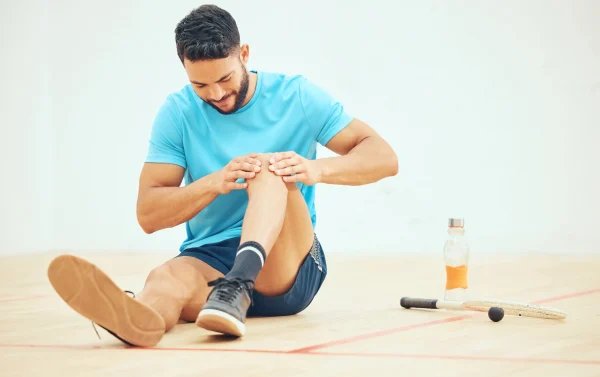
Stretching often feels like the right move, but it frequently backfires. Clinical protocols from the Wexner Medical Center suggest that stretching should be performed in a mid-range or shortened position to avoid compression and should not result in pain that lasts longer than 24 hours. Because stretching a painful tendon can create compressive stress that harms healthy cells, it may lead to increased soreness the following morning.
Many people also make the mistake of using weights that are too light. As published in the journal Medical Sciences, tendons require the application of heavy training loads to change their shape. Using five-pound dumbbells for a condition that requires 70% of your max capacity will yield zero results. You must challenge the tissue to see a change. Stick to the heavy, slow movements prescribed in modern tendinopathy treatment protocols. Avoiding light, high-rep "toning" exercises will save you months of frustration.
Scaling the Intensity of Tendinopathy Treatment Protocols
As your pain stays low, you must increase the difficulty. A tendon that can only handle a slow squat will fail during a fast sprint. You must bridge that gap through progressive loading.
Incorporating Heavy Slow Resistance (HSR)
HSR focuses on high weight and low speed. According to Physiopedia, loading should commence at three to four sets of 15 repetitions and progress toward a six-repetition maximum. This phase creates the stiffness needed for athletic power. Unlike isometrics, which you can do daily, HSR requires rest days. Your body needs 48 to 72 hours to finish the collagen-building process after a heavy HSR session. This schedule prevents overuse while maximizing the structural benefits of your Sports Medicine plan.
Reintroducing Energy Storage and Plyometrics
The final phase teaches the tendon to handle speed. This involves jumping, hopping, and sprinting. You are essentially turning the tendon back into a high-performance spring. Athletes often ask if walking is beneficial for tendinopathy. Research in Gait & Posture suggests that while walking is a light activity, the repetitive loads generated during daily steps are actually enough to condition the Achilles tendon. You need more intensity than a walk can offer to fully recover.
Start with "low-tier" plyometrics like small hops in place. Gradually move to "high-tier" movements like depth jumps or full sprints. This progression ensures the tendon can store and release energy without snapping or tearing. It is the final box to check before returning to full competition.
How Sports Medicine Experts Monitor Load Tolerance
You must track how your body reacts the next day. This is called the 24-hour rule. It is the most reliable way to know if your workout was helpful or harmful. If your tendon feels stiff or extra painful the morning after a workout, you did too much.
A little bit of pain during the exercise is fine. The Journal of Orthopaedic & Sports Physical Therapy notes that a pain rating of 3 out of 10 is acceptable during exercise, provided the discomfort returns to its starting level within 24 hours. If the pain lingers or gets worse the next day, you need to scale back the weight or the volume. Successful tendinopathy treatment protocols rely on this constant adjustment. You are looking for the "sweet spot" where the tendon feels challenged but not overwhelmed.
The Role of Nutrition in Sports Medicine Rehabilitation
What you eat supports the physical work you do in the gym. Tendons consist mostly of collagen. Nutrients timed perfectly can increase the production of new collagen. Research from Keith Baar’s lab suggests that taking a specific supplement before training can double your results.
Consuming 15 grams of gelatin or collagen powder about 60 minutes before your workout helps immensely. Adding a source of Vitamin C, like orange juice, assists the body in cross-linking the new collagen fibers. This nutritional window provides the raw materials your body needs to rebuild the tendon during your isometric session. Without these materials, the tendon has a harder time repairing the tiny micro-tears caused by heavy loading.
Reclaiming Your Performance with Sports Medicine
Tendon pain may seem like a permanent injury, while actually being an issue of load management. Isometrics give you a tool to fight back against the pain immediately. They offer a way to train when everything else hurts. Following structured tendinopathy treatment protocols allows you to move from a state of weakness to a state of resilience.
Consistency remains the most important factor in this process. Tendons change slowly compared to muscles, so you must stay patient. Use the principles of Sports Medicine to rebuild your strength. When you stop fearing the load and start using it as medicine, you regain control over your body. You can move past the frustration of chronic pain and get back to the activities you love with a stronger, more capable body.
Recently Added
Categories
- Arts And Humanities
- Blog
- Business And Management
- Criminology
- Education
- Environment And Conservation
- Farming And Animal Care
- Geopolitics
- Lifestyle And Beauty
- Medicine And Science
- Mental Health
- Nutrition And Diet
- Religion And Spirituality
- Social Care And Health
- Sport And Fitness
- Technology
- Uncategorized
- Videos