
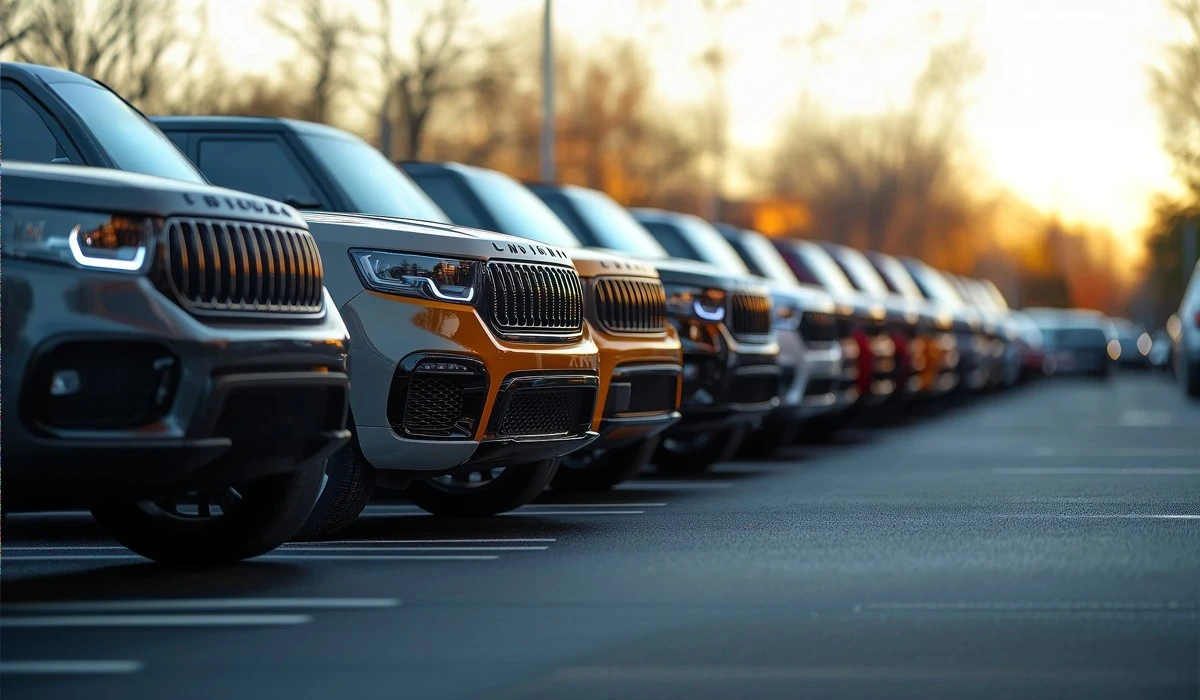
Oversized Vehicle Parking Surcharges Explained
A car built to isolate a family in perfect comfort drastically degrades the survival odds of the neighborhood around it. You purchase a heavy, elevated steel box to protect your children inside, while simultaneously amplifying the danger for the children walking directly outside.
This physical reality forces cities into a defensive posture. Modern roads feature a stark size mismatch between expanding automobiles and fragile pedestrians. To correct this imbalance, urban planners draft aggressive new policies to target the massive footprint of modern cars.
Officials turn to financial penalties to discourage giant automobiles from clogging local streets. The debate around oversized vehicle parking surcharges heats up, dividing politicians, families, and manufacturers. Local authorities tax width and weight. Drivers feel unfairly penalized for prioritizing their own family’s protection. The battle over who owns the city streets centers on how much space one vehicle conquers.
The Blunt Force of High Grilles
Raising a car's hood by just a few inches redirects a collision from a pedestrian's legs to their vital organs. Automakers design massive front ends to project dominance on the highway. That same towering design ensures that a pedestrian absorbs the entire force of a moving vehicle directly into their chest and head. Traditional sedans strike low, throwing a person onto the hood. Massive modern alternatives strike high, knocking the victim violently into the pavement or projecting them directly into oncoming traffic.
According to a study published in Injury Prevention, the data paints a grim picture of this physical mismatch:
- An adult pedestrian faces a 14 percent higher fatality risk when struck by a heavy vehicle instead of a compact car.
- A child faces a staggering 77 percent higher probability of death.
- For children under nine, the fatality risk jumps to three times higher.
Researchers at Imperial College present slightly different but equally alarming numbers. Their independent studies suggest a 44 percent increased fatality risk for adults and an 82 percent spike for children. Dr. Anthony Laverty, an Imperial College researcher, notes that flat, high frontals guarantee elevated contact zones that shatter heads and torsos. Jason Killens, an ambulance service chief, emphasizes the tragic nature of these completely avoidable emergencies. He warns that susceptible demographics like youth and seniors face the absolute highest peril on city streets.
Shrinking Streets and Expanding Steel
As automotive giants widen their models every year, local councils find their static parking lanes completely out of room. Engineers who built streets decades ago locked in rigidly fixed dimensions. You cannot magically stretch a Victorian street to accommodate a modern metal behemoth. Clean Cities director Oliver Lord points out this severe mismatch between relentless vehicle expansion and perfectly static urban layouts. The sheer mass of these vehicles rips up infrastructure and endangers youth with their heavy metal frames.
This growth is visually and mathematically obvious. According to a Clean Cities campaign analysis, the capital held roughly 80,000 large vehicles back in 2002. By 2023, the report notes that number exploded to an astounding 800,000. Today, over half of the oversized vehicles sold in the UK simply fail to fit inside standard parking bays. Their tires cross into bike lanes. Their bumpers hang over sidewalks. They force pedestrians into the road and block sightlines at critical intersections.
Transport authorities cite secondary problems beyond direct bodily harm. Large automobiles generate severe congestion and accelerate environmental degradation. Labour assembly member Elly Baker brings the infrastructure destruction into focus. She notes that immense vehicle mass and towering height drastically amplify hazards for fragile street users. Beyond the immediate bodily threat, these massive machines literally crush the city beneath their wheels. They pulverize tarmac designed for lighter loads, leaving taxpayers with the bill for constant road repairs.
The Push for Space Regulations
Local councils want drivers to pay a premium for taking up excess space. Later this year, authorities will likely propose severe oversized vehicle restrictions to clear congested roads. Some districts actively deliberate weight-based parking tariffs to offset the damage and danger these massive automobiles bring to local neighborhoods.
The Financial Fix: Oversized Vehicle Parking Surcharges
Charging drivers per pound of steel radically shifts consumer buying habits faster than any safety awareness campaign. A parking space represents a valuable piece of city real estate. Giving a giant truck the same cheap access as a compact hatchback essentially subsidizes urban congestion. To stop this, leaders push to price parking based on physical dimensions. You pay more if your vehicle consumes more of the street.
People frequently ask how do oversized vehicle parking surcharges actually reduce traffic? Financial penalties force buyers to rethink purchasing unnecessarily large automobiles just for city commuting, ultimately cutting down the total volume of giant cars on the road. The strategy works in practice. As reported by the European Commission's Urban Mobility Observatory, Paris recently implemented a policy multiplying parking costs by three for massive vehicles. According to Le Parisien, this aggressive fee hike caused a staggering 66 percent reduction in large vehicle parking volume across the French capital.
The UK actively tests this financial lever right now. Cardiff set a precedent as the first UK city to implement size-based parking surcharges. As noted by RAC Motoring News, Lambeth Council now actively deliberates a similar size-based model for their local streets. In June, the London Assembly voted 14 to 8 in favor of recommending tax and fee hikes on large vehicles. A prominent Labour politician insists leadership must acknowledge the demands of a progressive metropolitan electorate to avoid voter complacency.
Dialing Down the Speed Limits
Forcing heavy steel boxes to crawl at a snail's pace drastically alters the lethal physics of a collision. Speed dictates the outcome of any urban crash. You survive a bump from a heavy truck at walking pace, but adding just five miles per hour turns that same bump into a fatal strike. To mitigate the sheer destructive power of these giant vehicles, transport officials systematically slow everything down. The city recently achieved a 34 percent collision drop after officials enacted strict speed reduction policies.
The broader strategy requires turning fast thoroughfares into slow-moving zones. Readers often wonder what is the Vision Zero report timeline for speed limit reduction? Authorities plan to convert 35 miles of roads to a 20mph limit by 2030, followed by dropping speed limits from 50mph to 40mph on strategic roads by 2035.
Slowing down heavy traffic forms the backbone of the region's broader safety initiative. The ultimate goal demands the complete eradication of road casualties and injuries in London by 2041. Over the past decade, the capital successfully achieved a 25 percent drop in road casualties. By 2024, the city recorded its fewest serious annual casualties ever, excluding the unusual 2020-2021 pandemic era. Furthermore, current road accidents sit 50 percent lower than in Greater Manchester.

Political Panic Over Oversized Vehicle Parking Surcharges
Slapping a safety hazard label on a popular family car guarantees an immediate and explosive political backlash. Automotive manufacturers despise city regulations targeting their most profitable models. They argue the terminology used by politicians is completely flawed. Mike Hawes, a representative for the motor manufacturers society, dismisses standard SUV designations as meaningless marketing labels. He insists the industry strictly adheres to uniform, rigorous national safety certifications for all models. He claims oversized vehicle parking surcharges unfairly punish buyers who genuinely require spacious transport.
The political opposition frames the entire safety initiative as an ideological crusade. Conservative transport spokesperson Thomas Turrell leads the charge against the mayor’s safety timeline. He criticizes the zero-fatality goal as an absolute fantasy, estimating the current progress runs a massive 1200 years behind schedule. Turrell argues these aggressive fees actively hurt local residents simply trying to navigate their daily lives. He characterizes the policies as a disguised ideological attack aimed directly at everyday drivers.
The mayor strongly rejects this framing. A mayoral representative emphasizes the mounting data regarding massive vehicle hazards, highlighting the 77 percent higher probability of youth fatalities. Sadiq Khan insists his administration strictly targets fatalities rather than attacking drivers. He invites critics to interact with road trauma victims to understand the true stakes. He directed the transport authority to conduct a thorough evaluation of the specific risks these massive vehicles pose.
Navigating the Politics of Road Space
Nicola Pastore, a school run campaigner, channels the extreme parental anxiety caused by these gigantic automobiles. She highlights the acute youth susceptibility to obscured frontal zones. Parents walking their toddlers to school face daily terror because the sheer height of modern hoods completely obscures small children from the driver’s line of sight. Pastore forcefully calls for national size regulations and equitable taxation to level the playing field between steel and flesh.
The Green Shift and Local Elections
Politicians suddenly champion anti-car legislation the moment they detect a shift in the local voting demographics. Elections dictate the speed of urban reform. The rising momentum of the Green Party currently sparks outright panic among Labour politicians ahead of the May elections. Local leaders desperately want to prove their environmental and safety credentials to secure the progressive metropolitan vote.
This panic leads to conflicting and overlapping local policies. Westminster currently runs a one-year active emissions-based parking scheme. This setup charges highly polluting cars more, but it completely ignores physical dimensions. Consequently, electric large vehicles receive an exemption from extra fees. A massive electric truck damages the road and endangers pedestrians just as much as a gas-powered truck, yet it parks for cheap because it lacks a tailpipe.
People frequently ask why are weight-based parking tariffs better than emissions charges? Weight-based tariffs directly penalize the physical mass that destroys roads and endangers pedestrians, ensuring that even heavy electric vehicles pay their fair share for consuming public space. Addressing the size issue fixes the exact loophole the Westminster scheme created. Oliver Lord demands this shift toward weight-based pricing. He argues that the true danger to youth comes from gigantic metal objects rolling through neighborhoods.
Rewiring the Rules of the Road
Designing a city to eliminate human error requires replacing driver judgment with strict physical and digital enforcement. You cannot rely on a driver in a massive, elevated cabin to spot a toddler crossing the street. The blind spots are simply too vast. Therefore, the city must intervene and engineer the danger out of the physical environment. Following the Vision Zero report publication this Wednesday, the transport authority outlined 43 total actions designed to aggressively reshape how drivers interact with the streetscape.
The latest plan executes several major interventions:
- Installing 1,000 new pedestrian crossings to force large vehicles to yield.
- Deploying AI dangerous driver detection systems to catch erratic behavior.
- Evaluating new oversized vehicle restrictions to clear congested roads later this year.
Transport authority safety officer Lilli Matson notes the capital boasts superiority over Paris and New York in standard safety metrics. However, she stresses the extreme urgency for quicker progress. She firmly declares the unacceptability of any transit-related fatalities. The transport authority knows they must accelerate their timeline. They rapidly evaluate new oversized vehicle parking surcharges to price the largest hazards entirely out of dense neighborhoods. Attacking the problem through physical crossings, AI surveillance, and steep financial penalties allows the city to forcefully correct the size and speed imbalances dominating modern roads.
The End of Unrestricted Scale
The age of the infinitely expanding urban automobile rapidly closes. The data definitively proves that heavy, elevated front ends crush fragile bodies instead of deflecting them. You cannot reconcile a massively elevated child fatality risk with a family-friendly city environment.
Local authorities refuse to stretch their streets to accommodate this metal bloat. Instead, they use oversized vehicle parking surcharges, AI detection, and slashed speed limits to reclaim the asphalt. The pushback from industry advocates and political opponents remains fierce, framing the debate as an ideological war on drivers.
Yet the staggering success of aggressive pricing in Paris proves that hitting a driver’s wallet swiftly clears the curbside. Cities refuse to subsidize the massive footprint of modern cars any longer. The future of urban transit requires forcing the vehicle to fit the street to prevent the destruction of public roads.
Recently Added
Categories
- Arts And Humanities
- Blog
- Business And Management
- Criminology
- Education
- Environment And Conservation
- Farming And Animal Care
- Geopolitics
- Lifestyle And Beauty
- Medicine And Science
- Mental Health
- Nutrition And Diet
- Religion And Spirituality
- Social Care And Health
- Sport And Fitness
- Technology
- Uncategorized
- Videos

