
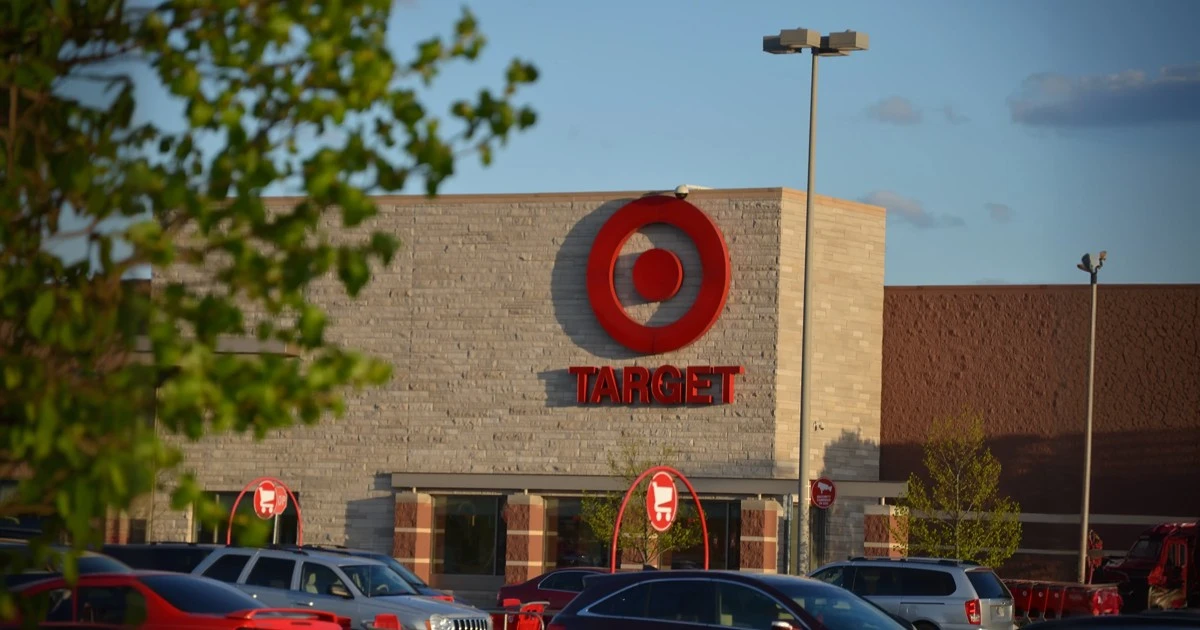
Image Credit - By Mjs92984, Wikimedia Commons
Target Removes Synthetic Dyes From Breakfast Cereal
A corporate deadline often masks the real reason iconic food brands suddenly scramble to rewrite century-old recipes. According to a Reuters report, Target executives, including CMO Cara Sylvester, insist their massive May 31 mandate to eliminate synthetic dyes in breakfast cereal comes straight from shoppers quickly prioritizing healthier lifestyles. Consumers want wellness. Shoppers hate petroleum-based ingredients. You buy the wholesome corporate narrative. You ignore the immediate threat of a multi-state legal offensive and shrinking profit margins dictating every grocery aisle decision.
The company's corporate website notes that Target manages roughly 2,000 US locations and employs 400,000 people under CEO Michael Fiddelke. As detailed by the Wall Street Journal and Reuters, the decision to purge synthetic dyes in breakfast cereal represents a highly calculated survival tactic following a 28 percent drop in stock in 2025 and the elimination of 1,800 corporate jobs due to weak discretionary spending. Fiddelke navigates these major workforce reductions ahead of a Tuesday earnings report. Target needs a major win, and forcing multi-billion-dollar food conglomerates to strip controversial food coloring from their boxes offers the perfect advantage.
A Retailer’s Ultimatum on Synthetic Dyes in Breakfast Cereal
Shelf space controls manufacturer behavior far faster than any regulatory threat ever could. Target laid down a definitive enforcement strategy for its suppliers: meet the May 31 deadline or lose your spot in the cereal aisle. Target plans aggressive inventory exclusion for any non-compliant manufacturers. They refuse to sell non-conforming items. CMO Cara Sylvester points directly to a massive shift in shopper habits. She demands rapid inventory adaptation to meet modern dietary demands. Buyers clearly prefer healthier packaged goods. Target holds the data to back up this aggressive posture. Their highly successful Good & Gather brand launched in 2019 and now features over 2,500 items.
Good & Gather completely excludes artificial flavors, high fructose corn syrup, and synthetic colors. Target already dominates this specific market category. Currently, 85 percent of Target cereal sales happen without synthetic dyes. The store essentially forces the stragglers to catch up to an already established baseline. Why do lawmakers and retailers ban synthetic dyes in breakfast cereal? Target and several lawmakers point to scientific concerns linking color additives like Red 40 and Yellow 5 to childhood ADHD. Consumers demand healthier ingredients, prompting sweeping retail restrictions across the country. Brands must either adapt their formulas or watch their retail presence evaporate overnight.
How Regional Laws Break National Supply Chains
One isolated state boundary breaks a national food supply chain instantly. Food manufacturers cannot run separate factories for different geographic regions. West Virginia proved this perfectly. According to a state press release and Chemical & Engineering News, Governor Patrick Morrisey signed House Bill 2354 into law in March 2025, making West Virginia the first US state to implement a total ban on seven synthetic dyes in all food and beverages sold within its borders. This single legislative act sent shockwaves through the industry. Environmental Working Group Vice President of Government Affairs Scott Faber explains the logistical reality. He states that a single-state ban forces nationwide recipe standardization. Food conglomerates face a literal logistical impossibility if they try to maintain separate regional inventory systems. State-level protection directly forces retail policy changes nationwide.
The Legislative Momentum
West Virginia sparked a massive legal avalanche. Data compiled by the National Conference of State Legislatures and reported by Stateline shows that in 2025, roughly 75 bills targeting food dyes emerged across 37 states. Brands see the writing on the wall. They understand they cannot reformulate their products state by state. The impending patchwork of contradictory state laws creates a nightmare for food distributors. Target watches this legislative push and simply decides to mandate the change across all 2,000 of its stores, effectively acting as a nationwide regulator.
The Illusions Within Washington’s Artificial Food Colorings Ban
Regulators win public applause when they draft sweeping mandates while quietly handing out exemption slips. US Health Secretary Robert F. Kennedy Jr. announced a massive policy change in April 2025. He pushed a federal ban on eight artificial food colorings. The Trump administration and the Make America Healthy Again (MAHA) movement applied intense corporate pressure to force ingredient reform. The Food and Drug Administration took action under both administrations. A January 2025 FDA press announcement confirms the agency revoked authorizations for Red 3 and will work with the industry to phase out six remaining synthetic dyes, including Red 40, Yellow 5, Yellow 6, and Blue 1, by the end of 2026. However, regulatory loopholes remain wide open.
The FDA issued a new labeling guideline that introduces a distinct classification. Are natural plant derivatives safe in breakfast cereal? An Associated Press report states that the FDA now relaxes labeling rules, allowing companies to claim "no artificial colors" as long as they remove petroleum-based dyes, even if they add plant-based colorings. Companies use these natural options to legally secure a "no artificial colors" label on their boxes. Center for Science in the Public Interest Regulatory Counsel Jensen Jose argues that corporate pledges result in zero binding enforcement. He views the federal actions as purely voluntary requests. CSPI Principal Scientist Thomas Galligan shares this frustration. Galligan describes the new labeling rule changes as an exasperating outcome. He highlights the massive gap between strong public messaging and weak practical enforcement, noting that major corporations preserve their full autonomy.
The Scramble to Remove Synthetic Dyes in Breakfast Cereal
Brands stall major ingredient changes until financial penalties finally outweigh production costs. Target forced the hand of massive food producers, but the exact timelines reveal a fractured compliance strategy. General Mills faces significant pressure regarding iconic brands like Trix and Lucky Charms. Target officially confirmed upcoming recipe modifications for these beloved products. General Mills claims they will achieve synthetic color elimination by summer 2026. However, contradicting reports from Reuters indicate General Mills will only eliminate synthetic colors from Lucky Charms by 2027.
This delay highlights the immense difficulty of replicating recognizable neon colors using natural plant derivatives. What happens to brands that keep artificial food colorings? Retailers like Target plan to enforce strict inventory exclusions against non-compliant manufacturers. These brands will lose massive shelf space and revenue until they update their recipes. WK Kellogg faces a similarly exhausting timeline. They must overhaul the recipes for Froot Loops, Apple Jacks, and Squishmallows. WK Kellogg scheduled their complete artificial dye phase-out for the end of 2027.

Image Credit - By Szeremeta, Wikimedia Commons
The Retail Competitor Benchmark
Target follows a trail blazed by specific specialty retailers decades ago. Whole Foods achieved zero artificial colors in their stores back in 1980. Trader Joe's also operates with zero synthetic dyes. Mainstream giants now rush to match these long-standing standards. Walmart recently established a January 2027 deadline. They demand the total elimination of synthetic colorings from all private-label goods. Other massive corporations, including PepsiCo, Campbell’s, Kraft Heinz, Nestle, and Conagra, already issued prior artificial dye phase-out pledges.
Following the Money Behind Healthy Shopper Habits
A retailer facing consecutive quarters of declining revenue suddenly finds ultimate truth in the wellness movement. Target positions the elimination of synthetic dyes in breakfast cereal as a moral victory for consumer health. The actual financial data paints a much more aggressive corporate strategy. Target uses the wellness trend to salvage its market position. Shoppers actively abandon heavily processed foods. Target watches their core demographic shift spending toward premium, natural items. Target uses this shift to squeeze non-compliant suppliers. They threaten inventory exclusion to force major brands into submission. The store refuses to carry products that drag down their new health-focused image. Target executives look at their internal Good & Gather sales and realize natural ingredients drive the highest profit margins. The retailer simply applies that profitable standard to every external brand begging for shelf space.
The Widening War on Ultra-Processed Goods
Striking one contested ingredient off a label draws a permanent bullseye on the rest of the pantry. The elimination of synthetic dyes in breakfast cereal represents just the first wave of a massive dietary purge. The MAHA movement focuses heavily on a trio of controversial ingredients. They target corn syrup, seed oils, and artificial colorings. Advocates confidently link these specific ultra-processed goods to severe negative health outcomes. The legal system escalates this war rapidly.
According to the Associated Press and Reuters, the City of San Francisco launched aggressive legal action in December 2025 and filed a first-of-its-kind municipal lawsuit alleging unfair and deceptive acts against ten major food corporations, specifically targeting the sale of ultra-processed goods. The city named giants like Kraft Heinz, Coca-Cola, and General Mills in the filing. Beverage giants feel the same intense heat. Coca-Cola announced a massive formula modification. During the summer of 2025, Coca-Cola changes entirely to pure cane sugar within the US market. The entire food and beverage industry undergoes a brutal, forced evolution. Shoppers reject highly engineered chemical mixtures, forcing brands to source authentic ingredients or face massive financial consequences.
The Contradictions Fracturing the MAHA Movement
Political movements demand absolute purity until they acquire the actual authority to enforce it. The MAHA movement generated unwavering corporate pressure regarding synthetic dyes. MAHA leader Vani Hari praises the massive retail giant policy change. She predicts an industry-wide ripple effect. Hari views the Target mandate as clear alignment with consumer preference for natural ingredients. However, massive internal friction fractures the movement. Advocates harshly criticize Health Secretary Kennedy. NYU Nutrition Professor Emerita Marion Nestle points out a stark reality. She states that the initial Kennedy pledges resulted in entirely unfulfilled commitments.
Kennedy recently withdrew from his original strict synthetic dye regulations. He also shocked supporters when he issued a strong endorsement of Roundup production. Advocates demand answers for these massive policy shifts. Kennedy defends his regulatory adjustments publicly. He claims these softer regulations ensure a smoother corporate changeover away from petroleum dyes. He insists the relaxed approach guides brands toward secure plant-based options without breaking the national food supply.
The Permanent End of Synthetic Dyes in Breakfast Cereal
The American grocery store completely changes on May 31. Target proves that massive corporations bend to the will of a single, powerful retailer. Lawmakers debate health regulations for decades, but the immediate threat of losing premium shelf space forces instant corporate compliance. Brands reformulate century-old recipes out of sheer financial terror. The crusade against ultra-processed goods rapidly gains legal and cultural momentum. Shoppers hold the ultimate power. The elimination of synthetic dyes in breakfast cereal proves that consumer dollars dictate the future of our food supply. Target simply recognized the shift, weaponized its inventory, and forced the entire industry to swallow a healthier reality.
Recently Added
Categories
- Arts And Humanities
- Blog
- Business And Management
- Criminology
- Education
- Environment And Conservation
- Farming And Animal Care
- Geopolitics
- Lifestyle And Beauty
- Medicine And Science
- Mental Health
- Nutrition And Diet
- Religion And Spirituality
- Social Care And Health
- Sport And Fitness
- Technology
- Uncategorized
- Videos