
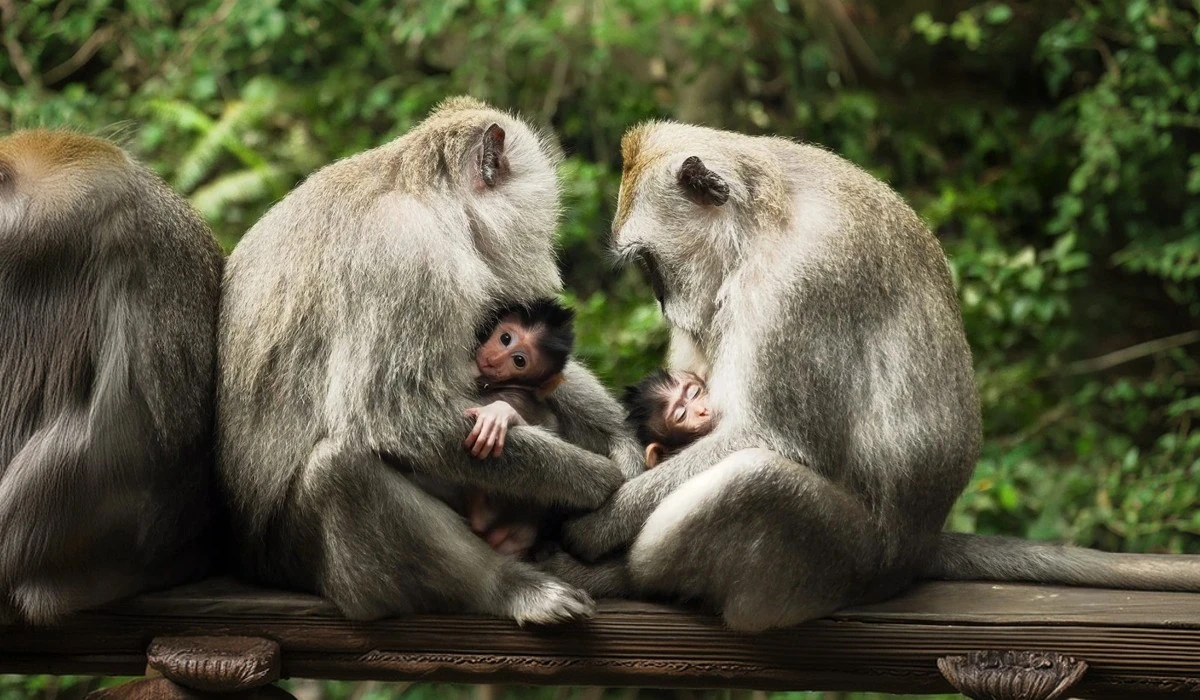
Does Primatology Prove Sisterhood Rules Apes?
For decades, people watched the jungle and only saw the loud, muscular males. They focused on the silverback’s chest-beat or the chimpanzee’s violent patrol, which caused this narrow view to overlook the actual power in the forest. Females lead the group while the males make noise. Modern Primatology now looks past the flashy displays to see the lasting ties between daughters, mothers, and sisters.
These female connections define how great ape social systems actually function over many years. While a male's reign might last only a few seasons, female networks endure for a lifetime. Scientists once ignored these interactions because they seemed quiet or subtle. Today, we know that these bonds decide who eats, who survives, and who leads. This new perspective changes everything we thought we knew about our closest relatives.
Beyond the Silverback: How Primatology Redefines Dominance
Early researchers brought their own cultural biases into the woods. They expected to see kings and subordinates. Consequently, they spent most of their time tracking the biggest males. They wrote volumes about aggression and dominance contests. This created a lopsided understanding of great ape social systems. They viewed females as mere background characters in a male drama.
In 1974, Jeanne Altmann changed the field. She introduced systematic sampling. This method required researchers to watch one animal for hours, regardless of how "boring" its behavior seemed. This shift in Primatology revealed that females spend their days in constant, meaningful contact. They share food and protect each other's infants. They do not just wait for males to decide their fate.
Researchers now use focal animal sampling to track every touch and proximity event. They see that females hold the social map in their heads. They know which allies will back them up during a fight. Strength matters, but social intelligence matters more. These long-term studies prove that female agency drives the group's direction.
The Bonobo Blueprint for Female-Led Societies
According to a report by ScienceDaily, bonobos offer a startling contrast to their chimpanzee cousins, with females leading the group. The Washington Post notes that although they are smaller than males, females maintain the highest social rank. ScienceDaily further suggests that they achieve this through intense cooperation rather than individual brawn.
Research published in Nature addresses the question of whether female apes lead their groups, noting that in species like the bonobo, females form powerful alliances that allow them to collectively dominate males and dictate the social climate. ScienceDaily adds that in 85% of the coalitions researchers observed, females collectively targeted males to shape the dominance hierarchy. Forbes reports that these findings are based on thirty years of data collected from six communities. This leadership keeps the community peaceful and reduces the threat of violence.
Forming Coalitions Against Aggression
As stated by ScienceDaily, adult female bonobos are actually unrelated immigrants from different communities, which makes their deep bonds and cooperation surprising. They use Genito-Genital (G-G) rubbing to reduce tension and build trust quickly. When a male acts aggressively toward any female, the others stand together. Phys.org reports that by acting as a unit, females are able to force male offenders into submission. According to ScienceDaily, this suggests that power is driven by social intelligence rather than physical strength, making individual male power less significant.
The Nutritional Benefit of Female Alliances
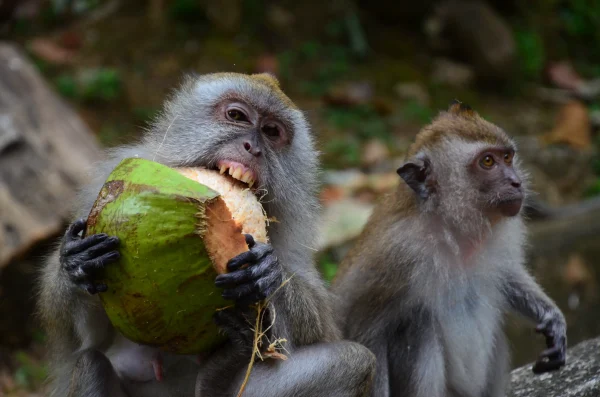
Food drives most decisions in the forest. Bonded females move toward the best fruit trees together. They hold "priority of access" over these resources. They eat their fill before allowing any male to approach. High-ranking females even share meat from small hunts with their female friends. This cooperation ensures that mothers and infants get the best nutrition. These great ape social systems thrive because the females prioritize each other's health. As documented by Forbes, years and communities in which adult females formed more coalitions corresponded to females winning more conflicts and achieving higher ranks. The same publication notes that in conflicts with males, females emerged victorious 61% of the time. Nature asserts that this coalition formation serves as a behavioral tool for females to gain power over males.
Gorilla Matrilines and the Power of Choice
We often view gorilla groups as a single silverback ruling his wives. The reality is a voluntary association. Females choose which male to follow. They can leave a group whenever they want. If a silverback fails to protect the group or becomes too aggressive, the females simply walk away. His power vanishes the moment his females decide to find a better leader.
Female mountain gorillas practice what scientists call "secondary dispersal." They move between groups multiple times in their lives. They look for a leader who provides stability and prevents infanticide. According to a study in ScienceDirect, the proximity relationships and physical closeness among these females are akin to the social bonds observed in baboons and chimpanzees. The silverback knows this risk. He works hard to stay attractive to his mates. He grooms them and plays with their young. In these great ape social systems, the male’s status rests entirely on female consent.
How Primatology Tracks the Evolution of Solidarity
Scientists no longer guess about feelings in the jungle. They use hard data to measure bonds. Modern Primatology uses non-invasive hormone sampling to look inside an ape's body. They collect urine and fecal samples from the forest floor. These samples tell a story of stress and connection that the human eye might miss. According to a study in Nature, great ape social systems differ significantly, ranging from the female-bonded, egalitarian societies of bonobos to the more dispersed, individualistic networks seen in orangutans. Each species adapts its social life to fit the specific challenges of its habitat.
Tracking Hormones to Measure Social Stress
Oxytocin levels increase when two female friends groom each other. Research published in PubMed found an overall effect where higher oxytocin levels led to more frequent grooming among female bonobos. This hormone cements their bond and lowers their heart rate. Meanwhile, cortisol levels reveal the cost of social isolation. Females with fewer friends show higher stress markers. High stress leads to poor health and lower fertility. Data proves that social females live longer lives. They raise more offspring to adulthood because their friends help them stay calm and safe.
Chimpanzee Mothers and the Strength of Kinship
Chimpanzees have a reputation for male politics and territorial war. However, the females live a parallel life that is just as involved. While males roam the boundaries, females stay in specific "core areas." These are the best parts of the forest for finding food. A female's knowledge of her core area determines her survival.
Daughters learn the secrets of the forest from their mothers. They learn where the rare medicinal plants grow. They learn how to crack nuts with stone tools. These mother-daughter bonds last for decades. Even when the males fight for the top spot, the female network remains stable. They provide the true foundation for chimpanzee life within their great ape social systems.
Focal follows show that females spend 80% of their time near their closest allies. They trade grooming for infant access. A lower-ranking female will groom a mother just to sit near her baby. This market of favors keeps the group together during lean times. It builds a safety net that protects the next generation.
Mapping the Fluidity of Great Ape Social Systems
The environment dictates how animals interact. In areas with scarce food, females spread out to avoid competition. They become more solitary, as seen in orangutans. Yet, even "solitary" orangutans maintain an "exploded" social network. They stay in contact through long-distance calls and smells. They know exactly where their female relatives are located at all times.
When fruit is abundant, females congregate in large parties. They take advantage of the surplus to build their social capital. Great ape social systems flex based on what the forest provides. Female bonding acts as a strategic response to these pressures. In a dangerous forest, a group of females provides more eyes for predators. Cooperation always offers a better return on investment than going it alone.
Using Primatology to Understand Our Own Social Roots
Humans share over 98% of our DNA with these creatures. Their social struggles often mirror our own. Studying Primatology helps us see the roots of human teamwork. It reminds us that our ancestors relied on hunting and fighting, but they also depended on other survival skills. We are the products of a long line of social experts.
According to Forbes, through the study of the social behaviors of our closest relatives, we gain vital clues about the evolutionary origins of human cooperation and the importance of female support networks in our own history. We see that "sisterhood" has deep biological roots.
Human societies often prioritize male history. However, the ape world suggests that female cooperation built the path to modern humanity. Mothers sharing food and protection allowed for bigger brains and longer childhoods. Our ancestors survived because they learned to trust each other. We owe our current success to these ancient social strategies developed in the trees.
The Lasting Legacy of the Female Bond
Our understanding of the forest has changed forever. We no longer see a world of solo "kings" ruling by force. Instead, we see a multi-layered web of female allies holding everything together. Primatology proves that these bonds provide the structural integrity for the entire group. Without these connections, the community would fall apart.
If we lose these females, we lose the deep knowledge of the forest. We lose the "grandmothers" who know where to find water during a drought. Protecting great ape social systems means protecting these social networks. We must ensure these families stay together in the wild. The future of the jungle depends on the strength and survival of the sisterhood.
Recently Added
Categories
- Arts And Humanities
- Blog
- Business And Management
- Criminology
- Education
- Environment And Conservation
- Farming And Animal Care
- Geopolitics
- Lifestyle And Beauty
- Medicine And Science
- Mental Health
- Nutrition And Diet
- Religion And Spirituality
- Social Care And Health
- Sport And Fitness
- Technology
- Uncategorized
- Videos

