
Will Carbon Finance Fund Your Green Upgrades?
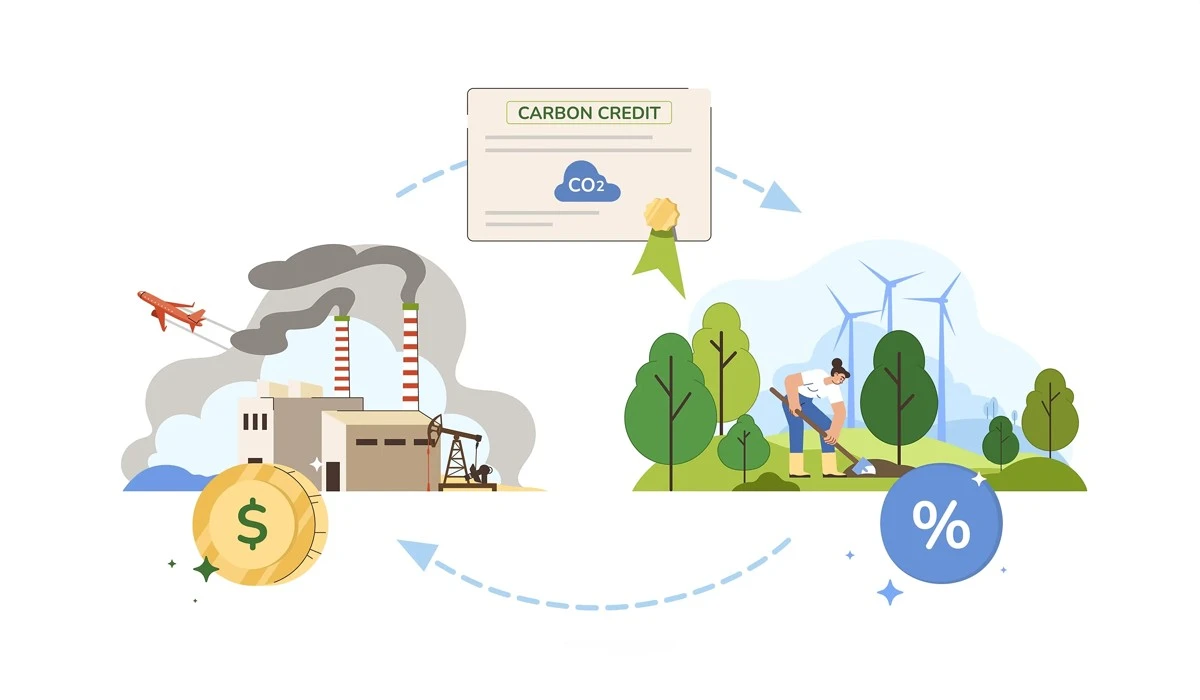
Most business owners view smoke coming out of a chimney as a sign of lost money or a future fine. They see environmental rules as a weight dragging down their growth. However, every ton of carbon your factory stops releasing actually puts cash back into your bank account. You already pay for these emissions through higher energy bills and regulatory fees. Using Carbon Finance turns these costs into products you can sell.
This shift changes the way you look at your entire operation. You stop looking for ways to hide your footprint and start looking for ways to harvest it. This guide shows you how to find these new revenue streams. We will explore how smart companies use environmental markets to outcompete their rivals. The state of global trade now rewards waste-reduction with liquidity. The Tony Blair Institute for Global Change notes that well-designed carbon markets have the potential to reduce the total expense of reaching global climate targets by half. This post concludes with an understanding of how to turn your sustainability goals into a functional department of your treasury.
Shifting from a Compliance Mindset to an Asset Mindset
For decades, companies viewed carbon emissions as a "waste product" they had to manage. This mindset costs money because it focuses only on following the law. In reality, a reduction in emissions is a quantifiable unit of value. According to the SDSN's European Green Deal Report, these units represent one metric tonne of carbon dioxide or its equivalent in other greenhouse gases. When you stop emitting a ton of CO2, you create a "carbon credit" or save a "carbon allowance."
Think of these units like digital currency. You can store them, trade them, or sell them to other companies that struggle to meet their goals. Businesses that succeed today treat their carbon footprint as a ledger of potential assets. Every productivity gain becomes a deposit into a new kind of savings account.
Identifying Hidden Carbon Value in Modern Operations
The Tony Blair Institute for Global Change notes that these markets function as systems that assign financial worth to emissions. Many companies generate value without realizing it. If you upgrade your lighting or optimize your delivery routes, you reduce your footprint. These actions create data that Carbon Finance experts use to generate revenue.
For example, a shipping company that switches to more aerodynamic trucks reduces fuel use. That fuel reduction equals a specific amount of CO2 saved. Under the right framework, those savings become tradable credits. While you save on fuel costs, you also create a secondary product from the very act of reducing waste. Look at your supply chain and energy use as a field of unharvested crops.
Navigating the Mechanics of Carbon Finance and Emissions Trading Schemes
Understanding how these markets work is the first step toward profiting from them. Governments and private groups have built a system where pollution has a price tag. How does carbon finance work? According to the UNDP, carbon finance functions by setting a financial value on emissions and their reduction, which permits organizations to trade these units as fiscal assets. This system bridges the gap between a factory floor and a global trading desk.
The Relationship Between Cap-and-Trade and Market Liquidity
As stated by the UNDP Climate Promise, governments utilize emissions trading systems as a method to regulate total levels of pollution. Additionally, the Tony Blair Institute for Global Change highlights that these systems establish a "cap" on the total amount of carbon dioxide a specific industry is permitted to release. Then, they issue "allowances" to individual companies. If you emit less than your allowance, you have a surplus.
Meanwhile, companies that go over their limit must buy your extra allowances to avoid massive fines. This creates a market where prices go up and down based on supply and demand. A report from the World Bank indicates that in 2023, these compliance markets produced more than $104 billion in global revenue. This liquidity allows you to model your future revenue with high accuracy. You can predict how much your "green" upgrades will pay back based on current market prices.
Proven Methods to Monetize Reductions through Carbon Finance
You do not have to wait for a government to tell you what to do to start making money. The voluntary market allows any business to participate. Carbon Finance provides the tools to turn your green projects into cash flow.
Generating High-Quality Offsets for the Voluntary Market
Analysis by Senken suggests that high-quality offsets are currently experiencing high demand as the market shifts toward more reliable credits. The study also points out that prices for these units fluctuate significantly depending on the specific project type and the overall quality of the reduction. Additionally, the Carbon Offset Guide defines additionality as a requirement where the reduction in carbon dioxide would not have occurred without the financial support provided by the credit.
As explained by Atmoz, credits must represent permanent reductions to ensure they provide lasting benefits to the climate. For instance, a project that stores CO2 underground for 1,000 years is worth more than a forest that might burn down in 20 years. When you prove your project is real and lasting, you command a price premium. Large tech companies and airlines regularly pay extra for these verified results.
Securing Upfront Funding for Green Infrastructure
You can use future carbon credits to pay for today’s equipment. This is a game-changer for businesses with tight budgets. What are the types of carbon finance? The two main types of carbon finance are project-based credits, where specific reductions are sold, and allowance trading within regulatory frameworks.
You can sell "forward" credits to investors who want to lock in prices now. They provide the capital to purchase high-productivity machinery or solar panels. In return, they get a share of the carbon credits your new equipment produces over the next five years. This removes the risk of taking on high-interest debt for green upgrades.
Optimizing Participation in Emissions Trading Schemes
If you operate in a region with a regulated market, you need a strategy. Simply buying or selling as needed is not enough. You must actively manage your position in emissions trading schemes to protect your margins.
Strategic Hedging Against Price Volatility
Carbon prices can jump suddenly. Market Data Forecast reports that prices for allowances in the European Union reached a peak of over €100 per ton in early 2023. If you need to buy allowances and the price spikes, your profits disappear.
Smart companies use financial tools like futures and options. They lock in a price today for the allowances they will need next year. This acts like insurance. If the market price goes up, you still pay the lower, locked-in price. This stability allows you to bid on long-term contracts with confidence, knowing your environmental costs won't change.
Utilizing Excess Allowances for Immediate Liquidity
If you overperform on your climate goals, you own a valuable asset. Do not let these allowances sit idle. Selling your surplus provides immediate cash that you can reinvest.
Some companies treat their excess allowances like a revolving credit line. They sell when prices are high and buy back when prices dip. Ironically, the more you reduce your pollution, the more "financial ammunition" you have to beat your competitors. Your waste-reduction effectively funds your next stage of growth.
Driving Long-Term ROI with Sustainable Asset Management
Profitability extends beyond the sale of credits. Being a leader in the carbon space changes how the whole financial world views your company. It turns your balance sheet into a magnet for capital.
Attracting ESG-Focused Institutional Investors
Major banks and pension funds now look at "climate risk" before they invest. A company with no carbon strategy is seen as a risky bet. If a new carbon tax starts tomorrow, a dirty company might go bankrupt.
Implementing a strong Carbon Finance strategy proves that you have already solved this problem. You lower your "risk profile." This makes your stock more attractive to large institutional buyers who need to fill their portfolios with "green" assets. Saving the planet simultaneously makes your company more secure with significant capital.
Lowering the Cost of Capital through Green Performance
Research from Sustainalytics demonstrates that sustainability-linked loans provide a way to decrease interest expenses if a company achieves its specific environmental targets. Lenders now offer these special loans where the interest rate is tied to your performance.
For example, a company might get a loan with a 5% interest rate. If they cut their emissions by 10%, the bank drops the rate to 4.5%. This saves millions of dollars in interest over the life of the loan. Your ability to manage carbon directly lowers your cost of doing business. This is one of the most powerful ways to use environmental data to boost your bottom line.
Mitigation of Risks Associated with Carbon Finance
No market is without risk. You must navigate the rules carefully to ensure your assets keep their value. Who uses carbon finance? Carbon finance is primarily used by industrial emitters to meet regulations, project developers to fund green initiatives, and institutional investors looking to hedge climate risk.
Navigating Regulatory Shifts and Policy Updates
Governments change the rules of emissions trading schemes frequently. For instance, the European Union is currently phasing out "free allocations" for certain industries. This means companies that used to get credits for free will now have to pay for them.
You must also watch international standards like Article 6 of the Paris Agreement. The Carbon Offset Guide warns that the issue of double counting, where reductions are claimed more than once, can cause credits to lose their financial worth entirely. Working with experts helps you stay ahead of these shifts so your investments remain secure.
Building a Roadmap for Carbon Finance Success
Starting your path requires a clear plan. You cannot monetize what you do not measure. Success in Carbon Finance starts with high-quality data.
Auditing Your Footprint for Maximum Credit Yield
You must conduct a deep audit of your operations. This process is called Monitoring, Reporting, and Verification (MRV). Traditionally, this was expensive and slow.
Today, new technology makes it easier. You can use satellite imagery and AI sensors to track your footprint in real-time. This "digital MRV" can cut your verification costs from 40% of your revenue down to 10%. Accurate data ensures that every ton of CO2 you save is "bankable." You cannot sell a credit if you cannot prove it exists.
Choosing the Right Technology and Market Partners
The market is crowded with different platforms and brokers. You need partners who offer transparency. Look for exchanges that show real-time prices and have high liquidity.
Choosing the right technology is also vital. Some platforms use blockchain to track credits, which prevents fraud and makes it easier for buyers to trust your product. Selecting the right tools early prevents getting stuck in "dead" markets where no one is buying.
Your Future in Carbon Finance
The period of ignoring carbon is over. What was once a chore for the legal department has become a tool for the CFO. Through proficiency in Carbon Finance, you stop reacting to change and start profiting from it. You turn a cost center into a profit center. This shift gives you a massive advantage over companies that are still trying to fight the inevitable change toward a low-carbon economy.
The tools we discussed—from hedging in emissions trading schemes to securing sustainability-linked loans—are available to you right now. The market is maturing, but the biggest gains belong to the early movers. Do not wait for the next regulation to force your hand. Start auditing your operations today and find the revenue you have been leaving on the table. Your future growth depends on how well you manage the air around you.
Recently Added
Categories
- Arts And Humanities
- Blog
- Business And Management
- Criminology
- Education
- Environment And Conservation
- Farming And Animal Care
- Geopolitics
- Lifestyle And Beauty
- Medicine And Science
- Mental Health
- Nutrition And Diet
- Religion And Spirituality
- Social Care And Health
- Sport And Fitness
- Technology
- Uncategorized
- Videos

