
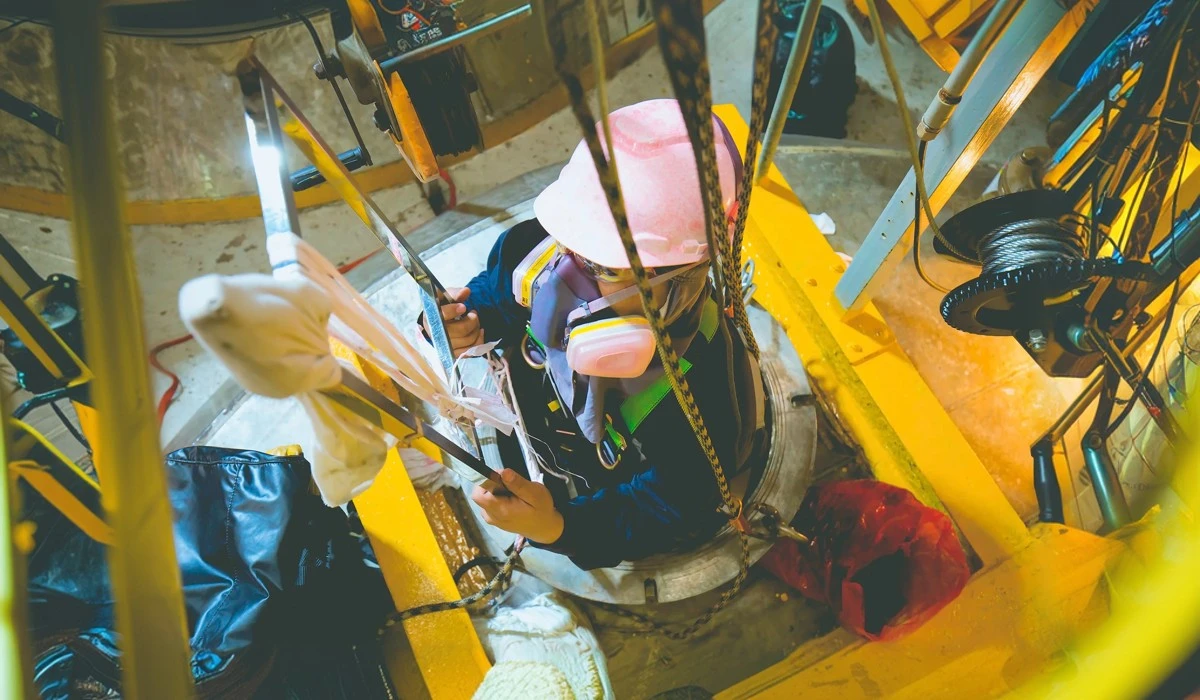
Stop Rescuer Tragedies with Confined Space Safety
When a worker collapses in a manhole, your brain screams at you to jump in and help. This natural human impulse creates a death trap for the person trying to save them. Statistics show that over 60% of people who die in these spaces are the ones who went in to help. They rush into a hole without checking the air and die right next to their friend. This happens because your body reacts faster than your training.
To stop these double tragedies, you need a system that overrides your instincts with a hard-coded process. That process starts with Confined Space Safety. It replaces panic with a cold, calculated strategy. If you don’t have a specific way to stop people from jumping into holes, you are just waiting for a disaster. True Confined Space Safety saves the person who wants to be a hero from becoming another victim.
Effective safety protocols turn a frantic emergency into a controlled retrieval. You must train every employee to resist the urge to dive in. Without this mental shift, your rescue gear stays on the truck while your team dies in the dirt.
The Fatal Instinct: Why Good Intentions Fail Without Confined Space Safety
Human nature often kills faster than gas. According to research published in PMC, atmospheric hazards such as oxygen deficiency or toxic gases are the primary cause for up to 82% of fatalities in these settings. The study also notes that confined space accidents frequently result in multiple deaths, averaging 1.5 fatalities per incident. When a supervisor sees their team member fall, they rarely stop to put on a mask.
They see a friend in trouble and move instantly. Unfortunately, the same air that knocked out the first person remains in the space. The second person breathes it in and falls on top of the first. This cycle repeats until an entire crew lies at the bottom of a vault.
The Science of Quiet Killers
Many hazards give no warning. According to a report by the National Center for Biotechnology Information (NCBI), Hydrogen Sulfide (H2S) creates a unique danger called olfactory fatigue. While the NCBI notes that the odor threshold is quite low, ranging from 0.008 to 0.13 ppm, the report explains that at 100ppm, it deadens your sense of smell completely as the body loses the ability to detect the odor.
A publication from OSHA further highlights that H2S environmental concentrations of 100 ppm are immediately dangerous to life and health, and Carbon Monoxide works even more severely. It binds to your hemoglobin 200 times faster than oxygen does. It suffocates your cells while you still think you are breathing normally.
Physical Obstructions and Retrieval Mechanics
Tight spaces make manual lifting nearly impossible. A person who weighs 200 pounds feels like 500 pounds when they are dead weight in a narrow pipe. If you try to pull them out by hand, you will likely injure your back or drop them.
High-risk environments require mechanical advantage. You need pulleys and winches to move that mass effectively. Without these tools, a rescuer ends up entering the space simply because they can’t reach the victim from the outside. This entry increases the body count.
Defining the Gold Standard for Confined Space Safety Protocols
Every entry must begin with a permit and a plan. You cannot guess if a space is safe. You must prove it with data before the first person breaks the plane of the opening. Confined Space Safety relies on strict measurement. If the numbers don't match the safety requirements, no one enters the hole.
Atmospheric Testing: Professional Safety Equipment
As noted in the WorkplaceNL OHS Guide, testing for hazardous atmospheres must be conducted prior to entry, and conditions must be monitored continuously. Failure to test the air in a specific order means you might miss the toxic pool waiting at the bottom. First, check for oxygen levels.
According to a blog post by OSHA.com, the agency considers an atmosphere to be oxygen-deficient if it contains less than 19.5% oxygen by volume. Second, check for flammable gases. Third, check for toxic vapors. You must also test at different heights. Gases have different weights. Methane rises to the top, while H2S sinks to the floor.
What is the first thing to do in a confined space emergency? The first step is to stay outside the space and call for the designated rescue team while attempting a non-entry retrieval. Testing only the top of a manhole might cause you to miss the toxic pool waiting at the bottom. This stratified testing ensures you see the full picture of the environment.
The Role of the Attendant as a Lifeline
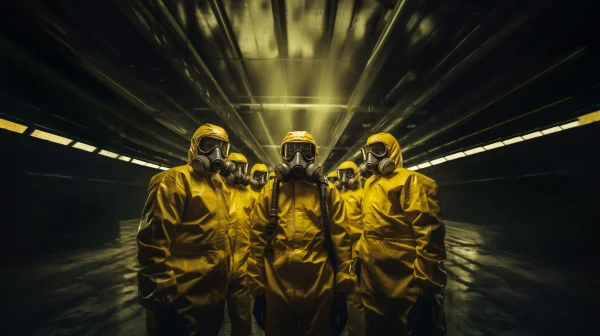
The attendant acts as the brain of the operation. They stay outside the space at all times. Their job involves watching the entrants and monitoring the air. They also keep unauthorized people away. If an emergency happens, the attendant starts the rescue process from the outside. Ironically, the attendant is often the person who wants to jump in the most. You must train them to realize that their entry guarantees a second death. They must remain at their post to operate the winch and manage communication.
The Blueprint for Proactive Confined Space Rescue Planning
Planning happens weeks before the job starts. You cannot invent a rescue strategy while someone is unconscious ten feet underground. Every site needs a written document that details how to get a person out in under four minutes. This time limit exists because brain damage begins quickly when oxygen vanishes. Your confined space rescue planning must account for every second.
Non-Entry vs. Entry Rescue: Choosing the Lesser Risk
Always aim for non-entry rescue first. This method uses tripods and retrieval lines attached to the worker before they enter. If they go down, you simply crank the winch and pull them out. As detailed in research from ScienceDirect, the hierarchy of rescue is divided into three main types: self-rescue, non-entry rescue using retrieval lines, and entry rescue, where a team enters the space. Non-entry rescue keeps your rescuers safe and speeds up the extraction. It removes the need for someone else to risk their life in a toxic atmosphere.
Regarding confined space rescue planning, you only have a "Golden Four Minutes." If a worker stops breathing, you must get them to fresh air immediately. Every twist in a pipe or narrow hatch adds seconds to your time. You must measure these openings and ensure your equipment fits through them. If a worker wears a bulky air tank, they might get stuck in the opening during a rescue. You must plan for these physical limits to ensure a smooth exit.
Essential Gear for Confined Space Safety
Tools do not replace training, but the right gear makes survival possible. You need equipment that withstands harsh environments and provides mechanical power. Standard fall protection gear often fails in the lateral or vertical pulls required for confined spaces.
Harnesses and Mechanical Advantage Systems
Workers must wear a Class III full-body harness. This harness has D-rings on the shoulders or high on the back. These attachment points keep the body upright during a vertical pull. If you pull a person by their waist, they will fold in half and get stuck against the walls of the manhole. You also need a 3:1 or 4:1 mechanical advantage system. These pulley sets allow one person to lift a heavy victim with minimal effort. This gear ensures that even a smaller attendant can save a much larger worker.
Respiratory Protection and SCBAs
When the air turns bad, you need a dedicated air supply. Some teams use long hoses connected to tanks outside. These hoses allow workers to stay in tight spots for hours. Others use Self-Contained Breathing Apparatus (SCBA) tanks on their backs. However, SCBA tanks are bulky. They can prevent a rescuer from fitting through a standard 24-inch manhole cover. You must choose your breathing gear based on the size of the entry point. Always test your gear in the actual space to ensure it doesn't become a snag hazard.
Bridging the Gap Between Compliance and Confined Space Safety
OSHA rules provide a floor, not a ceiling. Following the law keeps you out of court, but following best practices keeps your workers in their homes. Many companies make the mistake of listing "Call 911" as their primary rescue plan. This choice often leads to disaster.
Evaluating Local Emergency Services Capabilities
Most local fire departments are not ready for a technical confined space rescue. They might have the heart to help, but they lack the specific "Technician" level certification. A standard fire crew might take ten minutes to arrive and another ten minutes to set up. By then, the victim has likely passed the point of resuscitation. You must verify that your local responders can actually perform the rescue you need. If they can’t, you must hire a private rescue team or train your own.
Site-Specific Drills and Muscle Memory
Reading a manual does not save lives. You must practice your confined space rescue planning in the field. Use weighted manikins that mimic the size of a real person. Run these drills in the actual tanks or vaults where your team works. This practice builds muscle memory. When a real emergency hits, your team won’t have to think. They will move automatically to set up the tripod and start the winch. These drills also reveal flaws in your gear, such as ropes that are too short or tripods that don't fit on uneven ground.
Elevating Professionalism through Rigorous Confined Space Safety Training
Safety is a professional skill, just like welding or engineering. You must treat it with the same respect. High-quality training creates a culture where workers feel empowered to stop a job if the conditions aren't right.
Identifying Roles: Entrants, Attendants, and Supervisors
Every person on the site must know their specific job. The entrant focuses on the task inside. The attendant focuses on the world outside. The supervisor ensures the permit stays valid. Who is responsible for confined space safety? While the employer is legally responsible for the safety system, the entry supervisor must ensure all safety measures are active before anyone enters. This clear division of labor prevents confusion during a crisis. Everyone knows exactly who to look to for orders when things go wrong.
Mental Fortitude and Stress Management
A crisis triggers a "fight or flight" response. In a confined space, flight is impossible, and fighting often means making rash decisions. Training helps workers manage the surge of adrenaline. They learn to take a breath and follow the checklist. This mental toughness prevents the "rescue reflex" from taking over. Keeping a level head helps the team ensure that the rescue remains a technical process rather than an emotional tragedy.
Integrating Technology into Your Confined Space Rescue Planning Workflow
Modern tools provide a layer of protection that didn't exist ten years ago. New technology removes the guesswork from atmospheric monitoring and communication. Integrating these tools into your confined space rescue planning saves lives and simplifies compliance.
Real-Time Gas Monitoring and Cloud Alerts
Old gas monitors only beeped at the person wearing them. If that person went unconscious, the alarm might go unheard. Modern monitors use Bluetooth and cellular data to beam readings to the attendant's tablet. They can even send alerts to a safety manager miles away. This real-time data allows the attendant to see a rise in gas levels before the entrant even notices. They can order an evacuation before the situation becomes an emergency.
Digital Permitting and Accountability Logs
Paper permits get wet, lost, or ignored. Digital permitting systems ensure that every safety check happens in the right order. The system won't allow a worker to clock into a space until the atmospheric tests are uploaded. This creates a digital trail of accountability. It also allows rescue teams to access site maps and hazard data instantly on their phones. During a rescue, having a map of the internal piping on a screen can shave minutes off the search time.
A Lasting Commitment to Confined Space Safety
Every worker deserves to go home at the end of their shift. To make this a reality, you must dismantle the rescue reflex. Replace the urge to help with a rock-solid commitment to Confined Space Safety. This means investing in the right winches, the best gas monitors, and the most rigorous training drills. It also means having the courage to stop a job when the plan is incomplete.
When you prioritize a pre-engineered rescue strategy, you protect your most valuable asset: your people. A well-planned retrieval saves the victim and keeps the rescuer on the surface. True safety does not happen by accident. It requires a relentless focus on the hazards and a refusal to cut corners. Following these protocols ensures that a single mistake never turns into a multi-fatality tragedy. Build your culture on the foundation of Confined Space Safety and turn the "fatal instinct" into a professional standard of excellence.
Recently Added
Categories
- Arts And Humanities
- Blog
- Business And Management
- Criminology
- Education
- Environment And Conservation
- Farming And Animal Care
- Geopolitics
- Lifestyle And Beauty
- Medicine And Science
- Mental Health
- Nutrition And Diet
- Religion And Spirituality
- Social Care And Health
- Sport And Fitness
- Technology
- Uncategorized
- Videos

