

Risk Management in Health and Social Care Analysis
When a caregiver misses a single dose of medication, we usually blame their memory. In reality, that mistake often starts weeks earlier during the scheduling process or when a ward layout is designed. These small, daily choices determine the safety of every patient.
Reliable Risk Management in Health and Social Care focuses on truly understanding how things go wrong instead of just following rules. Through the study of working methods, managers can stop accidents before they happen.
A strong strategy uses incident risk analysis to find the weak spots in a daily routine. This process turns every mistake into a lesson that protects the next person who walks through the door. It ensures that the focus stays on the patient rather than solely on the paperwork.
Defining Excellence in Risk Management in Health and Social Care
High-quality care involves both the avoidance of accidents and the creation of a system where safety is part of every conversation. Excellence happens when leaders treat risk as a tool for improvement instead of a threat to their reputation.
Moving Beyond Regulatory Compliance
According to Legislation.gov.uk, Regulation 12 of the Health and Social Care Act requires providers to do everything "reasonably practicable" to prevent harm. The Care Quality Commission (CQC) clarifies that while many organizations stop there and check boxes to satisfy inspectors, providers must actively work to mitigate risks. High-tier providers use these rules as a floor rather than a ceiling. They look at staff competence and building safety as active ways to improve a patient's life.
True safety involves a proactive mindset. Managers should constantly evaluate their own medicine management and environmental hazards instead of waiting for a CQC audit. This keeps the facility ready for an inspection at any moment while actually protecting the people living there.
The Core Supports of Care Safety
Safety rests on three main supports: clinical care, the physical environment, and the well-being of the staff. If one support cracks, the others eventually fail too. Effective managers monitor clinical results while also checking if the building itself creates hazards for vulnerable residents.
People often wonder, what is the main goal of risk management in healthcare? The primary objective is to protect patients, staff, and visitors from harm while ensuring the delivery of high-quality, effective care. This balance defines successful organizational leadership and keeps the focus on human dignity.
The Systems of Modern Incident Risk Analysis
When things go wrong, the first instinct is often to find someone to blame. Modern methods reject this approach. Instead, they use incident risk analysis to look at the system that allowed the error to occur in the first place.
From Root Cause to Preventive Action
Research published via the National Center for Biotechnology Information (NCBI) highlights that Psychologist James Reason identified two types of failures: active and latent. A report on the NCBI Bookshelf further explains that latent conditions are the concealed flaws in the system, such as poor lighting or heavy workloads, that increase the likelihood of mistakes.
Improvement Cymru suggests that the "Swiss Cheese Model" illustrates how safety layers work, noting that accidents result from a combination of system weaknesses rather than a single factor. This model imagines several slices of cheese lined up, where each slice represents a layer of defense. Through the use of incident risk analysis, managers can move those slices so the holes no longer align, stopping the next hazard.
Qualitative vs. Quantitative Data in Care Settings
Numbers tell you how often things go wrong, but stories tell you why. Data-led care combines hard statistics with the lived experiences of staff and patients. This mix provides a complete picture of where the organization stands.
A high fall rate in a specific hallway is a quantitative fact. Talking to the staff reveals that the floor is slippery or the lighting is dim, which is qualitative insight. The combination of these two types of data leads to a more effective response to recurring problems.
Bridging the Gap Between Policy and Practice
Policies only work if the people on the floor can actually follow them. If a safety rule is too involved, staff will find shortcuts just to get their work done. This creates a dangerous gap between what the handbook says and what actually happens.
Empowering Staff Through Training and Clarity
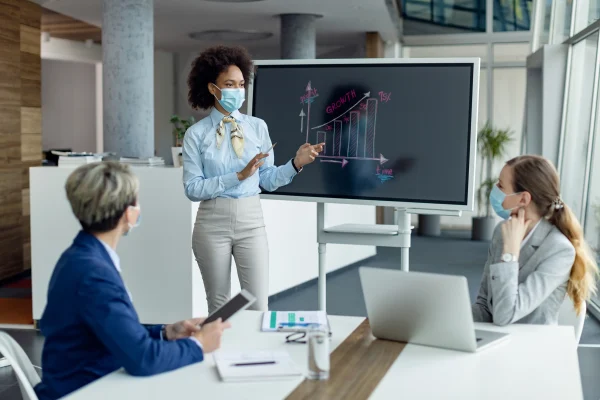
Clear protocols reduce "decision fatigue" for caregivers. When a staff member is tired after a ten-hour shift, they struggle to make difficult choices. Simple, clear instructions allow them to provide safe care even when they are exhausted.
Training must be practical. Staff should practice responding to real-life crises instead of just reading a document. This builds "muscle memory" that takes over when a high-pressure situation occurs, ensuring that Risk Management in Health and Social Care stays active on the front lines.
The Role of Real-Time Reporting Tools
Digital tools have changed how we track safety. Staff can now report issues instantly on tablets instead of filling out paper forms that get filed away and forgotten. This speed allows managers to see a growing risk before it turns into a serious injury.
A common question is, how do you perform an incident risk analysis? The process involves gathering evidence, interviewing involved parties, and using tools like the "Five Whys" to identify the systemic cause of an event. This systematic approach ensures that lessons are learned rather than just documented and filed away.
Data-Led Decisions for Better Patient Outcomes
The use of data allows a care provider to stop being reactive. Managers can use Risk Management in Health and Social Care to predict where the next problem might appear rather than cleaning up after a mistake. This shift saves lives and reduces the cost of legal claims.
Identifying Patterns and Emerging Hazards
NHS England states that the "Learn From Patient Safety Events" (LFPSE) service in the UK uses machine learning to identify trends across different care settings. If three different care homes report a specific equipment failure, the system flags it as a national trend. This allows every provider to check their own equipment before a failure occurs.
Looking at aggregated data helps managers spot small issues that might seem like one-offs. For example, a slight increase in skin tears across a ward might point to a new type of bedsheet or a change in a bathing routine. Catching these patterns early prevents serious complications later.
Benchmarking Success Against Industry Standards
Guidelines from the Health and Safety Executive (HSE) provide a five-step process: identify hazards, determine who might be harmed, evaluate risks, record findings, and review regularly. Following this structure ensures the organization stays aligned with the best in the industry.
Internal analysis helps a team see if they are improving over time. If the number of medication errors drops after a new training program, the data proves the investment was worth it. This evidence-based approach builds confidence among staff, patients, and their families.
Human Factors in Modern Care Settings
Safety is a human issue. People are not robots, and they are affected by their surroundings, their emotions, and their physical health. A risk strategy that ignores the "human element" will always fail eventually.
Supporting the Workforce to Reduce Errors
A perspective from the AHRQ Patient Safety Network emphasizes that staff burnout is a direct threat to safety, as it impairs the ability of clinicians to maintain safe practices and notice emerging threats. Research shows that clinical error rates jump significantly toward the end of long shifts. This is why mental health support is a vital part of risk mitigation.
Managers must design workdays that respect human limits. This includes structured breaks and fair rostering. Through support for the workforce, the organization reduces the basic conditions that lead to active failures on the ward.
Enhancing Communication Between Multi-Disciplinary Teams
A study published by MDPI reports that information "silos" are a major cause of risk, noting that the healthcare sector still faces significant IT silo problems. If a doctor knows something that the social worker doesn't, the patient is the one who suffers. This often happens during hospital discharges, where vital information about a patient’s needs gets lost in the change.
Open communication across different teams ensures that everyone has the same map of the risks involved. Regular "huddles" or shared digital notes can bridge these gaps. When everyone speaks the same language regarding Risk Management in Health and Social Care, the chance of a mistake dropping through the cracks decreases.
Building a Culture of Transparency and Reporting
A safety system is only as good as the information people put into it. If staff are afraid of being fired for making a mistake, they will hide their errors. This means the organization never learns, and the same mistake will happen again.
Eliminating the Blame Culture
The use of a "Just Culture" framework encourages people to report near-misses. It separates honest mistakes from reckless behavior. In this environment, a staff member who reports a potential hazard is thanked for protecting the team, rather than punished for the oversight.
This transparency allows for a much more thorough incident risk analysis. When people feel safe to speak up, they provide the honest details needed to fix the system. This honesty is the only way to build a truly safe environment.
Many professionals ask, why is risk management important in social care? It is vital because it protects vulnerable individuals from abuse or neglect while allowing them to maintain their independence and dignity. Without it, the basic ethical foundation of care begins to crumble, and the trust between the provider and the public vanishes.
Future-Proofing Your Risk Management in Health and Social Care Strategy
The care sector is changing rapidly. As people live longer with more complicated health needs, our safety strategies must keep up. Standing still is the same as falling behind.
Integrating AI and Predictive Analytics
Artificial intelligence can now analyze thousands of incident reports in seconds. It can find links between staffing levels and fall rates that a human manager might never notice. This technology improves incident risk analysis by giving leaders a broad view of their entire operation.
Immediate intervention is possible before a crisis occurs through the use of predictive tools. If staff-to-patient ratios drop while the difficulty of care increases, the system can initiate an alert.
Adapting to Aging Populations and Involved Needs
As more people live with multiple conditions like dementia and diabetes, care becomes more difficult. Risk Management in Health and Social Care must adapt to these specific challenges. Research from the National Patient Safety Agency, shared via NCBI, suggests using specialized tools like Failure Mode and Effects Analysis (FMEA) to study new care routines.
Proactive planning ensures that the organization is ready for the patients of tomorrow. This might mean redesigning physical spaces or introducing new monitoring technology. The goal is always the same: providing the highest level of care with the lowest possible risk.
Elevating the Standard of Care Through Analysis
Effective Risk Management in Health and Social Care is not a document you write once and forget. It is an ongoing, living process of looking at how we work and finding ways to do it better. Through the analysis of incidents, we turn the pain of past mistakes into the safety of future patients.
Every report filed and every hazard identified is an act of care. When we build systems that support staff and protect residents, we move beyond simple compliance. We create a culture where excellence is the standard and safety is a shared responsibility. This commitment ensures that every person in our care can live with the dignity and security they deserve.
Recently Added
Categories
- Arts And Humanities
- Blog
- Business And Management
- Criminology
- Education
- Environment And Conservation
- Farming And Animal Care
- Geopolitics
- Lifestyle And Beauty
- Medicine And Science
- Mental Health
- Nutrition And Diet
- Religion And Spirituality
- Social Care And Health
- Sport And Fitness
- Technology
- Uncategorized
- Videos

