
Fix Flat Loaves With Wheat and Bread Making Tips
According to a guide by King Arthur Baking, mixing water with flour creates a physical net rather than a sticky paste. This web traps gas bubbles to allow the bread to rise; the guide notes that a stronger network holds more gas for a higher rise. It also explains that yeast provides the gas while the strong mesh-like network traps it to prevent the bread from staying flat and heavy. Your hands change dusty particles into a stretchy fabric that can expand without snapping. This process changes everything about your results in the kitchen.
Learning wheat and bread making requires you to look past the surface of the dough. You are managing a system of tiny proteins that want to bond together. King Arthur Baking reports that proper handling of the dough encourages these proteins to link up and form long, strong chains, and the study also suggests that additional agitation, like kneading or folding, continues to develop those bonds. This creates the base for a high-quality loaf with a crackling crust and an airy middle. Gaining knowledge of gluten structure development gives you total control over the texture and height of every bake.
Selecting the Right Flour for Superior Wheat and Bread Making Results
The raw materials you choose determine the strength of your final product. Not all wheat is equal. Some varieties contain high amounts of protein, while others are soft and weak. For a sturdy loaf, a white paper from MIAX Global suggests using Hard Red Spring Wheat, which typically offers a protein content between 13% and 15%. This high percentage provides the building blocks for a strong network that supports heavy ingredients like seeds or whole grains.
Protein Content: The Base of Dough Strength
White bread flour and all-purpose flour behave very differently under tension. Bread flour has more "strength" because it contains more glutenin. This specific protein adds elasticity, allowing the dough to spring back when pulled. King Arthur Baking notes that whole wheat flour presents a different challenge because the sharp edges of bran particles physically cut the protein strands and interfere with their structure. You often need to increase hydration by 5% to 10% when using whole grains to keep the network flexible.
How do I know if my bread has enough gluten? According to King Arthur Baking, you can determine this by performing the 'windowpane test,' where you stretch a small piece of dough to see if it becomes translucent without tearing to visually confirm dough strength. This simple check confirms that the proteins have bonded sufficiently to hold carbon dioxide. If the dough rips immediately, the network needs more work or more time to strengthen.
The Unseen Framework: Learning Gluten Structure Development
Water acts as the primary cause for change in your dough. Before water is added, the proteins in the flour stay curled up and dormant. Once hydrated, these proteins uncoil and look for partners. This chemical shift marks the beginning of gluten structure development. King Arthur Baking clarifies that the amount of water you use, known as the hydration percentage, dictates how easily these proteins can move and find each other.
The Role of Hydration in Protein Realignment
A hydration level of at least 35% is the bare minimum to activate the proteins. However, artisanal wheat and bread making usually requires 65% to 75% hydration. Higher water content creates a more fluid environment. This allows protein strands to slide past each other and align into organized rows. While wet dough feels sticky and difficult at first, it often produces the largest air pockets and the softest crumb.
Salt also plays an important role in this process. Sodium chloride carries an ionic charge that neutralizes the electrical repulsion between protein strands. This allows the proteins to pull closer together, creating a much tighter and more stable mesh. Without salt, the dough feels "slack" and lacks the strength needed to hold its shape during the final rise.
Mechanical Techniques to Accelerate Gluten Structure Development
You can build strength through movement. Kneading is the most common way to force proteins into a structured network. Research published in PMC indicates that pushing and folding the dough physically stretches the glutenin and gliadin to create disulfide bridges, which are covalent chemical bonds that act like internal cross-links. These links turn a pile of mush into a bouncy, cohesive ball.
Kneading vs. Folding: Which is Better?
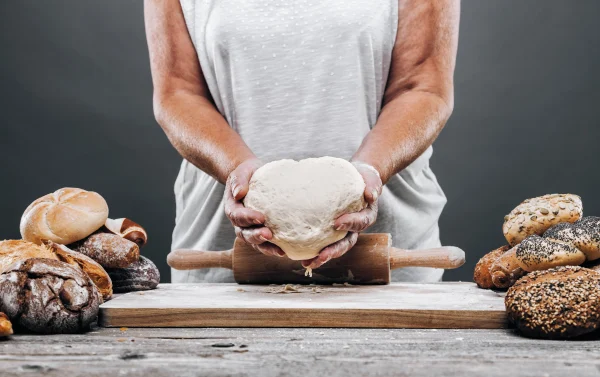
Traditional kneading works well for lower-hydration doughs. However, many modern bakers prefer the "slap and fold" or "stretch and fold" methods. These techniques use gravity and gentle tension to organize the proteins without the need for heavy labor. Stretching the dough and folding it over itself creates layers of strength. This method preserves the delicate gas bubbles that give artisanal bread its unique, open texture.
Does kneading longer create more gluten? While kneading does align protein strands, a report by Sourdough.co.uk warns that over-kneading can eventually oxidize the flour and break those bonds, leading to a loss of flavor and a crumbly rather than chewy texture. You want to reach a point of smooth elasticity, not push the dough until it becomes rigid and dull. Finding this balance ensures the best results in wheat and bread making.
The Power of Patience: How Time Affects Wheat and Bread Making
Time does the work that your hands cannot. You don't always need to stir or punch the dough to build strength. Enzymes inside the flour begin to break down complex starches into simple sugars as soon as the water hits. This natural process also assists in gluten structure development by allowing the proteins to hydrate fully and bond at their own pace.
The Autolyse Method: Letting Nature Do the Work
The autolyse method involves mixing just the flour and water, then letting it sit for thirty minutes to an hour. During this rest, the flour absorbs every drop of moisture. This makes the dough much more extensible, meaning it can stretch further without snapping. As noted by King Arthur Baking, this simple pause adds significant strength to the structure and reduces the total amount of physical kneading required.
Longer fermentation times also improve the flavor profile. Research published in PMC states that as the dough sits, the acidity increases and the pH of the dough is reduced. This increased "tenacity" allows the dough to support its own weight even as it grows larger. Waiting changes the physical properties of the wheat, making the final loaf easier to digest and more delicious to eat.
How Fermentation Shapes Your Wheat and Bread-Making Success
Yeast acts as a gas producer and a trainer for your dough. As yeast consumes sugars, it releases carbon dioxide. These tiny bubbles expand inside the protein net. This internal pressure pushes against the gluten walls, stretching them thin. This "micro-kneading" happens throughout the entire bulk fermentation stage, strengthening the network from the inside out.
Controlling Gas Retention Through Bulk Fermentation
High-quality wheat and bread making depend on how well your dough traps these bubbles. If the protein network is weak, the bubbles will pop and escape. This leads to a flat, dense product. During bulk fermentation, you must monitor the dough’s "feel." It should become light, pillowy, and bouncy. This indicates that the gluten structure development is enough to hold the pressure of the gas.
Why is my bread dense and heavy? A dense loaf usually indicates that gluten structure development was not enough to trap the gases produced during fermentation, causing the air pockets to collapse. A strong protein network is required to achieve a light, airy crumb. If the dough feels "soupy" and won't hold a bubble, it likely needs more folds or a stronger flour.
Shaping and Tension: The Final Stage of Gluten Structure Development
Shaping is your last chance to reinforce the dough’s strength. When you shape a loaf, you are creating surface tension. This acts like a tight skin on a balloon. Pulling the dough across the counter tightens the outer gluten fibers. This tension ensures that when the heat of the oven hits, the dough expands upward instead of spreading out into a pancake.
Creating the "Outer Skin" for Maximum Oven Spring
Food and Wine defines oven spring as the final, rapid expansion of the dough during the first few minutes of baking. The heat causes the gases inside the bubbles to expand according to the laws of physics. If you have succeeded in gluten structure development, the protein net will stretch to its limit without breaking. This results in a tall loaf with a beautiful "ear" where the crust has pulled apart.
The "memory" of the dough also plays a part here. The way you fold and tuck the dough during the final shape sets the direction of the growth. A taut surface guides the energy of the steam. This professional touch separates amateur bakes from bakery-quality bread. Every movement you make during shaping reinforces the work you did during the mixing and fermentation stages.
Perfecting Your Wheat and Bread-Making Process
Every loaf of bread you bake provides a lesson in physics and biology. You are managing a system of proteins and gases rather than just following a recipe. Once you understand how to guide gluten structure development, you gain the freedom to experiment. You can change your hydration levels or try different wheat varieties with confidence. You now know how to feel the dough and respond to its needs.
Success in wheat and bread making comes from observing the small changes in your dough. Notice how it moves, how it resists, and how it relaxes. This sensory connection is the mark of a true baker. Continue to practice your folds and refine your timing. Over time, you will develop an instinct for the perfect windowpane and the ideal level of tension. Each bake brings you closer to learning the art of the perfect loaf.
Recently Added
Categories
- Arts And Humanities
- Blog
- Business And Management
- Criminology
- Education
- Environment And Conservation
- Farming And Animal Care
- Geopolitics
- Lifestyle And Beauty
- Medicine And Science
- Mental Health
- Nutrition And Diet
- Religion And Spirituality
- Social Care And Health
- Sport And Fitness
- Technology
- Uncategorized
- Videos

