
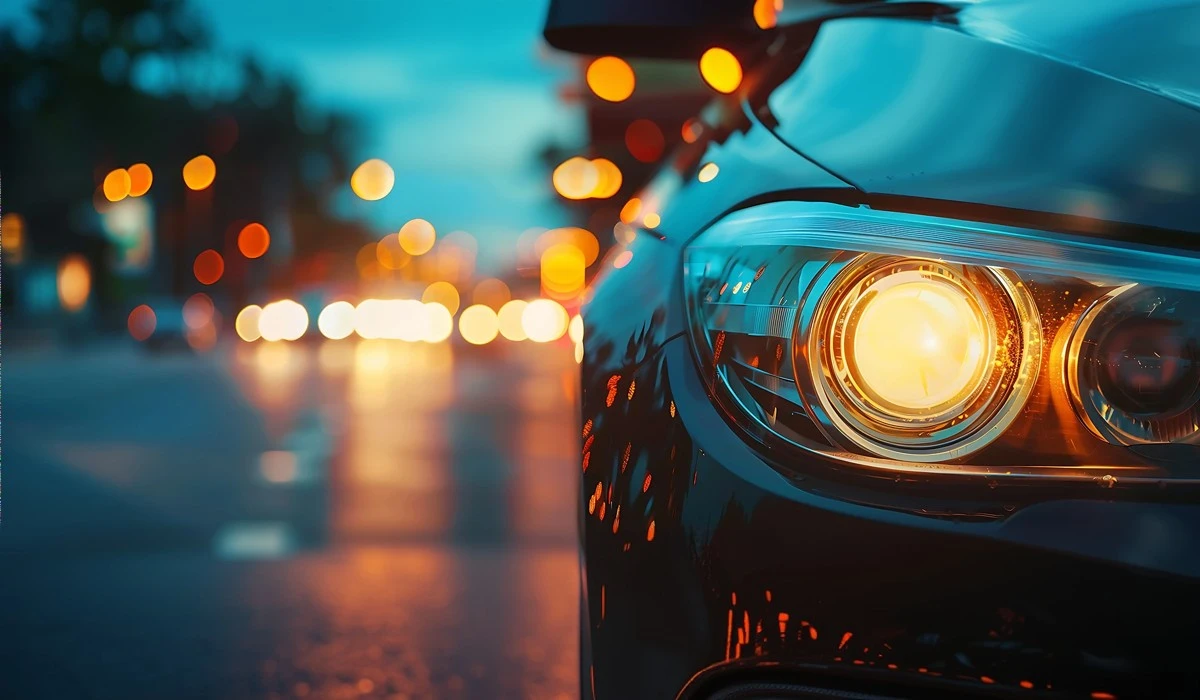
Headlight Glare: Why Night Driving Is Harder
Modern car lights illuminate the road while assaulting the retina with a specific frequency that the human eye struggles to process. Digital power and analog biology clash here. When a driver flashes past you on a dark country lane, your eyes struggle to adjust to brightness while fighting a focused beam designed to cut through darkness like a laser. This switch in technology prioritizes the view of the person behind the wheel while sacrificing the vision of everyone else in the approaching lane. For fifteen years, optometrists have watched patient complaints shift from general vision issues to specific struggles with oncoming traffic. Figures from the RAC suggest the problem of dazzling headlights is getting worse, supporting this growing anxiety.
A recent RAC survey of 1,745 UK drivers revealed that 57% believe headlight glare has worsened in just the last twelve months. This exceeds annoyance. It marks a deep change in how we interact with the road. The sharp, blue-white intensity of modern LEDs creates a stark contrast that older halogen bulbs never produced. While manufacturers argue that better lighting saves lives, the reality on the tarmac tells a different story. Drivers are reporting near-misses, intense eye pain, and, as the RAC notes, a quarter of them suffer a total loss of confidence. The problem of headlight glare expanded beyond a technical irritation to become a public safety crisis that regulations struggle to catch.
The Shift From Warm Glow to Sharp Pierce
Manufacturers swapped gentle, spreading light for a focused beam that creates a tunnel of vision for one driver and a wall of white for everyone else. This switch completely altered the nature of night driving. In the past, cars used filament bulbs. These produced a "brown glow" that washed over the road. The light was diffuse, meaning it spread out softly. It was bright enough to see, but not sharp enough to blind. Today, the industry has moved to Light Emitting Diodes (LEDs). The difference is massive. According to the RAC, a standard halogen bulb produces about 24 lumens per watt, whereas an LED pushes out 200 lumens per watt.
This creates a massive gap in output and brightness. Power is only one issue. The casing is the other. Old glass casings allowed light to scatter. New plastic casings focus the light source into a directional beam. This beam is two to three times brighter than previous technology. It does not fade at the edges; it cuts off abruptly. When that sharp edge hits your eye, the contrast is overwhelming. The design shift turned headlights into aesthetic objects, making cars look sleek and modern. A design professor from the Royal College of Art noted that while clarity improved for the driver, the side effect was dazzling others. The focus shifted from communal road safety to individual driver clarity.
Your Eyes vs. The Blue Spectrum
Your pupils operate on a delay, reacting instantly to a flash of brightness but taking precious seconds to reopen when the dark returns. This biological lag turns a split-second pass into a prolonged period of blindness. The human eye handles yellow light differently than blue light. Halogens burned at a color temperature of about 3200 Kelvin, giving off a yellow-orange hue. LEDs burn between 5000K and 6500K. This is a blue-white spectrum that mimics intense daylight. When this blue-heavy light hits the retina, the reaction is aggressive. The pupil constricts rapidly to protect the eye. However, once the car passes, the pupil does not open back up immediately.
Why do LED lights hurt my eyes?
LED lights emit a concentrated blue spectrum that scatters less within the eye, causing the pupil to clamp down harder and creating a piercing sensation that feels more painful than softer yellow light. This recovery time is dangerous. For drivers between the ages of 15 and 65, it takes anywhere from one to nine seconds for vision to fully recover. That sounds fast, but at 60 mph, a car travels approximately 250 yards in nine seconds. If your vision is compromised for that long, you are effectively driving blind for the length of two football fields. The intensity of the light can also cause retinal bleaching. This happens when the photoreceptors in the eye get overwhelmed. The result is a temporary imprint or "after-image" that floats in your vision, obscuring hazards long after the vehicle has passed.
The Geometry of Blindness
A headlight aimed correctly on flat ground turns into a weapon the moment a car crests a hill or hits a bump. The precise alignment of a beam only exists in a laboratory. On real roads, the geometry changes constantly. Even if a car passes the strict global standards for beam angle, the road surface can ruin the calculation. When a car goes over a hill or round a bend, the angle of the light shifts. A beam meant to point at the tarmac suddenly points directly into the windshield of oncoming traffic.
This issue is amplified by the popularity of high-riding vehicles like SUVs. A safety advisor from Volvo points out that while high vehicles are regulated to have lower beam angles, road misalignment causes the issue. Illegal modifications make this geometry problem worse. Many drivers retrofit LED bulbs into old cars designed for halogens. The reflection inside the casing is wrong, scattering the intense light in illegal directions.
Can I get fined for headlight bulbs?
Yes, as reported by The Guardian, selling or using illegal retrofit bulbs that do not match the vehicle's original casing design can lead to a penalty of £1,000 because they scatter light dangerously. The intensity threshold for glare is roughly 40,000 candela per square meter. Modern lights frequently flirt with or exceed limits when the angle is wrong. Dirty windscreens also play a role here. A guide from Kwik Fit notes that grease or film on a windshield turns incoming light into a blinding haze. The light hits the dirt and scatters, effectively turning the entire glass surface into a source of glare.
The Overlooked Social Cost of Headlight Glare
When roads feel hostile, drivers silently redraw their boundaries and stop leaving the house after sunset. The fear of being dazzled is shrinking people’s lives. It forces them to make choices that limit their freedom. This extends beyond driving to isolation. An 80-year-old resident shared that they abandoned night driving entirely due to safety fears. The anxiety caused by oncoming beams was too severe. As a result, social gatherings had to be rescheduled to daylight hours. If an event happens at night, they simply do not go. This story is common.
One-third of all drivers report feeling less safe at night specifically due to dazzle. The RAC reports that 25% of drivers who find headlights too bright are either driving less at night or have given up altogether. This avoidance behavior shows up in the data. In discussion groups, 90% of members refuse to drive in the dark. They park their cars when the sun goes down. This compromises independence for both the elderly and the young. A survey analysis by the RAC highlighted a significant reduction in social and family visits. People are missing out on connections because the journey feels too risky.
Is night driving becoming more dangerous?
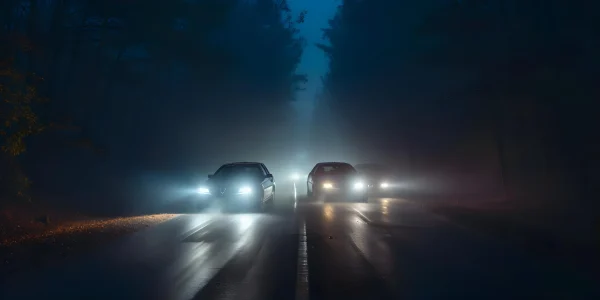
Many drivers feel less safe, with surveys showing that over 50% believe glare has worsened recently, causing them to reduce speed or avoid driving at night entirely to prevent accidents. The effect hits younger drivers too. A driver in their 30s who owns a small car reported that high-intensity lights cause migraines. The vision compromise lasts for minutes after a pass. To cope, they have to reduce speed drastically on dark lanes, a reaction aligned with RAC findings that four-in-ten drivers cannot confidently judge the speed or distance of oncoming vehicles. The glare forces drivers to choose between looking away from the road—a choice 39% of drivers admit to making—or enduring pain.
Data vs. Reality: The Reporting Gap
Official spreadsheets count twisted metal, but they fail to record the panic and hesitation that happen seconds before a near-miss. A massive gap exists between what drivers feel and what the government records. The Department for Transport (DfT) statistics show a downward trend in accidents caused by dazzling lights. In 2014, safety data recorded 330 collisions with glare as a factor. By 2023, that number dropped to 216, with only four fatalities. On paper, the problem looks like it is getting better. In reality, the methodology masks the truth.
The DfT recently removed "vision affected by dazzling headlights" as a standalone cause for accidents in some reporting structures. This changes how the data looks without changing the danger on the road. The RAC and the Spectator argue that collision stats do not capture "near misses." They also fail to track the unreported loss of confidence. If a driver swerves into a ditch to avoid a light and pulls themselves out, that event rarely makes it into a national database. The disconnect is clear. While the SMMT CEO argues that visibility is vital and compliance is maintained, drivers on the ground see a different picture. More than 50% of respondents claim headlight glare has worsened. The official numbers are clean, but the driver experience is messy and frightening.
Regulations Are Lagging Behind
New rules promise to fix the dazzle, but they ignore the millions of older cars already filling the roads. Bureaucracy moves slower than technology. The United Nations has recognized the problem and issued a new mandate. Starting in September 2027, automatic headlight leveling will be required for new vehicles. This technology adjusts the beam angle based on the car's load and position, keeping the light on the road and out of eyes. This sounds like a solution, but it leaves a massive hole. The mandate only applies to new cars sold after that date.
The legacy fleet—millions of vehicles currently on the road—will remain unregulated regarding auto-leveling. These cars will continue to drive with misaligned, static beams for decades. Current regulations also struggle to police the brightness itself. The switch to LEDs happened faster than the laws could adapt to the specific "blue" intensity. While manufacturers like Volvo claim global compliance is mandatory for international sales, the standard allows for a level of brightness that many human eyes find intolerable. The disconnect between a lab-certified light and a road-safe light remains wide.
The Adaptive System and Its Flaws
Computers manage high beams faster than humans, yet they still lack the intuition to spot a cyclist hiding in the shadows. To solve the glare problem, high-end manufacturers introduced adaptive masked lighting. These systems use cameras to detect oncoming cars and shut off specific LED segments. This creates a "shadow box" around the other vehicle while keeping the rest of the road bright. In theory, this gives the driver maximum visibility without dazzling others. In practice, the technology fails often. The Spectator argues that these systems lack human anticipation. A computer reacts to light it "sees." It cannot predict that a car is about to pop over a hill or come around a bend. By the time the sensor registers the oncoming headlights, the other driver has already been blasted with high-intensity light.
Do automatic headlights reduce glare?
While adaptive systems aim to cut glare by dimming specific sections of the beam, they often react too slowly on winding roads and fail to detect dimmer objects like pedestrians or cyclists. Furthermore, these automated systems often fail to detect road users who do not have bright lights. Cyclists and pedestrians frequently get ignored by the sensors. The adaptive lights remain on full beam because the computer sees nothing to dim for. This leaves vulnerable road users exposed to the full force of the LED row. Technology offers a promise of adaptation, but on winding roads or difficult environments, it struggles to match the human need for courtesy and safety.
The Rear-View Mirror Problem
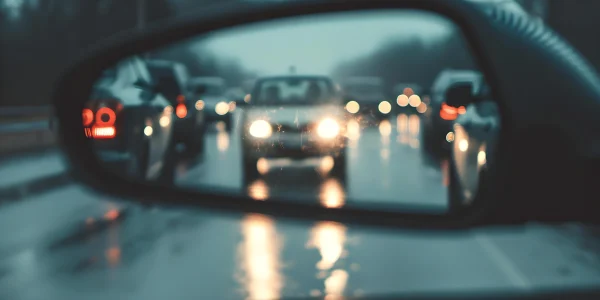
Glare attacks from the front, but it also invades the cabin from behind, bouncing off mirrors to strike the driver when they least expect it. While most discussions focus on oncoming traffic, the data shows a significant issue with following traffic. Supporting contexts reveal that, according to the RAC, 63% of drivers say they are subjected to dazzle from vehicles behind that they cannot avoid. The internal rear-view mirror captures the concentrated beam of a following SUV and shoots it directly into the driver's eyes.
A journalist from the Spectator described intense eye pain caused by a following vehicle, resulting in an immediate headache. They were forced to adjust the mirror to the ceiling just to continue driving. Modern cars often have auto-dimming technology, but like adaptive lights, they are not perfect. They require power and sensors. Older cars rely on the manual tab at the bottom of the mirror. Many drivers forget to use it or fumble with it while driving, adding another distraction. The combination of bright LEDs and higher driving positions means that a sedan driver is constantly bathed in the light of the SUV behind them.
Conclusion: The Unresolved Clash
The battle between seeing and being seen has tipped too far in one direction. We have engineered headlights that turn night into day for the driver, but in doing so, we have made the darkness more hostile for everyone else. The tension is clear. Drivers need visibility to be safe, but that same visibility is blinding the people sharing the road.
Technology created this problem with the switch to intense, blue-white LEDs, and technology is trying to fix it with delayed sensors and adaptive systems. But until regulations catch up to the reality of human biology, the roads will remain a source of anxiety. Headlight glare goes beyond a technical spec. It acts as a barrier that keeps people off the road and isolates them in their homes. As we wait for the 2027 mandates to take effect, millions of drivers are left squinting through the windshield, hoping the next pair of lights doesn't leave them driving blind.
Recently Added
Categories
- Arts And Humanities
- Blog
- Business And Management
- Criminology
- Education
- Environment And Conservation
- Farming And Animal Care
- Geopolitics
- Lifestyle And Beauty
- Medicine And Science
- Mental Health
- Nutrition And Diet
- Religion And Spirituality
- Social Care And Health
- Sport And Fitness
- Technology
- Uncategorized
- Videos

