
Motorsport Engineering: 2026 Active Aero Rules
Imagine a car that changes its physical shape while screaming down a straight at 220 mph. For decades, designers built racing cars as rigid sculptures of carbon fiber. These cars pushed through the air with brute force, creating a massive wall of turbulent wind that blocked anyone trying to pass. This wall of air stopped close racing in its tracks. Modern Motorsport Engineering now turns this entire philosophy upside down.
Engineers no longer build static shapes. They build living machines that breathe and adapt to the track surface every second. The 2026 regulations introduce the "nimble car" concept, forcing a massive shift in how teams approach race car aerodynamics. The FIA reports that designers are required to reduce total downforce by 30% and lower drag by a significant 55%. This change moves the sport away from heavy, power-hungry machines toward agile, productive athletes. Every wing flap and body curve must now work harder with less surface area.
The New Age of 2026 Motorsport Engineering
The 2026 rules represent the most significant reset in the history of the sport. The governing bodies want to fix the problem of "dirty air" once and for all. When a car creates too much turbulence, the car behind loses grip and slides. Through the reduction of the overall footprint of the vehicle, Motorsport Engineering teams can finally allow drivers to follow each other through high-speed sweeps.
The Nimble Car Concept
The new cars look smaller because they are smaller. The wheelbase drops from 3600mm to 3400mm, while the width narrows by 100mm. This smaller size allows the car to slice through the air rather than punching a giant hole in it. A smaller car naturally handles better in tight chicanes and requires less energy to move.
Weight Reduction Strategies
Cutting weight remains the hardest task for any designer. According to Formula1.com, the 2026 regulations necessitate a 30kg decrease in the minimum mass of the vehicle, setting the limit at 768kg. Teams must find these savings even while the battery systems grow larger. This forces engineers to use thinner carbon weaves and lighter mounting brackets without losing chassis stiffness.
Understanding Active Race Car Aerodynamics
Static wings are now a thing of the past. As explained by Formula1.com, during the 2026 period, the car modifies its shape depending on its location on the circuit. This shift relies on move-on-demand systems that adjust the front and rear wings simultaneously. This keeps the car balanced so the nose doesn't dive or lift unexpectedly at high speeds.
Front Wing Adaptability
The new front wing features two active elements. These flaps move to manage the air hitting the front tires. In the past, front wings pushed air out and around the tires. Formula1.com notes that the wing now channels air inward. This "in-wash" configuration maintains cleaner air for trailing vehicles, which is intended to make overtaking safer and more frequent.
Rear Wing Interaction
A report from Reuters indicates that the existing Drag Reduction System (DRS) will be retired in its current form. Instead, the full wing assembly operates alongside the front wing to modify the drag profile. Research from Motorsport.com adds that the rear wing will utilize a three-element active setup. How do the 2026 F1 active aero wings work? During 2026, these wings use electric actuators to flip flaps between a high-grip setting and a low-drag setting. This movement ensures the car has maximum stick in the corners but zero resistance on the long runs. Motorsport Engineering experts focus on the timing of these movements to ensure the driver never loses confidence in the rear end.
Tactical Modes and Dual Wing Configurations
Racing in 2026 involves a constant toggle between two distinct aerodynamic states. Drivers and onboard computers manage these states to extract every millisecond of performance. These modes represent a total departure from the "set it and forget it" setups of previous years.
Z-Mode for Cornering Stability
As detailed by Formula1.com, Z-Mode serves as the standard configuration for sections of the track that are not straight. The wing elements tilt upward to catch as much wind as possible. This creates downward pressure, shoving the tires into the asphalt. Even though total downforce is lower than in 2025, Z-Mode maximizes what is available to keep cornering speeds high.
X-Mode for Straight-Line Efficiency
Once the car straightens out, it enters X-Mode. The flaps on the front and rear wings flatten out, significantly reducing the car's frontal area. What is the difference between X-mode and Z-mode? The same source explains that drivers can switch to X-mode, a low-drag state that adjusts the flap angles on both the front and rear wings to reach higher speeds on straights. In Motorsport Engineering, the software that manages this changeover becomes the most important tool in the garage.
Structural Changes to Chassis and Floors
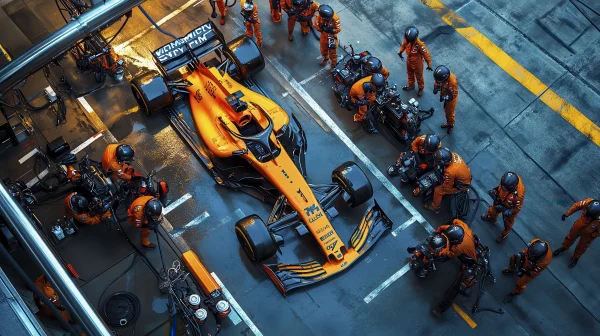
The floor of a modern race car generates the majority of its grip. However, the 2026 rules change how that grip forms. Formula1.com states that the objective is to decrease the vehicle's sensitivity to "porpoising," which refers to the heavy bouncing caused by air stalling under the vehicle.
Narrower Floors and Reduced Venturi Effect
The publication also highlights that the updated rules shift away from the deep tunnels used previously. It further clarifies that the 2026 floor is partially flat to lower the "ground effect" suction. Decreasing the floor width allows engineers to reduce the total volume of air passing under the car. This makes the car's balance more predictable when the driver hits a bump or a curb.
Diffuser Modification
The diffuser at the back of the car now sits lower and has a simpler shape. This change reduces the "up-wash" of air that used to hit trailing drivers in the face. Why are the 2026 cars getting narrower? A width reduction to 1900mm lowers the total drag and makes the car a smaller target for the wind. Regarding race car aerodynamics, this smaller size means the car behind encounters less turbulence and can stay closer in the corners.
Strategic Cooling in Modern Motorsport Engineering
The 2026 power unit splits its output equally between the engine and the battery. This 50/50 split creates a massive heat problem. While the engine needs air to stay cool, open cooling vents create drag. This creates a difficult puzzle for any Motorsport Engineering department.
Sidepod Geometry and Internal Flow
Designers now use "internal aerodynamics" to move air through the car. They pack radiators into tighter spaces and use curved ducts to speed up the airflow. This keeps the electrical components cool without ruining the clean air flowing over the outside of the bodywork.
Brake Duct Productivity
The new MGU-K system recovers three times more energy than the old version. This happens during braking, which puts immense stress on the rear axle. Brake ducts must now do two jobs. They must cool the physical discs and also manage the heat generated by the electric motor as it spins in reverse to charge the battery.
Simulating Success with Advanced Digital Tools
Because the rules are so strict, teams cannot simply build a hundred different wings to see which one works. They must use digital simulations to prove their ideas first. This makes the computer lab just as important as the race track.
CFD Constraints
The FIA limits how much "computing power" a team can use. This prevents the richest teams from running simulations 24 hours a day. Engineers must be very careful with their choices. They only run simulations on the parts they believe will offer the biggest jump in performance.
Wind Tunnel Correlation
Even the best computer model can fail in the real world. Official FIA regulations specify that teams continue to utilize wind tunnels to evaluate physical models that are 60% of the actual size. However, simulating active aero parts is hard. The model must move its wings while the wind blows at 180 mph. Motorsport Engineering firms spend millions of dollars making sure the wind tunnel matches the data they see on the actual race track.
Competitive Advantages in 2026 Motorsport Engineering
The winner of the next world championship will not just have the fastest engine. They will have the smartest car. The 2026 period turns the vehicle into a robot that must make decisions every millisecond.
Software Integration
The active aero flaps need code to tell them when to move. If a flap opens too early, the car might spin. If it opens too late, the driver loses time. Professional Motorsport Engineering teams now employ more software developers than ever before. These programmers write the logic that balances the wings against the engine's power delivery.
Driver Feedback Loops
Drivers must learn to trust a car that changes its grip levels mid-corner. They work in high-tech simulators to practice the feel of the wings moving. A driver who can feel the exact moment X-Mode kicks in will have a massive advantage. This human-to-machine connection defines the future of racecar aerodynamics.
The Enduring Effect of Motorsport Engineering
The 2026 regulations prove that speed no longer comes from simply adding more wings. It comes from productivity, smart packaging, and active control. Through the downsizing of the car and the use of active aerodynamics, the sport returns to its roots of pure, agile racing. We are moving toward a future where every gram of carbon fiber and every line of code must justify its existence.
This new direction in Motorsport Engineering will eventually change the cars we drive on the street. The active wings and high-performance batteries developed for the track will make future road cars faster and greener. As we watch these nimble machines battle wheel-to-wheel, we are seeing the birth of a new philosophy. Engineering has finally moved past brute force and into the age of intelligent motion.
Recently Added
Categories
- Arts And Humanities
- Blog
- Business And Management
- Criminology
- Education
- Environment And Conservation
- Farming And Animal Care
- Geopolitics
- Lifestyle And Beauty
- Medicine And Science
- Mental Health
- Nutrition And Diet
- Religion And Spirituality
- Social Care And Health
- Sport And Fitness
- Technology
- Uncategorized
- Videos

