
Inside The Massive Arsenal Disability Access
Stadiums often fix the building while ignoring the chaos outside. According to the Disability Sport NI design guidelines, engineers often install ramps and widen doors, assuming physical entry equals total access, yet a well-designed stadium offers little benefit if the routes getting to and from it remain challenging. This logic fails because the journey from the train station or bus stop to the turnstile remains a hazardous gap. A perfectly accessible venue becomes useless if the streets leading to it are unnavigable for a solo traveler.
A report by The Guardian notes that Arsenal disability access strategies tackle this overlooked logistical gap, improving the matchday experience for supporters with a variety of conditions in tandem with their Game Day Vision service. The club recognized that internal facilities mean nothing if fans cannot safely reach the ground. Instead of focusing solely on concrete and steel renovations, the approach shifted toward human logistics. The result creates a bridge between the hostile external environment and the protected stadium interior. This system acknowledges that true accessibility requires managing the entire timeline of a matchday, rather than just the ninety minutes of play.
The Gap Between Ticket and Turnstile
Most venues draw a hard line where their responsibility ends. Once a fan exits the gate, they are on their own. This boundary creates a dangerous "no-man's land" for disabled supporters. The street environment lacks the controlled safety of the stadium.
Arsenal disability access programs specifically target this disconnect. The stadium itself was never the core problem. Venues often possess high accessibility ratings internally. The friction point lies in the transit. For a disabled fan without a regular companion, the journey from public transport to the stadium entrance presents physical danger.
Thomas Clements attended his first match at Highbury in 1995. He sat on his father’s shoulders. That experience relied on family support. For adults wanting independence, that safety net disappears. The club realized that waiting for the city to fix the streets was a losing strategy. They needed a system to extend the stadium’s safety perimeter outward.
The solution emerged as "Game Day Vision." This service acts as a matchmaker. It connects disabled fans who lack regular companions with sighted guides. The volunteers offer more than company; they provide the essential navigation data that allows a blind or mobility-impaired fan to traverse the chaotic approach to the ground.
How Rapid Action Beats Bureaucracy
Corporate structures usually kill good ideas with slow approval processes. Innovation typically dies in committees. The timeline for the Game Day Vision service defied this standard corporate lethargy.
Andrew Birch pitched the concept to the Arsenal disability manager on a Wednesday. Standard corporate environments usually require a feasibility study. Here, the response was immediate. The club launched a beta version of the service that very same weekend.
Moving from a raw idea to a live service in under a week is rare. It reveals a specific operational priority. When the need is urgent, the administrative layers vanish. The club now utilizes 40 volunteers to run this service.
This speed changed the fan experience. A founder of the service noted that solitary attendance poses real safety risks. Without sighted help, navigation becomes impossible. The risk of injury or simply getting lost keeps fans at home. Bypassing the usual red tape allowed the club to close the safety gap immediately.
Solving the Solo Traveler Problem
Independence often creates isolation. A fan who wants to attend alone usually faces a choice between autonomy and safety. The social aspect of football collapses when the logistics require intense concentration just to survive the trip.
Game Day Vision changes the nature of the matchday. It converts a logistical stress test into a social experience. A user from Norwich described solitary travel as isolating. The service provides necessary social connection. It removes the anxiety of travel.
How does Arsenal help disabled fans?
Arsenal uses the Game Day Vision service to pair solo disabled fans with sighted volunteers who guide them safely to the stadium.
The Chair of the Disabled Supporters’ Association emphasizes that sport provides necessary escapism. Sighted assistance offers security. Life quality depends on this access. When the logistical fear disappears, the fan can focus on the game. The service moves people while also reintegrating them into the social fabric of the crowd.
Arsenal Disability Access and the Restroom Revolution
Standard accessibility labels often hide the reality that facilities are physically unusable for complex needs. A "disabled toilet" sticker usually implies a slightly larger stall with a grab bar. For many fans, this standard is inadequate and prevents attendance entirely.
Mencap announced that Arsenal disability access standards shifted in 2014 when the club became the first in the Premier League to install a "Changing Places" toilet, marking the 600th such facility in the UK. These facilities differ radically from standard accessible units.
A standard unit is often too small for a wheelchair user and a carer. It lacks the equipment necessary for safe transfers. According to club officials, Changing Places toilets are larger than standard units and include a height-adjustable bench, a hoist, and room for two carers.
This specific technical upgrade alters the demographics of the crowd. A campaigner from Mencap noted that standard facilities are insufficient for complex needs. Without a hoist, stadium attendance is impossible. Families stay home because they cannot manage basic hygiene needs safely.
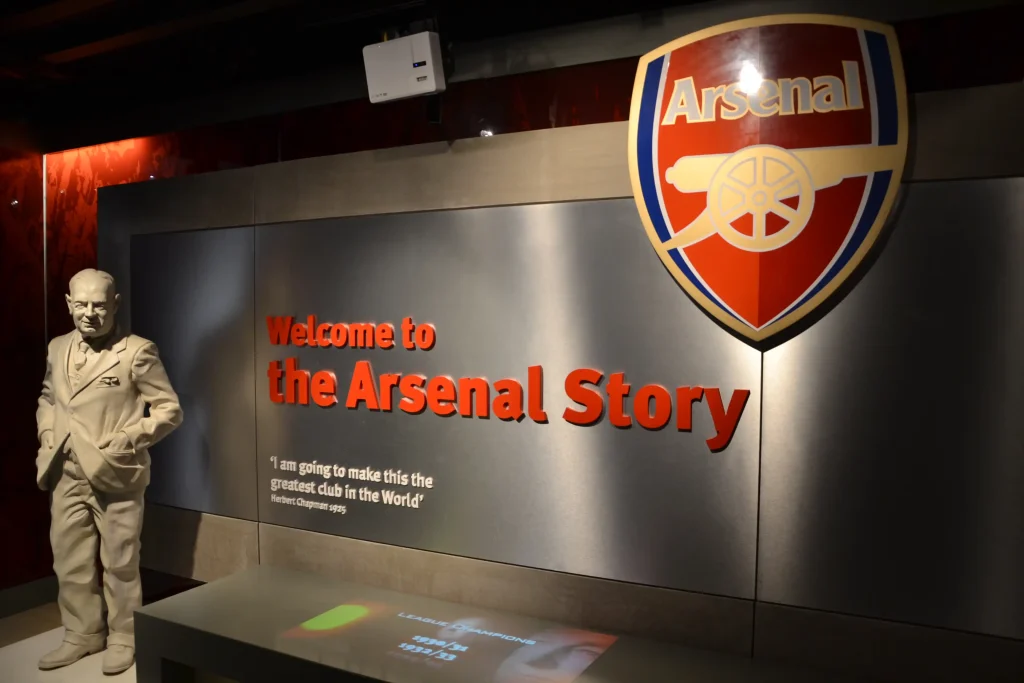
Image Credit - By Gael13011, Wikimedia Commons
What are Changing Places toilets?
These are specialized restrooms equipped with hoists, changing benches, and extra space to accommodate people with complex disabilities and their carers.
A supplier for the facility pointed out that this eliminates stress for families. It supports caregivers. The installation set a benchmark for league facilities. It proved that true inclusion requires specific, expensive equipment, rather than just a widened door.
The Economics of Inclusion
Reducing ticket prices appears to be a loss, yet it builds a fiercely loyal, recurring customer base. Financial barriers often compound physical ones. A disabled fan frequently incurs higher costs for travel and assistance.
The "Purple" membership scheme addresses this economic reality. The club currently has over 600 members in the Disabled Supporters’ Association and 800+ members in the Purple scheme. The pricing structure acknowledges the extra costs disabled fans face. Members receive half-price tickets. Crucially, they also receive a free enabler pass.
This economic model accepts that the fan requires a companion to attend. Charging for two tickets would effectively double the price for a disabled supporter. Removing the cost of the carer allows the club to remove a financial penalty attached to disability.
The infrastructure supports this volume of members. The stadium holds 241 wheelchair seats. It offers 102 Blue Badge parking spots. There are 38 disabled toilets. These numbers allow for scale. The membership program works because the physical capacity exists to support it.
Audio Description and the Sensory Gap
TV commentary assumes the audience can see the action, leaving blind listeners with zero context about the pitch. Broadcasters describe the narrative but often skip the spatial details. A blind fan listening to a standard radio feed often misses the nuance of play.
The club bridges this sensory gap through a partnership with Alan March Sport. This service provides specialized descriptive commentary. It differs from a standard broadcast. The commentators focus on ball position, player movement, and spatial dynamics.
Mainstream commentary relies on the viewer's eyes to fill in the blanks. Blind-specific commentary paints the entire picture verbally. Fans access this via headsets or podcasts. This service allows visually impaired fans to track the game in real-time. It aligns their experience with the sighted crowd. The reaction to a goal happens simultaneously. A dedicated guide dog facility further supports this sector of the fanbase. The infrastructure accommodates both the fan and their service animal.
Employment and Internal Culture
Most organizations view accessibility as a fan service issue, ignoring the barriers facing their own payroll. A club can have great ramps but a discriminatory hiring policy. True inclusion changes the workforce, not just the customer base.
According to official club statements, Arsenal disability access initiatives extend into employment practices, as they became the first professional football club to achieve "Level 3 Disability Confident Leader" status by championing the "Arsenal for Everyone" campaign. This status focuses on recruitment and retention. The strategy moves beyond spectator comfort. A former CEO stated that workforce diversity is mandated. The inclusion strategy extends beyond the pitch to employment.
Is Arsenal a Disability Confident employer?
Yes, the club is a Level 3 Disability Confident Leader, meaning they actively champion inclusive hiring and retention practices. A Government Minister for Disabled People cited the club as a model for other top-flight teams. The dual focus on inclusive hiring and spectator access creates a consistent culture. Staff who understand disability issues from the inside create better services for fans. The "Purple" members interact with staff trained in an inclusive environment.
Expanding the Model
Local success often triggers wider adoption. A working system creates a blueprint for competitors. The Game Day Vision service began as a specific fix for one club. It has since expanded.
The Guardian reports that clubs like West Ham, Colchester, Ipswich, and Crystal Palace have adopted similar models, working directly with Game Day Vision. The rapid beta test at one stadium proved the concept worked. The replication proves the need was universal.
Small adjustments change the matchday. A fan with Cerebral Palsy noted that club logistics feel seamless. The experience improves because of attention to detail. When the friction of travel and access disappears, the football remains.
Accessibility Beyond Compliance: Designing for Real Experience
Accessibility often fails when it focuses on code compliance rather than user experience. Ramps and elevators satisfy inspectors, yet they fail to solve the isolation of the solo traveler or the anxiety of the arrival. Arsenal disability access succeeds by targeting the invisible barriers that exist before the turnstile and inside the employment office.
The shift from logistical stress to a seamless social experience defines the success of these programs. Addressing the journey, the restroom requirements, and the financial penalties of disability allows the club to convert excluded individuals into active participants. The system works because it prioritizes the reality of the fan over the rigid requirements of the building code.
Recently Added
Categories
- Arts And Humanities
- Blog
- Business And Management
- Criminology
- Education
- Environment And Conservation
- Farming And Animal Care
- Geopolitics
- Lifestyle And Beauty
- Medicine And Science
- Mental Health
- Nutrition And Diet
- Religion And Spirituality
- Social Care And Health
- Sport And Fitness
- Technology
- Uncategorized
- Videos

