
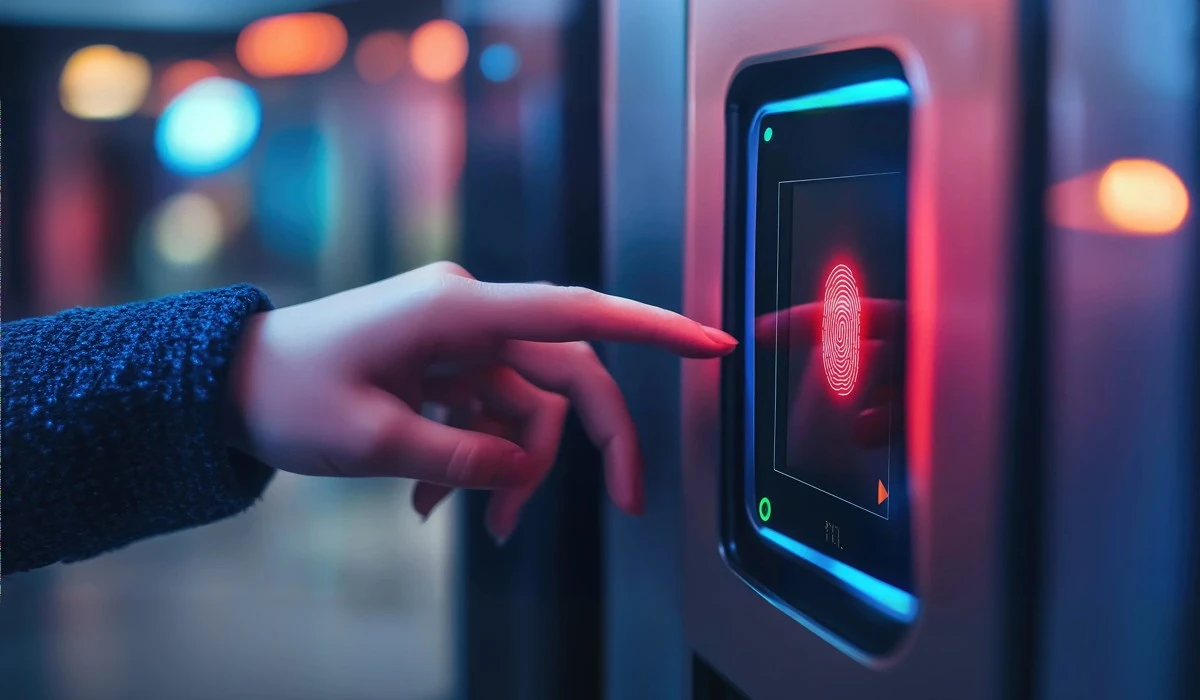
Biometrics In Schools: Privacy Rights At Risk?
According to implementation descriptions by the Leverhulme Academy Trust, cafeteria lines often move faster when you pay with a thumbprint because payments are reflected instantly. However, this speed hides a primary shift in how educational institutions view their students. Schools historically acted as guardians of academic records, yet they now function as massive processors of biological identity. This transition turns the playground into a data collection zone where convenience trades places with privacy.
Biometrics in schools represents a significant convergence of technology, law, and civil liberty. Administrators push for cashless catering and automated attendance to streamline operations. However, this efficiency demands that children surrender unique physical characteristics—fingerprints, facial maps, and voice patterns—to a digital database. The tension here lies between the operational goals of the institution and the rigid legal protections surrounding a minor's personal data.
Most parents assume a permission slip covers everything, but the legal reality contradicts this standard assumption. The authority to process a child’s physical data does not rest solely with the guardian; it involves a layered hierarchy of rights where a student’s refusal holds absolute veto power. Understanding this situation requires looking past the "efficiency" sales pitch and examining the strict regulations well-defined by the Protection of Freedoms Act 2012 and the UK GDPR.
The Legal Hierarchy of Control
Laws typically reinforce parental authority, yet regarding biometric processing, legislation actively dismantles it to empower the child. As outlined in Department for Education guidance, the Protection of Freedoms Act 2012 and the UK GDPR create a unique legal environment where the subject of the data owns more authority than the adult signing the forms. This structure ensures that a student’s bodily autonomy supersedes administrative convenience or parental compliance.
The Data Protection Act 2018 and UK GDPR classify biometric data as "special category data." The Department for Education clarifies that this label elevates fingerprints and facial scans above standard personal information, meaning processing it requires a strict lawful basis under Article 6 and a discrete condition under Article 9. Schools cannot simply claim legitimate interest; they must navigate a maze of compliance that prioritizes the rights of the student.
The Protection of Freedoms Act 2012 specifically targets the use of biometrics in schools and colleges. It mandates that schools notify all parents of their intent to use automated biometric recognition systems. Notification is not optional. The only exception occurs if a parent cannot be traced or if contacting them poses a welfare risk to the child. This creates a mandatory transparency layer that prevents schools from quietly rolling out new tech without community awareness.
Does a student have to participate in biometric systems?
No, a student’s objection precedes over parental permission and forces the school to provide an alternative. Even if a parent provides written consent, the school cannot process the data if the student objects. This objection doesn’t have to be written or formal. If a student refuses to place their finger on a scanner, the school must accept that refusal immediately. This provision places the final decision directly in the hands of the child, acknowledging their ownership over their own biometric identity.
The Consent Trap
Consent acts as the gatekeeper for biometric processing, but the requirements for obtaining it are rigorously defined. Schools need written permission from at least one parent before collecting biometric data from anyone under 18. After the student turns 18, they alone control consent and parental approval no longer applies.
However, the "written consent" rule contains a critical nuance. If one parent consents but the other parent writes to object, the school faces a conflict. While the legislation states written consent from "at least one parent" is the minimum, the spirit of the law leans heavily toward protecting the child's data in the event of a dispute. The absolute trump card remains the student. If the child says no, the parents' arguments effectively vanish.
Defining Biometric Data
We often treat our faces and fingerprints as mere physical features, but digitized versions of these traits function as unchangeable passwords. Unlike a compromised password, you cannot reset your fingerprint. This permanence forces regulators to treat biometric data as "special category data," requiring the highest levels of security and justification.
Biometric data includes information resulting from specific technical processing related to the physical, physiological, or behavioral characteristics of a natural person. In a school setting, this commonly appears as:
- Fingerprint systems: Used primarily for cashless catering and library checkouts.
- Facial recognition: Used for attendance, access control, or payment verification.
- Voice recognition: Less common but falls under the same strict definitions.
The Information Commissioner’s Office (ICO) and Department for Education (DfE) guidance stress that this data uniquely identifies a person. Therefore, schools act as "Data Controllers." They bear the full legal weight for compliance. They cannot outsource the blame to the third-party software vendor if a breach occurs or if the processing violates the UK GDPR principles.

The Necessity Check
Department for Education guiding principle emphasize that schools must justify why they need to use this specific technology, adhering to the principle of data minimization which demands that data collection be satisfactory, relevant, and limited to what is essential.
If a school uses facial recognition solely to let students pay for lunch, regulators often view this as excessive. A simple PIN code or smartcard achieves the same result without processing special category data. The convenience of not carrying a card rarely justifies the privacy risk associated with storing facial maps of minors.
Is facial recognition legal in schools?
Facial recognition is legal only if it passes strict necessity tests and lawful basis checks, though "live" scanning is rarely justified.
The Reality of Facial Recognition
Technology vendors market facial recognition as a seamless security upgrade, but it frequently introduces disproportionate surveillance into educational environments. The DfE guidance draws a sharp line between standard facial recognition (verification) and "live" facial recognition (surveillance).
"Live" facial recognition involves real-time scanning of crowds to identify individuals against a watchlist or database. The DfE deems this largely inappropriate for schools. The indiscriminate nature of live scanning means the system captures data from everyone walking past the camera, regardless of whether they consented. Justifying this under the UK GDPR is nearly impossible for a standard school setting.
Even for standard purposes, such as door access or lunch payments, the necessity argument struggles. Schools must prove that less intrusive methods cannot achieve the aim. Since schools have operated successfully for decades using registers and ID cards, proving that facial mapping is "necessary" rather than just "cool" or "modern" remains a significant legal hurdle.
Indiscriminate Data Capture
The problem with many facial recognition systems lies in their broad scope. When a camera scans a hallway, it does not selectively ignore students who opted out. It processes the visual data of everyone to find a match. This creates a situation where non-consenting students still have their data processed, even if only momentarily, to determine they are not in the database.
This aligns with concerns raised by privacy advocates. The routine use of such powerful technology conditions students to accept constant surveillance as a normal part of daily life. It shifts the baseline of privacy expectations, training young people to value speed over anonymity.
Mandatory Alternatives and Equality
Opting out of a biometric system often feels like a social penalty, yet the law mandates that privacy choices must not carry negative consequences. Schools cannot punish a student for refusing to scan their fingerprint, nor can they make the alternative method cumbersome or stigmatizing.
The Protection of Freedoms Act 2012 forces schools to provide "reasonable alternative arrangements" for students who do not participate in biometric systems. These alternatives must ensure the student suffers no disadvantage.
- Payment Systems: If the biometric line moves quickly, the manual entry line cannot be deliberately slow or understaffed.
- Access: Students using PIN codes or swipe cards must have the same level of access to facilities as those using biometrics.
- Social Stigma: The process for opting out must be handled discreetly to avoid peer pressure or bullying.
Do schools have to offer an alternative to biometrics?
Yes, schools must provide a reasonable alternative, like a smartcard or PIN, without disadvantaging the student. The DfE emphasizes that these alternatives must be immediate. A student who withdraws consent at 9:00 AM must have a way to buy lunch at 12:00 PM. The school cannot delay the alternative while processing the paperwork. The right to oppose is an active right, not a bureaucratic request.
Data Retention and Security
Digital identity requires a secure vault, but schools often treat data retention with the casualness of a lost-and-found box. The GDPR principle of storage limitation dictates that personal information must not be kept longer than necessary. For biometrics in schools, this timeline is brutally short.
Department for Education mandates state that when a student leaves the school, their biometric data must be deleted immediately. There is no grace period for "keeping it on file just in case." The justification for processing ends the moment the student is no longer enrolled. Furthermore, if a student or parent withdraws consent, the data must be deleted immediately.
The Security Burden
Schools act as Data Controllers, meaning they are responsible for the integrity and confidentiality of the data. The Information Commissioner’s Office (ICO) advises that to ensure appropriate security, biometric templates (the digital map of the fingerprint or face) must be encrypted.
A major risk involves the lack of technical expertise within school administrations. Schools often rely on third-party vendors who claim their systems are "GDPR compliant." However, compliance is an ongoing process, not a software feature. The school must ensure the vendor processes the data correctly. If the vendor suffers a data breach, the school is accountable to the parents and the ICO.
This responsibility forces schools to conduct a Data Protection Impact Assessment (DPIA) before implementing any biometric system. A DPIA identifies high-risk processing and outlines how the school will mitigate those risks. If the risks cannot be mitigated, the school must consult the Information Commissioner’s Office before proceeding. This step is mandatory, yet historical data suggests it is often overlooked or rushed.
The Historical Surge: Big Brother Watch Data
Current regulations did not appear in a vacuum; they emerged as a response to a rapid, unregulated expansion of biometric tech in the early 2010s. A 2013 report by Big Brother Watch revealed the scale of biometric adoption before tight controls like POFA and GDPR were fully entrenched.
The report, based on Freedom of Information (FOI) requests to 1,255 schools, painted a concerning picture.
- High Adoption: Approximately 40% of secondary schools were using biometrics.
- Mass Processing: An extrapolated 1.28 million pupils were fingerprinted.
- Regional Hotspots: The South East led with 39% usage, while the North East sat lower at 30%.
This data highlighted a trend where technology adoption outpaced legislation. Schools prioritized efficiency and cashless catering without pausing to consider the long-term privacy implications.

The "Action Required" Pressure
The Big Brother Watch investigation uncovered aggressive tactics used to secure parental permission. Schools frequently sent letters framed as "action required" or "urgent registration," implying that biometrics were mandatory.
- Transparency Failures: Many schools failed to mention the right to opt-out.
- Pre-POFA Consent: 31% of schools admitted they had not consulted parents properly before the Protection of Freedoms Act introduced stricter rules.
- Scope Creep: While schools claimed the data was for identification only, the systems allowed for behavioral tracking across different school activities—library usage, food choices, and attendance patterns.
This historical context explains the rigidity of current DfE guidance. The "soft" pressure schools applied in the past necessitated the "hard" rights students possess today. The shift from "opt-out if you dare" to "written consent required" marks a major victory for privacy advocates.
The Tension: Efficiency vs. Conditioning
We accept trade-offs daily, but introducing children to these trade-offs early normalizes a culture where personal INFORMATION is the currency for basic services. The debate around biometrics in schools extends beyond legal compliance; it touches on the psychological conditioning of the next generation.
Schools argue that biometrics eliminate bullying (no free school meal stigma), reduce queues, and simplify administration. These are valid operational goals. However, privacy groups argue that this trains children to view their bodies as readable barcodes. It establishes a worldview where constant identification is the price of participation in society.
This "conditioning for surveillance" creates a long-term societal risk. If a student spends seven years scanning their thumb to eat, they are less likely to question intrusive surveillance in the workplace or public spaces as adults. The normalization of the technology is as persuasive as the technology itself.
The Role of the DPIA
The Data Protection Impact Assessment (DPIA) serves as the primary defense against this conditioning. It forces schools to pause and ask, "Is this actually necessary?" A robust DPIA challenges the assumption that efficiency is the ultimate goal. It requires schools to document:
- The nature, scope, context, and purposes of the processing.
- An assessment of the necessity and proportionality.
- The risks to the rights and freedoms of the students.
- The actions to address those risks.
If a school cannot prove that the benefits outweigh the severe privacy risks, the DPIA dictates that the project should not proceed. This bureaucratic hurdle acts as a necessary brake on the mindless adoption of surveillance tech.
The Balance of Power
Technology constantly pushes boundaries, but the laws governing biometrics in schools serve as a firm anchor for individual rights. The sector is defined by a unique power dynamic where a student's objection carries more weight than administrative efficiency or parental permission. This structure ensures that the digital identity of a minor remains under their control, protected by the Protection of Freedoms Act and the strict principles of the UK GDPR.
Schools must navigate this terrain with extreme caution. They act as the custodians of high-risk special category data, responsible for everything from secure encryption to the immediate deletion of records upon a student's departure. The history of aggressive adoption revealed by Big Brother Watch demonstrates why these checks are vital. Without them, convenience easily overrides privacy.
Ultimately, biometrics in schools offers a streamlined experience at the cost of anonymity. The legislation forces a continuous re-evaluation of that trade-off. It demands that we ask if the technology works and if it belongs in a space dedicated to the development of free, independent minds. As data becomes the world's most valuable resource, protecting the biometric integrity of students is not just a legal duty; it is a safeguard for their future autonomy.
Recently Added
Categories
- Arts And Humanities
- Blog
- Business And Management
- Criminology
- Education
- Environment And Conservation
- Farming And Animal Care
- Geopolitics
- Lifestyle And Beauty
- Medicine And Science
- Mental Health
- Nutrition And Diet
- Religion And Spirituality
- Social Care And Health
- Sport And Fitness
- Technology
- Uncategorized
- Videos

