
Redesigning Life via Environmental Psychology
You walk through your front door and drop your keys. You expect to feel instant relief. Instead, your shoulders tighten, and your heart rate stays high. Your brain scans the room and sees a thousand tiny demands on your energy. This happens because your house operates as a physical extension of your nervous system. Every wall, window, and chair shapes how you think and feel. According to a report by eCampusOntario, Environmental Psychology is the study of transactions between individuals and their physical settings, which reveals how your floor plan influences your mood. Scientists now understand the deep link between human behavior and the environment. You can stop fighting your home and start using it to heal.
The Science of Human Behavior and Environment
Your surroundings hold your furniture and change your biology. Kurt Lewin, a pioneer in the field, expressed this concept through an equation discussed by James Clear, which posits that behavior is a function of the individual within their specific environment. When you enter a room, your brain immediately looks for safety and comfort.
Why Your Surroundings Dictate Your Stress Response
Your brain processes spatial cues every millisecond. Sharp edges and dark corners send signals to your amygdala. This part of the brain handles fear and survival. In this context, you might wonder, how does your home affect your mental health? Your immediate surroundings send constant signals to your nervous system, either causing a "fight or flight" response through clutter and poor light or stimulating the parasympathetic system through order and soft textures. High-stress homes keep you in a state of alert. A healing home uses Environmental Psychology to signal that the danger is over. This allows your body to start the recovery process.
The Hidden Effect of Spatial Density and Layout
Density refers to the number of objects or people in a space. However, "crowding" is a psychological feeling. You can feel crowded in a large mansion if the layout feels chaotic. Research published in PubMed indicates that higher stress scores in a home environment correlate with hormone patterns linked to adverse health outcomes, showing that the feeling of crowding increases cortisol. When you clear the physical path between rooms, you clear a mental path for your thoughts. High density often leads to social withdrawal and irritability. Designing for low "environmental load" keeps your brain from reaching a state of total exhaustion.
Using Environmental Psychology for Stress Reduction
You can use specific design choices to lower your stress levels. Environmental Psychology provides the tools to organize your life for maximum peace. Every room should have a clear purpose to help your brain stay calm.
Using "Zoning" to Minimize Decision Fatigue
Your brain loves patterns. When you use your bed for work, your brain gets confused. It does not know whether to stay alert or fall asleep. This "role confusion" creates mental friction. Zoning solves this by creating dedicated "behavioral settings." You should have one spot for deep work and another for pure relaxation. This structure helps your brain switch gears without effort. It removes the need to decide what to do in a space. The environment makes the decision for you.
Sensory Neutralization and the Power of Negative Space
Too much visual information drains your battery. A room filled with clashing patterns and piles of mail creates "cognitive overload." Your eyes have nowhere to rest. Negative space, the empty areas around objects, acts as a visual palate cleanser. Minimalist principles provide a research-backed way to prevent this mental drain. Removing unnecessary items provides your brain a break. A clean surface allows your mind to focus on internal thoughts rather than external clutter. This simple change improves your daily mood and sharpens your focus.
Optimizing Light and Color for Circadian Health
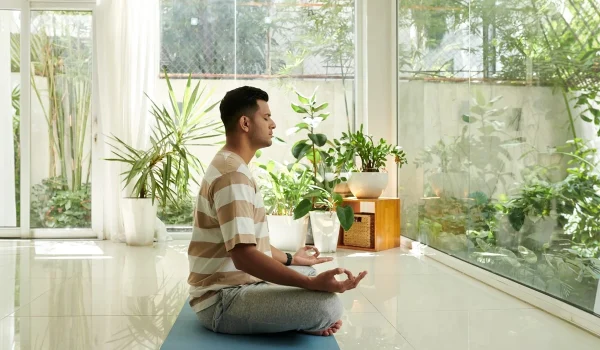
Light acts as a drug for your brain. As noted by the National Institute of General Medical Sciences, light and darkness are the primary influences on circadian rhythms, regulating your internal clock and energy levels. Environmental Psychology helps you manage this biological tool.
The Psychology of Hues: Beyond Aesthetics
Colors carry deep evolutionary meanings. Research published in PubMed describes Ecological Valence Theory, which suggests that color preferences develop from people's emotional reactions to objects associated with those colors. Blue reminds the brain of clear skies and clean water. This connection makes blue a perfect color for focus and calm. Green links to lush natural scenery and growth, which promotes feelings of rest. Meanwhile, red can raise your heart rate and increase physical speed. Use cool tones in bedrooms to signal rest. Save warm, energetic tones for kitchens or exercise areas to boost your activity.
Maximizing Natural Daylighting for Vitamin D and Serotonin
Natural light contains the full spectrum of wavelengths your body needs. Sunlight in the morning triggers the release of serotonin. This chemical improves your mood and helps you feel awake. In the evening, you must avoid blue light. A study published by Wiley demonstrates that melatonin levels are highly sensitive to short-wavelength light, particularly blue light at 480 nanometers, which suppresses the hormone that helps you sleep. You can manipulate your environment by using sheer curtains during the day and warm, dim lamps at night. This alignment with the sun’s cycle fixes your sleep-wake rhythm. It ensures you wake up refreshed and stay productive all day.
Biophilic Design: Integrating Nature into the Home
Humans have an innate bond with the natural world. This bond is a core part of Environmental Psychology. Bringing nature indoors provides a powerful cognitive reset.
Living Greenery as a Cognitive Reset Tool
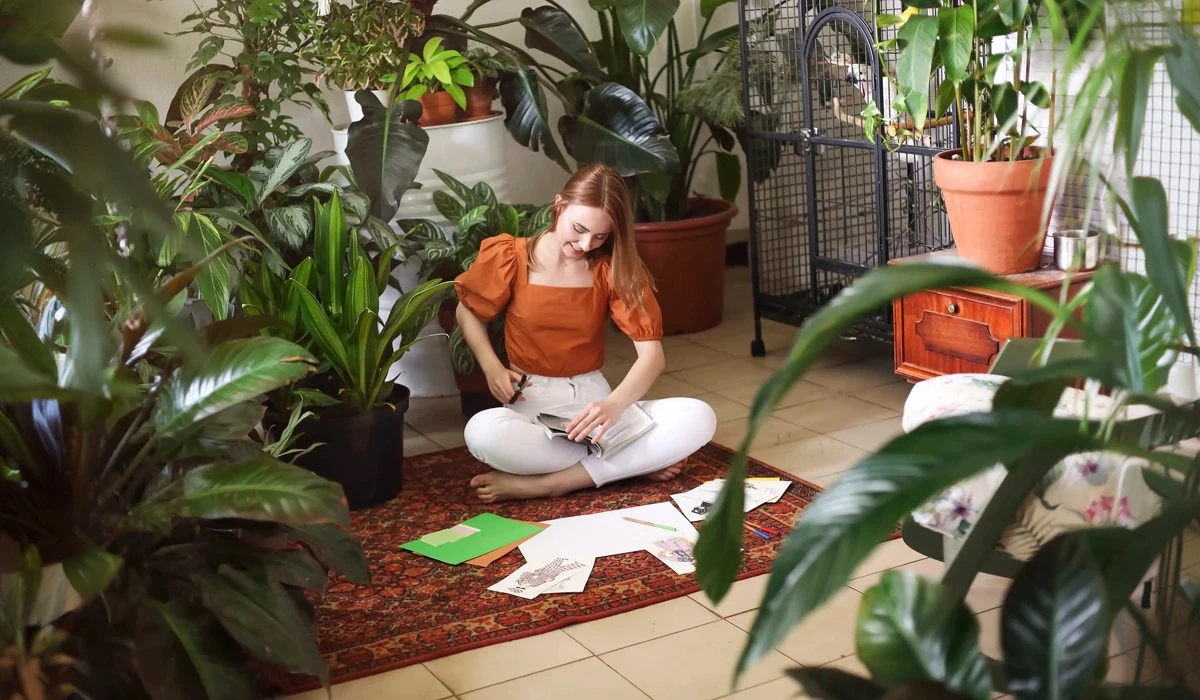
Plants clean the air and provide "soft fascination." This means they capture your attention without requiring effort. For those new to the field, what is environmental psychology? It is the study of how people interact with their surroundings, and biophilia, our innate bond with nature, is a core pillar that proves seeing greenery reduces physiological stress in seconds. Simply looking at a plant for 40 seconds can boost your concentration. It allows the part of your brain used for intense focus to rest and recharge.
The Role of Natural Materials and Textures
The materials you touch influence your heart rate. Touching natural wood or stone induces lower blood pressure than touching plastic or metal. As explained by Metropolis Magazine, these materials often feature fractals, which are detailed patterns of elements that are self-similar at different scales. Our brains evolved to process these patterns easily. They provide a sense of order without being boring. Use cotton, wool, and wood to ground your home. These textures make a space feel safe and permanent.
Applying Environmental Psychology to Social Dynamics
The way you arrange your furniture dictates how you interact with others. The connection between human behavior and the environment is most obvious in your social life.
Sociopetal vs. Sociofugal Seating Arrangements
Some furniture layouts pull people together, while others push them apart. "Sociopetal" spaces encourage eye contact and conversation. A circular seating arrangement or chairs facing each other creates this effect. "Sociofugal" spaces, like chairs lined up against a wall, discourage interaction. You need both in a healing home. Use sociopetal layouts in the living room to build family bonds. Use sociofugal layouts in quiet corners when you need to be alone with your thoughts.
Designing for Privacy and Territoriality
Everyone needs a sense of control over their space. This is called "territoriality." In a shared home, a lack of private space leads to conflict. You can prevent this by creating "private nooks." Even a specific chair or a small desk can serve as a "primary territory." When people have a spot where they feel in total control, their overall anxiety drops. This sense of ownership provides emotional security. It allows family members to coexist without feeling like they are constantly invading each other's bubbles.
Managing Soundscapes and Acoustic Comfort
Sound is a constant environmental stimulus. Most people ignore the "soundscape" of their home, but their brains do not. Environmental Psychology shows that noise levels directly affect your mental clarity.
The Effect of Chronic Noise on Mental Clarity
Constant background noise above 55 decibels causes long-term stress. This includes the hum of a loud refrigerator or the drone of traffic outside. These sounds keep your brain in a state of low-level irritation. You may ask yourself, can a room design change your behavior? Yes, because acoustic treatments like heavy curtains or rugs can lower ambient noise, leading to decreased irritability and increased patience during social interactions. Soft surfaces absorb sound waves and prevent echoes. A quiet home allows for deeper thinking and better emotional regulation.
Curating Restorative Sound Environments
You can use sound to mask unpleasant noises. This is called sound masking. Research in the National Library of Medicine found that people felt more relaxed when a water fountain sound was added to environmental noise, suggesting that a small water fountain or white noise machine can drown out the sound of a busy street. These "natural" sounds provide a soothing backdrop. They raise the "ambient floor" of the room. This makes sudden, sharp noises less jarring. Controlling the audio environment creates a buffer between yourself and the outside world. This buffer protects your mental energy throughout the day.
Personalization and the Sense of Place
The final step in creating a healing home involves your identity. A house becomes a home when it reflects who you are. This connection is vital for long-term well-being.
Place Attachment and Emotional Security
Psychologists use the term "place attachment" to describe our emotional bond with a location. This bond grows when you personalize your space. Displaying meaningful items like family photos or travel souvenirs creates "psychological anchors." These anchors remind you of your history and your values. They turn a physical structure into a safe haven. When your environment reflects your identity, you feel more grounded and secure. This emotional safety net helps you handle the stresses of life outside the home.
Designing a Micro-Sanctuary for Peak Restoration
You do not need to redesign your entire house at once. Start with one "micro-sanctuary." This is a small area dedicated solely to healing. It could be a comfortable reading chair by a window or a meditation corner with a soft rug. Fill this space with elements that follow the rules of Environmental Psychology. Use natural light, a favorite plant, and a comfortable texture. Make this spot your go-to location for a 10-minute reset. Having a guaranteed place for restoration gives you a sense of power over your environment.
Transforming Your Life with Environmental Psychology
Your home acts as a quiet partner in your mental health. It either drains your energy or refills your cup. Understanding the link between human behavior and environment grants you the power to change your life. You do not need an expensive renovation to see results. Small changes like moving a chair, adding a plant, or changing a lightbulb make a massive difference.
A healing home provides shelter and a space where your nervous system can finally rest. Use the principles of Environmental Psychology to build a sanctuary that supports your goals and heals your mind. Start with one room today. When you fix your environment, you fix the foundation of your well-being. Your future self will thank you for the peace you create now.
Recently Added
Categories
- Arts And Humanities
- Blog
- Business And Management
- Criminology
- Education
- Environment And Conservation
- Farming And Animal Care
- Geopolitics
- Lifestyle And Beauty
- Medicine And Science
- Mental Health
- Nutrition And Diet
- Religion And Spirituality
- Social Care And Health
- Sport And Fitness
- Technology
- Uncategorized
- Videos

