
Inside The Ancient History of Yezidis Rituals
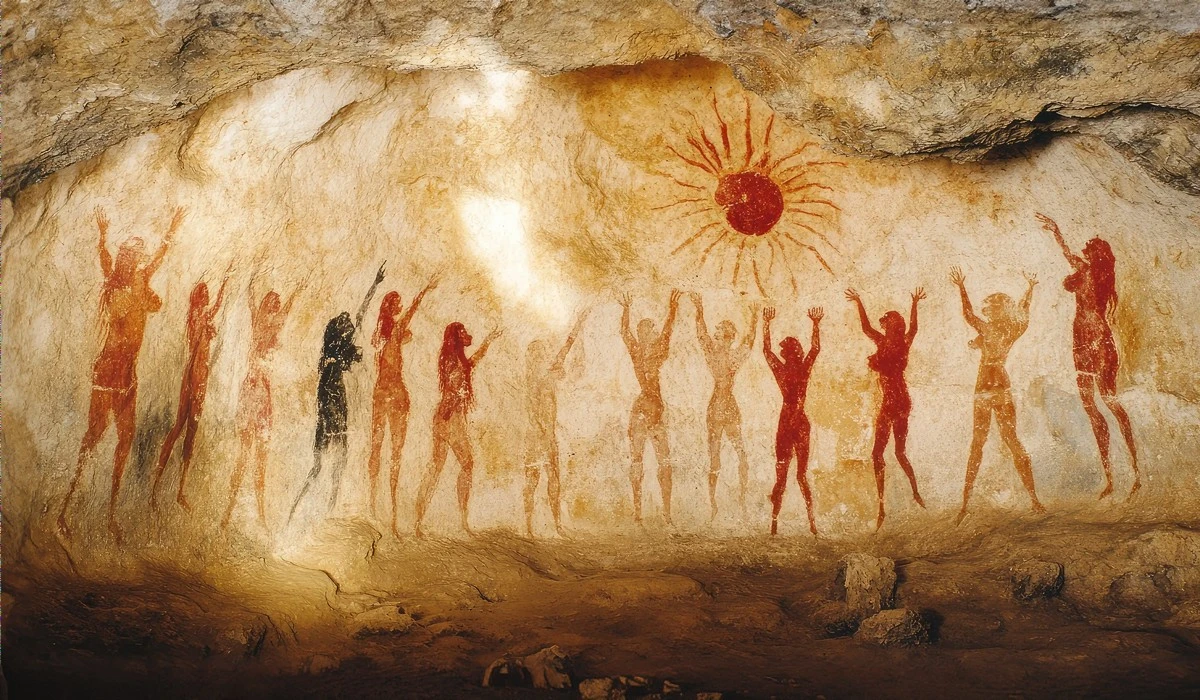
When a community survives 74 attempts at total erasure, they do not rely on military might. They rely on the sky. According to the Encyclopædia Iranica, the practice of praying facing the rising, noonday, and setting sun is standard, so every morning, as the sun peaks over the Nineveh plains in Iraq, Yezidi families turn their faces toward the first rays of light. This daily act tethers their identity to a cycle that no empire can stop. Making the sun their primary witness, they created a way of life that persists despite centuries of isolation. The History of Yezidis reveals a people who turned the terrain into a living prayer book.
While the outside world often views them through a lens of tragedy, their daily existence follows a strict rhythm of spiritual purity. Every ritual protects a specific set of Yezidi religious beliefs that date back to the dawn of civilization. They believe the universe began as a single white pearl. This ancient perspective keeps the community grounded even when the modern world shifts beneath them. Understanding the History of Yezidis means looking past the headlines and seeing a tradition that values light as the ultimate truth.
Tracing Lineage to Ancient Sumer and Babylon
The History of Yezidis begins in the fertile soil between the Tigris and Euphrates rivers. Scholars find deep links between modern Yezidi practices and the ancient civilizations of Sumer and Babylon. For example, the Yezidi concept of the "White Pearl" mirrors ancient Mesopotamian creation stories where the world emerges from a primordial sea. This pearl represents the concentrated light of God before the creation of matter.
Archaeologists note that Yezidi symbols often match those found on 4,000-year-old stone carvings. These connections show that the faith did not appear out of thin air. Instead, it grew from the very first human attempts to understand the cosmos. This lineage gives the community a sense of permanence. They see themselves as the original keepers of the land’s spiritual secrets.
The Synthesis of Indo-Iranian Traditions
According to the Encyclopædia Iranica, the origin of the religion is a layered process of syncretism, meaning that over thousands of years, the faith absorbed elements from surrounding cultures. The History of Yezidis includes a long period of interaction with Mithraic and Zoroastrian traditions. From these Indo-Iranian roots, they kept a deep respect for the four elements: earth, air, fire, and water. These traditions eventually blended with local mystical movements.
This blending created a unique spiritual identity. Some scholars cited by the Encyclopædia Iranica suggest the term "Yezidi" likely comes from the Old Iranian word yazata, which means a being worthy of worship. By the time of the Middle Ages, the community had refined these Yezidi religious beliefs into a cohesive system. They maintained their core identity even as the Silk Road brought new ideas and empires through their territory.
The Sun as a Physical Manifestation of the Divine
Light acts as the primary language for the Yezidi people. They do not worship the sun as a separate god. Instead, they view the sun, or Shams, as the "eye" of the Creator. It serves as a source of purity that cleanses the world of darkness every morning. This belief turns the natural world into a temple that requires no walls.
Focusing on the sun, the community maintains a direct connection to the divine. They believe the sun carries the nur, or holy light, of God to the Earth. This light sustains all life and provides the spiritual energy needed for the soul to grow. This focus on the sun is a main pillar of Yezidi religious beliefs that separates them from their neighbors.
Morning Prayers and the Ritual of Turning Toward Light
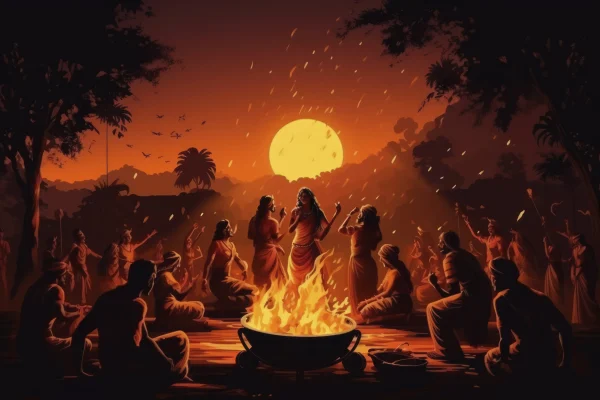
Every morning, devout practitioners wash their hands and faces before the sun crosses the horizon. They stand facing the east and cross their arms over their chests, placing their hands on their shoulders. This gesture shows total submission to the light. Why do Yezidis pray toward the sun? They view the sun as a sacred source of light and a physical manifestation of God’s glory rather than a separate deity.
This daily ritual reinforces their communal bond. Mesopotamia Heritage describes Lalish as a central spiritual hub and qibla, ensuring that even when living in the diaspora, a Yezidi in Germany and a Yezidi in Iraq turn toward the same point in the sky. This shared orientation provides a sense of unity that transcends borders. It ensures that the History of Yezidis remains a story of collective resilience.
The Monotheistic Concept of Xwedê
The Yezidi faith centers on a single, transcendent God known as Xwedê. In this system, God is the absolute creator of the universe. However, Yezidi religious beliefs teach that God is so vast and remote that He does not interfere in the daily struggles of humans. After creating the world from the White Pearl, God retired to a higher plane of existence.
This perspective changes how the community interacts with the divine. They do not expect God to change the weather or fix a problem. Instead, they look to the intermediaries God left behind. This belief system emphasizes personal responsibility and respect for the natural laws God set in motion during the beginning of time.
The Hevtek and the Seven Angel Doctrines
To manage the world, God emanated seven holy beings from His own light. These are the Hevtek, or the Seven Angels. Each angel has a specific role in maintaining the balance of the universe. They govern the seasons, the movement of the stars, and the protection of the faithful. These angels are not distant figures; they are active guardians of the Earth.
The angels represent different aspects of the divine light. One might govern the rains that feed the crops, while another protects the souls of the deceased. Honoring these seven mysteries, Yezidis acknowledge the details of the world. This doctrine provides a detailed map for understanding how the spiritual and physical worlds overlap.
The Peacock Angel as the Leader of the Hevtek
Research by Rodziewicz highlights the Seven Angels and their leader, noting that Melek Taus, the Peacock Angel, stands as the most important figure in the faith. He is the leader of the seven angels and the ruler of this world. Yezidis believe God gave Melek Taus the authority to govern the Earth and its inhabitants. The peacock serves as his symbol because its feathers contain all the colors of the rainbow, representing the diversity of life.
Melek Taus plays a central role in the daily life of the community. They see him as a benevolent protector who understands human flaws. Who is the main angel in Yezidism? The primary figure is Melek Taus, the Peacock Angel, who is believed to be the leader of the seven angels and the supreme ruler of the earthly realm. His presence gives the community hope during difficult times.
Deconstructing External Misunderstandings and Myths
Throughout the History of Yezidis, outsiders have often misunderstood the role of Melek Taus. Many neighboring groups falsely labeled the Yezidis as "devil worshippers" because of a specific story. In this story, Melek Taus refused to bow to Adam. However, in Yezidi religious beliefs, this was not an act of rebellion. It was a test of his absolute devotion to God.
Melek Taus knew that God commanded the angels to bow only to the Creator. Refusing to bow to a human, he proved his loyalty. This misunderstanding has caused centuries of persecution. Despite this, the Yezidi people refuse to change their stories to suit others. They hold onto their truth with incredible strength.
The 12th-century Transformation in Lalish
According to the Encyclopædia Iranica, Sheikh Adi ibn Musafir died around 1162, meaning it was in the 12th century that a scholar named Sheikh Adi ibn Musafir arrived in the Lalish valley. His arrival marked a major turning point in the History of Yezidis. He organized the various tribes into a formal community and established a clear social structure. This structure helped the community survive the pressures of the surrounding empires.
As explained by the Oxford Research Encyclopedia of Religion, Yazidi society is organized into castelike social groups determined by birth; specifically, he divided into three groups: Sheikhs, Pirs, and Murids. Sheikhs and Pirs serve as the spiritual leaders and teachers, while the Murids make up the general population. This system remains in place today and dictates who can marry and who performs sacred rites.
From Oral Tradition to Sacred Decrees
Before Sheikh Adi, the faith relied almost entirely on oral tradition. He helped codify these Yezidi religious beliefs through sacred hymns called Qawls. Since Yezidis traditionally did not keep a single holy book, these hymns became the primary way to pass down their laws. Research by Omarkhali from the University of Göttingen indicates that the transmission of sacred texts is achieved by oral tradition, requiring that musicians known as Qawwals spend years memorizing these long, detailed poems.
This oral tradition created a "living" faith. Because the teachings exist in the hearts and voices of the people, no one can steal or burn their scripture. Every wedding, funeral, and festival includes the chanting of these hymns. This methodology ensures that every generation hears the same stories and follows the same spiritual path.
Lalish: The Navel of the World and Spiritual Center
According to UNESCO, the Lalish Temple is located in the Sheikhan district, making the valley of Lalish in northern Iraq the holiest site for the Yezidi people. They believe this is the spot where the Earth first became solid. The temple compound at Lalish houses the tomb of Sheikh Adi and features two sacred springs: the White Spring and the Zemzem. These springs provide water for baptisms and ritual cleansing.
Visiting Lalish is a requirement for every Yezidi at least once in their life. When they enter the valley, they walk barefoot to show respect for the holy ground. Where is the holiest temple for Yezidis? The holiest site is the Sanctuary of Lalish in northern Iraq, which houses the tomb of Sheikh Adi and serves as the destination for their annual pilgrimage.
The Symbolism of Conical Fluted Spires
The architecture of Yezidi shrines is instantly recognizable. They feature tall, conical domes with vertical ribs or flutes. These ribs represent the rays of the sun coming down to Earth. The design reminds everyone who sees it that the faith is built on light. Most shrines have 12 or 24 ribs to reflect the cycles of the sun and the moon.
These spires also serve as landmarks for the community. In the rugged mountains of Sinjar, a white spire on a hilltop signals a place of safety and prayer. The architecture physically manifests the History of Yezidis in the region. It proves that their presence is permanent and their devotion is visible.
Preserving Oral Culture in a Digital Age
The modern world presents a new type of challenge for the community. With the spread of the internet and the displacement of people, the traditional way of teaching through memorization is under threat. As noted in studies from the University of Göttingen, the faith is based in the Middle East, Caucasus, and Europe, meaning young Yezidis now live in cities far from the Lalish valley. Ironically, this distance has sparked a new movement to preserve their heritage.
Religious leaders are now recording the Qawls and digitizing their ancient wisdom. The same study observes that the faith is responding to modernization by exploiting new technologies to mass-produce texts, meaning they use social media to teach the younger generation about Yezidi religious beliefs. This shift ensures that the oral culture survives even if the community is scattered across the globe. They are turning modern technology into a tool for ancient preservation.
The Global Diaspora and the Future of the Faith
The History of Yezidis is currently entering a global chapter. After the genocide in 2014, thousands of Yezidis moved to Germany, Canada, and Australia. In these new homes, they face the struggle of maintaining their identity while surrounded by secularism. They must find ways to practice their solar rituals in climates where the sun is often hidden by clouds.
Despite these hurdles, the community remains resilient. They build new shrines and continue to celebrate the New Year, known as Sere Sal. They prove that being Yezidi is about a commitment to a specific worldview that prizes purity, light, and the memory of their ancestors.
Honoring the Living Legacy of the History of Yezidis
The path of the Yezidi people shows that a culture does not need an army to survive. It only needs a story that is stronger than the forces trying to silence it. Anchoring their lives to the rising sun and the seven angels, they created a belief system that provides constant hope. The History of Yezidis is a lesson in human endurance.
Today, as the community rebuilds their homes and records their hymns, they carry the light of the White Pearl forward. Their ancient solar rituals serve as a bridge between a Mesopotamian past and a global future. Every time a Yezidi turns toward the sun, they honor the millions of ancestors who did the same. These enduring Yezidi religious beliefs continue to offer a unique path toward understanding our place in the universe.
Recently Added
Categories
- Arts And Humanities
- Blog
- Business And Management
- Criminology
- Education
- Environment And Conservation
- Farming And Animal Care
- Geopolitics
- Lifestyle And Beauty
- Medicine And Science
- Mental Health
- Nutrition And Diet
- Religion And Spirituality
- Social Care And Health
- Sport And Fitness
- Technology
- Uncategorized
- Videos

