
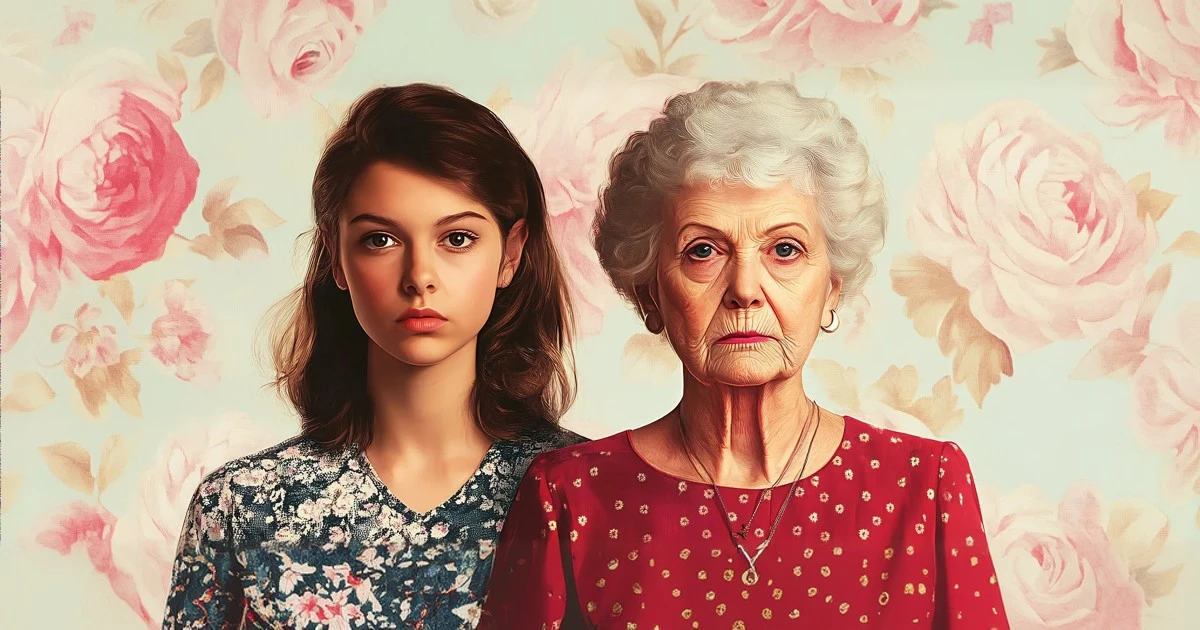
The Dark Spinster Meaning: From Job To Social Slur
Society took a simple job description and twisted it into a weapon against independent women. The history of the word "spinster" reveals a shift from economic power to social pity. In the 14th century, this term described a skilled worker essential to the economy. It referred to a woman who spun thread or yarn. She held a job, earned money, and contributed to her community. The stigma we know today did not exist.
Industrial changes eventually stole this independence. As factories replaced hand-labor, the ability to earn a living wage vanished. A woman without a husband became a financial liability instead of a productive artisan. The spinster meaning morphed from a professional designation into a label for women who failed to secure a marriage proposal. This evolution exposes how language controls social status.
The Economic Origins of a Solo Life
Money defined the label long before marital status entered the picture. The suffix "-ster" in Old and Middle English originally indicated a female agent. A "brewster" brewed ale, a "webster" wove cloth, and a "spinster" spun wool. These were functional titles.
From Fiber to Finance
The spinster meaning originally signaled a specific economic reality. Women needed to spin to survive. During an era when fabric production required immense manual labor, these women fueled the textile industry. However, the wages told a harsh story. According to economic history data published by EH.net, female factory workers at age 30 earned only one-third as much as men.
Despite the low pay, the work offered a path to survival without a husband. A woman could feed herself through her own labor. This financial reality creates a clear distinction. The word described a daily grind instead of a personality flaw.
Financial Independence as a Threat
Spinning provided an alternative to the "matrimonial trap." A woman with a trade possessed the ability to reject marriage. This autonomy threatened the established social order. Men usually held the role of provider, but a working woman disrupted that balance.
Does the word imply a gendered double standard?
Yes, "bachelor" implies a positive choice for men, whereas "spinster" implies failure for women. Linguistics reflect this tension. The suffix "-ster" eventually shifted. It moved from a female job indicator to a gender-neutral, often pejorative ending. Words like "gangster," "trickster," and "punster" carry a casual or negative tone today. The history of the spinster meaning follows this same downward trajectory in language.
When Technology Changed the Definition
Machines stole the job, leaving behind only the stigma. As noted by Cambridge University Press, the introduction of the spinning mule in 1780 overturned the traditional division of labor, shifting spinning from women to men. This shift forced women out of their trade and destroyed their primary source of income.
Industrial Displacement
Technology stripped the "spinster" of her spindle. Men took over the weaving and spinning industries in factories. The term lost its connection to an actual occupation. Without the job, the label needed a new definition. Society attached the label to the woman herself instead of her work.
The shift occurred rapidly. A woman could no longer define herself by her output. She became defined by what she lacked: a husband. The spinster meaning now signaled a woman without a role in the industrial economy.
The Slide into Poverty
Displaced female workers faced destitution. Unmarried women often had no other way to support themselves. The association between being single and being poor became concrete. People saw a "spinster" and assumed she lived in poverty. The economic shift reinforced the idea that a woman needed a husband for financial safety.
The Legal Trap and Tax Penalties
Governments used the title to track and tax single wealth. The shift from a job title to a legal designation occurred legally in the 18th century. Lawmakers needed a way to identify unmarried women for administrative purposes.
Taxes on Existence
Being single came with a literal price tag. In the late 18th century, proposals surfaced to tax single women over the age of 27. The suggested tax rate stood at 6% of their assets. This was a direct financial penalty for not marrying.
The system punished privacy as well. A woman who failed to report her assets faced a 25% forfeiture. The state used the spinster meaning to categorize and penalize women who managed their own money. This legal framework treated independence as a taxable luxury.
Official Designation
The term solidified as a formal identifier. While "bachelor" evoked images of freedom and choice, its female counterpart carried the weight of pity. The legal system required clear labels. "Spinster" appeared on official documents, cementing the divide.
When did spinster become a derogatory term?
The negative "old maid" associations began to take hold firmly during the 18th century. This bureaucratic usage stripped the last remnants of dignity from the word. It became a box to check, signifying a woman without a master.

Social Stigma and the "Old Maid" Trope
Society invented scary stories to force women into marriage. As the economic power of spinning faded, cultural attacks increased. The 19th century saw a rise in cruel slang designed to mock single women.
Slang and Insults
People used harsh terms to describe these women. "Thornbacks" compared them to prickly fish. "Superannuated virgins" mocked their age and sexual status. The most vivid insult involved a proverb about the afterlife. People said unmarried women were destined to "lead apes in Hell." This bizarre punishment served as a warning to young girls.
The message was clear. Avoid the spinster meaning at all costs, or face eternal ridicule. These tropes fueled the "old maid" stereotype that persists today.
Age Benchmarks
Society set strict expiration dates on female value. In the Regency era, a woman reached "past prime" status between 27 and 30 years old. Fashion dictated this shift visibly. Women adopted the "mob cap" around age 29 or 30. This headwear signaled their withdrawal from the marriage market.
Demographic studies on ResearchGate assess that between 20% and 30% of adult women in early modern England never married. Despite the numbers, the cultural pressure remained intense.
Voices of Rebellion and Autonomy
Women used the label to protect their freedom. Not every woman accepted the pity of society. Some embraced the spinster meaning as a badge of honor and liberty.
Sarah Kennerly’s Defense
In 1889, Sarah Kennerly wrote a fiery letter to Tit-Bits Magazine, archived by the ACE Archive. She rejected the idea that she needed a husband. As transcribed by Upworthy, she compared her life to a "wild prairie mustang" roaming unfettered, tossing its head in disdain at the lasso.
Kennerly expressed disdain for "capture." She viewed the "matrimonial trap" as a prison. For her, the single life offered "freedom's edge." Her words challenge the narrative of the sad, lonely woman. She chose herself over societal expectations.
Famous Figures
History is full of successful women who fits the technical spinster meaning. Jane Austen wrote masterpieces without a husband. Mary Anning made groundbreaking fossil findings. Jane Addams won a Nobel Prize. Caroline Herschel mapped the stars.
Quotes from this era reveal a strong counter-narrative. In her journals, Louisa May Alcott declared that liberty is a better husband than love to many women. Catharine Sedgwick advocated for independent female sovereignty. She denied that a woman was merely an "adjunct to man." These women proved that success did not require a wedding ring.
Contradictions in the Record
History books disagree on who actually counted as a spinster. The definition was never as clean-cut as modern dictionaries suggest. Records show conflicting usage of the term.
Married Spinsters?
The Cambridge Group for the History of Population and Social Structure analyzed census data from 1767, 1787, and 1801. They found something surprising: in surveys like Westmorland, records listed "spinster" as an occupation for married women and widows.
This challenges the idea that the word only meant "unmarried." In these cases, the spinster meaning strictly referred to the work. A woman could have a husband and still be a spinster by trade. This proves the economic root of the word remained active even as the social slur developed.
The Age Debate
Linguists and lawyers argue over the age threshold. Linguist Robin Lakoff argued that 20-year-olds are not spinsters because they are still eligible for marriage. The term implies a loss of eligibility.
Is spinster still a legal term?
The UK replaced the terms "spinster" and "bachelor" with "single" in the 2005 Civil Partnership Act. However, legal usage historically applied the term to any unmarried woman over the age of majority. This clash between social perception and legal definition adds layers to the history.
Modern Usage and Reclaiming the Word
The law moved on, but the culture stuck around. The legal term "spinster" has largely vanished from government forms, but the cultural weight remains.
Legal Changes
The UK Civil Partnership Act of 2005 officially retired the word. Government documents now use "single" to describe unmarried status. This marked a victory for those who fought the archaic label. Yet, the Church of England still occasionally uses the term in marriage banns. Old habits die hard in traditional institutions.
From "Crazy Cat Lady" to Autonomy
Modern tropes like the "crazy cat lady" are just updated versions of "leading apes in Hell." The insult remains, just with new imagery. But women continue to reclaim the concept. Author Kate Bolick describes spinsterhood as "enigmatic autonomy." She contrasts it with the strictly defined roles of wife and mother. For Bolick, the spinster meaning represents a preservation of self. It allows a woman to exist for her own sake rather than for others.
The Power of Definition
The evolution of the spinster meaning exposes a deep fear of female independence. What started as a job title for skilled artisans became a tool to shame women who lived outside traditional family structures. Society used laws, taxes, and insults to push women toward marriage. Yet, figures like Sarah Kennerly and Jane Austen proved that a life without a husband could be rich, productive, and free.
Today, the word has lost its legal power, but the choice it represents remains valid. Whether called a spinster, single, or simply independent, the woman who owns her own life continues to defy expectations. The definition ultimately belongs to the woman who lives it.
Recently Added
Categories
- Arts And Humanities
- Blog
- Business And Management
- Criminology
- Education
- Environment And Conservation
- Farming And Animal Care
- Geopolitics
- Lifestyle And Beauty
- Medicine And Science
- Mental Health
- Nutrition And Diet
- Religion And Spirituality
- Social Care And Health
- Sport And Fitness
- Technology
- Uncategorized
- Videos

