
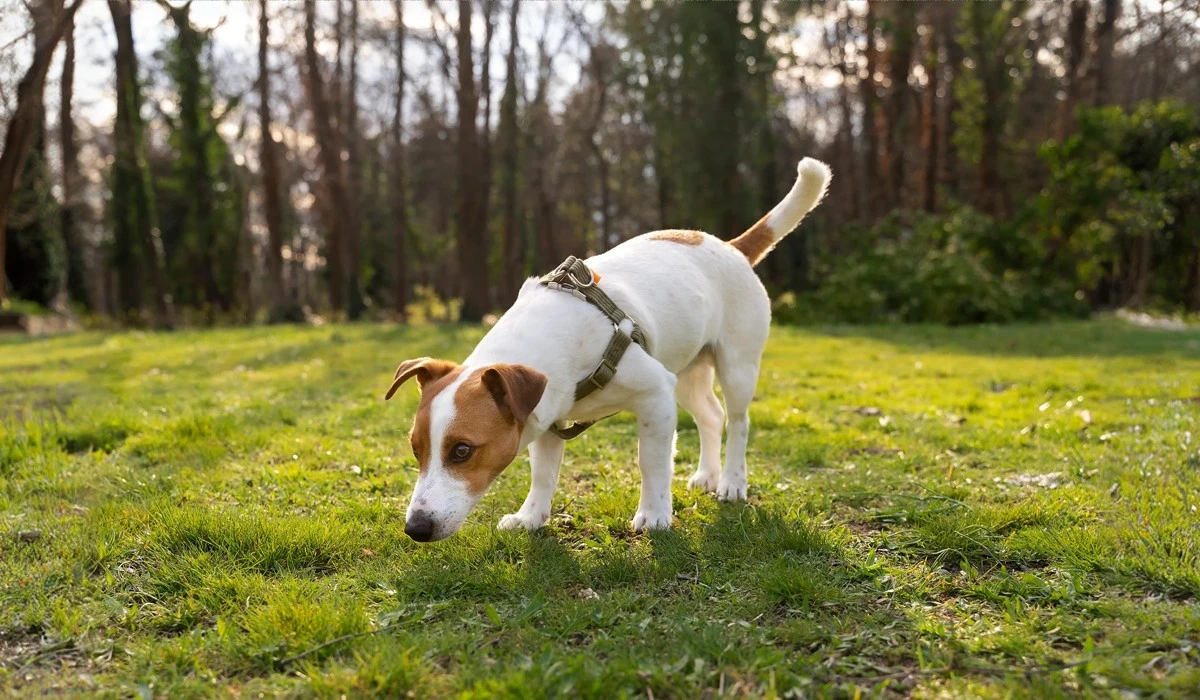
Is Dog Scent Training Better Than A Long Walk?
You throw the ball for thirty minutes. Your dog sprints, pants, and seems physically exhausted. But ten minutes after getting home, they are pacing, whining, or shredding a pillow. You built an endurance athlete when you wanted a calm companion. There is a different switch in your dog’s brain that turns off the chaos, but you can’t flip it with a tennis ball. You have to access it through their nose.
This is where Dog Scent Training changes the atmosphere of your home. This training serves as a biological off-switch for anxiety, boredom, and hyperactivity rather than a simple party trick. The use of specific nosework training methods allows you to tap into a primal instinct that burns mental energy faster than any run, transforming a frantic pet into a centered, satisfied family member.
The Science: Why the Nose Controls the Brain
To understand why this works, you have to look at the hardware inside your dog's skull. Humans navigate the world primarily with their eyes; dogs navigate with their noses. According to a study published in PMC8868339, dogs possess roughly 300 million olfactory receptors, which is a significant contrast to the 5 to 6 million found in humans. This biological makeup, as noted in research from PMC8388720, enables them to identify odors at levels as low as one part per trillion. But the anatomy goes deeper. The canine olfactory bulb, the brain center that processes smell, is 40 times larger than yours relative to total brain size.
As observed in a report by Canine Companion Consulting, a dog’s pulse rate decreases during the act of sniffing. The researchers also note that this heavy processing engages the parasympathetic nervous system, causing the brain to release dopamine and serotonin. It acts as a natural antidepressant. Additionally, dogs have a "second nose" called the Jacobson’s Organ located at the bottom of the nasal passage. This organ detects pheromones and bypasses the conscious brain, connecting directly to the amygdala, effectively hijacking the dog's emotion center to induce calm.
This biological effort requires fuel. Many owners wonder, does scent training tire a dog out? Yes, the Baypath Humane Society reports that 15 to 20 minutes of sniffing provides mental exhaustion comparable to a one-hour walk due to the neural processing required to analyze complicated odors.
Top Behavioral Benefits of Dog Scent Training
Dog Scent Training focuses on how your dog handles stress and interacts with their environment, rather than simply finding a treat.
Reducing Anxiety and Reactivity
PetMD notes that sniffing serves as a displacement behavior, representing a socially acceptable method for dogs to calm themselves when experiencing tension. In the wild, if a dog is nervous, they sniff the ground to avoid eye contact and de-escalates a fight. Placing this behavior on cue gives reactive dogs a constructive way to disengage from stressors like other dogs or loud noises. It satisfies the "Seeking System," a primary emotional drive identified by neuroscientist Jaak Panksepp. When this system is engaged, the dog’s brain focuses on the hunt rather than the fear, reducing frustration-based destruction like chewing furniture.
Building Confidence in Shy Dogs
Research published in PMC9334413 indicates that the Search, Find, Reward cycle creates a predictable reinforcement loop where animals learn to associate positive cues with successful outcomes. This process is called "cognitive bias modification." It trains the dog's brain to expect positive outcomes rather than threats. The dog learns that their actions (sniffing) directly control their environment (finding the reward), which builds massive autonomy and confidence.
Improving Impulse Control
The game requires waiting. The dog must sit and watch you hide the scent before getting the "Search" command. This builds massive impulse control, often faster than standard obedience drills, because the reward (the hunt) is self-reinforcing. They learn that patience pays off, a lesson that translates directly to better manners at the door or during mealtime.
Essential Gear for Home Scent Work
You don't need a professional kit or a large field to start Dog Scent Training. You likely have everything you need in your kitchen right now. The barrier to entry is incredibly low.
Start with high-value treats (string cheese, hot dogs, or liver), a clicker (or a verbal marker like "Yes!"), and simple containers. Cardboard boxes (shoe box size) are perfect, but plastic Tupperware or yogurt tubs work well too. The National Association of Canine Scent Work recommends that target odors be introduced in a specific sequence: Birch, then Anise, and finally Clove.
For those using target odors, professional trainers often use a "suet cage" or a metal tea infuser to hold the scented cotton swab. This protects the source from being eaten while allowing maximum airflow. For outdoor work, invest in a 15-30-foot Biothane long line. Unlike nylon, Biothane doesn't absorb water, drag heavily, or get tangled in brush, allowing the dog the autonomy they need to search without leash tension.
Step-by-Step Nosework Training Methods for Beginners
Ready to start? These nosework training methods build the base of the hunt.
The Box Game (The Foundation)
Gather 6-8 cardboard boxes and place them on the floor. In the beginning, leave the flaps open so the dog can see the treat inside. Place a treat in one box. Let the dog eat it. Repeat this until the dog is diving their head into the box immediately. Once they are confident, close the flaps. Now, they must use their nose to verify which box holds the prize before trying to open it.
The Shell Game
This helps the dog move from using their eyes to using their nose. Start with three clear plastic cups with holes punched in the top. Let the dog see the treat go under one. Do this until they get it right five times in a row. Then, switch to opaque cups (like yogurt tubs). Since they can no longer see the treat, they are forced to sniff the holes to identify the correct cup.
"Find It" Without Equipment
Place your dog in a "stay" or have a helper hold them. Hide a treat in the room, behind a chair leg, or under a rug corner. Release them with the cue "Search!" or "Find it!" While learning these games, people often ask, can I do nosework with any breed of dog? Absolutely, every breed from Pugs to Shepherds can perform well at scent work because it taps into a primal instinct shared by all canines, regardless of their size or pedigree.
For a rainy-day variation, try the "Muffin Tin" game. Place treats in a muffin tin and cover every hole with a tennis ball. The dog must sniff out the specific cup with the treat and problem-solve how to physically remove the heavy ball.
Integrating Dog Scent Training Into Daily Walks
Dog Scent Training shouldn't stay in the living room. It is a powerful tool for leash manners and real-world behavior management.
Off Leash MKE highlights that the concept of a "Decompression Walk" was established by trainer Sarah Stremming to describe nature walks focused on sniffing rather than pace. This is a walk taken on a long line in nature where the dog decides the pace and direction. The sole goal is sniffing, not exercise. This is distinct from a "heel" walk. It allows the dog to process the "pee-mail" of the neighborhood, which is mentally satisfying.
The "Go Find It" cue can also manage distractions. If your dog locks onto a squirrel or another dog, toss a handful of high-value treats into the grass and say, "Find It." This breaks the visual fixation and engages the nose. Changing the dog's focus from visual arousal to olfactory processing effectively lowers the dog's adrenaline levels without yanking on the leash.
Troubleshooting Common Training Challenges
Even with the best methods, friction happens. Here is how to solve common issues.
The Dog Gives Up Quickly
If your dog quits, the puzzle is likely too hard, or the pay is too low. In the early stages, the dog needs to win frequently to build drive. Lower the criteria by making the hide more obvious or accessible. Simultaneously, increase the value of the reward, swap the dry kibble for roast beef.
The Dog Is Eating the Boxes
This is known as the "Box Smasher." It usually stems from frustration or over-arousal. To fix this, use the "PVC Tube" drill. Hide the scent in a PVC pipe with drilled holes. The round, hard shape makes it impossible to crush. You only reward when the dog freezes their nose at the hole, teaching a passive alert rather than a destructive one. Regarding practice, beginners frequently ask, how long should a scent training session be? Sessions should remain short, ideally 5 to 10 minutes, to keep the dog eager and prevent mental fatigue, ending the game while they still want more.
Moving From Food to Target Odors
Once your dog becomes proficient at food searches, you can graduate to target odors using advanced nosework training methods. This is where the hobby becomes a sport.
Introducing Birch, Anise, and Clove
Moving from food to oil requires the "Pairing Method." Place the essential oil tin inside a box and tape a treat directly on top of the tin. The dog smells the oil while eating the treat (Classical Conditioning). After over 20-30 repetitions, you remove the tape and treat. The dog will begin to hunt for the oil, anticipating that the smell produces the reward.
Blind Hides and Variable Surface Tracking
To truly test your dog, try "Blind Hides" where even you don't know the location of the scent. This prevents the "Clever Hans effect," where the dog reads your subtle body language instead of using their nose.
You must also consider the environment. As explained by Hound and the Found, scent behaves in a manner similar to water, often collecting or pooling in areas like grass. It slides across concrete. Indoors, heating and cooling vents create "thermal plumes" that can lift scent to the ceiling. Advanced dogs learn to source the odor despite these complicated environmental factors, further solidifying their focus and obedience.
A Happier Dog Through Smell
A tired nose creates a calm dog. You don't need a massive field, expensive equipment, or a uniform to change your dog's behavior. You just need a cardboard box and a handful of treats. The engagement of the olfactory system provides the mental release your dog is desperate for.
Start with the Box Game today. Watch how your dog’s focus sharpens and their anxiety melts away. Dog Scent Training connects you to your dog's world in a way a game of fetch never could. Share your training progress in the comments below. We’d love to hear how your dog is doing!
Recently Added
Categories
- Arts And Humanities
- Blog
- Business And Management
- Criminology
- Education
- Environment And Conservation
- Farming And Animal Care
- Geopolitics
- Lifestyle And Beauty
- Medicine And Science
- Mental Health
- Nutrition And Diet
- Religion And Spirituality
- Social Care And Health
- Sport And Fitness
- Technology
- Uncategorized
- Videos

