
Does Shockwave Therapy Really Fix Old Injuries?
Deep tissue pain often feels like a debt that your body refuses to pay. You rest, you stretch, and you wait, but the ache stays buried under layers of muscle where your hands cannot reach. In many cases, your body simply stops trying to fix the damage. It eventually treats the injury as a permanent part of your life. Shockwave Therapy breaks this cycle and forces your body to pay attention again. Modern shockwave physiotherapy uses high-energy acoustic pulses to restart the repair work that your body abandoned months ago.
How Shockwave Therapy Targets Deep Tissue Pain
According to technical specifications from MVP Physio, this technology utilizes compressed air to generate a powerful acoustic pulse rather than relying on electrical currents. They explain that a handheld device launches a projectile within a tube, which then strikes a metal transmitter. This collision creates a wave of energy that travels directly into your tissue. Unlike a standard massage that moves skin and surface muscle, these waves penetrate deep into the body. They reach the tendons and ligaments that usually lack a strong blood supply.
The physics behind this process involves massive pressure changes. Research published in PMC indicates that focused waves deliver peak pressures between 10 and 100 Mega-Pascals. This is nearly 100 times higher than the pressure produced by entry-level radial devices. These pulses move through the skin and fat layers without damaging them. They only release their energy when they hit denser tissues like scar tissue or bone. You might be wondering, does shockwave therapy hurt? While you may feel some mild discomfort or a "tapping" sensation during the session, it is generally well-tolerated, and the intensity can be adjusted to your comfort level.
The Core Benefits of Shockwave Physiotherapy
Practitioners use shockwave physiotherapy because it changes the biology of an injury. This treatment alters cellular behavior instead of simply masking the pain. Therapists apply specific frequencies to initiate three main changes in the damaged area. These changes turn a "cold" chronic injury into a "hot" healing environment.
Stimulating Neovascularization
The acoustic waves create tiny micro-traumas in the tissue. As noted in a study on PubMed, these minor disruptions stimulate the body to release growth factors such as Endothelial Nitric Oxide Synthase (eNOS). This enzyme acts as a signal for the body to grow new blood vessels. This process, called neovascularization, brings fresh oxygen and nutrients to areas that previously had poor circulation. Better blood flow means the body can finally clear out waste products and rebuild damaged fibers.
Reversing Chronic Inflammation

Chronic injuries often get stuck in a state of low-level inflammation that never resolves. Shockwave Therapy increases the activity of mast cells. These cells release chemical signals that "restart" the inflammatory process in a productive way. The treatment helps the body finally finish the healing work it started months or years ago through the creation of a brief moment of acute inflammation.
Breaking Down Calcified Fibers
Over time, chronic tension can cause calcium to build up in your tendons. This makes the tissue brittle and painful to move. The acoustic pulses create a "cavitation" effect. This process forms tiny bubbles that expand and then collapse. Research appearing on PubMed suggests that the collapse of these bubbles produces high-speed liquid micro-jets that physically disintegrate calcified deposits. Once these hard bits turn into a slurry, the body reabsorbs them naturally.
Conditions Most Responsive to Shockwave Therapy
Many people turn to this treatment when traditional medicine fails them. It is particularly effective for injuries that involve "white tissue," which are parts of the body with very little blood flow. Because these areas heal slowly on their own, they require the mechanical "kickstart" that acoustic waves provide.
Plantar Fasciitis and Heel Pain
Heel pain often makes the first steps of your morning feel like walking on glass. This condition usually stems from tiny tears in the thick band of tissue on the bottom of your foot. A report in PMC notes that success rates have risen significantly since the FDA approved the OssaTron device for this condition in 2000. Additionally, clinical findings published in ScienceDirect demonstrate that between 82% and 88% of patients find lasting relief through this method. It succeeds where inserts and stretches often fail.
Calcific Tendonitis of the Shoulder
Shoulder pain can make it impossible to reach into a cupboard or put on a coat. In many cases, calcium deposits grow inside the rotator cuff tendons. A 2018 study showed that 88.5% of patients saw these deposits disappear or shrink significantly after treatment. The waves hit the calcium with enough force to dissolve it without needing a single surgical incision.
Jumper’s Knee and Achilles Pain
Athletes frequently struggle with patellar or Achilles tendon pain. These injuries often end careers or stop training for months. Shockwave physiotherapy speeds up the return to sport by approximately four weeks. It helps the body build Type I collagen, which provides the tensile strength needed for jumping and sprinting.
Integrating Technology into Your Recovery Plan
You should not view this treatment as a standalone miracle. It works best when you combine it with a smart rehabilitation plan. While the machine handles the deep tissue repair, you must still teach your body how to move correctly. If you fix the tissue but keep moving with bad form, the pain will eventually return.
Physiotherapists often pair the sessions with specific "loading" exercises. These exercises tell the newly formed collagen fibers how to align themselves. Stressing the tendon in a controlled way ensures the new tissue is strong and flexible. Patients often ask, is shockwave therapy safe for long-term use? According to the UT Southwestern Medical Center, this is a non-invasive, FDA-approved treatment with no known long-term side effects, making it an excellent alternative to repeated steroid injections or surgery.
Shockwave Therapy vs. Traditional Hands-On Methods
Traditional massage and manual therapy have clear limits. Even the strongest therapist can only apply so much pressure before they bruise the skin. An article in MDPI observes that most manual techniques only reach a depth of approximately 2 to 3 centimeters into the tissue. In contrast, focused Shockwave Therapy can reach depths of up to 12 centimeters. This allows it to treat deep hip or gluteal issues that hands cannot touch.
Manual therapy is a "passive" experience where the therapist moves your muscles. Shockwave physiotherapy is a "bio-active" experience. It changes the chemical markers in your cells, such as Proliferating Cell Nuclear Antigen (PCNA). While massage relaxes a muscle, the acoustic pulse actually changes the cellular structure of the tendon. This makes it a much more aggressive and effective tool for long-standing scar tissue.
What to Expect: From First Pulse to Full Recovery
Knowing what happens during a session helps reduce any anxiety you might feel. The entire process is relatively quick and does not require any downtime. You can usually walk out of the clinic and go back to your day immediately.
The Initial Consultation
The first step involves a detailed assessment to find the exact source of your pain. Many clinicians now use ultrasound guidance to locate the injury. This increases the success rate to over 90% because the energy hits the sensitivity point with perfect accuracy. As specified by a patient information leaflet from the University Hospitals Coventry and Warwickshire NHS Trust, the therapist will also check for contraindications, such as the use of anticoagulants like Warfarin, which could lead to deep bruising.
The Treatment Session
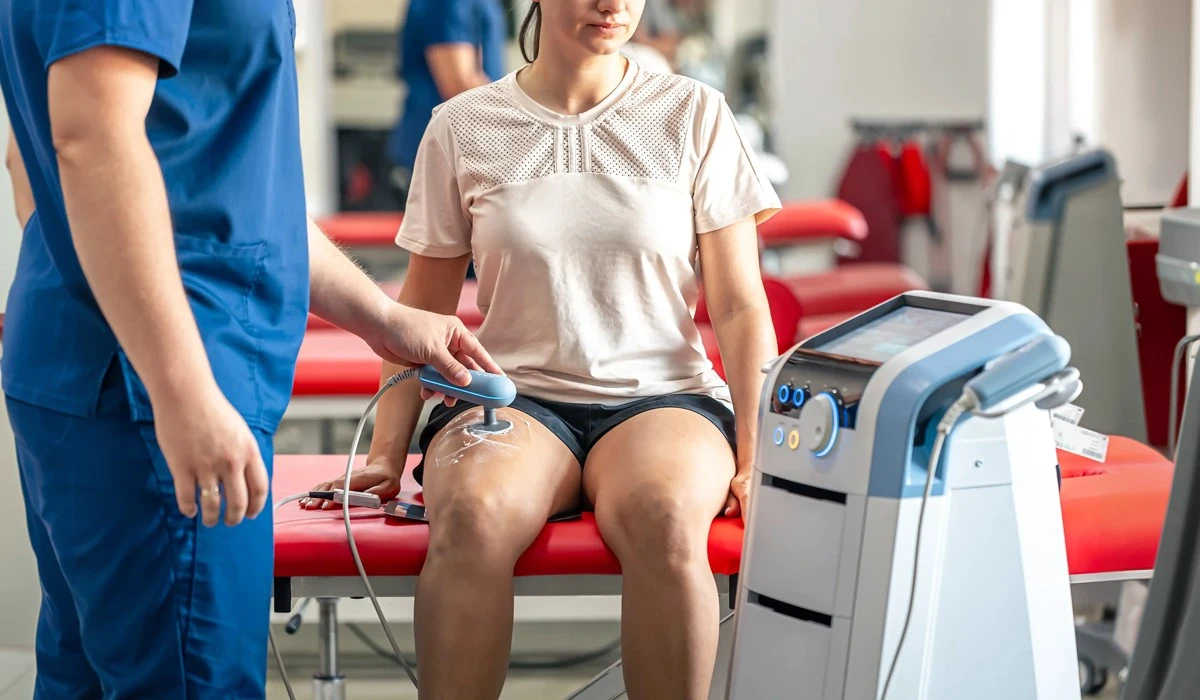
The therapist applies a clear ultrasound gel to your skin to help the waves travel smoothly. They then move the handpiece over the injured area for about 10 to 15 minutes. As stated by CK Physio, the machine will deliver between 2,000 and 3,000 pulses during this time. You will hear a rhythmic clicking or tapping sound. A common question is, how many sessions are needed to see results? Standard clinical protocols from Isokinetic suggest that between 3 to 5 sessions are typically required, though many patients report a significant reduction in pain after just the first appointment.
Why Shockwave Therapy is a Game-Changer for Chronic Sufferers
If you have tried chiropractic care, ibuprofen, and physical therapy without success, you are not alone. Chronic pain often persists because the tissue has entered a "dead zone" of healing. Researchers Valchanou and Michailov proved in 1991 that shockwaves could even fix bone fractures that refused to knit back together. They saw a 90% success rate in these difficult cases.
This therapy offers a way out for people who fear surgery. Unlike steroid injections, which can weaken tendons and cause them to rupture over time, this treatment actually increases the strength of the tissue. It provides a non-invasive path to recovery for those who have been told they have no other options. Focusing on the root cellular cause of the pain offers a permanent solution rather than a temporary fix.
Reclaiming Your Mobility with Shockwave Therapy
Deep tissue pain does not have to define your daily life. You do not have to accept a limited range of motion or a constant ache as your new normal. Utilizing the power of acoustic energy allows you to restart the natural healing processes that your body has put on hold. Shockwave Therapy provides a bridge between chronic suffering and an active, pain-free lifestyle.
Whether you are an athlete or someone who just wants to walk without pain, this technology offers a proven solution. Consult with a professional to see if shockwave physiotherapy can help you break through your biological stalemate. Taking this step could be the final move in your path toward full recovery.
Recently Added
Categories
- Arts And Humanities
- Blog
- Business And Management
- Criminology
- Education
- Environment And Conservation
- Farming And Animal Care
- Geopolitics
- Lifestyle And Beauty
- Medicine And Science
- Mental Health
- Nutrition And Diet
- Religion And Spirituality
- Social Care And Health
- Sport And Fitness
- Technology
- Uncategorized
- Videos

