
Can Brain Stimulation Actually Fix Selfishness?
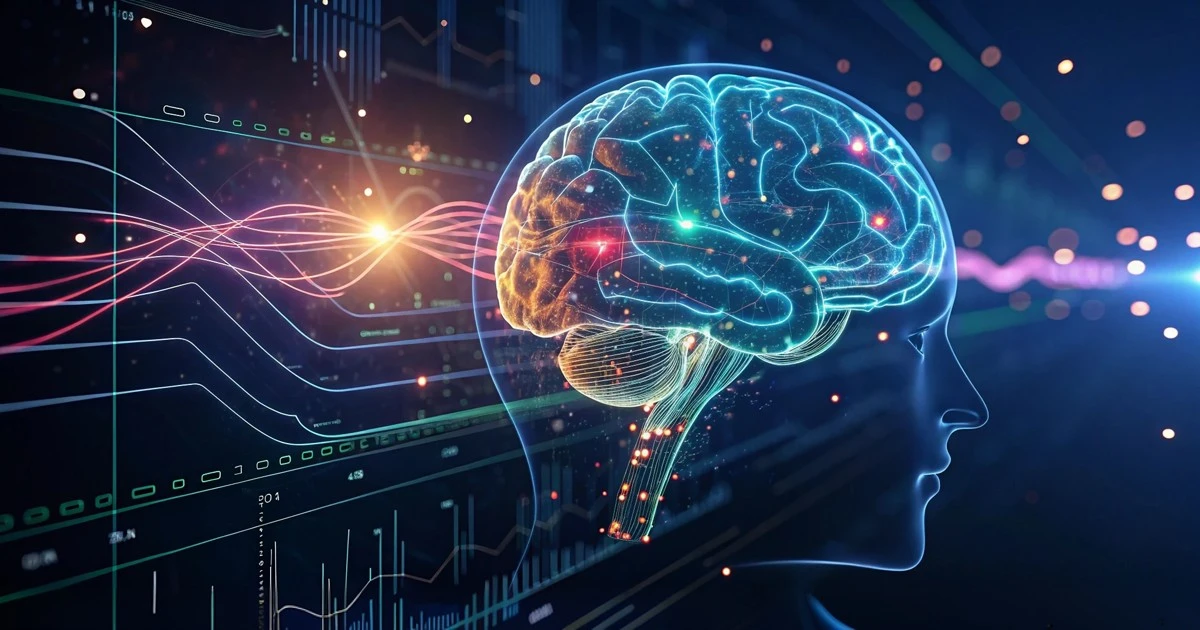
Selfishness often looks like a personal character flaw, but it frequently stems from a simple connectivity error inside the skull. Empathy relies on two specific brain regions talking to each other, and when that conversation drops, your ability to consider others disappears. A new study published in PLOS Biology reveals that we can now manually repair this connection. Researchers successfully used electrical waves to bridge the gap between self-interest and altruism. This isn’t science fiction; it is a measurable biological shift. The study used brain stimulation to synchronize neural rhythms, proving that generosity is less about moral high ground and more about neural timing.
The Biology of Being Nice
Being kind requires precise coordination between two distinct control centers in your head. One part handles your immediate desires, while the other calculates how your actions affect the people around you.
The study focused on 44 adult volunteers. The researchers targeted the prefrontal lobe and the parietal lobe. The prefrontal lobe acts as the seat of judgment and impulse control. It helps you pause before you act. The parietal lobe processes sensory information and handles spatial awareness. In social situations, these two areas must sync up. They need to fire signals at the exact same rate to weigh personal gain against the needs of others.
When these regions fall out of sync, you prioritize yourself. The research team, led by Professor Christian Ruff, used a method called Transcranial Alternating Current Stimulation (tACS). This technique applies low-level electrical currents to the scalp. The goal was simple. They wanted to see if artificial synchronization could force the brain to value other people more.
The Electric Rhythm of Empathy
Your brain runs on a strict tempo, and missing the beat turns manageable social decisions into selfish impulses. The researchers found that the frequency of these signals matters immensely.
They dialed the brain stimulation to 10Hz. This frequency creates what scientists call Gamma oscillation. When the prefrontal and parietal lobes oscillated in unison at this rate, the communication channels opened up. The information flowed freely between the decision-making center and the empathy center.
This synchronization triggered a specific behavioral outcome. Participants became significantly more willing to share resources. They sacrificed personal gain to help others. The study also tested Alpha oscillations, but those did not produce the same effect. Only the Gamma synchrony linked directly to altruistic choices. Dr. Marius Moisa, a co-author of the study, expressed surprise at the effectiveness of this neural coordination. The increased synchrony directly led to a greater willingness to accept a personal cost for someone else’s benefit.
Testing Greed with the Dictator Game
Money reveals the truth about human nature faster than any questionnaire ever could. To measure generosity objectively, the researchers used a classic economic experiment known as the "Dictator Game."
In this setup, the participant acts as the sole decision-maker. They receive a pot of money. They must decide how much to keep for themselves and how much to give to a passive partner. The partner has no say. The partner cannot punish the decision-maker for being greedy. This removes the fear of social retaliation. The participant shares money only if they genuinely want to.
The 44 participants made 540 separate decisions during the trials. The results showed a statistically significant rise in payment willingness. When the brain stimulation aligned their neural rhythms, the subjects gave away more money. They did not just talk about being nicer; they actually paid for it.
How does the dictator game measure generosity?
Researchers use this game to track pure altruism because the decision-maker faces zero consequences for keeping all the money.
Feeling the Zap
We assume mind alteration feels like an alien intrusion, yet the reality is disturbingly natural. You might expect a sudden shift in consciousness or a feeling of being controlled. The volunteers reported nothing of the sort.
One anonymous volunteer described the physical sensation as a gentle rain or warm water flowing over their scalp. The internal experience was even more subtle. The decision-making process felt completely organic. They did not feel like a machine pushed them to be nice. They simply felt a natural inclination to share.
This finding is crucial. It suggests that brain stimulation nudges preferences without overwriting the person's sense of agency. A computational model used by the researchers confirmed this. The stimulation altered the "weight" the participant gave to their partner's benefit. It tipped the scale, but the person still felt like they were holding the balance.
Hardwired or Flexible?
We treat personality as a permanent sculpture, but biology suggests it acts more like soft clay. This study highlights a major contradiction in how we view social behavior. On one hand, the results point to "hardwired altruism." We have a neural architecture designed to support caretaking.
On the other hand, the study proves the "malleability of social cognition." Your brain structure allows for temporary changes. Dr. Jie Hu, a co-author, notes that society depends on this selfless attitude to function. However, he also emphasizes that biology is only part of the story.
Environmental factors still play a massive role. Upbringing, culture, and individual experience shape who you are. The brain stimulation provided a temporary window into the neural machinery. It showed that we can modulate these traits, but it does not mean we can permanently rewrite a personality with a single switch.
Can brain stimulation cure selfishness forever?
Current research shows that while stimulation creates a temporary boost in generosity, lasting change would likely require a repetitive regimen similar to physical exercise.
The Ethics of Mind Tuning
A tool that builds empathy could easily become a weapon that enforces compliance. The ability to alter social behavior raises immediate ethical red flags. If we can make people more generous, could we also make them more obedient?
Professor Ruff addressed these concerns directly. He emphasized that this process is distinct from manipulative algorithms. Social media platforms already influence our behavior in unregulated ways. This medical approach operates under strict oversight.
Participant consent remains central. In the study, volunteers knew what was happening. They retained their right to withdraw. Ruff contrasts this with the hidden influences of the digital world. The brain stimulation occurred in a controlled lab, not through a secret feed on a smartphone. The distinction lies in transparency and medical intent.
Future Implications for Therapy
Temporary fixes often reveal the blueprint for permanent solutions in mental health. The findings in PLOS Biology open the door for new therapeutic applications.
Many social behavior disorders stem from a deficit in perspective-taking. Some patients struggle to understand the needs of others. Professor Ruff suggests that this technique could offer a viable treatment path. By strengthening the communication between brain lobes, doctors might help these individuals engage more successfully with society.
However, this is not a magic cure. The results were short-term. The brain tends to revert to its baseline. Ruff compares the potential treatment to a physical exercise regimen. You cannot lift a weight once and expect to stay strong forever. You must repeat the action to build the muscle. The same logic applies to neural synchronization.
What are the side effects of brain stimulation?
Most participants in this specific study reported only mild physical sensations like warmth or tingling on the scalp, with no perception of external mind control.
The Neural Switch Behind Human Generosity
Generosity is a physical event in the brain. It relies on the prefrontal and parietal lobes beating in time with each other. When they sync at 10Hz, we share more. When they drift apart, we keep more for ourselves. This study proves that brain stimulation can bridge that gap. We now have a causal link between electrical rhythms and human kindness. The experience feels like warm rain, not mind control, yet the results on our behavior are undeniable. While we cannot yet permanently switch on altruism, we now know exactly where the switch is hidden.
Recently Added
Categories
- Arts And Humanities
- Blog
- Business And Management
- Criminology
- Education
- Environment And Conservation
- Farming And Animal Care
- Geopolitics
- Lifestyle And Beauty
- Medicine And Science
- Mental Health
- Nutrition And Diet
- Religion And Spirituality
- Social Care And Health
- Sport And Fitness
- Technology
- Uncategorized
- Videos

