
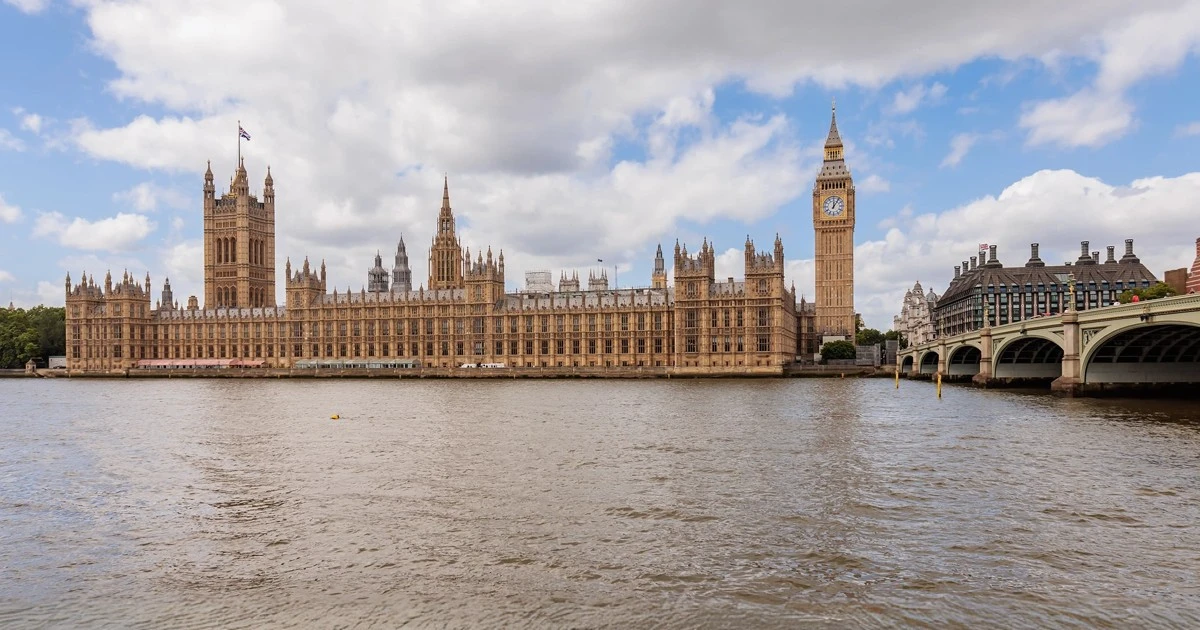
Westminster Renovation: The £40bn Repair Bill
When a government delays a repair, it usually expects to save money, but in this case, waiting actually generates a bill larger than the GDP of some small nations. The Palace of Westminster renovation forces politicians into a strange trap where preserving their daily comfort guarantees the destruction of their budget. Every week they stay inside the crumbling halls, they burn through tax money just to keep the lights on and the sewage flowing. This situation goes beyond a debate about heritage to become a math problem that Parliament is currently failing.
The iconic building is rotting from the inside out. While debates rage in the chambers, the infrastructure around the MPs is quietly collapsing. Historic stonework falls from the ceiling. Pipes burst. Fire alarms ring with alarming frequency. The decision to fix the building has been kicked down the road for years, but the road has finally run out.
Official reports now present a stark reality that no amount of rhetoric can hide. We no longer face a choice between spending money or saving it. Instead, the decision lies between a difficult, expensive move or a catastrophic, astronomically expensive disaster. As the structure decays, the cost of hesitation rises by the day, turning a national symbol into a financial sinkhole.
The High Cost of Doing Nothing
Ignoring a leak in your roof fails to make the water go away and instead turns a hundred-pound patch job into a structural nightmare. The Palace of Westminster renovation works on the same principle, but the numbers are terrifyingly high. The current strategy is often called "managed decline," but the data suggests there is nothing managed about it.
A report by the R&R Client Board states that taxpayers currently pay £1.5 million every single week just to maintain the status quo. Rather than improving the building, this money simply stops it from falling down immediately. On top of that maintenance bill, the cost of inaction and delay adds another £70 million per year to the final tab. This is money set on fire. It buys nothing. It builds nothing. It only pays for the privilege of waiting longer to make a decision.
The same report notes that since 2016, the building has suffered 36 fires. It further identifies 12 incidents involving asbestos exposure and 19 separate events where masonry fell from the structure. These are not hypothetical risks. The R&R Client Board—the body overseeing the project—has stated clearly that the current approach is unsustainable. Safety risks are rising, and the cost of patching up an emergency is far higher than fixing the root cause.
The Two Options: Leave or Stay
Staying put looks like a display of strength, but mathematically, it guarantees nearly half a century of chaos. The primary debate boils down to two main options: a "full decant" (moving out completely) or a "staged" renovation (trying to work while builders repair the structure around them).
The numbers show a massive divide between these choices. As highlighted by The Guardian, a full relocation allows crews to finish the job in 19 to 24 years. The board estimates that the cost for this option sits at approximately £15.6 billion. While that is a massive sum, compare it to the alternative. If MPs refuse to leave, the project transforms into a 38 to 61-year ordeal. The cost balloons to nearly £40 billion—specifically estimated at £39.2 billion.
Staying in the building more than doubles the cost and triples the timeline. This is the "Option 3" scenario, often detailed in support documents as "Enhanced Maintenance" or rolling works. It carries the highest risk and the longest duration. Yet, despite the clear financial advantage of moving out, the political will to pack up remains split.
Why is the Palace of Westminster renovation so expensive?
The renovation costs billions because the building is massive, full of asbestos, and sits on a crumbling Victorian sewage system that requires specialized, hand-crafted repairs.
The Danger Within: Asbestos, Fire, and Falling Stone
Historical prestige acts as a shield, effectively hiding industrial-level hazards that would shut down any normal office building instantly. If this were a private commercial tower, health and safety inspectors would have likely condemned it years ago.
Lord Hain, a former minister, has drawn a chilling comparison to the tragedy at Notre Dame. He warns that a similar fire could destroy the Commons at any moment. The building is a labyrinth of dry wood and old wiring, creating a perfect environment for a catastrophic blaze. The 36 fires recorded since 2016 serve as warning shots that leadership has so far ignored.
The dangers are physical as well as thermal. Falling masonry has become a genuine threat. Lord Dobbs, a peer and author, advises visitors to run immediately if they see others running. This is not hyperbole. It is a practical reaction to a workplace where the ceiling might literally descend on your head. Lord Dobbs argues that the credibility of the House of Lords is at risk. How can they govern effectively when they cannot even guarantee the physical safety of their guests?
The Political Gridlock: Why Decisions Stall
Fear of losing relevance overrides the fear of the roof collapsing. Despite the physical danger and the financial logic, many MPs resist the idea of leaving.
Sir Edward Leigh leads the opposition to a full move. He labels the £15 billion expense as unjustifiable to the public and fears a "permanent exile." His concern is that once MPs leave, they will never return, and the historic connection to the seat of power will be severed forever. He prefers piecemeal repairs, arguing that the country cannot afford the "absurd" proposals currently on the table.
Sir Jacob Rees-Mogg adds another layer of skepticism. He doubts the warnings of immediate ruin, recalling similar "doom-mongering" from 2010 that turned out to be false. He argues that the building is still standing and that vacating the premises causes MPs to lose bargaining power over the builders. In his view, once the politicians are gone, the construction firms will drag out the work to serve their own commercial interests.
This resistance drives the unions crazy. Mike Clancy, the General Secretary of the Prospect trade union, argues that leadership has delayed decisions repeatedly. He endorses a full exit as the only safe and economical choice. Dave Penman of the FDA Union goes further, calling the decade-long indecision "absurd" and the process "farcical."
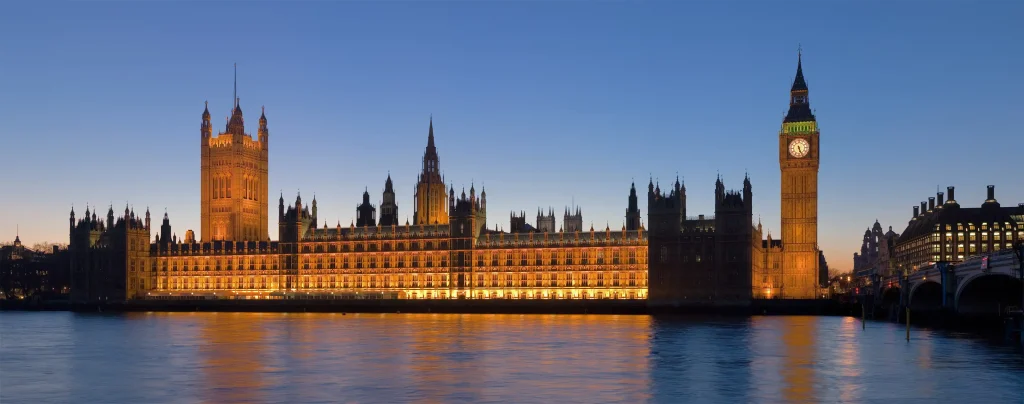
Image Credit - By Diliff - Own work, Wikimedia Commons
Will MPs have to leave the Palace of Westminster?
MPs will likely have to leave for a full renovation to happen safely and affordably, though some politicians are fighting to stay despite the risks.
The Logistics of Relocation: Where Will They Go?
Moving a government involves complications beyond packing boxes, requiring the replication of a symbol of power in a conference center. You cannot simply host a session of Parliament in a hotel ballroom. The logistics of the Palace of Westminster renovation require secure, specialized facilities.
The plan for a full decant involves moving the House of Commons to the "Northern Estate," a collection of nearby buildings adapted for parliamentary use. The House of Lords would move to the Queen Elizabeth II (QEII) Conference Centre. This temporary arrangement allows the specialized restoration work to happen without endangering lawmakers.
Work has already begun on the preliminary stages. Phase 1 includes the refurbishment of the Victoria Tower and the construction of a Thames jetty for deliveries. This jetty is vital because it allows materials to arrive by river, reducing the need for thousands of heavy trucks to clog the streets of London. Crews are also digging shafts for underground tunnels to manage the utilities.
Where will Parliament move during renovation?
The House of Commons is expected to move to the "Northern Estate" nearby, while the House of Lords will relocate to the Queen Elizabeth II Conference Centre.
A Tale of Two Viewpoints: Veteran Peers vs. New MPs
Long-term residents see a home worth defending, while newcomers see a workplace that violates basic health codes. The divide often splits between those who view the Palace as a temple of tradition and those who view it as a functional office.
Newer MPs like Jayne Kirkham look at the infrastructure and see a disaster. She points out the critical failure of sanitary systems, noting that sewage issues have plagued the area near the Speaker’s House. For her, preserving the icon means fixing the pipes, not pretending they aren't leaking. She argues there is a duty to preserve the building for the future, which means accepting the repairs now.
On the other extreme, Edward Morello has suggested a radical idea: a permanent exit. He proposes converting the old palace into a museum and building a modern, functional parliament elsewhere. This clashes directly with traditionalists. Baroness Smith, a senior minister, takes a pragmatic middle ground. She argues that occupancy during repairs is impossible and that maintenance funds are better utilized for a total renovation rather than endless patches.
The Reality of Decay: Sewage and Systems
Behind the gold leaf and red leather, the building is fighting a losing battle against its own waste. The physical decay details paint a grim picture. The sewage system is failing regularly. In the House of Lords, heating failures are common. There have been reports of "exploding" toilets, a phrase that should never appear in a report about a G7 nation's legislature.
Sky News has reported that the building also suffers from RAAC issues—reinforced autoclaved aerated concrete—which is prone to sudden collapse. This issue extends beyond comfort to basic habitability. The 2018 vote accepted the principle of full relocation, but cost anxiety caused a reversal. Now, the cost discrepancy is even wider. A 2022 report cited figures between £7 billion and £22 billion, but those are now outdated. The current reality is the £15.6 billion to £40 billion range. Inflation and deterioration have eaten away at the lower estimates.
The Future Timeline: 2026 and Beyond
Deadlines in politics are usually flexible, but gravity and rot set a schedule that votes cannot override. The timeline for the Palace of Westminster renovation is tightening.
According to Apollo Magazine, early 2026 marks the expected start of the initial "Phase 1" works, which recommends an expenditure of £3 billion over seven years. However, this still requires a Parliament vote to proceed. The deadline for the final decision on the preferred renovation option—stay or go—is set for mid-2030. If they choose the full decant, the earliest start date for the move is 2032.
This schedule highlights the slow pace of the process. Even if they vote to move today, they will not actually leave for another six years. The full decant itself will take up to two decades. If they choose the staged option, the work could continue into the 2090s.
The economic argument for the project is strong despite the costs. The renovation will support thousands of jobs and create apprenticeships nationwide. It is a massive infrastructure stimulus disguised as a repair bill.
The Price of Sentiment
The attachment to the building threatens the institution itself. The data proves that the Palace of Westminster renovation is inevitable. The only variables are how much it will cost and how long it will take. The R&R Client Board, the unions, and the safety inspectors all point in one direction: full relocation.
Opponents argue for tradition, but the price of that tradition is an extra £24 billion and decades of additional disruption. By refusing to treat the Palace as a building that needs fixing, Parliament risks turning it into a ruin that cannot be saved. The "managed decline" is over. The choice is now between a painful bill today or a catastrophic failure tomorrow.
Recently Added
Categories
- Arts And Humanities
- Blog
- Business And Management
- Criminology
- Education
- Environment And Conservation
- Farming And Animal Care
- Geopolitics
- Lifestyle And Beauty
- Medicine And Science
- Mental Health
- Nutrition And Diet
- Religion And Spirituality
- Social Care And Health
- Sport And Fitness
- Technology
- Uncategorized
- Videos

