

Why The Ash Regan Prostitution Bill Just Failed
Governments often claim to support a moral principle while systematically dismantling the only legislation that could enforce it. This specific contradiction played out on the floor of the Scottish Parliament recently. MSPs engaged in a fierce debate over the prostitution bill, a piece of legislation designed to radically shift how the law treats the sex trade. According to the bill's official summary, the legislation proposed creating a new offense of paying for sexual acts while removing penalties for those selling it. The vote result was tight: 64 against and 54 for, with zero abstentions.
The defeat of the bill represented a collision between moral urgency and bureaucratic reality. Proponents argued that buying humans equates to violence and that current laws are dangerously outdated. Opponents countered that criminalization drives the industry underground, increasing risks for workers. However, the final blow came from the government itself, with Holyrood reporting that ministers "regretfully" withheld support due to drafting concerns and time constraints before the May election. Records from the Scottish Parliament confirm that this Bill fell at Stage 1 on 3 February 2026, but the debate exposed a fractured parliament struggling to balance safety, justice, and legislative practicality.
The Logic Behind the Ban
Changing the target of a law often reveals that enforcement is far more difficult than the moral argument that drives it. The core objective of the prostitution bill of Ash Regan was to introduce the "Nordic Model" to Scotland. This legal framework flips the traditional script on sex work. Instead of punishing the sellers, the law targets the buyers. The goal is to strangle demand. Ash Regan, the bill’s mover, argued that demand directly fuels exploitation. She stated clearly that the purchase of humans is an act of violence. Under the current system, selling sex is legal, but related activities like soliciting, kerb-crawling, and brothel-keeping remain illegal. This creates a legal gray zone. The Scottish Parliament website notes that people convicted of these offenses in the past would have their convictions quashed. This would theoretically remove the criminal stigma from women in the trade.
The official text states that Scottish Ministers would need to ensure help and support are provided to anyone who is or has been involved in prostitution. The argument was simple: without buyers, the market for exploitation collapses. The bill faced immediate scrutiny regarding its practical application. While the principle of reducing demand sounds effective, opponents questioned the reality of enforcement. The difficulties of policing consensual interactions versus exploitative ones muddied the waters. Supporters believed this shift was the only way to protect vulnerable women. They viewed the current system as one that penalizes the victim while ignoring the perpetrator. This disagreement over the definition of harm set the stage for the bill's rejection.
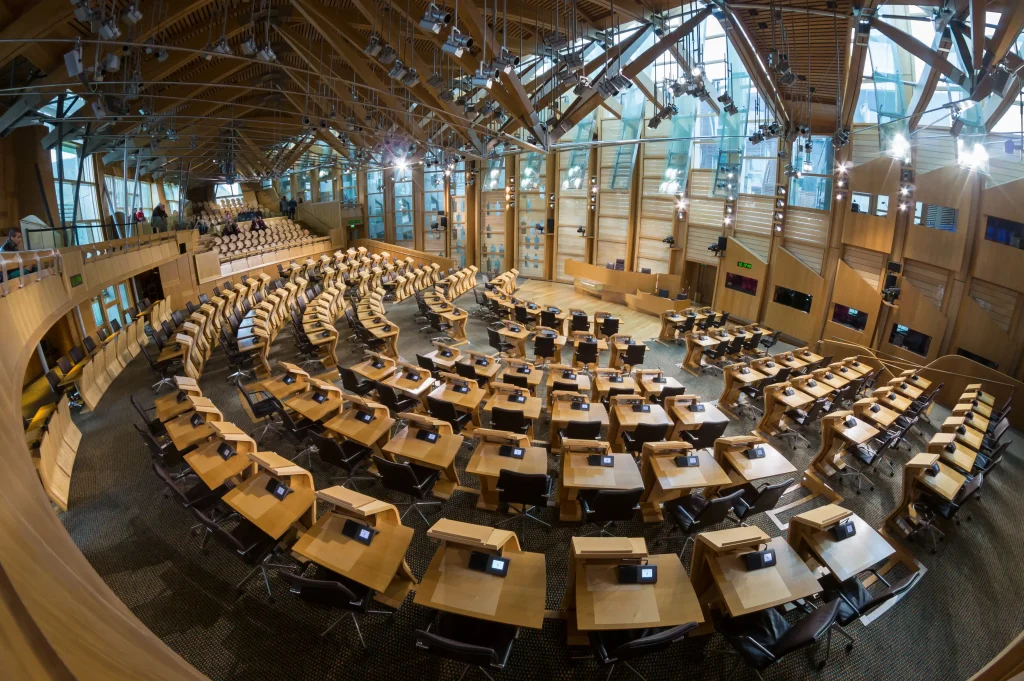
Image Credit - By Colin, Wikimedia Commons
Timing Killed Ash Regan’s Prostitution Bill
Legislative calendars are frequently the most effective tools for burying controversial policies without ever debating their substance. The Scottish Government, represented by Victims Minister Siobhian Brown, officially supported the principle of criminalizing the purchase of sex. Yet, they voted against the bill. The reason cited was time. With the upcoming election in May, the parliamentary session had only six weeks remaining. Brown argued that the bill contained significant drafting flaws that required extensive amendments. The government position was that six weeks was insufficient to fix these errors. They feared that rushing the legislation would result in a bad law. Brown expressed regret over the inability to back the legislation but stood firm on the issue of workability. This sparked outrage among the bill's supporters.
Ash Regan countered this excuse aggressively. She pointed out that the parliament always finds time for less critical matters. She specifically mentioned that time was found for "dogs and gravel," implying that the legislature prioritized trivial issues over the safety of women. This clash highlighted a major tension in the legislative process. Ideally, laws are judged on their merit. In reality, they are often judged on the clock. The government’s refusal to extend the debate or allocate more time effectively killed the proposal. Douglas Ross, the Conservative leader, requested an extension for the debate, but this was refused. This friction over time allocation gave opponents a procedural exit ramp. They could reject the bill without explicitly rejecting the moral concerns behind it.
The High Cost of Enforcement
A law is only as strong as the budget and manpower assigned to enforce it. Beyond the moral arguments, the financial implications of the bill raised serious concerns. Police Scotland provided a stark estimate for the cost of enforcement: £321 million per year. This figure represented the resources needed to actively police the ban on sex buying. The high cost suggested that effective implementation would require a massive diversion of police resources. The nature of the sex trade has changed, further complicating enforcement. A summary of consultation responses indicates that prostitution has largely moved off the street and online.
Siobhian Brown cited specific concerns about online enforcement. Policing the internet for sex buyers requires different tools and tactics than policing street soliciting. The government feared that the bill did not adequately address these digital challenges. Without a clear plan for online regulation, the ban risked becoming unenforceable. Critics used these numbers to argue that the bill was unrealistic. Spending hundreds of millions of pounds on a policy that might drive the trade further into the shadows seemed imprudent to many MSPs. The financial argument provided a pragmatic counterweight to the emotional appeals of the bill’s supporters. It raised the question of whether the police could actually deliver on the promise of eliminating demand.
How much would the prostitution bill cost scotland?
Police Scotland estimated that enforcing the ban on sex buying would cost approximately £321 million per year.
The Safety Dilemma
Attempts to protect vulnerable groups can sometimes strip away the few safeguards they actually use to survive. The most heated part of the debate focused on the safety of sex workers. Opponents, including the Greens and Lib Dems, argued that the prostitution bill would endanger the very people it aimed to save. Their central argument was that criminalizing buyers drives the industry underground. When clients fear arrest, they demand more secrecy. This secrecy prevents workers from screening clients effectively. It forces transactions into isolated, dangerous locations. Alex Cole-Hamilton, the Lib Dem leader, stated that prostitution is inevitable.
He argued that the focus must be on safety rather than elimination. International evidence, according to opponents, suggests that criminalization leads to the marginalization of workers. It creates barriers to accessing support services and healthcare. Maggie Chapman of the Greens challenged the premise that all sex work is violence. She argued that "sex work is work" and that some adults consent to it. By treating every transaction as abuse, the law ignores the agency of those who choose the profession. This perspective clashed directly with the bill’s supporters. The debate became a battle between two definitions of safety: safety from exploitation versus safety in the workplace. The fear that the bill would unintentionally increase violence against workers was a key factor in its defeat.
Does criminalising buyers help sex workers?
Critics argue it pushes the trade underground and increases danger, while supporters believe it cuts off the demand that drives exploitation.

Image Credit - By Scottish Government, Wikimedia Commons
A Party Divided
Political parties usually demand loyalty, yet moral conscience issues tend to shatter even the strictest voting blocs. The vote on Ash Regan’s prostitution bill exposed deep divisions within the Scottish National Party (SNP). While the government whipped its members to vote against the bill, a group of rebels broke ranks. Holyrood reported that Michelle Thomson, Ruth Maguire, Stephanie Callaghan, Annabelle Ewing, Kenneth Gibson, and Elena Whitham broke the whip to vote in favor. Michelle Thomson was particularly vocal in her criticism. She slammed her party for denying a free vote on a matter of conscience.
Thomson argued that women in the sex trade are at a higher risk of murder and addiction. She rejected the idea that buying humans is a right. For her, it is an entitlement that leads to harm. The rebellion demonstrated the intensity of feeling on the issue. This represented a moral stand rather than a simple policy disagreement. The final vote count of 64 against to 54 for showed how close the decision was. The lack of abstentions indicated that every MSP took a side. The rebel MSPs highlighted that the issue of prostitution cuts across party lines. It divides those who prioritize theoretical harm reduction from those who prioritize immediate abolition. This internal conflict weakened the government’s authority on the issue and ensured the debate would continue long after the vote.
Voices from the Chamber
Public debates often hide the reality that politicians are trading accusations of inaction rather than discussing solutions. The speeches during the session revealed the emotional weight of the bill. Ash Regan accused the legislature of fear. She claimed that MSPs were ignoring evidence and survivor testimony. In her view, inaction was an active choice that would lead to negative outcomes. She drew links to high-profile scandals like the Epstein case and grooming gangs, arguing that the public demands accountability from exploiters. On the other side, Liam Kerr, the Tory Justice Spokesman, acknowledged the bill was imperfect.
However, he argued that the potential to reduce violence created a duty to attempt amendments. He believed the parliament should have tried to fix the bill rather than rejecting it entirely. This sentiment was echoed by Fergus Ewing, an independent MSP. He offered a moment of self-reflection, admitting that parliamentary justice had allowed "abhorrent abuse" to continue across the country. Pauline McNeill of Labour highlighted the imbalance of the current system. She noted that vulnerable women are criminalized while male buyers remain exempt. She described the treatment of women as commodities. These quotes paint a picture of a parliament deeply uncomfortable with the status quo but unable to agree on a path forward. The rhetoric was high, but the consensus was low. The "Unbuyable Bill" became a lightning rod for broader frustrations about justice and gender inequality.
Drafting Flaws and Legal Hurdles
Writing a complicated law in a hurry ensures that even its strongest supporters will find reasons to reject it. The government’s main technical argument against the bill was that it was simply too broken to fix. Legislative documents detail a maximum fine of up to £10,000 and/or six months’ imprisonment on summary conviction. However, the definitions and procedures for applying these penalties were reportedly flawed. Siobhian Brown insisted that the drafting issues were "significant." The challenge of defining "purchase" in a legal context is difficult.
Without precise language, the law could be applied inconsistently or fail to stand up in court. The government argued that Stage One is the time to identify these flaws. Since there was no time to redraft the bill before the election, they felt they had no choice but to vote it down. Supporters viewed this as a technicality used to kill a necessary law. The debate over "workability" is common in legislative bodies. It allows politicians to support a cause in theory while blocking it in practice. The government’s stance was that a bad law is worse than no law. Opponents of the bill used these drafting flaws to bolster their arguments about safety. If the law is vague, it could be used to harass workers rather than protect them. The technical failure of the bill provided the cover needed for its political defeat.
What is the nordic model in scotland?
It is a proposed legal framework where sex buyers face criminal charges while sellers are decriminalized to support their exit from the industry.
Conclusion: The Ash Regan Prostitution Bill
A defeated bill rarely disappears; it simply waits for a new political cycle to resurface under a different name. The prostitution bill has fallen, but the issues it raised remain unresolved. The Scottish Government has made a commitment to revisit the issue after the May election. The "Unbuyable Bill" may be dead, but the demand for reform is very much alive. The vote clarified the battle lines.
On one side are those who view the purchase of sex as inherent violence that must be stopped at the source. On the other are those who prioritize the immediate safety and agency of sex workers, fearing that criminalization brings only danger. The estimated £321 million enforcement cost and the difficulties of online policing ensure that any future bill will face the same scrutiny. The parliament rejected this specific proposal, but it cannot ignore the reality of the trade. The clock ran out on this attempt, but the argument over how to handle prostitution in Scotland is far from over.
Recently Added
Categories
- Arts And Humanities
- Blog
- Business And Management
- Criminology
- Education
- Environment And Conservation
- Farming And Animal Care
- Geopolitics
- Lifestyle And Beauty
- Medicine And Science
- Mental Health
- Nutrition And Diet
- Religion And Spirituality
- Social Care And Health
- Sport And Fitness
- Technology
- Uncategorized
- Videos

