
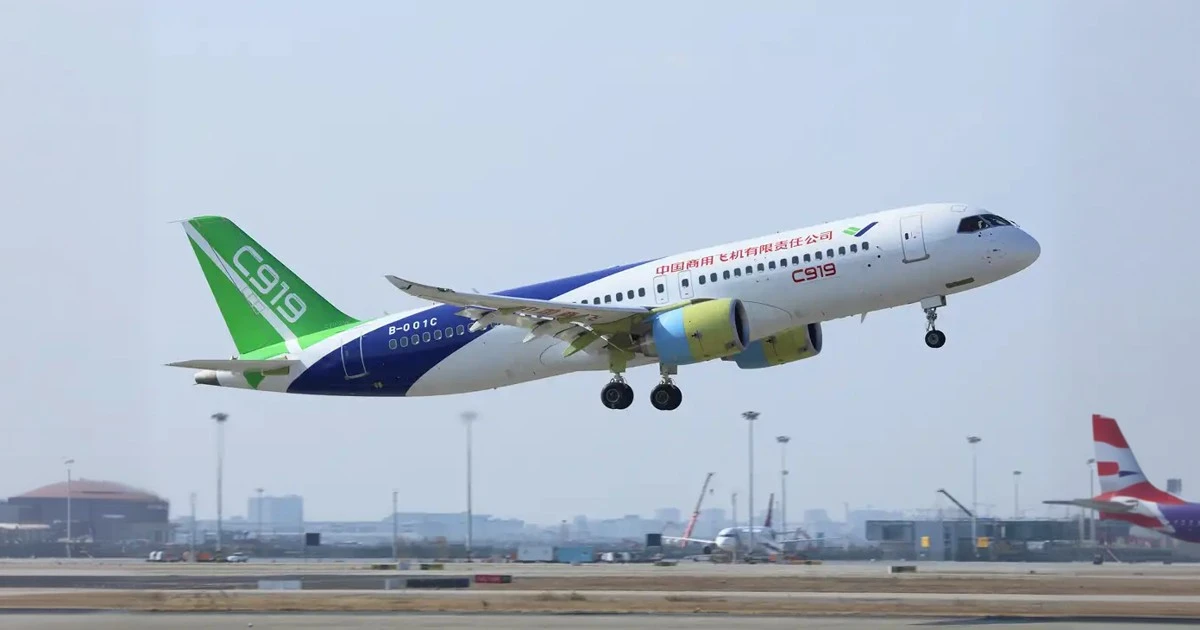
Image Credit - By Ken Chen, Wikimedia Commons
Is Comac Now Ready To End The Boeing-Airbus Era?
Global supply chains do not break because of a single disaster; they snap when reliability becomes a gamble. Airlines today face a brutal reality where ordering a new plane means waiting nearly a decade for it to arrive. This stagnation forces carriers to look for solutions they would have ignored just a few years ago. The aviation industry is watching a desperate search for hardware that actually exists.
The arrival of a Chinese competitor changes the math for every major airline. Executives can no longer rely solely on Western manufacturers when their production lines are stalled. The Comac C919 enters the scene as a wedge driven into a fractured market. It uses the failures of established giants to carve out its own territory. This shift creates a tripartite future where power creates a new balance.
The Vacuum Created by Delays
You cannot run a profitable business when your essential tools arrive seven years late. This specific failure in delivery timelines has created the perfect opening for a new player. Boeing and Airbus hold a duopoly that currently acts more like a bottleneck than a pipeline. Airlines in the Asia-Pacific region want to grow, but they cannot secure the seats to carry passengers.
According to The Economic Times, the backlog for major manufacturers ensures the wait between making an order and taking delivery is about seven years. Willie Walsh, the Director General of IATA, calls this delay unacceptable. He argues that hardware scarcity stifles the growth potential of the entire industry. When carriers cannot get jets, ticket prices rise and routes stay closed. This pressure forces airline CEOs to look for any viable alternative.
As reported by Reuters, Cebu Pacific CEO Michael Szucs explicitly welcomes Comac "coming to the party," viewing the competition as beneficial. He suggests that a third option helps everyone by forcing the giants to improve. The Comac C919 targets this exact frustration. It promises availability in a market defined by scarcity. Airlines do not necessarily want a Chinese jet, but they need capacity that the West cannot currently provide.
China’s Strategy for Market Entry
A competitor only needs availability when everyone else is sold out. Comac understands that it cannot beat Western engineering overnight, so it competes on access. The state-owned manufacturer uses the massive domestic market of China as a training ground. They build the fleet at home before sending it abroad.
The strategy focuses heavily on Southeast Asia. Countries like Indonesia, Vietnam, and Laos already operate roughly 25% of China’s foreign fleet, mostly the smaller ARJ21. Now, the C919 aims to follow that path. Cambodia has already shown intent to order around 20 aircraft. This regional focus allows Comac to build a support network close to home.
Budget carriers find the Comac C919 attractive because of its lower initial price point. While costs have risen to over $100 million due to composite materials, it remains a competitive option. Government support ensures that Comac can survive early losses. They play a long game where market presence matters more than immediate profit. This allows them to seed the market while Western rivals struggle to tighten bolts.
Inside the Hardware and Specs
Replicating a proven design reduces risk while forcing direct competition with perfection. The C919 does not try to reinvent the wheel. It mimics the successful formulas of the Airbus A320neo and the Boeing 737 MAX. It fits squarely into the narrow-body airliner category, which carries the bulk of global domestic traffic.
The jet seats between 158 and 192 passengers. Its range sits between 4,075 and 5,555 kilometers. These numbers make it ideal for regional routes across Asia. Comac has prioritized safety, cost-effectiveness, and comfort. Pilot Zhang Shaobo notes that passengers already book flights specifically to fly on this aircraft type. The cabin feels familiar to anyone who has flown on a Western jet.
Comac plans to expand the family quickly. A stretched version is in development, and a shortened "high altitude" variant will roll out in early 2026. This variety proves that they want to cover every niche of the market. Is the C919 safe to fly? Regulators continue to test the aircraft rigorously, but major Chinese airlines already fly it daily with passengers. The design targets the exact sweet spot that airlines need most.
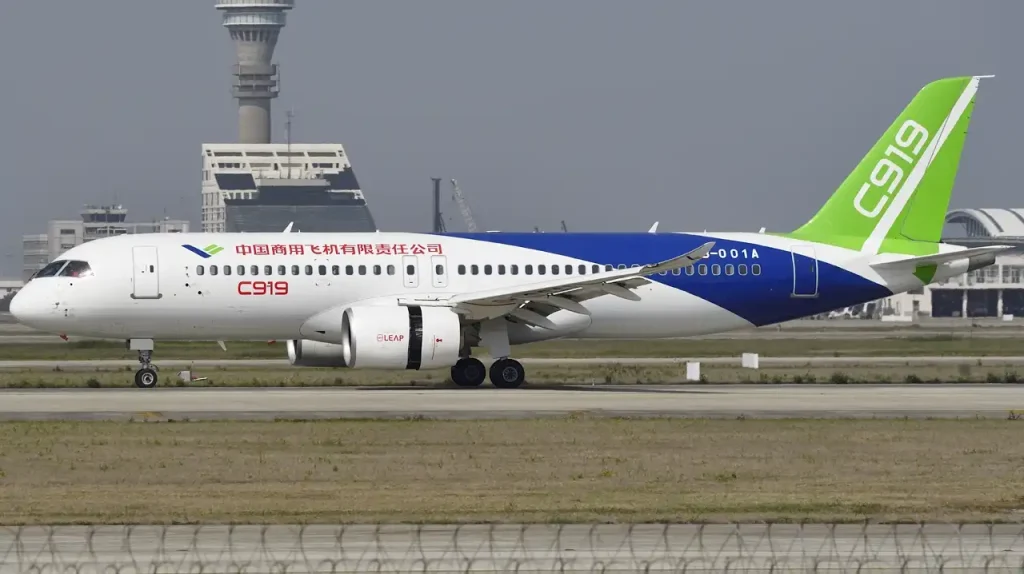
Image Credit - By Shimin Gu, Wikimedia Commons
The Engine and Supply Chain Dilemma
Building a sovereign jet with foreign heart valves creates a fatal dependency. Reuters notes that the C919 relies on LEAP-1C engines, a product of the joint venture between GE Aerospace and France's Safran. This reliance on Western technology contradicts the goal of total independence. If political winds shift, the supply of engines could vanish.
This vulnerability showed itself in May 2025. The US suspended sales of the LEAP-1C engine to China. Although the ban was lifted in July, it sent a shockwave through the program. It proved that the C919 exists at the mercy of Western permits. Comac knows this is a weakness. They are rushing to verify their own indigenous engine, the AECC CJ-1000A.
Flight testing for this Chinese engine began on a Y-20 transport plane in March 2023. According to The Straits Times, mass production is expected around 2030, while international certification remains years away. Until then, the C919 remains a hybrid product. It uses Western power to fly Chinese ambitions. This creates a tense race against time. Comac must secure its own supply chain before geopolitical tensions cut off the flow of parts forever.
The Certification Wall
Safety paperwork often acts as a political weapon disguised as bureaucratic caution. The biggest hurdle for the Comac C919 is not gravity, but the European Union Aviation Safety Agency (EASA). Without EASA certification, the jet cannot fly freely in global skies. It remains locked out of the most lucrative Western markets.
EASA Director Florian Guillermet confirms that the certification window lies between 2028 and 2031. This timeline is years away. The regulators demand a thorough check of every system. Reuters confirmed in January 2026 that Europe's aviation regulator carried out test flights in Shanghai as part of necessary validation activities. They do not trust Chinese data blindly. They want to feel the plane respond in the air.
This process involves checking the design integration. It assesses how different parts talk to each other. When will the C919 fly in Europe? Certification is expected between 2028 and 2031, depending on how testing proceeds. Until then, the jet stays mostly in Asia. This regulatory wall protects Western airspace but also gives Boeing and Airbus time to recover.
Shadows in the Factory
Innovation moves faster when you steal the instructions instead of writing them yourself. The development of the C919 carries a history of cyber intrusion. Between 2010 and 2015, a group known as Turbine Panda targeted companies like Honeywell, GE, and Safran. These companies supply the core tech for Western jets.
Intelligence agencies connected these intrusions to an effort to bypass research barriers. In 2022, a Chinese intelligence officer named Yanjun Xu was convicted for attempting to steal trade secrets related to fan blades and sensors. This espionage suggests that parts of the C919’s DNA come from hacked servers rather than original research. It accelerates development but creates legal and trust issues.
The shadow of espionage hangs over the program. It complicates relationships with suppliers who fear their intellectual property might disappear. Yet, the plane flies. The industry must deal with the physical reality of the aircraft, regardless of how the blueprints were acquired. It forces competitors to guard their secrets while selling parts to the very rival trying to copy them.
Production Targets vs. Reality
Announcing a goal is easy; bending metal into a safe machine is incredibly hard. Comac claims it holds over 1,000 orders, but mostly from state-owned Chinese airlines. The actual delivery numbers tell a slower story. By early 2025, production faced significant hurdles.
The company aims to produce 150 jets per year by 2028. However, in the first half of 2025, only a handful were delivered. Sanctions and supply chain snags slowed the line. Contradictory reports exist regarding the exact fleet size. While some reports track around 12 deliveries, deeper data suggests the fleet has grown closer to 20 units across multiple carriers like Air China and China Southern.
This gap between promise and reality defines the current state of Comac. How much does a C919 cost? It costs about $100 million, though this price is rising due to expensive composite materials. Airlines watch these numbers closely. If Comac cannot ramp up speed, they cannot relieve the pressure on the market. They need to turn prototypes into a steady stream of reliable aircraft.
The Future of the Tripartite Market
Market dominance relies on surviving until your opponents stumble. The aviation industry is moving toward a three-way split. Willie Walsh predicts that Comac will become a global contender within 10 to 15 years. The days of the Boeing-Airbus duopoly are numbered.
By the 2030s, carriers like Cebu Pacific may actively operate the C919. As the indigenous engine comes online and production stabilizes, the jet will become a true option for neutral nations. Airlines will use the existence of the C919 to negotiate better prices from Western manufacturers. It becomes leverage.
Embraer is also growing in the APAC region, but Comac has the backing of a superpower. The vision statement of Comac emphasizes a spirit of "Never give up." They aim to capture one-fifth of the global narrow-body market by 2035. This ambition ensures that the skies will look very different in the coming decade.
The Comac C919 Age
The rise of the Comac C919 signals a permanent shift in how the world buys airplanes. Airlines effectively buy insurance against future delays by supporting a third manufacturer. The current struggles with engines and certification are temporary friction in a long-term plan. China is building a system that eventually functions without Western permission.
For passengers, this means flying on new brands. For the industry, it means the end of a comfortable duopoly. The Comac C919 forces Boeing and Airbus to fix their own flaws or lose ground. The sheer weight of demand ensures that this new competitor is here to stay.
Recently Added
Categories
- Arts And Humanities
- Blog
- Business And Management
- Criminology
- Education
- Environment And Conservation
- Farming And Animal Care
- Geopolitics
- Lifestyle And Beauty
- Medicine And Science
- Mental Health
- Nutrition And Diet
- Religion And Spirituality
- Social Care And Health
- Sport And Fitness
- Technology
- Uncategorized
- Videos

