
Why We Still Trust A Groundhog To Predict Winter
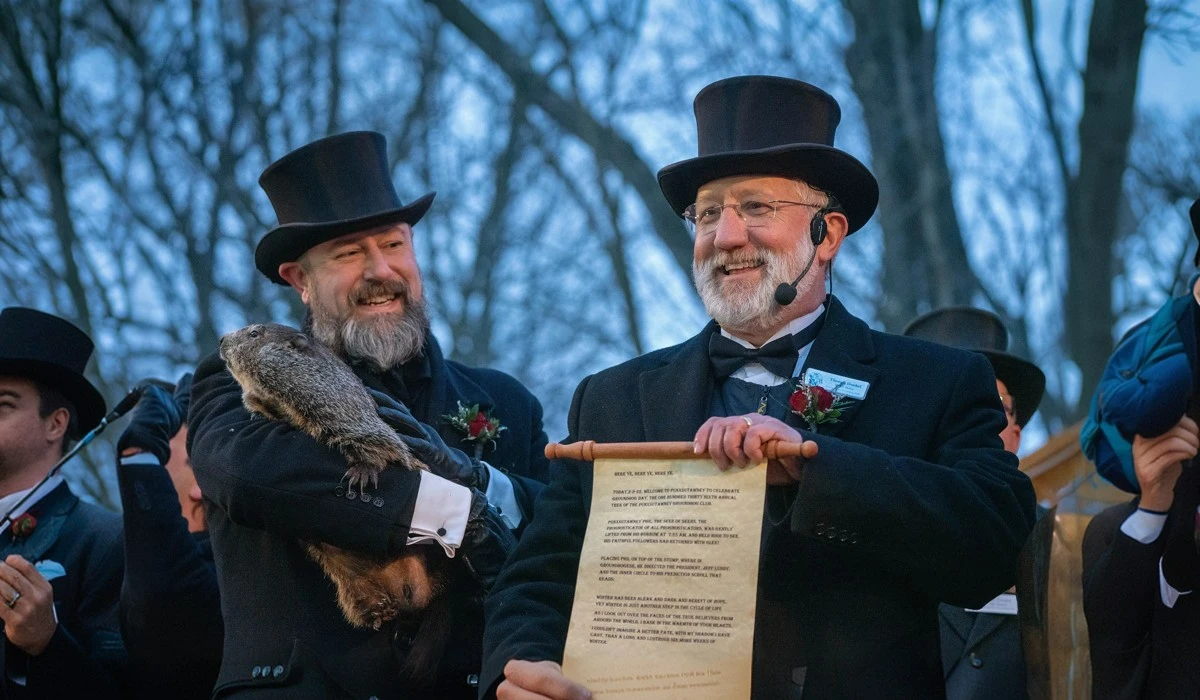
Ancient farmers created a calendar system based on solar math rather than animal behavior. We rely on a furry oracle every February because old traditions demanded a sign of hope halfway through the darkness of winter. Modern crowds flock to Pennsylvania for a party disguised as a weather report. Groundhog Day stands as the most curious superstition in American culture. A rodent emerges from a burrow. A group of men in top hats interprets his movements. The world accepts the forecast. This ritual survives because it offers a break from the monotony of the cold season.
The 2026 celebration just concluded. Punxsutawney Phil saw his shadow. The forecast calls for six more weeks of winter. This prediction aligns with centuries of folklore, yet the data tells a different story. Science proves the animal possesses no meteorological skill. The tradition persists anyway. We value the connection to history over the accuracy of the forecast. This event reveals our desire to control the uncontrollable. We want to know when the sun will return. Groundhog Day gives us a specific date to focus our anxiety. The holiday evolved from a simple agricultural marker into a media spectacle. The story involves Roman candles, German badgers, and a Hollywood comedy that changed our language forever.
The Astronomy Behind the Rodent
The calendar determines the celebration date rather than the animal. According to Newgrange.com, February 2 marks a cross-quarter day called Imbolc, and this specific date sits at the exact midpoint between the Winter Solstice and the Spring Equinox. Ancient civilizations tracked these midpoints to manage food stocks. Farmers needed to know how long their supplies had to last. The Romans celebrated this time as Februa. They focused on purification. Later, Christians adapted the timing for Candlemas. As stated by Britannica Kids, by the 5th century, the church introduced a custom of observing this festival with lighted candles to bring light into the remaining winter gloom.
Victor Hugo wrote about this specific tension in Les Misérables, and the text provided by Project Gutenberg notes that a bright sun on Candlemas signals deceptive warmth. The bear retreats to its den upon seeing the light. Brightness implies the cold will linger. German folklore expanded on this solar logic. They watched for a badger or a fox. If the animal cast a shadow, winter continued. German immigrants brought this specific rule to Pennsylvania. They lacked badgers, so they substituted the local groundhog. Why is Groundhog Day on February 2? It marks the astronomical halfway point of winter, signaling farmers to check their supplies. The switch to the groundhog occurred simply due to availability. The animal became the new face of an old mathematical marker.
From Pest to Prophet
A small town turned a hunting trip into a national legend to put themselves on the map. The Library of Congress notes that the earliest written record of this tradition appears in the 1840 diary of James L. Morris from Pennsylvania. However, the media narrative began later. The Punxsutawney Spirit newspaper reported on the "beast" in 1886. They noted the creature saw no shadow. The following year, in 1887, a group made the first official trek to Gobbler’s Knob. This solidified the start of the unbroken tradition. The early celebrations looked nothing like the modern broadcast. Locals viewed the groundhog as a food source. They often consumed the "oracle" after the prediction.
Marinated meat and "Groundhog Punch" served as the main course. A document archived by the University of Delaware reveals that a 1952 description of the town called it a "remote two cow village." They considered the animal a pest. The Punxsutawney Groundhog Club formed in 1899 to organize the event. They slowly shifted the focus from hunting to protecting. The groundhog evolved from dinner into a beloved national icon. Official club lore claims the same groundhog has predicted the weather since 1887. They suggest he drinks a magical elixir of life. Britannica reports that biology contradicts this lore, as captive groundhogs live up to 14 years. The club quietly replaces the animal to maintain the illusion of immortality.
The Movie That Changed Reality
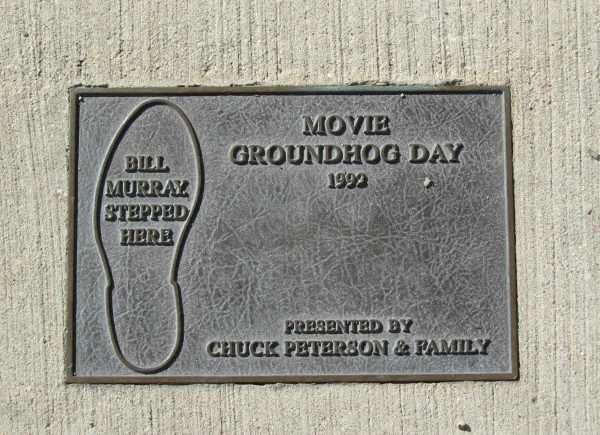
A comedy film accidentally rewrote the dictionary and supercharged the tourism economy. The 1993 release of the film Groundhog Day altered the trajectory of the holiday. Before the movie, the phrase referred only to the weather prediction event. After the film, Merriam-Webster states that the idiom "Groundhog Day" entered the lexicon to describe a tedious, repetitive loop. A BBC analysis confirms that Hollywood bears responsibility for this linguistic shift. The film had a tangible physical effect on Punxsutawney. Pre-1993 attendance hovered around 2,000 people.
The box office success drove crowds to explode. Modern attendance ranges from 10,000 to 40,000 revelers. The town of roughly 5,769 people swells to seven times its size for a single morning. Folklorists point to the film as the primary driver of this participation. The narrative of a protagonist forced to repeat the same day resonated with audiences. People wanted to experience the real-world location of the time loop. How did the movie change Groundhog Day? The film caused attendance to surge from 2,000 to over 40,000 people and changed the meaning of the phrase. The event shifted from a local quirk to a bucket-list destination. Fans tolerate the freezing temperatures to share in the communal experience.
The Science of the Shadow
Random chance outperforms the most famous weather prophet in history. The core belief states that shadow visibility equals six more weeks of winter. No shadow equals early spring. This binary logic fails under scrutiny. Data from Stormfax pegs Phil's accuracy at a dismal 39%. A study by Lakehead University gives him slightly more credit at 52%. This rate equals the statistical probability of a coin flip. Meteorological analysis confirms the disconnect.
The arrival of the spring equinox remains fixed regardless of rodent behavior. Feb 2 weather patterns often align with lingering cold purely by coincidence. The shadow depends on local cloud cover at 7:25 AM. Clouds do not dictate the jet stream for the next month. The biological reality of the animal also contradicts the lore. A report in the Journal of the American Meteorological Society indicates that while we celebrate in February, groundhogs typically wait until March to emerge. The timing mismatches the actual hibernation patterns across the region. We force the animal out of its burrow for our entertainment. Is the groundhog accurate? Studies show Phil's success rate hovers between 39% and 52%, effectively random chance. The crowd cheers regardless of the outcome. They prioritize the moment over the meteorology.
Cultural Necessity Over Accuracy
We celebrate this holiday to bond over our shared impatience for spring. Folklorist Angus Gillespie classifies Groundhog Day as a minor holiday with a specific distinction. It requires no gifts. You send no cards. The obligation remains low. This lack of pressure allows people to enjoy the event purely for the spectacle. The bond forms through shared viewing. Communities gather around televisions or live streams to watch the same moment. The event serves a psychological function. It breaks the "long, bleak winter" mindset.
The Roman roots of Februa and the Gaelic Imbolc both served this purpose. Humans need a checkpoint. We need assurance that the season will change. The bloom of the Carolina Spring Beauty wildflower signals spring more accurately than the groundhog. Yet, we prefer the theatrical rodent. The tradition proves resilient. The COVID-19 pandemic forced the first closed-door ceremony in 2021. The inner circle wore masks. No crowds gathered. The prediction happened anyway. The ritual continued because the continuity matters more than the audience size. The 2026 event saw the return of massive crowds. The shadow appeared. The groan of "six more weeks" echoed through the crowd. This collective groan unifies the participants.
The Contradiction of the Immortal Rodent
We pretend a wizard lives in a hole to avoid facing the reality of nature. The official lore presents Phil as a supercentenarian. He has supposedly lived since the 19th century. This story conflicts with basic biology. A wild groundhog lives roughly six years. A captive one might reach ten. The club maintains the fantasy to preserve the brand. The 1886 Punxsutawney Spirit report referred to a generic "beast." Today, Phil possesses a distinct persona. He serves as the town's primary economic engine.
The contradiction between the "pest" of 1952 and the "oracle" of 2026 highlights the power of marketing. The town successfully rebranded a nuisance animal into a tourist attraction. European analogs show similar patterns. Hungary uses a bear. Serbia also looks to the bear on February 15. The UK watches St. Swithin’s Day in July. Humans consistently look to animals to understand time. We project our knowledge onto them. Phil acts as a mirror for our own hope. We want the winter to end. We use the groundhog to voice that desire.
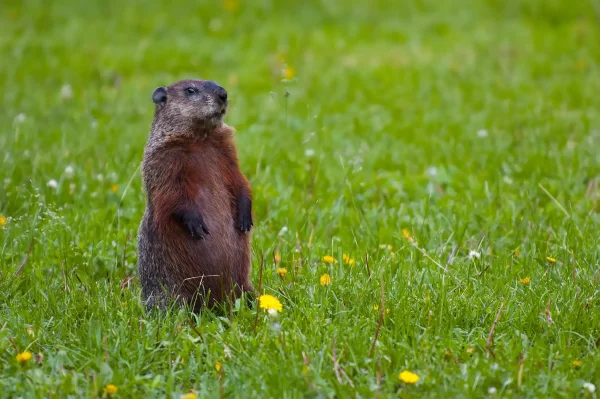
Image Credit - by Marumari at English Wikipedia, CC BY-SA 3.0, via Wikimedia Commons
The 2026 Verdict and Beyond
The shadow creates a self-fulfilling prophecy of patience. The latest prediction occurred on February 2, 2026. Phil saw his shadow. The "inner circle" interpreted this as a forecast for six more weeks of winter. The crowd accepted the news. The forecast aligns with the "long winter" warnings from Victor Hugo's time. Bright skies mean cold air remains. This year's event reinforces the holiday's stability. The numbers remain high. The live stream reached millions. The "Groundhog Day" idiom remains firmly planted in our vocabulary. The event survived pandemics, wars, and cultural shifts. It survives because it demands nothing from us. It only asks us to look at a shadow.
Conclusion: The Shadow Remains
We cling to Groundhog Day because we love the illusion of certainty. The 2026 prediction of six more weeks of winter might prove false by March. That failure will not matter. The accuracy holds no weight in the tradition. The true value lies in the ritual itself. We take a meaningless data point from a confused rodent and turn it into a reason to hope. The event connects us to the ancient farmers who watched the sky in fear of starvation. It connects us to the movie fans who love the loop. Groundhog Day persists because we need to believe that spring is coming, even if we have to ask a groundhog to confirm it.
Recently Added
Categories
- Arts And Humanities
- Blog
- Business And Management
- Criminology
- Education
- Environment And Conservation
- Farming And Animal Care
- Geopolitics
- Lifestyle And Beauty
- Medicine And Science
- Mental Health
- Nutrition And Diet
- Religion And Spirituality
- Social Care And Health
- Sport And Fitness
- Technology
- Uncategorized
- Videos

