
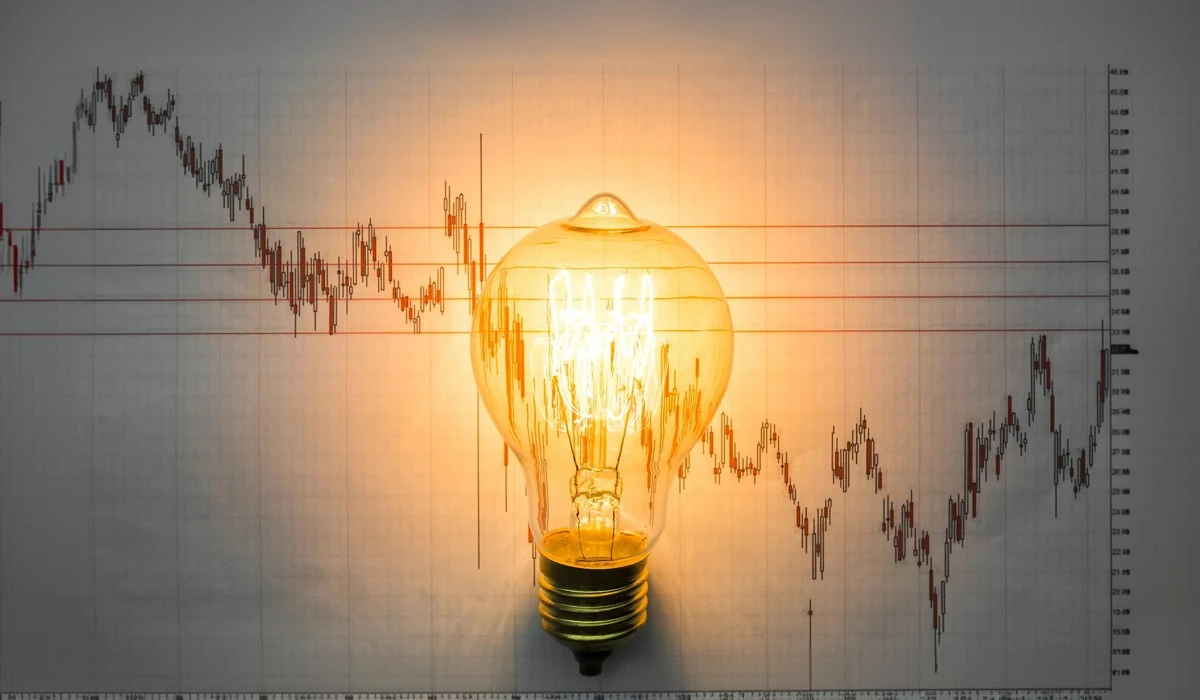
Energy Trading lowers Costs Via Volatility Focus
Your energy bill represents more than just raw consumption; it includes the financial burden of market volatility. By maintaining steady operations while the grid struggled with peak demand, your business effectively subsidized the cost of systemic instability
Stability is gone. We have entered a time where market shifts are violent and instant. In 2022 alone, the European Power Benchmark didn't just rise; it averaged 230 €/MWh. That is a staggering 121% increase from the previous year. This represented a signal that the old way of buying power is broken, rather than a mere glitch.
This is where Energy Trading stops being a buzzword for Wall Street and starts being a survival tool for your budget. This approach involves defense rather than speculation. Analyzing trade patterns around spikes turns electricity price volatility from a budget-killer into a manageable risk.
The New Reality of Market Fluctuations
The days of flat-rate predictability are over. To see why your operational costs are bleeding out, look at the grid's new vulnerability. According to a UK Parliament report, the energy sector has moved away from steady coal and nuclear baseloads toward home-grown renewable sources that are inherently intermittent. While greener, this shift introduces wild instability.
Consider Winter Storm Uri in February 2021. Research from the Mississippi Public Service Commission indicates it was a financial catastrophe, not a simple weather event. The report notes that companies without hedging strategies faced electricity price volatility that wiped out years of profit in days, contributing to total economic losses of approximately $196.5 billion. In Texas, spot prices hit the $9,000/MWh cap and stayed there. If you were exposed to the market without a safety net, you paid that rate. Data from the International Energy Agency shows that electricity prices also surged during short-term extreme weather events throughout 2024.
Many managers ask what causes electricity price volatility. The answer lies in a mix of supply constraints, extreme weather events, and geopolitical tensions that disrupt fuel delivery. A pipeline issue in one country or a cloud over a solar farm in another can instantly double your rate.
The Core Principles of Energy Trading
Most businesses treat energy procurement like buying office supplies; they shop for a price once and forget it. Energy Trading requires a mindset shift. You stop treating electricity as a utility and start treating it as a traded commodity, similar to currency or stock.
Beyond Simple Procurement
There are two sides to this coin: physical and financial. Physical trading involves the actual delivery of electrons. It is governed by physics and grid congestion. If you need power to run a machine, you are in the physical market. However, financial trading is where the protection happens. This involves derivatives like swaps and futures. You don't "hold" the electricity; you hold a contract that protects you from price changes.
Smart traders watch the "Spark Spread." According to the Energy Information Administration (EIA), this represents the difference between the price of electricity and the cost of the natural gas used to generate it. When this spread tightens, it signals that generation is becoming expensive. A savvy energy manager sees this and locks in rates before the grid passes those costs on to the consumer.
The Spot Market vs. Futures

The most dangerous place for a business to be is the "spot market." Information provided by Nasdaq defines this as the cash market where securities are purchased and sold for immediate delivery. During the 2022 crisis in Europe, spot prices fluctuated by hundreds of Euros within a single day. Buying here leaves you with zero control.
In contrast, Energy Trading allows you to utilize futures contracts. A blog by Montel explains that companies use these contracts or swaps to lock in a specific electricity price, neutralizing the risk of future spikes. It effectively "deletes" the risk of a future price increase. When evaluating ROI, you might wonder if energy trading is profitable. Yes, for businesses that actively manage their portfolio, it generates profit through the avoidance of peak rates and capitalizing on market dips.
Identifying Drivers of Electricity Price Volatility
To beat the market, you have to know what moves it. The drivers of price changes have shifted from simple demand to complicated supply-side issues.
The Influence of Renewable Intermittency
Solar and wind are non-dispatchable, meaning you can't turn them on with a switch. This creates massive gaps in supply. A 2024 study highlighted that in grids with high renewable penetration, a mere 10% increase in wind generation can depress spot prices significantly. But the inverse is violent. As reported by Clean Energy Wire, a sudden drop in wind, known in Germany as "dunkelflaute," causes power prices to spike instantly. The Guardian adds that this phenomenon has occurred multiple times in recent winter seasons.
In places like California and Australia, this creates the "Duck Curve." Solar floods the grid at midday, dropping net demand to near zero and crashing prices. Then, as the sun sets, prices rocket upward. Energy Trading strategies now focus entirely on this arbitrage, buying when the "duck" is low and hedging when the neck cranes up.
Regulatory and Infrastructure Constraints
Sometimes the power exists, but it can't get to you. This is grid congestion. In the UK, a "boundary constraint" between wind-rich Scotland and demand-heavy England forces the National Grid to pay wind farms millions annually to switch off. Reuters reports that the government is working with the National Energy System Operator to reduce these constraint payments, as upgrades could save billions of pounds, whereas current waste creates artificial volatility in local pricing nodes.
Geopolitics acts as a massive multiplier here. When Russian gas curtailment reduced EU pipeline imports from 140 bcm in 2021 to under 25 bcm in 2022, it didn't just lower supply. It induced electricity price volatility that bankrupt unhedged utilities who couldn't absorb the shock.
Advanced Strategies in Energy Trading
Once you understand the drivers, you can move from defense to offense. You don't just survive the market; you use it to lower your average spend.
Load Shifting and Demand Response
The cheapest energy is the energy you don't use during a peak. Load shifting involves moving your consumption to off-peak times. A Minnesota study found that commercial entities implementing load shifting reduced energy costs by 34% without reducing their total energy usage. They simply moved their operations to cheaper hours.
You can also get paid to help. The Federal Energy Regulatory Commission (FERC) defines Demand Response (DR) as a change in electric usage by customers in response to incentive payments during grid stress. In PJM, a major US grid operator, DR participants earn capacity payments that can offset 10-20% of their annual energy spend. This makes you a virtual power plant when you reduce consumption.
Strategic Hedging
You don't have to hedge everything at once. Guidance from Fidelity describes a "Calendar Spread" as a sophisticated move where a buyer simultaneously purchases and sells two futures contracts with different delivery months, such as selling for April and buying for August. This balances the portfolio against seasonal volatility.
To protect the bottom line, CFOs often ask how companies hedge energy costs. As noted previously by Montel, they typically use futures contracts or swaps to lock in a specific electricity price, neutralizing the risk of future spikes.
Utilizing Data to Predict Price Swings
Speed is the new currency. In the past, you could review energy data monthly. Today, you need to review it by the minute.
Algorithmic Trading Tools
Human traders cannot react fast enough to a cloud passing over a solar farm. S&P Global reports that modern Energy Trading increasingly relies on algorithms, which have become a vital part of European power and gas trading. Tools like Ascend Analytics or Tyba execute trades in milliseconds. In short-term power markets, these algorithms account for the majority of transactions. They digest weather data and execute a hedge before the storm even hits the radar of a human analyst.
Real-Time Market Monitoring
Predictive models now use "Monte Carlo simulations." According to Investopedia, traders run thousands of potential scenarios to quantify risk, calculating "Value at Risk" (VaR). This determines how much a firm might lose on a bad day with 95% confidence. This data allows for precise decision-making, moving away from gut feelings toward mathematical certainty. Key inputs now include hyper-local weather forecasts and even grid frequency deviations.
The Financial Influence on Operational Costs
The theoretical strategies sound good, but the real value is in the bank account. Focusing on volatility lowers your cost per kilowatt-hour.
Consider the case of a manufacturing plant client of Diversegy. They utilized a "blend and extend" strategy. During a market dip, they didn't just sit back; they extended their contract term to capture lower futures rates. The result was an immediate 10% budget reduction, followed by another 10% reduction later. That is nearly 40% savings compared to staying on default utility rates.
Case Studies in Cost Reduction
Cost avoidance is just as powerful as savings. During the 2022 crisis, industrial consumers using "block and index" strategies (fixing a portion of baseload and floating the rest) paid 30-50% less than competitors fully exposed to spot market rates.
Even more striking is the phenomenon of negative pricing. A report from the Australian Energy Regulator shows that in 2023, the South Australian market saw the highest proportion of annual negative intervals due to solar oversupply. Time and Reuters have both noted that in such instances, renewable generation creates a mismatch between demand and supply, meaning companies with flexible operations were effectively paid to use electricity. In the UK, the grid saw 66 hours of negative pricing by May. This turns a cost center into a revenue stream.
Getting Started with a Volatility-Focused Strategy
You don't need to be a multinational corporation to start. You just need a plan and a risk limit.
Assessing Your Risk Tolerance
First, define your "open position limit." This is the volume of energy you are willing to leave exposed to the spot market. A conservative strategy might hedge 80% and float 20%.
Don't buy it all at once. According to Zenith Energy, smart buyers use a "Layering" strategy, which involves breaking energy purchases into smaller blocks bought at different times to average out market highs and lows. This dollar-cost averages the price, smoothing out the peaks and valleys of electricity price volatility.
Finding the Right Partners
This is not a DIY project. Successful execution requires an Energy Trading and Risk Management (ETRM) system, like those from PCI Energy Solutions, to track value in real-time. You also need to understand local rules. A report by the National Renewable Energy Laboratory (NREL) explains that in Texas (ERCOT), prices are scarcity-driven because the region uses an energy-only market and does not rely on capacity payments. This makes volatility much higher than in PJM or ISO-NE. Partnering with a specialized broker or trading desk ensures you navigate these regulatory nuances correctly.
Taking Control of Your Energy Future
Market instability isn't going away. The shift to a green grid is messy, complicated, and inherently volatile. However, high costs are not inevitable. They are a choice. Remaining passive means you choose to pay for the grid's lack of productivity.
Adopting Energy Trading as a core operational strategy allows you to change the situation. You stop being a victim of price spikes and start using them to your advantage. Whether it is through load shifting, hedging futures, or utilizing algorithmic data, the tools exist to secure your budget. Stop viewing energy as a bill you have to pay, and start viewing it as an asset you have to manage.
Recently Added
Categories
- Arts And Humanities
- Blog
- Business And Management
- Criminology
- Education
- Environment And Conservation
- Farming And Animal Care
- Geopolitics
- Lifestyle And Beauty
- Medicine And Science
- Mental Health
- Nutrition And Diet
- Religion And Spirituality
- Social Care And Health
- Sport And Fitness
- Technology
- Uncategorized
- Videos

