

Noise-Cancelling Headphones Create A Trap
When you hand a child a shield, you accidentally teach them to expect a battle. We often view technology as a neutral tool, a simple helpful device to make life easier. However, reliance on specific gadgets changes how a person interacts with reality. For the neurodivergent community, this dynamic becomes vital. We often treat noise-canceling headphones for autism as a universal solution, a perfect mute button for a chaotic world.
The reality holds a sharper edge. During my toddler years, doctors diagnosed me as autistic. I grew up relying on sensory accommodations to navigate daily life. Years later, I walked into a stadium at the University of California, Berkeley, believing my tech would save me. I expected relief from the crowd’s roar. Instead, I found a flaw in the system that no one mentions on the packaging. Tools alter our perception. Sometimes, they amplify the very thing we try to escape. We need to look at the batteries, the plastic, and the promises to understand what happens when the power runs out.
The Tech Flaw in the Quiet
Trusting a battery-powered wall creates a false sense of security. We assume these devices treat all sound equally, like a blanket smothering a fire. As highlighted in reviews by The Telegraph, the technology works wonders on low, droning sounds, effectively making airplane engines and highway traffic vanish. However, a study in MDPI notes that while steady waves get canceled, the circuitry struggles with impulsive, high-energy noises.
Sudden noises present a different challenge. High-frequency sounds move faster than the processor can react. This processing lag creates a vulnerability. The device excels at creating a baseline of quiet, but that baseline creates a trap. By stripping away the background clutter, the remaining spikes of sound stand out with terrifying clarity.
The Paradox of Noise Cancellation
Research published in Springer identifies this as the "Contrast Effect," where the contrast between a target sound and the background exaggerates how loud it feels. Imagine a dark room. A single candle flame looks blindingly bright. In a fully lit room, that same flame barely registers. When headphones strip away the ambient hum of a classroom or city street, a dropped book or a shout hits the ear with zero competition. The brain perceives these sudden sounds as amplified, sharper, and more jarring.
The technology fails exactly when you need it most. People often ask, do noise-canceling headphones help with sensory overload? They reduce general exhaustion from background noise, but they offer little protection against sudden, startling shocks. The user sits in an artificial calm, unaware that the next sharp noise will hit them harder than if they wore nothing at all.
When Quiet Becomes a Weapon
Muting the background accidentally turns unexpected sounds into weapons. My experience at that football game illustrates this perfectly. I sat in the stands, surrounded by thousands of screaming fans. My high-end headphones created a seal, pressing a layer of synthetic calm against my ears. I felt safe. I felt protected. I watched the players line up, confident in my electronic armor.
Then the ceremonial cannon fired.
A real cannon blast is a physical event. It has weight. The sound wave hit my headphones, but the processing chip couldn't catch it in time. The low-frequency rumble of the crowd was gone, so the crack of the cannon had the stage to itself. The blast transmitted through the plastic cups. It felt amplified, a sharp physical strike against my eardrums.
The device designed to prevent a meltdown nearly caused one. This incident highlights the limitations of current tech. A standard earplug lowers volume across the board. Active cancellation plays a game of catch-up. For steady sounds, it wins. for sudden blasts, it loses. This lag turns a tool of comfort into a source of distress. The user anticipates safety, making the violation of that safety more traumatic.

The Barbie Problem: Visual Shorthand
A plastic doll significantly alters public perception of disability. According to Mattel’s corporate announcement, Barbie recently released a doll featuring over-ear pink headphones to signal representation. AP News reported that the set also includes a fidget spinner and a communication tablet, modeling devices used by autistic people who struggle to speak. Representation matters, yet it carries a risk of simplification.
Headphones have become a visual shorthand for autism in media and society. When people see a child wearing large ear cups, they make assumptions. The equipment becomes a symbol of "valid" autism. It signals a specific type of need. This visibility leads to a dangerous assumption: if you wear the gear, your condition is "real" or "severe." If you don't, you must be fine.
This creates a stereotype. It creates an expectation that all autistic people need, want, or benefit from this specific tool. It erases those who need earplugs, which are unseen. It erases those who need movement, visual predictability, or social buffering. The "headphones kid" becomes the stock image for a varied neurological spectrum.
Also, the device itself changes how others treat the wearer. The headphones signal "Do Not Disturb." They act as a physical barrier to social interaction. While often helpful, this can isolate the wearer. Teachers or peers might avoid engaging, assuming the person wants total solitude. The tool meant to help someone navigate the world ends up walling them off from it.
Not All Quiet is Good Quiet
Total isolation forces the brain to invent its own noise. Our ears are not designed for absolute voids. When you block out all external input, the auditory system searches for a signal. Popular Science notes that total quiet forces the brain to invent noise, eventually allowing you to hear your own heartbeat or joints rubbing. A study found on PubMed adds that over 60% of listeners in quiet environments perceive tinnitus-like sounds.
Active noise cancellation also introduces "auditory artifacts." The technology works by pumping sound waves into the ear canal. Some users describe a sensation of pressure, often called "eardrum suck." It feels like the pressure change when an airplane takes off. For a sensory-sensitive individual, this physical sensation can be just as destabilizing as loud noise.
The hush is synthetic. It contains a subtle signal noise, a faint electronic hiss. Sensitive listeners detect this immediately. It adds a layer of sensory input that shouldn't be there. We must ask, are noise-canceling headphones safe for autistic child? Yes, generally, but parents must monitor volume levels to prevent hearing damage and watch for signs of discomfort caused by this pressure sensation.
Safety features like volume limiting become vital here. Children with regulation struggles might crank the volume to drown out the pressure sensation or the outside world. This risks permanent hearing damage. The sanctuary becomes a hazard.
The High Cost of Personal Armor
Putting the burden on the user lets the architect off the hook. Inclusion comes with a price tag, and right now, the individual pays it. Noise-canceling headphones for autism represents a shift in responsibility. Instead of designing quiet classrooms or sensory-friendly public spaces, society expects the autistic person to buy their own peace.
This creates an economic barrier, a concern echoed by WHO reports on assistive technology accessibility. The Verge noted that original high-end Sony models launched at nearly $400. Even "budget" options like the Soundcore Space Q45 sit around $150 according to SoundGuys, leaving families with fewer resources behind.
The logic creates an exclusionary loop. If the solution to noise pollution is "buy better headphones," then there is no incentive to reduce noise pollution. Schools and workplaces stop trying to modify the environment. They point to the gadget and say, "You have your accommodation." The problem shifts from the noisy room to the person with the sensitive ears.
This perspective ignores the physical reality of wearing the gear. Over-ear headphones get hot. They clamp on the jaw. They press on glasses. Wearing them for eight hours a day causes physical fatigue. We demand that neurodivergent people endure physical discomfort to make up for a lack of environmental planning.
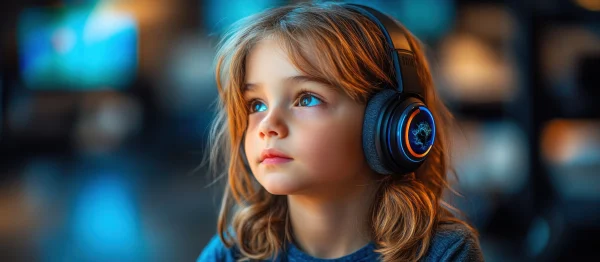
Finding the Right Tool for the Job
One specific shape rarely fits a spectrum of human needs. The debate requires moving past simple labels of "good" or "bad." Matching the tool to the specific human matters more. Different designs serve different purposes.
Over-ear (circumaural) headphones offer the best passive noise isolation. They enclose the ear completely. They provide a sensation of enclosure, which some find comforting. However, they are bulky and conspicuous.
In-ear buds offer portability. They are discreet. A teenager might prefer them to avoid drawing attention. Jonas, an autistic teen, notes his preference for wireless earbuds for mobility. He uses them when he needs to move through a crowd without carrying a heavy headset. However, they provide less isolation than the big cups.
Bone conduction headphones offer a completely different approach. They bypass the ear canal entirely, sending vibrations through the cheekbones. This solves the "pressure" problem. It allows the user to hear ambient sound while still getting audio input. This helps people who need to remain aware of their surroundings for safety.
We often wonder, what are the best headphones for autism? The answer depends entirely on the sensory profile; over-ear models like the Sony WH1000MX3 offer maximum quiet, while bone conduction suits those who hate ear pressure.
Building a Real Sensory Sanctuary
True safety comes from control, not just blocking. The goal of using noise-canceling headphones for autism should be regulation, not total avoidance. A therapist or guide will often recommend a strategy of gradual exposure. You use the headphones to take breaks, to recharge, rather than wearing them 24/7.
Creating a "Sensory Sanctuary" involves distinct strategies beyond a simple gadget. It requires a predictable auditory environment. It might involve a visual "Do Not Disturb" sign that peers respect. It involves scheduling quiet time. The headphones are just one piece of a larger puzzle.
The author Jonas points out that he uses wired over-ear headphones for gaming. He creates a specific zone for that activity. He uses the noise-canceling feature to filter out fan noise, a steady drone that drives him crazy. He controls the input. He uses the tool to manage specific irritants, not to escape the world entirely.
We must dismantle the prejudicial expectation that inclusion equals a standardized toolkit. Handing out headphones is easy. Changing how we structure our days, our classrooms, and our expectations takes real work.
Beyond the Shield: Navigating Noise with Agency
We want simple answers for layered neurology. We want to believe that a pair of noise-canceling headphones for autism solves the problem of sensory overload. The reality is far more nuanced. These devices are powerful tools, but they carry buried costs. They alter how we perceive sudden dangers. They create pressure on the eardrums. They act as a visual barrier that can isolate the wearer.
The author’s experience at the football game serves as a warning. When we rely solely on armor, we forget how to handle the force. Silencing the individual or the world creates the wrong outcome. We must focus on navigating the noise with agency. We must view these devices as one option among many, rather than a universal fix. True inclusion requires environmental change rather than solely personal shielding. When we understand the limitations of the technology, we can finally start addressing the real needs of the people wearing it.
Recently Added
Categories
- Arts And Humanities
- Blog
- Business And Management
- Criminology
- Education
- Environment And Conservation
- Farming And Animal Care
- Geopolitics
- Lifestyle And Beauty
- Medicine And Science
- Mental Health
- Nutrition And Diet
- Religion And Spirituality
- Social Care And Health
- Sport And Fitness
- Technology
- Uncategorized
- Videos

