
DNA Test Ends Hitler’s Jewish Ancestry Rumor
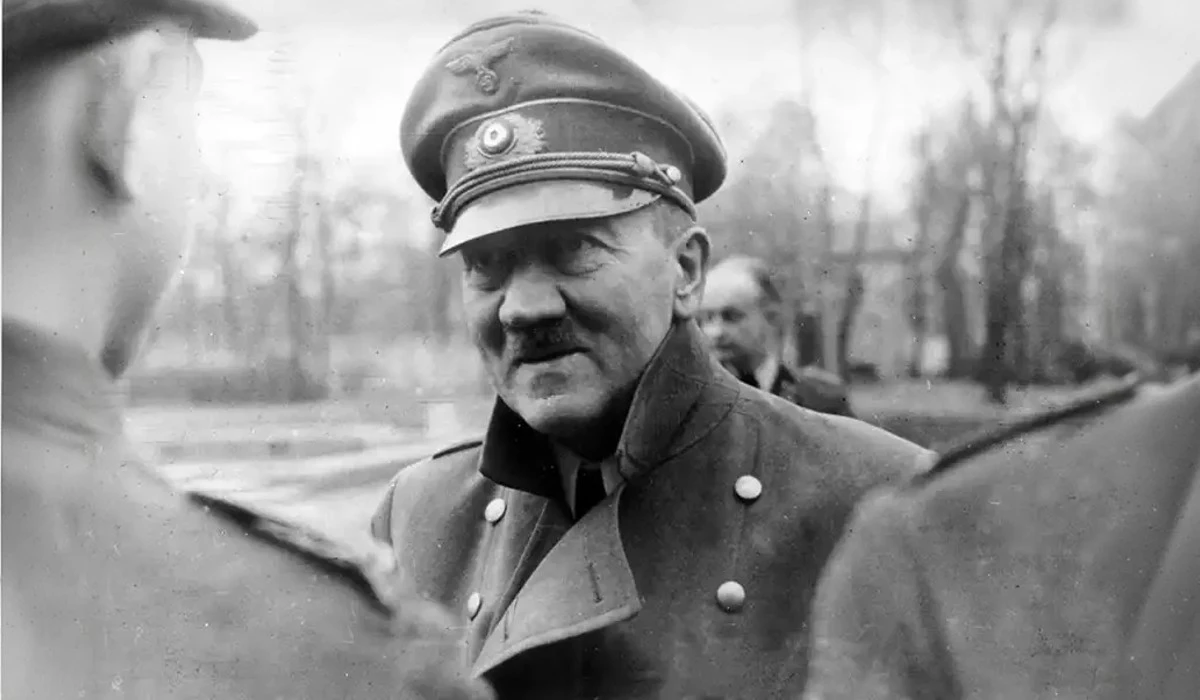
When a dictator bleeds onto a sofa, he leaves behind a physical record that outlasts his propaganda. Genetic sequencing now turns these stains into a map of the body. For years, rumors of a secret heritage followed the leader of the Third Reich. People whispered about Jewish ancestors and physical abnormalities. Now, experts use blood from the Berlin bunker to test these claims. This investigation looks past the political mask to find the biological reality.
Genes reveal a man’s private health struggles rather than explaining mass violence. According to an article by AOL, geneticist Turi King led a four-year international research project to sequence Hitler’s genome and settle these debates. The results provide a new lens for viewing history. While politics shaped his public image, his biology told a different story. This study highlights the tension between a man's public performance and his actual cellular biology.
The Blood on the Sofa: Finding Hitler’s DNA
A single scrap of fabric holds the biological record of a man's final moments. This material provides the bridge between historical accounts and modern science. In May 1945, US Colonel Roswell P. Rosengren entered the Berlin bunker where Adolf Hitler died on April 30, 1945. Rosengren collected fabric from the sofa where the suicide occurred. This fabric remained in his family until the Gettysburg Museum of History purchased it in 2014. An affidavit signed by Rosengren’s son and visual matches with bunker photos verify the source.
Scientists extracted blood from this eighty-year-old sample to begin their investigation. This process required comparing the bunker blood to DNA from known male relatives. As Euronews reports, geneticists found a perfect Y-chromosome match between the bunker blood and a male relative, which confirmed the sample's authenticity. This verification allowed the team to move forward with full genetic sequencing. The study relies on this verified chain of custody. The genetic profile would remain guesswork without this physical evidence.
Debunking the Jewish Ancestry Rumor
Rumors often survive on a lack of evidence until a single chromosome ends the conversation. Hard data replaces decades of speculation with a simple negative result. The public started hearing rumors of Hitler's Jewish ancestry in the 1920s. Political rivals used these claims to damage his reputation. CBS News notes that Belgian journalist Jean-Paul Mulders and historian Marc Vermeeren previously tested DNA from 39 of the Nazi leader's relatives to investigate this theory. The recent sequencing of the bunker fabric confirms their earlier findings.
Genetic sequencing of Hitler’s DNA shows a 0% match for Jewish ancestry, ending decades of rumors. This finding removes a long-standing historical myth. The data shows no genetic link to the groups he targeted during the Holocaust. Ironically, the man who obsessed over racial purity lived with a standard European genetic background. The rumors functioned as political tools rather than biological facts because of the lack of Jewish markers. Science finally closed the door on a conspiracy theory that lasted nearly a century.
The Physical Cost of the PROK2 Mutation
Small changes in a single gene can rewrite a person's physical and social development. These internal shifts often lead to external isolation.
The Effects of Kallmann Syndrome
Research published in the Sunday Guardian Live states that the team found a mutation in the PROK2 gene. This specific mutation correlates with Kallmann syndrome, a congenital condition that delays puberty and impairs testosterone production. It often causes a lack of smell and delayed or absent puberty. Medical records from a 1923 Landsberg prison exam already noted that Hitler was rumored to have an undescended right testicle. The data now supports that physical record.
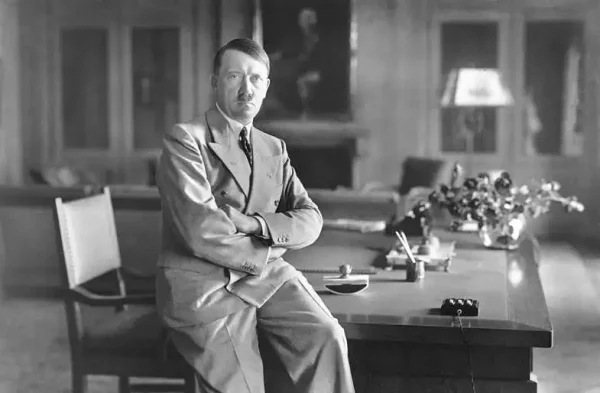
Image Credit - by Bundesarchiv, Bild 146-1990-048-29A / CC-BY-SA 3.0, CC BY-SA 3.0 DE, via Wikimedia Commons
Repressed Sexuality and Development
Kallmann syndrome leads to a low libido and potential physical deformities. In 5% cases, patients also experience a micropenis. These biological factors might explain his lack of a personal history and his social isolation. Dr. Alex Kay notes that science now provides an explanation for why the dictator avoided intimate relationships. While he projected strength, his body struggled with a hormonal deficiency. This internal struggle contradicts the hyper-masculine image he promoted to the German public.
Genetic Markers for Neurodivergence and Behavior
High genetic risk scores often point toward traits that separate a person from normal social bonds. These markers suggest a brain that processes the world differently than the average person. The study found that Hitler’s genetic score put him in the top 1% for several conditions. These include predispositions for bipolar disorder, autism and schizophrenia. Researchers also identified a "moderately elevated" risk for ADHD. The analysis found a PROK2 gene mutation linked to Kallmann disorder and high risk for neurodivergent conditions. These markers do not serve as a diagnosis, but they suggest a brain wired for intensity and obsession.
Prof. Turi King describes a struggle between academic rigor and the sensational nature of the subject. She uses caveats to explain that these scores only show probability, not certainty. The National Autistic Society (NAC) condemned the study, and as quoted by the organization, Tim Nicholls called the investigation a "cheap stunt" that shows a "callous disregard" for the feelings of autistic people. This data highlights the friction between biological research and social stigma.
The Ethical Debate Over Hitler’s DNA Research
Science loses its neutrality when it tries to diagnose historical monsters. The search for answers often clashes with the responsibility to protect living groups from unfair associations. The investigation of Hitler’s DNA faced significant hurdles before it even began. Many European labs refused to participate in the testing due to the sensitive nature of the material. The team eventually used a US-based facility to complete the sequencing. Two separate nations conducted ethical reviews to make sure the research met professional standards.
Prof. Baron-Cohen warned that a massive gap exists between biology and behavior. He noted the hazard of creating social shame for individuals who share these genetic markers today. Prof. Turi King focused on academic rigor to avoid "cheap thrills" for the media. This tension shows that genetic data carries more weight when it belongs to a person who caused massive historical trauma. The researchers had to balance the desire for historical clarity with the potential for modern harm.
Why Biology Does Not Explain Evil
Genes provide the biological foundation, but social trauma builds the person. No single sequence of code can account for the choices a human makes. The documentary title, "Map of a Dictator," suggests a level of certainty that the experts themselves reject. Prof. Weber and Prof. King both disagreed with the idea of a "dictator gene." They argue that genes do not determine destiny. As noted by AOL, while the sequenced genome provides new insights, Turi King’s team stressed that DNA alone cannot explain behavior or excuse crimes.
Mass violence comes from sociopolitical contexts rather than a double helix. Iva Vukusic argues that genetic tests do not provide answers for drivers of widespread aggression. Anne van Mourik suggests that focusing on physical traits might distract from the workings of genocide. She worries that highlighting a physical condition might humanize a man responsible for the deaths of 6 million Holocaust victims. The genetic data reveals a man with health issues, but it does not reveal a monster. His actions remain a product of his environment and his choices.
The Data Gap in Modern Science
Releasing results to the public before fellow scientists creates a conflict between entertainment and facts. This approach often leads to a struggle for credibility within the scientists worldwide.
Media First, Science Second
The documentary team at Blink Films and Channel 4 chose to premiere their findings in a film rather than a peer-reviewed journal. Geneticists like Pontus Skoglund and Adam Rutherford criticized this decision. They argue that the absence of raw data makes it impossible for other experts to evaluate the claims. Rutherford even accused the production of contributing to a "misinformation deluge."
The Reliability of the Source
The study avoided using questionable sources like the 2014 David Irving hair sample, which proved to be fake. The team used the verified Gettysburg Museum fabric to ensure the foundation of their work was solid. However, critics still question the use of PRS for individual historical figures. These tools usually work best for large populations, not single people. The analysis of his DNA provides a striking look into the past, but scientists worldwide demand more transparency before accepting the results as absolute truth.
The Final Verdict on History
The legacy of Hitler’s DNA research teaches us that biology represents only one piece of a much larger picture. We now know that the rumors of his ancestry were false and that his physical health was likely more fragile than he admitted. The PROK2 mutation and high risk scores for neurodivergence suggest a man who lived with significant internal challenges. Yet, these findings do not excuse his actions or explain his rise to power.
The study of Hitler’s DNA proves that even the most powerful figures cannot hide their physical realities forever. While propaganda creates a myth, science eventually recovers the truth. This investigation settles old debates about his background while opening new questions about how we view historical figures. Ultimately, the data shows a man who was biologically vulnerable, yet socially destructive. Understanding his DNA helps us see the human behind the dictator, even if it cannot explain the darkness he brought to the world.
Recently Added
Categories
- Arts And Humanities
- Blog
- Business And Management
- Criminology
- Education
- Environment And Conservation
- Farming And Animal Care
- Geopolitics
- Lifestyle And Beauty
- Medicine And Science
- Mental Health
- Nutrition And Diet
- Religion And Spirituality
- Social Care And Health
- Sport And Fitness
- Technology
- Uncategorized
- Videos

