
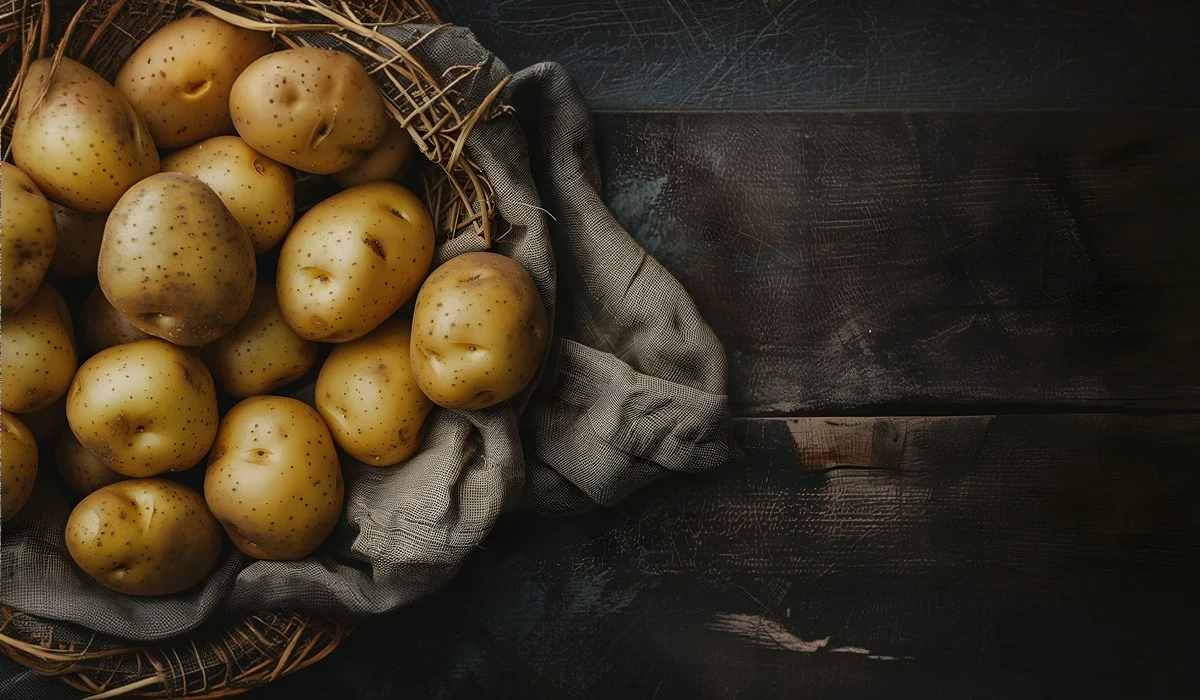
4,000 Tons Of Potatoes Given Away In Berlin
When a farm grows too much food, the cost of shipping often exceeds the value of the crop, forcing growers to dump produce into the dirt. Reports from The Berliner state that a farm in Saxony recently faced a surplus of 4,000 tons of potatoes that threatened to rot in storage. To prevent this waste, Fresh Plaza describes a rescue operation that sends these trucks of produce from rural fields to urban kitchens. The arrival of potatoes in Berlin signals a notable change in how people view food waste. Typically, the market handles excess when it lowers prices or discards the goods.
However, the current situation involves a scale that standard retail cannot absorb. The Berliner reports that 4 million kg of food—roughly the weight of 800 adult elephants—moves through a network of 174 distribution points. The same publication notes that Ecosia finances the transport while the Berliner Morgenpost organizes the distribution to prevent the destruction of these Saxon crops. This effort bypasses traditional grocery stores to put food directly into the hands of residents. While the project solves a waste problem, it also highlights the friction between charity and commerce.
The Massive Scale of the Saxony Potato Surplus
Bountiful harvests often turn into liabilities when the cost of storage outweighs the potential profit from a sale. This year, German potato production reached 13.4 million tons. Data from Potato Business shows that farmers expanded their cultivated area by 6.7% to a total of 301,000 hectares. The surplus at the Osterland Agrar facility alone could fill the volume of the Berlin TV Tower if stacked. These 4,000 tons represent a specific kind of success that the market cannot handle.
When supply spikes this high, the market price drop often hits 18.9% or more. According to Zamin.uz, the market value currently fluctuates between 10 and 24 euros per 100kg. For many traders, these prices mean zero profit. They have already paid for their contracts, yet the goods remain in storage because demand has stalled. How do I get free potatoes in Berlin? Residents use the digital application system at 4000-tonnen.de to register for their share at local hubs. This digital registration ensures that the distribution stays organized despite the large volume of food.
Logistics of the 174 Spud-Hubs
Moving thousands of tons requires a coordination effort that rivals military operations, yet relies entirely on digital registration. The organizers established 174 "spud-hubs" in and around the city. These locations serve as the primary points for free potatoes in Berlin. Schools, churches, and food banks act as the main recipients of these shipments. The Berliner Morgenpost leads the organizational effort, while Ecosia provides the financing for transport. This partnership ensures that the potatoes reach those who need them most.
Reports from The Berliner indicate that distribution began in mid-January during icy weather conditions. Since then, trucks have steadily moved the Saxon crop toward the capital. The project also extends beyond the city limits. Some shipments travel to other German regions, while others head toward Ukraine to support relief efforts. Where can I find a spud-hub? Most hubs operate out of community centers and local charities that have the space to store large crates of produce. This decentralized network allows the project to move 4 million kg of food without clogging central city streets.
Economic Realities of Low Market Demand
Paid contracts often keep food locked in warehouses because releasing it would crash the retail market further. The current economic situation presents a strange contradiction. Traders have settled their financial obligations with the farms, meaning the farmers have their money. However, the traders cannot sell the potatoes because the market is already full. This saturation led to the 18.9% price decrease seen in recent retail statistics.
Why are potatoes so cheap right now? High yields and a 6.7% increase in planting area created a massive oversupply that drove prices down to as low as 10 euros per 100kg. Agricultural officials suggest that prices will not rise anytime soon because the abundance remains so high. Berlin’s free potatoes project steps into this gap. Instead of the potatoes becoming livestock feed or being converted into biogas, they enter the human food chain. Standard surplus protocols usually involve grinding the potatoes for industrial use. This project chooses a different path; it prioritizes human nutrition over industrial processing.

The Financial Strain on Local Markets
While the giveaway helps consumers, it creates tension with local vendors. Small sellers in Brandenburg struggle to compete with a free product. The Brandenburg Farmers' Association has voiced concerns about this disruption. They argue that giving away 4,000 tons of produce devalues the work of every farmer in the region.
Clash with the Brandenburg Farmers' Association
Charity occasionally looks like a threat to the very people who grow food for a living. Timo Scheib, a representative of the Farmers' Association, calls the distribution a "PR stunt." He believes that "reckless idealists" are scattering produce at public institutions without considering the long-term consequence on the market. From his perspective, sustenance always holds worth, and free distribution suggests that the food has no value. This creates a rift between the organizers and the local agricultural community.
The organizers focus on food waste prevention, while the farmers focus on market stability. Ironically, the same abundance that allows for the giveaway also makes it difficult for local farmers to sell their own crops. The Brandenburg Farmers' Association argues that the project ignores the illogicalities of the modern food network. They suggest that the project solves a temporary symptom while potentially damaging the local trade system.
The Cultural Role of the Potato in Germany
A society's primary starch often defines its resilience during economic shifts. Germany remains the leader in EU potato production. The "Kartoffel" represents a cultural descriptor and a staple of the national identity. Peter Schink, an editor involved in the project, emphasizes that the potato is a prized nourishment. The project aims to promote the potato as necessary nutrition. The organizers distribute free potatoes in Berlin to reinforce the idea that no edible food should ever reach a landfill.
This philosophy drives the "4,000 tons" initiative. They view the potato as a tool for social good rather than just a commodity. Can you feed surplus potatoes to animals? Farmers often use extra crops for livestock feed or biogas conversion when the human market cannot support the supply. However, this project redirects those calories back to people. This shift in priority reflects a growing desire to fix the broken parts of the food distribution system.
Supporting Ukraine and Beyond
The project does not stop at the Berlin border. The organizers recognize that the surplus can help people in war zones. The organizers send trucks to Ukraine to turn a local Saxon surplus into international aid. This move helps justify the large-scale logistics and the funding provided by Ecosia.

From Storage to Table: The Lifecycle of a Surplus
Cold weather preserves the crop, but rising temperatures dictate the final deadline for distribution. Hans-Joachim von Massow, a Managing Director, notes that the stock remains viable through the summer months if handled correctly. The Osterland Agrar facility maintains the stockpile in optimal conditions to prevent spoilage. The distribution follows a strict timeline. It began in the winter and will reach its maximum storage duration by mid-year.
As warmer weather arrives, the final truckloads will deliver the remaining stock. The end of the Berlin distribution will likely coincide with the conclusion of the spring season. These potatoes provide a benefit beyond a one-time gift; they represent a logistical success over a system that usually defaults to destruction. Every bag of potatoes picked up at a hub is a bag that did not end up in a biogas plant. This effort shows that with enough coordination, even a massive surplus can find its way to a dinner table.
Solving the Food Network Absurdity
Food waste usually happens because the system values price stability over feeding people. The current situation in Saxony and Berlin highlights the gaps in our agricultural economy. We have enough food to feed everyone, yet we often destroy it to protect the market value of the remaining stock. The Berliner Morgenpost describes the current food network as illogical. When 4,000 tons of food sit in danger of being destroyed while people face rising living costs, the system has failed.
This project serves as a temporary fix for a much larger problem. It proves that the logistics exist to move food to where it is needed, provided someone pays for the fuel. Berlin’s free potatoes project will eventually wind down as funding depletes. However, the consequence of the distribution will remain. Residents have seen that a 17% increase in yield can either be a disaster for farmers or a blessing for the community. The success of the 174 hubs suggests that people are ready for a more direct connection to their food sources.
A New Perspective on Agricultural Abundance
The movement of 4,000 tons of potatoes from Saxon fields to Berlin homes reveals the tension between market forces and human needs. We see how a record-breaking harvest can become a burden for farmers while offering a lifeline to urban residents. This project successfully navigated the logistical hurdles of moving 800 elephants' worth of produce to 174 different locations. It turned a potential waste of 4 million kg into a massive community effort.
While the Brandenburg Farmers' Association views the giveaway as a disruption, the recipients see it as a necessary correction. The free potatoes in Berlin initiative proved that food waste is not an inevitable part of farming. Instead, it is a choice made by a system that often prioritizes profit over utility. The organizers used digital registration and corporate partnerships to create a temporary bridge between a surplus and a need. As the final trucks roll out this summer, the conversation about how we handle our harvests will continue to evolve.
Recently Added
Categories
- Arts And Humanities
- Blog
- Business And Management
- Criminology
- Education
- Environment And Conservation
- Farming And Animal Care
- Geopolitics
- Lifestyle And Beauty
- Medicine And Science
- Mental Health
- Nutrition And Diet
- Religion And Spirituality
- Social Care And Health
- Sport And Fitness
- Technology
- Uncategorized
- Videos

