
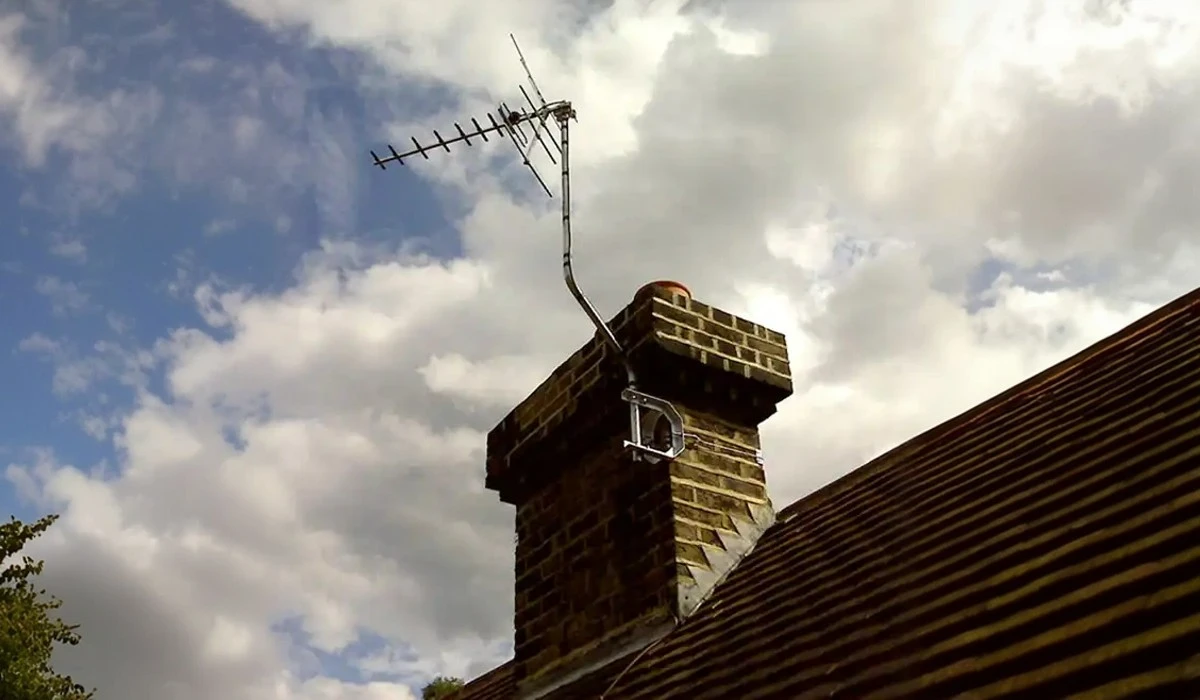
Image Credit - by Digitalsmart7, CC BY-SA 4.0, via Wikimedia Commons
Freeview Switch-Off Forces Internet TV Costs
Television used to be a public service delivered through the air. Now, it is rapidly becoming a private product delivered through a cable you have to rent. While the push to shut down traditional broadcast signals looks like a technology upgrade, it functions as a massive transfer of infrastructure costs from the broadcaster to the viewer. When you rely on an aerial, the BBC pays to keep the tower running. When you switch to streaming, you pay the broadband provider to keep the line open.
This shift creates a radical change in who owns the access to information. It effectively puts a paywall in front of public service broadcasting. Millions of households are walking toward a cliff edge where their screens go black unless they sign a contract with an internet service provider. The tension here extends beyond picture quality or convenience. The core issue is whether "free" TV can survive when every connection comes with a monthly bill.
The Economic Tipping Point for the Freeview Switch-off
It’s a numbers game where the viewers are the losing variable, and the math stops working when the audience creates less value than the electricity required to reach them. The entire transmission network runs on a delicate balance between advertising revenue and maintenance costs. Currently, over 16 million homes use the service, with 10 million relying on it as their main way to watch. However, broadcasters are looking at a specific "tipping point." According to the Guardian, if DTT usage falls from its peak to fewer than 2 million viewers, the revenue from commercials will fail to cover the broadcasting costs.
The proposed Freeview switch-off date is currently set for 2034. This aligns with the end of the contracts for Arqiva, the company that runs the transmission hardware. But there is a conflict in the timeline. While the main plan targets 2034, an Ofcom Notice of Renewal confirms that the license for the BBC’s High Definition multiplex expires at the end of 2030—four years early. This creates a confusing gap where services might degrade long before they disappear completely.
Broadcasters argue that maintaining this older technology is unsustainable as audiences shrink. However, former TV executive Christy Swords points out a flaw in this logic. He argues that keeping the towers running until the 2040s would cost only 1% to 2% of the BBC’s revenue. The rush to close the network might have less to do with bankruptcy and more to do with pushing viewers toward profitable data-gathering streaming apps.
The Hidden Cost Shift to Vulnerable Households
Moving the signal from a tower to a router helps the sender save money but taxes the receiver with new, recurring fees. The financial burden of this transition is not evenly shared. If the Freeview switch-off goes ahead as planned, the concept of "free" television effectively ends. Accessing public service content will require a high-speed internet connection. For many, this is already a reality. However, the Future of TV Distribution report commissioned by the DCMS projects that approximately 1.5 to 1.8 million households will remain reliant on Freeview in the coming decade, making this a budget-breaking change.
Experts estimate that combining the BBC license fee with the necessary broadband subscription will cost households over £500 per year. For vulnerable groups, specifically the elderly and those on fixed incomes, this is a steep price to pay for a service that was previously free. Data cited in Hansard from an Exeter University study indicates that the alternative transition cost for these vulnerable households is around £218 annually.
This creates a new form of inequality. The Future TV Taskforce argues that an internet transition is an opportunity to eliminate the digital divide. However, in practice, it forces the poorest viewers to subsidize the distribution network of wealthy broadcasters. Christy Swords notes that this destroys the universality of the BBC. The corporation saves money on masts, but the problem is simply shifted to pensioners who must now pay private internet companies to access a public service.
Manufactured Consent and the Sample Size Scandal
You can prove almost anything is popular if you carefully select a tiny group of people to ask. A major controversy surrounds the government’s justification for this move. The Department for Digital, Culture, Media and Sport (DCMS) claims that viewers are "unconcerned" about the shift and willing to adapt. However, campaign groups like Silver Voices argue that this consent has been manufactured using flawed data.
The government’s position relies heavily on a "Revealing Reality" report. When you look closer at the data, the cracks appear. The research was based on interviews with only 100 people. Even worse, only 27 of those participants were over the age of 65—the exact demographic most likely to struggle with the Freeview switch-off. Furthermore, one-third of the participants lived in London, failing to represent the millions of rural viewers who deal with spotty internet connections.
Dennis Reed, the director of Silver Voices, calls this study "ridiculously flawed" and "statistically insignificant." He suspects collusion between the government and the BBC to push through a policy that benefits the industry while ignoring the actual user base. With over 100,000 people signing petitions to save broadcast TV, the official narrative that "everyone is happy to stream" stands in direct contrast to the public outcry.
The Digital Barrier and Usability Nightmares
Modern interfaces demand a level of digital literacy that acts as a gatekeeper, locking out those who cannot navigate convoluted menus.
For digital natives, opening an app is second nature. For seniors like Lynette, a senior citizen quoted in the campaign, it is a barrier to entry. Streaming services require logins, passwords, software updates, and reliable Wi-Fi signals. Lynette explains that the apps are confusing and the constant need to sign in is burdensome. If an interface error occurs, she has to restart the whole system, which creates a fear of losing access entirely.
This issue extends beyond stubbornness; design exclusion defines the problem. The current Freeview system is passive and reliable: you press a button, and it works. Internet TV is active and fragile. It requires management. A huge portion of the remaining terrestrial viewers are likely to be older, living alone, or living with disabilities. Ofcom analysis confirms this demographic skew.
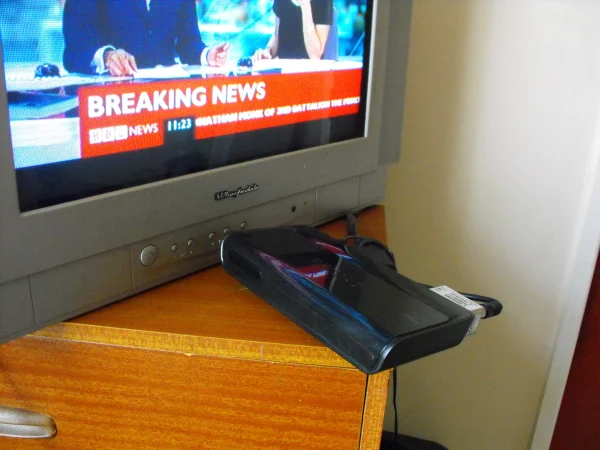
Image Credit - by Kicior99, CC BY 3.0, via Wikimedia Commons
Freeview’s 2034 Cliff-Edge
People often search for clarity on this timeline, asking when will Freeview be turned off for good? The current industry proposal points to 2034 as the final year for the service, though decisions regarding the 2030 license renewals could speed up the process.
If the industry forces these viewers onto streaming platforms without massive support, they are effectively disconnecting them from society. Sky Research suggests that 330,000 households would need help just to understand the change. However, previous DCMS estimates suggest the number of at-risk households is actually between 1.8 million and 4 million. That is a massive gap in support planning.
Collateral Damage to the Radio Industry
Pulling the plug on one machine accidentally kills its neighbor because they share the same life-support system. The Freeview switch-off impacts more than television; it poses an existential threat to radio. The radio industry relies on the same physical infrastructure as digital TV. They share the transmission masts and the maintenance costs associated with them.
If TV broadcasters withdraw their funding and dismantle the DTT network, the costs for radio stations to stay on air will soar. They cannot shoulder the burden of maintaining these massive towers alone. This could lead to a cascade of station closures, particularly for smaller local stations that provide vital community information.
This interdependency is often overlooked in the rush to digital. Policy makers view TV and radio as separate distinct services, but physically, they are tenants in the same building. Evicting the main tenant (TV) leaves the smaller tenant (radio) with a rent bill they cannot pay. The government has yet to provide a clear answer on how radio transmission will be protected if the TV broadcasters leave the shared sites in 2034.
Safety Concerns in an Internet-Only System
The internet is a web, but a broadcast tower is a lighthouse; one can get congested or cut, while the other broadcasts to everyone simultaneously. The Voice of the Listener & Viewer (VLV) warns that internet-delivered content lacks the resilience required for emergency broadcasts. Conversely, technical providers like ENENSYS note that standard TV services can instantly inform large audiences of danger.
Internet networks are fragile. They rely on power at both ends (the sender and the home router) and are subject to congestion. If a crisis occurs and everyone tries to stream the news at once, bandwidth can throttle. Campaigners worry about the reliability of emergency broadcasts in a pure-IP (Internet Protocol) environment.
Viewers concerned about their setup often ask do I need the internet for Freeview right now? At this moment, no, you only need an aerial, but if the 2034 switch-off happens, a broadband connection will become the only way to watch live television.
This shift removes a layer of national resilience. Dismantling the DTT infrastructure places all the UK's communication eggs in one basket. If the internet goes down—whether due to cyber-attacks, power cuts, or technical failure—the television goes dark. For 700,000 households that currently have no connection at all, this safety net disappears entirely unless they purchase a subscription they may not be able to afford.
The False Promise of "Better" Content
Local channels are evacuating a space that global giants have already conquered, leaving the viewer with more choice but less relevance. The push for a Freeview switch-off is often sold as a way to modernize British broadcasting. BBC Director General Tim Davie argues that the digital shift offers financial and social benefits and that a dual-funding scheme (keeping both aerials and internet) is rejected. He wants confirmation of the switch-over now to plan for the future.
However, industry executives warn that the battle for internet viewers has already been won—and not by British Public Service Broadcasters (PSBs). YouTube and Silicon Valley giants already dominate the viewer share on connected devices. When you move TV to the open internet, the BBC is no longer the default option; it becomes just another app icon next to Netflix, TikTok, and YouTube.
This raises the question: who is affected by the Freeview changes the most in terms of content? The data suggests that while younger viewers have already left for US-based platforms, the older generation relies on British programming that could get lost in the algorithm-driven chaos of the open web.
By abandoning the terrestrial platform where they have a monopoly on attention, British broadcasters are entering a global market where they cannot compete on budget. The Future TV Taskforce warns that programming budgets are at risk if dual-distribution costs remain high, but the alternative—total reliance on the internet—might strip them of their unique connection to the British public.
The Cost of Disconnection
The proposed Freeview switch-off represents more than a technical upgrade; it constitutes a total restructuring of who pays for public access to information. By dismantling the transmission towers, broadcasters are effectively outsourcing their distribution costs to the viewer’s monthly broadband bill. While the year 2034 seems distant, the expiration of key licenses in 2030 suggests the degradation of the service will begin much sooner. The decision rests on a flawed assumption that internet access is as universal and reliable as a radio wave. For the millions of elderly, vulnerable, and rural residents who rely on the current system, this transition looks less like progress and more like a disconnection.
Recently Added
Categories
- Arts And Humanities
- Blog
- Business And Management
- Criminology
- Education
- Environment And Conservation
- Farming And Animal Care
- Geopolitics
- Lifestyle And Beauty
- Medicine And Science
- Mental Health
- Nutrition And Diet
- Religion And Spirituality
- Social Care And Health
- Sport And Fitness
- Technology
- Uncategorized
- Videos

