
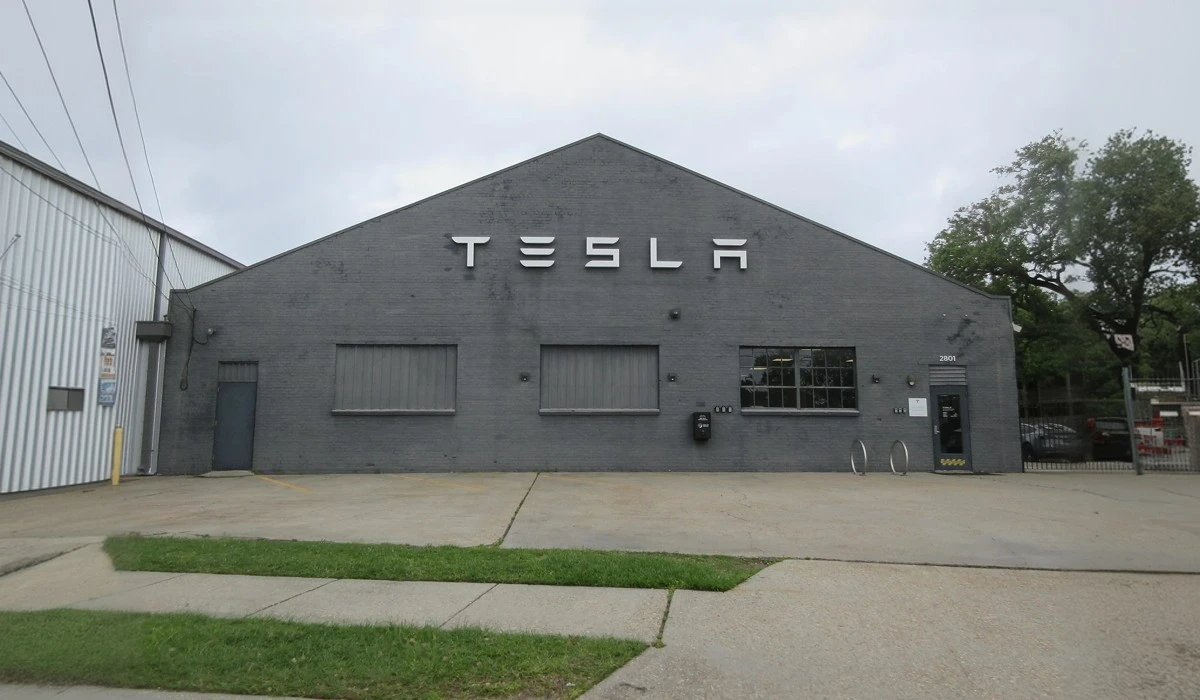
Image Credit - by Infrogmation, CC BY-SA 4.0, via Wikimedia Commons
Tesla Kills Model S To Build Robot Army
When a business faces its first annual sales drop, the standard playbook demands you fix the product. You usually polish the chrome, lower prices, and beg customers to return. Elon Musk is doing the opposite. Instead of repairing the car business, he is effectively dismantling parts of it to build something entirely different. The numbers show a company bleeding cash in traditional auto sales while pouring billions into a future that does not exist yet. This is a deliberate demolition of the old Tesla to make room for a robot army.
We are witnessing a massive gamble. The CEO is betting the entire company's survival on a Tesla AI pivot that prioritizes synthetic workers over luxury sedans. The data from 2025 paints a stark picture of a company in flux. Revenue is down. Profits are down. Yet, spending is doubling. The plan stops prioritizing selling cars to humans to focus on building a physical AI entity that replaces human labor.
The Reality of the Revenue Drop
Success often masks decay, but in this case, the decay is being displayed as a badge of honor. The financial report for the full year of 2025 reveals a company shrinking in its primary market. According to Reuters, Tesla's revenue fell roughly 3% to $94.83 billion, marking the company’s first annual decline.
This decline represents more than a gentle dip. The fourth quarter showed a profit trend collapse of 61%. AlphaStreet reports that while Wall Street expected revenue of roughly $24.78 billion, the actual number came in modestly higher at $24.9 billion. However, earning per share (EPS) hit $0.50, barely beating the expected $0.45. These numbers usually send investors running for the exits.
Losing the Crown to BYD
The dominance of the American EV giant has officially fractured. As noted by Reuters, Chinese competitor BYD outsold Tesla for the first time on an annual basis in 2025, helped by a 28% rise in global sales. This shift signals that the days of easy growth in the electric vehicle sector are over. Competitors are moving faster and selling cheaper.
Rather than fighting a price war to regain that crown, the Tesla AI pivot suggests a different priority. The company seems willing to lose market share in the short term to fund its long-term science fiction goals. The strategy is risky. It relies on the assumption that cars are merely a stepping stone to something larger.
Killing the Flagship to Feed the Robot
Sometimes you have to burn your trophy case just to keep the lights on. The most shocking revelation from the recent updates is the fate of the Model S and Model X. These vehicles established the brand as a luxury status symbol. Now, they are being led to the chopping block.
Production for both the Model S and Model X is scheduled to end in the second quarter or shortly after. Musk stated clearly that the lifecycle of these models is complete. The factory space currently used for these luxury cars will not sit empty. It is being converted immediately for Optimus robot production.
A Volume Calculation
The decision is cold and calculated. Analyst Caldwell notes that the volume for Model S and X has become negligible. It makes no sense to keep expensive production lines running for nostalgia. The logical shift is toward the high-volume Model 3 and Model Y, alongside the new ventures.
Why is Tesla discontinuing Model S?
The company is ending production because sales volume is too low, and it needs the factory floor space to build Optimus robots.
This move confirms the Tesla AI pivot goes beyond marketing fluff. It is a physical restructuring of the manufacturing floor. The car that made the company famous is dying so the robot can live.
The 20 Billion Dollar Gamble
Investors often think they are buying shares in a car manufacturer, but the CEO is building a synthetic workforce. The projected capital expenditure (CapEx) for the upcoming period has doubled to $20 billion. This is a massive layout of cash during a time when profits are falling.
Musk calls this a shift to a "physical AI entity." The goal is to move away from a hardware-centric model, which he views as obsolete. The company is directing this cash flow specifically toward Artificial Intelligence and robotics.
The xAI Controversy
A significant portion of this spending involves a $2 billion investment into xAI. A report by The Guardian confirms that Tesla agreed to invest this sum into Musk’s artificial intelligence company earlier this month. Musk claims this investment is driven by shareholder demand and represents the execution of the investor's will. However, the voting data suggests a different story.
There is a glaring contradiction in the mandate. While Musk cites demand, the actual shareholder vote showed that abstentions and "No" votes outnumbered the "Yes" votes. The investment is happening regardless. This creates tension between the board's aggressive future bets and the shareholders' desire for stability.
Image Credit - By Ivan Radic, CC BY 2.0, via Wikimedia Commons
Politics and the Brand Erosion
A brand creates a tribe, but the leader is actively pushing that tribe away. The political fallout from Musk’s role and his ties to the Trump administration is affecting the bottom line. The data points to global customer protests and alienation.
This political friction has tangible consequences. The Trump administration's policy effects include the removal of non-fossil fuel subsidies. This policy change directly hurts the EV sector, yet Musk remains aligned with the administration.
How does politics affect Tesla sales?
Musk’s active political role and government ties have triggered global customer protests and alienated a portion of the core buyer base.
Analyst Abuelsamid points out that this political controversy contributes to brand erosion. As competitors advance, the distraction of politics weakens the company's defense. The Tesla AI pivot might be a way to escape this dynamic. If the company sells labor to corporations instead of cars to liberals, political alignment matters less.
The Optimus Timeline and Promises
Betting the house on a miracle cure works great until you run out of chips. The timeline for the Optimus robot is aggressive. The Guardian reports that production is set to start before the end of 2026, with Musk targeting public sales in 2027.
Musk believes the potential of the Optimus robot exceeds all prior products combined. He views automation as the tool that will eliminate poverty. This is a grand vision, but the execution risks are high.
Cybertruck Disappointment
The company’s track record with new product launches gives reason for pause. The Cybertruck, once hyped as a game-changer, is struggling. Sales performance for the truck is down 48%. If the robot faces similar production delays or demand issues, the financial hole will deepen.
Memory chip shortages and regulatory hurdles further complicate the aggressive ramp-up plans. The Tesla AI pivot requires perfect execution in a supply chain that is currently fractured.
Wall Street's Strange Logic
Market logic usually punishes shrinking profits, yet this stock ignores the gravity of bad math. Data from Xinhua indicates that net income fell 46% to $3.79 billion, yet the stock moved up 2% in post-market trading.
This reaction highlights a disconnect between current financials and future promises. Investors are ignoring the -3% revenue trend and the -61% Q4 profit trend. They are buying into the "Robot Army" promise.
Margins vs. Income
There is a nuance in the numbers. While net income plummeted, gross profit margins actually increased from 16% to 20% year-over-year. This suggests that while fewer items are being sold, the company is making more money on each unit.
This productivity is likely driven by the energy sector and cost-cutting measures. The Energy Storage sector saw revenue jump by 25%, driven heavily by demand from data centers. This sector is quietly supporting the company while the car business stumbles.
The Robotaxi Roadmap
Promising a self-driving future distracts people from the steering wheels collecting dust today. The Robotaxi rollout is expanding. Business Insider notes that plans are in place for launches in Dallas, Houston, Phoenix, Miami, Orlando, Tampa, and Las Vegas.
In Austin, the company has removed safety drivers. This is a critical step toward full autonomy. It signals confidence in the software, even as the hardware sales lag.
When will Tesla Robotaxi launch?
Expansion is currently planned for Houston and Miami, and the company has already removed safety drivers from vehicles in Austin.
The pivot effectively changes the customer, moving from selling a car to a driver to selling a ride to a passenger. This shifts the revenue model from a one-time purchase to recurring service fees.
The Performance Window
Deadlines often force drastic action, and a massive payday is looming. A performance window for Musk’s $1 trillion pay package is open for the next 10 years. This incentive structure drives the high-stakes betting.
Musk is not incentivized to maintain a steady, boring car company. He is incentivized to create explosive growth. This explains the willingness to double CapEx to $20 billion despite falling profits. The Tesla AI pivot is the only vehicle capable of delivering the valuation required for that pay package.
Strategic Rationalization
The discontinuation of the Model S and X is part of a "product rationalization." The company is trimming the fat. Low-volume products are distractions. The focus is entirely on high-volume Model 3/Y units and the new robotics ventures.
Musk’s quote regarding the "high stakes betting on future tech" confirms this. He is willing to sacrifice the present for a shot at a trillion-dollar future.
The Final Gamble
The company we knew is gone. The Tesla AI pivot has fundamentally altered the DNA of the business. It has stopped acting as an auto manufacturer attempting to be green to become a robotics firm attempting to be omnipresent. The data from 2025—revenue down, profits slashed, flagship cars cancelled—looks like failure to a traditional analyst. To Musk, it looks like shedding skin.
By killing the Model S and doubling down on AI, the leadership has burned the boats. There is no retreat to being just a car company. The $20 billion bet must pay off, or the foundation will crack under the weight of its own ambition. The car is dead; long live the robot.
Recently Added
Categories
- Arts And Humanities
- Blog
- Business And Management
- Criminology
- Education
- Environment And Conservation
- Farming And Animal Care
- Geopolitics
- Lifestyle And Beauty
- Medicine And Science
- Mental Health
- Nutrition And Diet
- Religion And Spirituality
- Social Care And Health
- Sport And Fitness
- Technology
- Uncategorized
- Videos

