
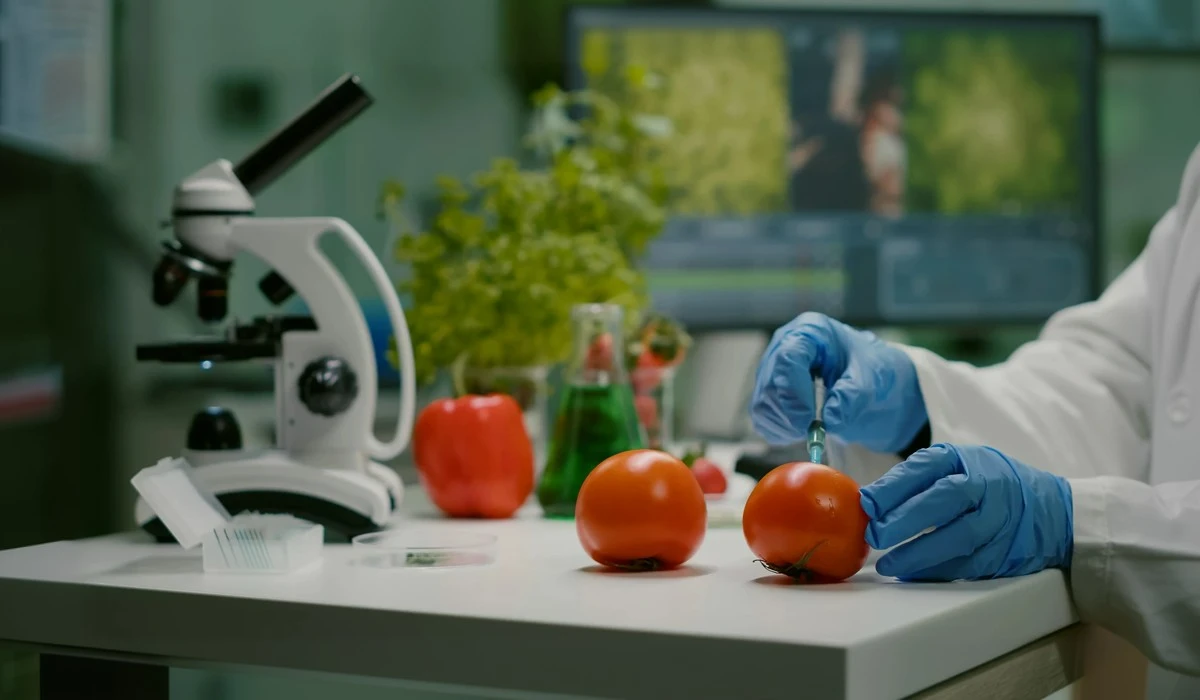
Analytical Science Detects Trace Contaminants
Your dinner plate represents a massive logistical victory that you likely never notice. A single strawberry might cross three borders and pass through five different warehouses before you take a bite. Without a thorough check on what exists inside that fruit, you gamble with your health every time you sit down to eat.
Analytical Science serves as the rigorous standard that removes this risk from the grocery aisle. It changes food from a potential hazard into a reliable source of energy. Through the application of quantitative chemical analysis, experts measure exactly how much of a specific substance exists within a sample. This change moves food safety away from the area of luck and places it firmly into the world of hard data. Every apple, grain of rice, and bottle of milk owes its safety to the people who measure molecules for a living.
The Role of Analytical Science in Modern Food Systems
Modern food systems rely on an interconnected web of producers and transporters. A single frozen pizza contains ingredients from dozens of countries. This involvement increases the chance that a contaminant enters the supply chain at any point. Analytical Science provides the tools to monitor these moving parts.
Navigating the Global Supply Chain
Ingredients often travel through many hands before they reach your kitchen. A spice grown in India might move to a processing plant in Vietnam before a distributor in Europe buys it. Each stop introduces a risk of cross-contamination or improper storage. Analytical Science provides the oversight needed to maintain consistency across these borders. Labs use standardized tests to ensure that every batch of ingredients meets the same safety requirements, regardless of its origin.
Moving from Reactive to Proactive Safety
In the past, people only found food safety issues after they got sick. This reactive approach cost lives and ruined businesses. Today, we use a proactive model. What is the main goal of food safety testing? According to a guide by Alleratech, the primary objective of food safety testing is to detect and neutralize biological or chemical hazards before products reach the market, ensuring public health remains protected. This change depends entirely on rigorous quantitative chemical analysis. The testing of batches before they leave the factory allows companies to prevent outbreaks instead of just cleaning up after them.
Establishing Precision via Quantitative Chemical Analysis
Precision determines the difference between a safe meal and a hospital visit. Analytical chemists measure the exact amount of a chemical to see if it crosses a dangerous line, rather than just looking for its presence.
Measuring Parts Per Billion
Modern equipment possesses incredible sensitivity. Scientists can now find a single drop of a contaminant in a swimming pool full of water. This level of detail requires an understanding of the Limit of Detection (LOD) and the Limit of Quantitation (LOQ). Within the field of quantitative chemical analysis, finding a substance is step one. Step two involves measuring it at the parts per billion level to determine if it violates safety standards. This precision ensures that even trace amounts of toxins do not accumulate in the human body over time.
Defining Maximum Residue Limits (MRLs)
Regulatory bodies like the FDA or the EFSA do not guess which levels are safe. They use data to set Maximum Residue Limits. These limits represent the highest concentration of a pesticide legally allowed in food. As stated in a report published in ScienceDirect, the Codex Alimentarius Commission was established in 1963 by the FAO and the WHO to create the global framework for these standards. Labs use these benchmarks to judge every sample they test. If a shipment of grapes shows a chemical level above the MRL, the law requires its destruction.
How Analytical Science Identifies Concealed Contaminants
Agricultural products often pick up unwanted chemicals from the environment. These substances hide in the soil or the water used to grow crops.
Tracking Pesticide Residues in Fresh Produce
Farmers use pesticides to protect crops from insects, but these chemicals must not stay on the food. Chromatography helps scientists separate a food sample into its individual chemical components. This allows them to see every pesticide residue present. Shimadzu documentation indicates that a single 15-minute run on a liquid chromatography machine can quantify over 500 different compounds. This ensures your salad remains free of harmful sprays.
Monitoring Heavy Metal Accumulation
Research published in Wiley Online Library shows that while plants naturally absorb minerals from the ground, certain species can also hyperaccumulate toxic metals like lead, arsenic, or mercury. These metals leach into the soil from industrial waste or old pipes. How do scientists find heavy metals in food? According to Analytik Jena, specialists use techniques like atomic absorption spectroscopy to detect minute metallic particles that are otherwise unseen and tasteless. Analytical Science identifies these metals before they can reach the public. This testing is especially vital for baby food, as infants have a much lower tolerance for heavy metals than adults.
Protecting Public Health from Natural Toxins
Not all food hazards come from humans. Nature produces some of the most dangerous poisons in the world. Mold and bacteria create toxins that can contaminate entire harvests of grain.
Managing Mycotoxin Risks in Grain Storage
When grain gets damp in a silo, mold begins to grow. The World Health Organization notes that this mold produces mycotoxins, such as aflatoxins, which are genotoxic and can lead to liver damage or cancer. The FDA enforces a strict limit of 20 parts per billion for aflatoxins in human food. High-precision quantitative chemical analysis allows grain elevators to test their stock immediately. If the levels are too high, they divert the grain away from the human food supply. This prevents contaminated flour or cereal from ever reaching the grocery store shelf.
Allergen Detection and Quantification
For someone with a severe peanut allergy, a trace amount of protein acts like a poison. Modern safety standards require more than just labeling a product with "may contain nuts." Scientists use the Enzyme-Linked Immunosorbent Assay (ELISA) to find specific proteins. This test uses antibodies to grab onto allergens and measure their concentration. The use of this data allows companies to provide accurate labels that protect sensitive populations from accidental exposure.
Using Chemical Analysis to Expose Food Adulteration
Food fraud involves replacing high-quality ingredients with cheaper, sometimes dangerous substitutes. According to the FDA, when food fraud is found, the agency seeks to remove the product from the market and prevent future sales to consumers. This practice cheats buyers and puts lives at risk.
Verifying the Authenticity of High-Value Ingredients

Expensive products like extra virgin olive oil or Manuka honey are frequent targets for fraud. Someone might mix olive oil with cheap seed oil to increase their profit. Research from the PMC database suggests that Analytical Science uses Nuclear Magnetic Resonance (NMR) to create a chemical "fingerprint" of a product to assess its origin and authenticity. This fingerprint reveals if the oil actually comes from the region stated on the label. If the chemical signature does not match a pure sample, the product is flagged as a fake.
Detecting Illegal Additives
Sometimes, fraudsters add chemicals to food to make it look better or seem more nutritious. In 2008, a major scandal involved adding melamine to milk to fake high protein levels. Is food fraud a common safety issue? A study in PMC highlights that while motivations are often economic, food fraud becomes a safety crisis when unapproved chemicals are added to mimic high-quality ingredients, requiring ongoing analytical vigilance. Today, labs use quantitative chemical analysis to look specifically for melamine. This ensures that no one can trick the testing equipment through the application of non-food chemicals.
Ensuring Accuracy in Nutritional Labeling
You have a right to know what you put into your body. Nutritional labels provide the data you need to manage your health, but those numbers must be accurate.
Quantifying Micronutrients for Health Transparency
Many foods, like bread and cereal, are fortified with extra vitamins and minerals. Companies must prove that these nutrients are actually present. Analytical Science measures the exact amount of Vitamin D, Iron, or Folic Acid in a sample. This ensures that a product labeled "High in Vitamin C" actually delivers the health benefits it promises. The World Health Organization also warns that this testing prevents the over-fortification of food, which can cause harmful health consequences.
Validating Macro Ratios
Dietary management for conditions like diabetes or heart disease relies on knowing the exact amount of fats, sugars, and proteins in a meal. Chemists use Fourier Transform Infrared (FTIR) spectroscopy to calculate these ratios. They can measure trans-fats and saturated fats with extreme accuracy. This data goes directly onto the nutrition facts panel, giving you the power to make informed choices about your diet.
Advancing the Future of Analytical Science and Food Safety
The field of food safety never stops evolving. New technologies are making it faster and easier to catch problems before they scale.
Real-Time Monitoring and Portable Sensors
In the past, testing required sending a sample to a distant lab and waiting days for a result. This delay allowed contaminated food to keep moving through the system. Now, researchers are developing gold nanoparticle biosensors that work on-site. According to a study in MDPI, these sensors provide quantitative chemical analysis in about 20 minutes at the warehouse or the farm. This speed allows workers to stop a contaminated shipment before it even gets on a truck.
Predictive Modeling through Big Data
Data from thousands of analytical tests is now being fed into computers. Artificial intelligence analyzes this information to find patterns. It might notice that a certain region has higher mercury levels after a flood. This allows scientists to predict where contamination is most likely to occur next. The combination of Analytical Science and big data allows for a move from testing food to predicting risks before the food is even grown.
Why Analytical Science is Vital for the Future
The safety of our global food supply is an ongoing battle against contamination and fraud. We no longer rely on the appearance or smell of food to judge its quality. Instead, we rely on hard numbers and scientific proof. Every safety standard currently in place exists because someone took the time to measure a sample with extreme care.
Analytical Science serves as the final line of defense for the public. As the world population grows, the demand for food will only increase. This will place even more pressure on the supply chain. Maintaining a secure and transparent food system will require the continued use of quantitative chemical analysis. The support of these scientific standards ensures that the food on our tables remains a source of health rather than a source of worry.
Recently Added
Categories
- Arts And Humanities
- Blog
- Business And Management
- Criminology
- Education
- Environment And Conservation
- Farming And Animal Care
- Geopolitics
- Lifestyle And Beauty
- Medicine And Science
- Mental Health
- Nutrition And Diet
- Religion And Spirituality
- Social Care And Health
- Sport And Fitness
- Technology
- Uncategorized
- Videos

