
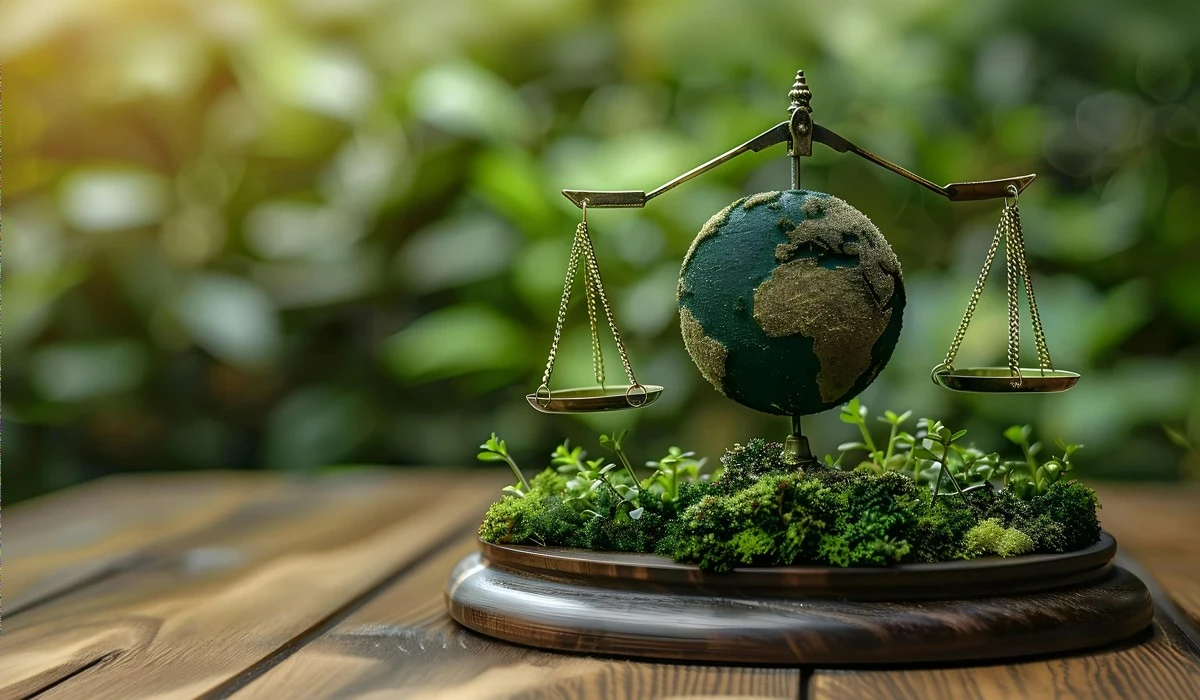
Avoid $100k Daily Fines Using Environmental Law
Filling out a stack of permits often feels like a waste of time until the local river floods and stays inside its banks. While most builders see regulations as red tape that blocks progress, these rules actually prevent your building from sinking into the ground or poisoning the neighbors. Ignoring Environmental Law invites disaster. You risk your money, your reputation, and your future. Understanding the rules gives you a path to grow without looking over your shoulder. The application of the effect assessment law allows you to see trouble before you dig the first hole. You turn a legal requirement into a business strategy. Smart leaders use these rules to build projects that last for decades. They know that a clean record attracts better partners and cheaper loans. This guide shows you how to turn compliance into a primary competitive advantage.
How Environmental Law Protects Your Profit Margins
Fines kill profits faster than a bad market. The U.S. EPA charges over $100,000 per day for some Clean Air Act violations. These costs add up until they swallow your entire budget. Following Environmental Law protects your bank account from these massive hits. Between 2011 and 2021, the EPA handled $78 billion in compliance actions. Companies that ignored the rules paid $14.2 billion in penalties.
Minimizing Litigation and Penalty Risks
Proactive legal work saves money. The firm ASARCO once profited $32.5 million by delaying environmental compliance. However, that choice eventually led to crushing legal battles and cleanup costs. You avoid these traps by aligning your project with the law from day one. What is the purpose of environmental law? Its primary goal is to harmonize industrial progress with nature preservation to ensure today’s growth doesn't bankrupt tomorrow's resources. This balance keeps your business running without the threat of a sudden shutdown.
As noted in the Rio Declaration, specifically Principle 16, the law applies the "Polluter Pays Principle." This principle dictates that the party responsible for pollution is required to cover the costs of the cleanup. If you create a mess, you own the bill. Following the rules ensures you never create that mess in the first place. You keep your cash for growth instead of spending it on lawyers and restoration crews.
Streamlining Growth with Effect Assessment Law
Planning requires more than just a map and a shovel. You need a clear view of how your work changes the land. The effect assessment law provides this view. As noted in the text of the National Environmental Policy Act of 1969, the trend of requiring consequences to be documented started in 1970. It requires an Environmental Impact Statement for any major federal action. This document proves you thought about the consequences before you started.
Identifying Site Sensitivities Early
A good assessment acts as a roadmap for your site. You follow a five-step process: screening, scoping, consequence analysis, mitigation, and monitoring. Screening tells you if you even need an assessment. Scoping identifies the most important issues, like local water sources or rare plants. How does the effect assessment law affect project timelines? These rules identify potential ecological conflicts early to prevent the "stop-work" orders that occur when unforeseen environmental issues arise mid-construction.
Modern rules, like EU Directive 2014/52/EU, require you to look at climate change and disaster risks. You must also distinguish between an Environmental Impact Assessment (EIA) and a Strategic Environmental Assessment (SEA). An EIA looks at one project, like a single factory. An SEA looks at an entire government policy or a large-scale plan. Using both tools helps you pick the best location for your next big move. You avoid building in areas that will cause legal or physical headaches later.
Navigating Modern Environmental Law for Developers
Real estate developers face a web of different rules in every state and country. One city might protect a specific bird, while the next city focuses on mountain runoff. Success requires a single strategy that works across all these lines. A United Nations report on the Stockholm Declaration of 1972 states that this document established the global framework for these rules. It established 26 principles that almost every nation follows today.
Managing Multi-Jurisdictional Regulations
According to Principle 15 of the Rio Declaration, you must learn the "Precautionary Principle." This rule says that if an action might cause serious harm, you must take steps to prevent it, even if you lack full scientific certainty. This principle guides how judges and inspectors look at your project. If you show caution, you win their trust. Meanwhile, the Espoo Convention requires you to talk to neighboring countries if your project affects their air or water.
As described by the European Commission regarding the Aarhus Convention, developers also depend on this treaty. The Commission notes that it gives the public three rights: the right to information, the right to participate in decisions, and the right to challenge legal breaches. Adherence to Environmental Law satisfies these public rights. You involve the community early. This transparency prevents the lawsuits that typically pop up at the end of a project. You build a faster path to completion by including everyone from the start.
Why Environmental Law Drives Investor Confidence

Investors hate surprises. They want to know that their money is safe from sudden lawsuits or environmental disasters. Strict adherence to Environmental Law signals that your company is a safe bet. It shows you have a handle on your risks. Today, over $35 trillion sits in sustainable investment assets. This "green capital" only flows to businesses with high Environmental, Social, and Governance (ESG) scores.
Attracting Green Capital through Transparency
Banks use the Equator Principles to decide who gets a loan. Over 100 financial institutions follow these rules for projects costing more than $10 million. They require you to meet high standards for nature and social consequences. If you fail to follow effect assessment law, these banks will walk away. Conversely, following the law opens doors to lower interest rates and more partners.
Implementing ISO 14001 helps too. This is an international standard for managing your environmental impact. Companies using this system often cut waste by 20%. They also pay lower insurance premiums. Insurance companies see these businesses as lower risks. Showing you follow the law proves your business is built to last. You attract the kind of long-term investors who provide stability during market shifts.
Mitigating Operational Risks with Effect Assessment Law
Operations run smoother when you know the limits of your land. The effect assessment law forces you to model the future. Instead of simply looking at the weather today, you look at how the climate will change over the next thirty years. This foresight protects your physical assets from floods, fires, and droughts.
Predictive Modeling for Sustainable Operations
Technical documentation on the mitigation hierarchy suggests that you follow a four-step plan. First, you avoid effects entirely. If you can't avoid them, you minimize them. Then, you restore the land you used. Finally, you offset any remaining damage by helping the environment elsewhere. This four-step plan keeps your operations within legal limits. It also ensures you have the resources you need to keep working, like clean water and stable soil.
The BATNEEC principle helps you balance technology and cost. It stands for "Best Available Techniques Not Entailing Excessive Cost." This legal standard ensures you use the best tools available without going broke. It provides a fair way to stay clean while staying profitable. The use of these models prepares you for the worst and ensures the best outcome for your daily operations.
Future-Proofing Assets via Environmental Law
Laws change, but your assets stay in the ground for decades. You must build for the rules of tomorrow, not just the rules of today. The UK now requires "Biodiversity Net Gain." This means every new project must leave the local nature 10% better than before. If you plan for this now, you won't have to rebuild later.
Staying Ahead of Legislative Shifts
The Corporate Sustainability Reporting Directive (CSRD) in Europe now requires 50,000 companies to share their environmental data. This transparency is becoming the new global standard. Gaining proficiency in Environmental Law now keeps you ahead of these shifts. You won't be caught off guard when new rules arrive in your region. Why is environmental law important for sustainable development? It provides the essential legal framework that ensures economic activities remain within planetary boundaries, securing the long-term viability of the business itself.
Early adopters of high standards often help write the new rules. Governments look to successful, compliant businesses for advice. This gives you a seat at the table. You help shape the future of your industry. Instead of reacting to change, you lead it. This proactive stance protects your assets from becoming obsolete as the world moves toward a greener economy.
Achieving Scalability through Environmental Law
Scaling a business requires a repeatable process. You need a "playbook" that works every time you enter a new market. Environmental Law provides the structure for this playbook. Once you understand the assessment process in one country, you can adapt it to the next. You save time on research and planning because you already know the core principles.
Creating a Repeatable Compliance Playbook
Use effect assessment law as your template. A standard 30 to 60-day public comment period is common in many places. If you build this time into your master schedule, you never fall behind. You create a system that handles permits, public meetings, and site surveys with high productivity. This allows you to launch multiple projects at once without losing control.
History shows that the first environmental laws, like the Roman water mandates of 80 AD or William Penn’s forest rules in 1681, were about survival. Today, they are about scale. Companies that respect the land find fewer roadblocks in their way. They build faster because they have the trust of the government and the public. You turn the law into an engine for growth that works anywhere in the world.
The Strategic Future of Environmental Law
Growth and responsibility go hand in hand; currently, they are inseparable. Environmental Law provides the foundation for a business that earns money and respect at the same time. It stops being a burden the moment you use it as a tool for better planning. Gaining proficiency in effective assessment law provides a clear view of your project's future. You avoid the fines that bankrupt your peers and the lawsuits that ruin your name. This legal knowledge is the ultimate safety net for your capital. It ensures that every dollar you invest builds a legacy that lasts. Leading with the law makes your business durable, profitable, and ready for the challenges of a changing planet.
Recently Added
Categories
- Arts And Humanities
- Blog
- Business And Management
- Criminology
- Education
- Environment And Conservation
- Farming And Animal Care
- Geopolitics
- Lifestyle And Beauty
- Medicine And Science
- Mental Health
- Nutrition And Diet
- Religion And Spirituality
- Social Care And Health
- Sport And Fitness
- Technology
- Uncategorized
- Videos

