
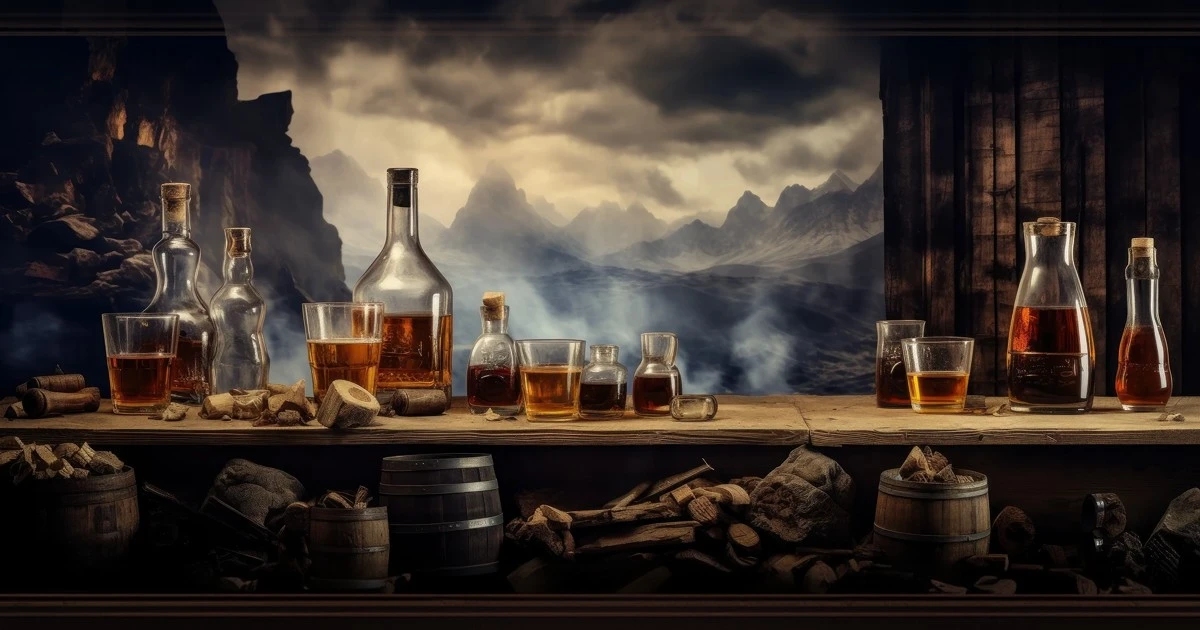
Alcohol Cravings Link To Ancient Primate Hunger
You didn't learn to like a drink because it tastes good; you learned to like it because your ancestors were starving. Millions of years ago, the ability to sniff out and digest fermented fruit wasn't a party trick—it was the only way to stay alive on a forest floor stripped of fresh food. Evolution wired a reward system into your brain that lights up when it finds ethanol, not to give you a buzz, but to signal a massive calorie jackpot. We simply dragged that ancient survival software into modern bars, where the "jackpot" is now endless and the scarcity is gone.
This biological drive is so deep that it predates our own species. We share the urge with chimps, gorillas, and even stumbling lorikeets. It shaped our genetics, influenced where we settled, and may have even pushed early humans to invent farming just to keep the brew flowing. The story of booze isn't just about culture. It is a story of biological destiny. This is the evolutionary history of alcohol.
The Calorie Trap That Saved Us
Nature bribes you to eat things that keep you alive, and sugar is the ultimate currency. Ten million years ago, a massive climate shift disrupted the African forests. The trees thinned out, and our primate ancestors were forced down from the canopy to the ground. Up in the trees, fruit was fresh and ripe. Down in the dirt, the fallen fruit was rotting. Yeasts were already at work on these sugary piles, converting the sugars into ethanol.
Most animals couldn't eat this "spoiled" food without getting sick or expelling it. But a specific genetic divergence occurred around this time. A common ancestor of humans, chimps, and gorillas developed a mutation that allowed them to metabolize alcohol efficiently. This wasn't about getting drunk; it was about unlocking a new food source. Ethanol smells potent—it travels through the air, acting as a dinner bell for hungry apes.
The Genetic Split
This adaptation created a sharp divide in the primate family tree. Arboreal primates, like orangutans, never needed to eat floor scraps, so they never developed the ability to process ethanol well. If an orangutan drinks, it faces serious consequences because its body lacks the efficient enzyme setup. However, the ground-dwellers—humans, chimps, and gorillas—thrived. We can strip the calories from alcohol and turn it into energy. This gave us a massive survival advantage during food scarcities. We didn't drink to forget our problems; we drank to fuel our bodies.
The "Drunken Monkey" Reality
Observations of modern animals back this up. Vervet monkeys, for example, have developed a taste for alcohol that mirrors human habits. About 12% are steady drinkers, and 5% prefer the hard stuff, drinking until they pass out. Charles Darwin himself noted that monkeys showed a distinct preference for strong spirits and beer. This suggests the "taste" for alcohol isn't a modern vice. It is an ancient biological trait we have carried for millions of years
Civilization’s Liquid Foundation
We like to think we built cities to house our families, but we might have built them to house our brewing vats. For decades, historians assumed that agriculture came first. They believed humans settled down to grow grain for bread, and then accidentally discovered that wet grain ferments into beer. But new evidence flips this timeline. We now see signs that the thirst for alcohol might have been the reason we stopped wandering and started farming.
The "Beer Before Bread" Debate
In a cave in Haifa, Israel, researchers found traces of wheat and barley fermentation dating back to 13,000 BC. This is significantly older than the earliest evidence of bread making. This discovery supports the "Drunk Hypothesis"—the idea that the desire for a stable supply of alcohol drove early humans to domesticate crops.
Fermented beverages offered something bread couldn't: social cohesion. The "Drunk Hypothesis" suggests that alcohol acted as a chemical handshake. It lowered inhibitions and allowed large, unrelated groups of humans to trust each other. When you are trying to build the first political alliances, a substance that reduces anxiety and increases bonding is incredibly valuable.
Ancient Brewing Timeline
The practice spread rapidly across the ancient world. By 7000 BC, fermentation was active in China. Georgia followed in 6000 BC, and by 3400 BC, the Egyptians were brewing on an industrial scale. The Greeks formalized it further by 2000 BC. Interestingly, this was all happening before basic sanitation. Fermentation kills dangerous bacteria. In a world where water could kill you, beer and wine were often the safest liquids to drink. The social fitness gained from alcohol was just as important as the physical health benefits. It became a cornerstone of religious rituals and political meetings, cementing its place in human history long before we invented the flush toilet.
The Chemistry of Digestion
Your body treats a glass of wine like a hazardous material spill that needs immediate containment. When you swallow a drink, you trigger a complex chemical cleanup operation. Your body knows ethanol is energy-dense, but it also knows the byproduct is toxic. The liver deploys a specific set of enzymes—Alcohol Dehydrogenase (ADH) and Cytochrome P450 (CYP2E1)—to strip the ethanol apart.

Ethanol vs. The Liver
The process is violent on a molecular level. The enzymes convert ethanol into acetaldehyde. This is the dangerous part. Acetaldehyde is a poison that damages tissues and causes inflammation. It is far more toxic than the alcohol itself
How does the body metabolize alcohol?
Your liver enzymes quickly convert ethanol into toxic acetaldehyde, which is then broken down into harmless acetate, and finally into water and carbon dioxide. If your body is working right, a second enzyme called ALDH swoops in and breaks the acetaldehyde down into acetate, which is harmless. Acetate eventually turns into water and carbon dioxide, which you breathe or pee out. The problem arises when you drink faster than your enzymes can work. The toxic backlog builds up, and you get drunk, and eventually, hungover.
Why Asian Populations Diverged
Not everyone runs this software the same way. During the era of rice domestication in Asia, a genetic variant emerged that changed how people process alcohol. This variant makes the conversion of alcohol to acetaldehyde very fast, but the cleanup of the toxic acetaldehyde very slow. This results in the "Asian Flush"—redness, nausea, and rapid heartbeat. Evolutionary biologists believe this might have been a protective adaptation. By making drinking unpleasant, the gene protected individuals from the dangers of alcoholism. It is a rare example of evolution stepping in to curb the very drive it created millions of years earlier.
Distilling the Spirit
Humans eventually grew tired of waiting for nature to ferment fruit and decided to force the chemistry to go harder. For most of history, alcohol was limited by the yeast itself. Yeast eats sugar and excretes alcohol, but once the concentration hits about 15%, the alcohol kills the yeast. This put a hard cap on how strong ancient beverages could be. You could get drunk on beer or wine, but you had to drink a lot of volume. That changed when we learned to separate the spirit from the water.
From "Aqua Vitae" to Gin Lane
In the 12th century, the School of Salerno established the science of fractional distillation. They realized that alcohol boils at a lower temperature than water. If you heat wine just right, the alcohol turns to steam first. Catch that steam and cool it down, and you have pure, concentrated ethanol.
By 1405, whiskey distillation was recorded in Ireland. In 1651, John French developed a method to produce it on an industrial scale. Suddenly, humans weren't just drinking fermented juice; we were drinking concentrated chemical energy. Early advocates like Arnaldus of Villanova praised this new creation as "Aqua Vitae" or "Water of Life." He claimed it prolonged health, reanimated the heart, and maintained youth. But as production scaled up, the narrative shifted. The Industrial Revolution viewed alcohol not as a medicine, but as a threat to efficiency. A worker buzzing on "Aqua Vitae" couldn't operate heavy machinery. The tool that once helped build civilization was now seen as a wrench in the gears.
The Scale of Modern Consumption
Today, the numbers are staggering. In 2018, the global average consumption was 6.2 liters of pure ethanol per adult. That is roughly 155 pints of beer a year. The total amount of alcohol consumed globally hits 37.7 billion liters annually—enough to fill 15,000 Olympic swimming pools. The market value sits at $1.62 trillion and is projected to hit $2 trillion by 2030. We have industrialized our evolutionary craving to a point that would baffle our ancestors. We no longer need the calories, but we still have the thirst.
Animals Get High Too
We arrogantly assume that altering consciousness is a uniquely human ambition, but the forest is full of addicts. The "Drunk Hypothesis" isn't limited to humans. In the wild, animals frequently seek out intoxicating substances. This challenges the idea that drug use is purely a product of human societal pressure or boredom. Nature itself seems to have a proclivity for intoxication.
Jaguars, Reindeer, and Lorikeets
In the Amazon, jaguars have been observed chewing on the Banisteriopsis caapi vine. This is the same vine humans use to make Ayahuasca. It contains powerful psychoactive compounds. The jaguars don't eat it for calories; they seem to seek out the sensory disruption.
In the Arctic, reindeer aggressively hunt for Amanita muscaria mushrooms. These are hallucinogenic. The reindeer eat them and then stumble around, twitching and acting completely disoriented. Interestingly, the psychoactive compounds stay potent in urine. Reindeer will fight each other to drink the urine of a herd member who has eaten the mushrooms to get a second-hand high.
Red-collared lorikeets in Australia feed on fermented nectar. When they overindulge, their behavior mimics humans perfectly. They fall off perches, lose coordination, and chatter incessantly. It’s a messy, loud, and uncoordinated display that proves drunkenness is not a human invention.

Geography of Drugs
A fascinating pattern emerges when you look at what animals and humans consume based on geography. In the Americas, the focus has historically been on psychedelics—mushrooms, peyote, and coca. In Eurasia and Africa, the focus was almost entirely on alcohol. This split might be environmental. The plants available in the Americas lent themselves to hallucinations, while the grains and fruits of Eurasia lent themselves to fermentation. Our "drug of choice" was dictated by the botany of our region long before it was a cultural decision.
The Price of the Buzz
Every moment of chemically induced happiness borrows energy from the next day, and the interest rate is biologically steep. The hangover is the oldest medical complaint in history. It is the body's inflammatory response to the toxicity of acetaldehyde and the dehydration caused by ethanol. Despite thousands of years of drinking, we have never found a cure. We have only found strange ways to cope.
Biological Cost
The misery of the morning after comes from several sources. First, your immune system reacts to alcohol as if it were an infection, releasing agents that cause muscle aches and fatigue. Second, booze blocks the hormone that tells your kidneys to hold water, causing severe dehydration. Finally, dark liquors contain congeners—chemical impurities like methanol—that make the hangover significantly worse.
What are ancient cures for hangovers?
Historical remedies were often bizarre; Romans ate fried canaries or raw owls, while the Assyrians mixed ground bird beaks with myrrh to ease the pain.
Bizarre Ancient Cures
Because we didn't understand the chemistry, we turned to superstition. The English in the medieval period believed a meal of raw eel and bitter almonds would clear the head. In 1894, the Waldorf Hotel invented Eggs Benedict specifically as a hangover cure for a hungover socialite.
Even tea has a complicated relationship with hangovers. While a cup of tea might make you feel alert, green tea actually inhibits the enzyme that breaks down acetate. Drinking it might prolong the suffering rather than ending it. The only true cure is time—the time it takes for your liver to clear the toxic backlog.
The Modern Paradox
We built a world that demands high-level cognitive function, yet we flood it with a substance designed to shut that function down. This is the central tension of modern life. We have the genetics of a fruit-foraging ape, but we live in a society of spreadsheets and safety regulations. Alcohol, once a survival tool, is now often an obstacle.
Teetotal Trends and Addiction
There is a shifting tide. In the UK, 26% of young people (16-24) are teetotal. In the US, that number has risen to 28%. The "evolutionary necessity" argument is losing ground to the reality of health and productivity. Yet, for many, the drive remains overwhelming. Addiction patterns often emerge quickly. Author Dr. Knowles noted that his own 30-year habit began instantly with his first drink in a Munich beer hall at age 13. He didn't just like it; he competed with it. This mirrors the behavior of the heavy-drinking Vervet monkeys.
Coping with "Civilization"
Why do we still drink if we don't need the calories? One theory is that civilization itself is stressful. Living in large, dense, unnatural cities creates anxiety. Alcohol allows us to "change our minds" because we cannot "change our circumstances." An AA member once described sobriety as "trying to live on Earth while avoiding the ground." It feels impossible because the culture of drinking is ubiquitous. Even in dry nations like Saudi Arabia, industry workers have been known to drink cleaning fluid, claiming "sand contamination" as an excuse to ingest the alcohol. The drive finds a way, regardless of the law or the risk.
The Evolutionary Hangover:
The glass in your hand is a fossil. It represents a biological key that unlocked calories millions of years ago, helping your ancestors survive when the forests shrank. We are not drinking because we are flawed; we are drinking because we are successful survivors of a harsh evolutionary filter.
However, the context has flipped. The mechanism that once saved us now threatens us. We live in a world of surplus, not scarcity. The evolutionary history of alcohol teaches us that while the desire to drink is built into our hardware, the ability to control it is the software we have to write ourselves. As the ancient philosopher Anacharsis said, the vine bears three grapes: pleasure, intoxication, and disgust. Evolution gave us the first two. Wisdom is learning to avoid the third.
Recently Added
Categories
- Arts And Humanities
- Blog
- Business And Management
- Criminology
- Education
- Environment And Conservation
- Farming And Animal Care
- Geopolitics
- Lifestyle And Beauty
- Medicine And Science
- Mental Health
- Nutrition And Diet
- Religion And Spirituality
- Social Care And Health
- Sport And Fitness
- Technology
- Uncategorized
- Videos

