
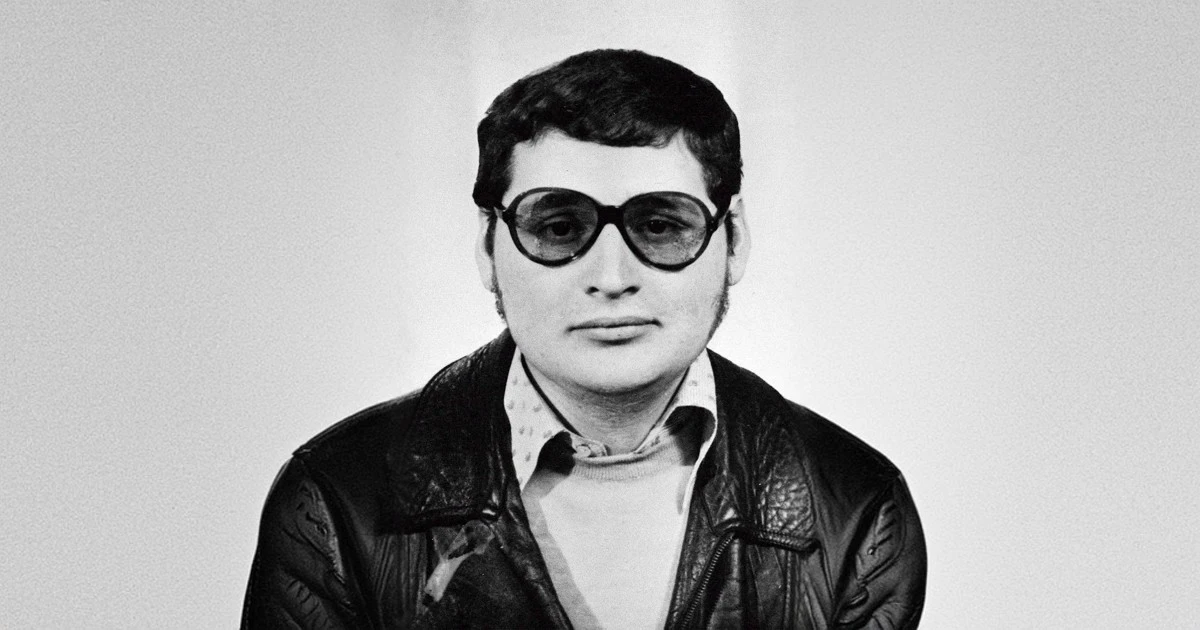
Image Credit - By Wikimedia Commons
Ilich Ramírez Sánchez Myth Grew From Police Errors
Fame usually follows success. Sometimes, however, a reputation grows purely from failure and accidental branding. You assume the world’s utmost notorious terrorist was an expert tactician operating with military precision. In reality, reporters and police errors built a supervillain out of a man whose gun jammed at point-blank range. The legend of "The Jackal" did not rise from perfect operations. It grew because newspapers needed a monster to sell copies. We look at the strange, messy truth of Ilich Ramírez Sánchez, a man whose actual career was far more chaotic than the movies suggest.
The Weight of a Name and a Wealthy Father
Fathers often pass on material wealth, but some leave behind powerful ideological legacies that shape a child’s entire life. Ilich Ramírez Sánchez was born in Caracas in 1949 into a wealthy family. According to Britannica, his father ran a highly profitable law practice while holding strong Marxist convictions. This gave the boy an unusual beginning. As reported by JNS, his father named him Ilich in tribute to Vladimir Ilich Lenin, a decision that set him apart from birth.
The family did not stay in one place. During the late 1950s, Ilich traveled through Central America and the Caribbean. He saw political instability firsthand. These early years exposed him to the fragility of governments. He watched power shift and crumble in real-time. His mother eventually took him and his brother to London in 1966 after his parents separated. This move placed him in the center of Western culture, yet his father's influence remained strong. The combination of money and radical politics defined his early identity. He lived with a foot in two very different worlds.
Moscow, Misfits, and Expulsion
Universities are intended to be centers of education, but at times they also become unintended gateways to turmoil. In 1968, Ilich Ramírez Sánchez registered at Patrice Lumumba University in Moscow, with his studies funded by the Venezuelan Communist Party. The school hosted about 3,000 international students and functioned as a gathering point for young people from developing countries. Yet Ilich did not match the image of a disciplined, self-denying revolutionary.
He was strongly attracted to nightlife, and reports from the time say he frequently spoke loudly and at length about his own intellect. Instructors noted that he routinely overestimated his abilities. The KGB even evaluated him as a possible recruit but ultimately rejected him, citing weak educational attainment and a reckless lifestyle. By July 1970, both the university and the Party had reached their limit. According to The Guardian, the institute was seemingly not drastic enough for him, and was barred, losing his sponsorship as well.
Who was Ilich Ramírez Sánchez? He was a Venezuelan militant known as “Carlos the Jackal,” who became a symbol of Cold War–era terrorism despite a record of unsuccessful operations. This expulsion pushed him away from formal Soviet structures and toward more radical circles in the Middle East.
The Shift to Beirut and the PFLP
Rejection often forces people to find a new tribe, and for Ilich, that tribe waited in Beirut. After leaving Moscow in July 1970, fellow students introduced Ilich to the Popular Front for the Liberation of Palestine (PFLP). He moved to Lebanon to join their cause. The organization offered him a new purpose. They needed recruits, and he needed a platform.
He participated in a training campsite in Jordan throughout the Black September conflict in late 1970. You might expect a guerilla fighter to be hardened by battle. Sometimes, they just watch from the sidelines while others bleed. Ilich fell ill during the conflict. He saw minimal or no actual combat. His status as a fierce fighter, which appeared later in encyclopedia entries, contradicted the reality of his period in Jordan. He spent his period on guard duty or recovering from illness. Yet, this period validated him in the eyes of his peers. He now claimed a link to the Palestinian struggle, even if his contribution on the ground remained small.
The London Playboy Lifestyle
Terrorists are supposed to live in shadows. This one lived in Kensington and partied with the elite. Ilich Ramírez Sánchez returned to London in January 1971. He moved back in with his mother in one of the city's most expensive neighborhoods. He used a fake passport to enter the country, but his life was hardly underground. He became a fixture in the local social scene.
He cultivated an image that baffled observers later. He wore fine clothes, visited clubs, and dated multiple women. He acted like a playboy while plotting violent overthrow. This contradiction defines his time in London. He lived off his family’s wealth while claiming to fight for the oppressed. The police failed to notice him for a long time. They missed obvious clues and family connections. His ability to hide in plain sight had less to do with spycraft and more to do with the assumptions of British authorities. They did not expect a terrorist to look and act like a wealthy socialite.
The Botched Assassination of Joseph Sieff
Assassinations fail for complicated reasons. Sometimes, it is just bad dental work and a cheap weapon. On December 30, 1973, Ilich Ramírez Sánchez attempted his first major hit. The target was Joseph Sieff, the president of Marks & Spencer and a prominent Zionist figure. Ilich walked into Sieff’s home in St John’s Wood, London. He found Sieff in the rest room.
Ilich fired one shot. The bullet struck Sieff in the face. However, the bullet deflected off Sieff’s dental work. The victim survived. Ilich tried to fire again, but his weapon jammed. He escaped the scene, leaving Sieff injured but alive. The attack was a failure. The "expert assassin" had relied on a faulty gun and bad luck. A few months later, in February 1974, he attacked Bank Hapoalim in London. He threw a bomb, but he threw it incorrectly. It caused only minor damage. These early operations show a pattern of incompetence, not the lethal efficiency that the media later attributed to him.
The Accidental Creation of "The Jackal"
A nickname usually sticks when it fits the person. In this case, a reporter found the wrong book in a messy apartment. The world knows him as "Carlos the Jackal," but this name was a media invention. A reporter for The Guardian visited a friend's apartment where Ilich had stayed. Among the belongings, the reporter found a copy of Frederick Forsyth’s novel, The Day of the Jackal.
The book did not even belong to Ilich. It belonged to his friend. The press ignored this detail. They seized on the connection. The nickname "The Jackal" gave headlines a punchy, terrifying quality. It transformed a bungling gunman into a mythical super-spy. Ilich Ramírez Sánchez benefited immensely from this branding. The name did the work for him. It made him seem ubiquitous and unstoppable. The myth grew larger than the man, fueled by sensationalist reporting rather than actual tactical success.
OPEC, Ransom, and the Expulsion
Governments claim they don't negotiate with terrorists. Despite this, millions of dollars often quietly change hands behind closed doors. In 1975, Ilich led a search on the OPEC headquarters in Vienna. Reuters reports that this event marked the peak of his notoriety, where he and his team took dozens of hostages, including oil ministers, and killed 3 people. They flew the ministers to Algiers. The operation grabbed the world’s attention.
Behind the scenes, the outcome was murky. Reports suggest a ransom of $20 million to $50 million was paid for the release of the hostages. According to Britannica, PFLP leadership had commanded the execution of 2 of the ministers, but he did not carry it out. Instead, it was revealed he received a ransom, an act that infuriated his superiors and led to his removal for disobeying orders. How many people did Ilich Ramírez Sánchez kill? He is convicted for attacks involving at least 11 deaths, though he claims responsibility for many more. The OPEC invasion ended his time as a disciplined soldier for the cause and launched his career as a freelance mercenary.
The East Bloc and the Stasi Connection
Superpowers often look like puppet masters. Frequently, they are just confused bystanders trying to manage chaos. During the mid-1970s and 1980s, Ilich Ramírez Sánchez operated with the tacit support of East Bloc intelligence agencies. The Stasi in East Germany provided him with an office, safe houses, and permits to carry weapons. They monitored his movements but couldn't control him.
Western intelligence historians, like Daniela Richterova, note that the Soviets did not micromanage these attacks. The relationship was messy. The Czech secret police (StB) grew alarmed by his presence in Prague in 1986. They fabricated a French assassination plot to trick him into leaving their country. They wanted him gone. The idea that he was a top agent of the KGB contradicts the reality. The Communist states viewed him as a liability—a dangerous, uncontrollable figure they tolerated only when it suited them.
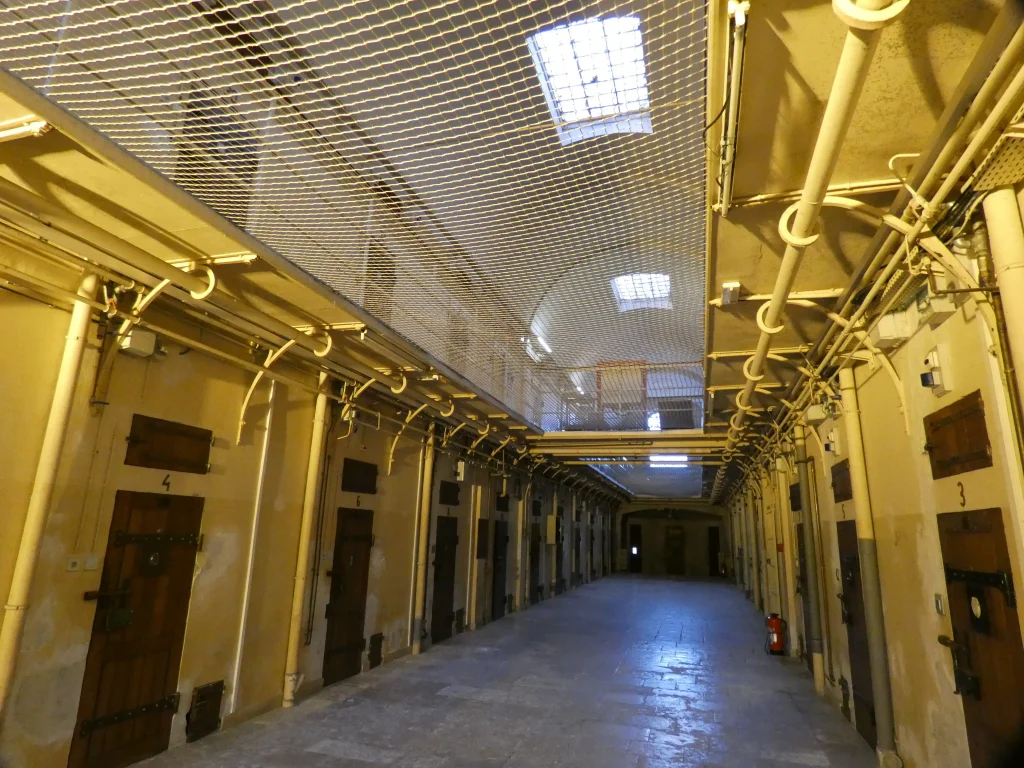
Image Credit - By David.Monniaux - Own work, Wikimedia Commons
The Slow Decline and Capture
Legends often end in a blaze of glory. Reality usually offers a hospital bed and a betrayal. By the 1990s, the world had changed. The Cold War ended. The "armed struggle" of the 1970s faded. Ilich Ramírez Sánchez became a relic. He hid in Sudan, protected by the local government. However, international pressure mounted.
In 1994, he underwent surgery for a varicocele (a vein issue). While he recovered, the Sudanese government betrayed him. They handed him over to French agents. There was no shootout. There was no dramatic escape. He was drugged and taken to Paris. Is Ilich Ramírez Sánchez still alive? Yes, he is presently serving multiple life imprisonment in a French prison. His capture marked the end of a time. The man who once grabbed headlines worldwide ended up in a cell, trapped by his own health issues and the shifting political tides.
The Courtroom and the Contradictions
Trials are designed to find the truth. They often serve as a stage for final performances. In French court, Ilich faced 3 life sentences. He stood accused of killing two French agents in 1975, bombings in 1982-1983, and grenade attack in 1974. Throughout the proceedings, he maintained his persona.
He described his profession as a "professional revolutionary." He acknowledged bloodshed on both sides but denied financial motives. He claimed his sole purpose was Palestinian liberation. Yet, the facts of the ransom money and his high-flying lifestyle weakened these claims. Hugo Chávez, the late leader of Venezuela, later called the conviction unjust and characterized Ilich as a "friend" and legitimate fighter. This support highlights the deep political divide that still surrounds his legacy. To some, he remains a symbol of resistance; to others, a narcissist who got lucky.
The Reality of the "Jackal" Period
Nostalgia often rewrites history, making messy conflicts look like heroic struggles. The life of Ilich Ramírez Sánchez mirrors the trajectory of 1970s radicalism. It began with high ideals and university debates. It moved to violent action that often lacked clear results. It ended in isolation and irrelevance.
His time was one of hijackings, distinctive fashion, and ideological rigidity. He embodied the contradictions of that period. He was a Marxist who loved fine dining. He was a killer who failed to fire his gun correctly. He was a "top spy" known by a nickname from a book he never read. The media needed a face for the terror of the age, and he happily stepped into the spotlight. He played the role they wrote for him.
The Man Behind the Headlines
We prefer villains to be geniuses because it makes their violence feel less random. If an expert mind attacks us, we can analyze it. If a bungler with a jammed gun attacks us, it feels like chaos. Ilich Ramírez Sánchez was never the perfect soldier the papers described. He was a man of wealthy origins who stumbled into a revolution, failed his way upward, and used a media-generated nickname to build a terrifying reputation.
His story reveals how easily we confuse notoriety with competence. The police missed him because they looked for a phantom, not a party-loving socialite living with his mother. The press feared him because they believed the "Jackal" myth they helped create. In the end, the man in the French prison cell is just a man. The legend remains on the pages of old newspapers, separated forever from the flawed reality of Ilich Ramírez Sánchez.
Recently Added
Categories
- Arts And Humanities
- Blog
- Business And Management
- Criminology
- Education
- Environment And Conservation
- Farming And Animal Care
- Geopolitics
- Lifestyle And Beauty
- Medicine And Science
- Mental Health
- Nutrition And Diet
- Religion And Spirituality
- Social Care And Health
- Sport And Fitness
- Technology
- Uncategorized
- Videos

