
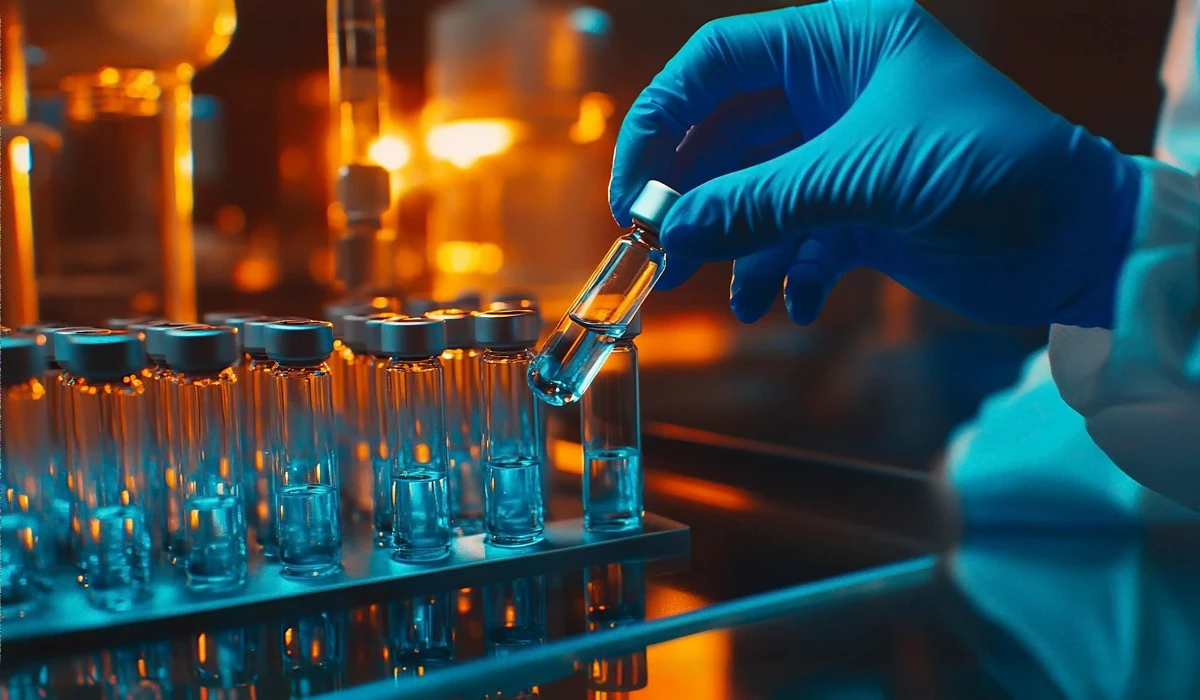
Detect Drug Pile-Ups With Forensic Pharmacology
Imagine a case where a man is found dead in his bed. There are no signs of struggle, no suicide note, and no empty pill bottles scattered on the floor. When the toxicology report comes back, the medical examiner is baffled. The report lists three different medications in his blood, but surprisingly, every single one of them is within the "therapeutic" range; based on these numbers, the man should be alive.
Standard toxicology identifies substances in the body and their quantities, providing a list of ingredients. When the numbers fail to explain a cause of death, a different set of tools is required. This is where Forensic Pharmacology steps in.
While a toxicologist identifies the chemicals, a forensic pharmacologist reconstructs the biological story. They look at how these substances speak to each other inside the body. In many modern cases, the cause of death is the interaction between two or three innocent-looking prescriptions rather than a massive overdose of a single drug. We are going to explore how these chemical collisions happen, how they stop the heart or lungs, and how experts prove it in court.
The Procedures of a Chemical Crash
When a person swallows a pill, they aren't just putting a chemical in a tank. They are introducing a new variable into a highly complicated biological system. When multiple drugs enter that system at once, you get a "traffic jam." This biological congestion is often where drug interaction fatalities begin. To understand this, we have to look at two main concepts: Pharmacokinetics and Pharmacodynamics.
Pharmacokinetics vs. Pharmacodynamics
Think of Pharmacokinetics (PK) as what the body does to the drug. Your body needs to break the drug down (metabolism) and get rid of it (excretion). The liver acts as the primary checkpoint here. If Drug A distracts the liver, the liver might ignore Drug B. This causes Drug B to pile up in the blood, reaching lethal levels even if the person only took a normal dose.
OpenStax identifies Pharmacodynamics (PD) as the inverse process, which essentially describes the effects a drug has on the body. This is about where the drug attaches itself. If you have two drugs fighting for the same parking spot (receptor) on a cell, or two drugs that both tell the brain to "slow down," the effect becomes overwhelming rather than simply doubled.
The Combined Action Effect
Whereas math dictates that one plus one equals two, in Forensic Pharmacology, one plus one often equals ten. This is known as combined action. It happens when two drugs work together to produce an effect far greater than the sum of their parts.
Consider the respiratory drive, the automatic signal from your brain that tells your lungs to breathe while you sleep. If you take a mild painkiller, that signal gets a little quieter. If you take a sleeping pill, it gets a little quieter. But take them together, and the signal might stop entirely.
This brings up a vital question for investigators: What is the most common cause of drug interaction deaths? A report from the FDA notes that the most frequent cause involves the combined action of mixing central nervous system depressants, such as opioids and alcohol, which stops the respiratory system. The body simply "forgets" to breathe.
Deciphering Drug Interaction Fatalities
While the phrase "drug interaction" sounds clinical, the reality is often violent. These interactions attack specific organs, usually the heart or the brain, in ways that can look like natural causes to the untrained eye. Analyzing drug interaction fatalities requires knowing exactly which biological wires were crossed.
Additive Toxicity
Additive toxicity is subtle. This occurs when two drugs have different primary jobs but share a dangerous side effect. A classic example involves the heart’s electrical rhythm.
Research in PMC identifies methadone as a synthetic opioid utilized for pain management. While effective, a study in the same journal notes that both methadone and the antibiotic erythromycin are linked to "QT prolongation," which delays the time the heart takes to recharge between beats. If experts do not look for this specific electrical interaction, the death may resemble a sudden heart attack, as the heart’s rhythm descends into chaos, known as Torsades de Pointes.
Metabolic Inhibition
The liver uses enzymes to dismantle drugs. The most famous family of these enzymes is the Cytochrome P450 system (specifically CYP3A4 and CYP2D6). Think of these enzymes as workers on a demolition line.
Some drugs act as "inhibitors." They fire the workers. For example, a patient stable on a blood thinner might take a fungal medication like fluconazole. The fungal medication inhibits the enzyme that breaks down the blood thinner. Suddenly, the blood thinner isn't being broken down. It accumulates day by day until the patient suffers a massive internal hemorrhage. While the dose on the bottle remained constant, the body’s ability to process it changed.
Forensic Pharmacology Techniques for Analysis
How do we prove this after the fact? The body changes rapidly after death. A forensic pharmacologist cannot just look at a blood test number and stamp "Interaction" on the death certificate. They have to build a case using specialized Forensic Pharmacology techniques.
Beyond the Blood Concentration
Blood frequently provides less reliable information than is commonly assumed. According to a report in PMC, this phenomenon is known as Post-Mortem Redistribution, where physiological changes after death can falsely change drug concentrations once blood stops circulating and drugs seep from tissues back into the vessels.
Heart blood testing might show a toxic level of a drug that was actually at a safe level during life. To fix this, experts compare blood from the heart (central) with blood from the leg (peripheral). ScienceDirect highlights that investigators also examine the vitreous humor—the clear fluid within the eye—which serves as a reliable alternative for analysis when blood is unavailable. The eye is isolated from the rest of the body’s blood flow, making it a "black box" that preserves chemical levels more accurately.
Reconstructing the Timeline
Timing is everything. Did the patient take the pills all at once (suicide intent) or spaced out over hours (therapeutic use)? Experts look at half-lives, the time it takes for half the drug to leave the system.
Forensic experts estimate when the drugs were ingested through measurement of the ratio of the parent drug to the metabolite, which indicates how long the body was processing the substance.
This investigation includes everything the patient consumed. People often ask, can natural supplements cause fatal drug interactions? Research published in PMC notes that natural supplements like St. John’s Wort can drastically modify liver enzymes by inducing CYP3A4, which can cause fatal toxicity when mixed with prescription drugs. If the investigator doesn't ask about the herbal tea or vitamin stack on the counter, they might miss the cause of death entirely.
The "Deadly Duo" and Other Common Culprits
In the field of drug interaction fatalities, certain combinations show up on the autopsy table over and over again. These "frequent flyers" are well-documented, yet they continue to claim lives because patients underestimate their power.
The Opioid-Benzodiazepine Axis
According to ABC News, this specific combination resulted in the death of actor Heath Ledger, who suffered acute intoxication from several combined substances. The FDA further warns that combining opioid medicines with benzodiazepines creates serious risks of death, requiring its most stringent warnings because of how these drugs interact. Both types of medication relax the body.
When taken together, they create a heavy "sedative blanket" over the brainstem. The opioid dulls the brain's reaction to carbon dioxide (the signal to breathe), and the benzo relaxes the muscles of the throat and chest. The patient falls into a deep sleep and simply stops inhaling. In many of these cases, the level of opioid alone wouldn't kill, and the level of benzo alone wouldn't kill. It is the combination that is lethal.
Alcohol as the Great Amplifier
Ethanol (alcohol) is the wildcard. It is a solvent, and it changes how drugs dissolve and move through the stomach lining.
ScienceDirect explains that alcohol can cause "dose dumping" in specific extended-release drugs, causing the rapid release of the entire dose from a capsule. Instead of receiving the medication over 24 hours, the patient receives the entire dose in 20 minutes. Furthermore, alcohol occupies the liver, forcing other drugs to wait in line, which keeps them circulating in the blood longer and at higher strengths.
Challenges in Forensic Pharmacology Investigations
Applying Forensic Pharmacology isn't like solving a math problem. The variables are messy. Human biology is inconsistent, and death alters the evidence.
Post-Mortem Redistribution
We touched on this earlier, but it is the biggest hurdle in the field. Some drugs are "lipophilic," meaning they love fat. They store themselves in body fat and organs. After death, as cell walls break down, these drugs rush back into the blood.
Data from Wires Online Library indicates that a drug like Amitriptyline can reach concentrations in the liver and lungs roughly 10 times higher than those found in the blood during life. If an investigator ignores this redistribution, they might falsely rule a death as a suicide overdose rather than a natural arrhythmia.
Genetic Variability (Pharmacogenomics)
Not everyone has the same factory settings. Our genes dictate how many enzymes we have in our liver.
Some people are "poor metabolizers." They lack the CYP2D6 enzyme. If they take a drug that needs to be broken down by CYP2D6 to leave the body, it stays forever. One standard pill a day can build up to a toxic level in a week. Research in PMC explains that "ultra-rapid metabolizers" possess extremely high enzyme activity, causing them to process substances at an accelerated rate. Codeine, for example, turns into morphine in the liver. An ultra-rapid metabolizer turns a standard cough syrup dose into a massive hit of morphine instantly, which can be fatal.
This variance makes timing difficult. How do forensic experts determine the time of death in overdoses? Experts estimate the time of death through measurement of the ratio of parent drugs to their metabolites, which indicates how long the body was processing the substance before functionality ceased. But if the person has a genetic anomaly, that ratio might be skewed, requiring genetic testing to confirm.
The Legal Effect
The findings of a Forensic Pharmacology report often decide freedom or prison. These scientific conclusions are the foundation of legal arguments in wrongful death suits and murder trials.
Differentiating Intent vs. Accident
The difference between suicide and accidental interaction is massive for insurance claims and family closure. A massive stomach concentration of undissolved pills usually points to suicide, a deliberate ingestion of a large quantity at once.
However, a high blood level with no pills in the stomach suggests the drug accumulated over time. This points to an accidental interaction or metabolic failure. This distinction protects families from the stigma of suicide and helps clarify life insurance payouts, which are often voided by suicide rulings.
Standard of Care in Prescribing
When a patient dies from a known "contraindicated" combination (two drugs that should never be mixed), the focus shifts to the prescriber. Did the doctor check the patient’s other meds? Did the pharmacist warn the patient?
As documented by Cornell Law, legal cases like Burrage v. United States have established rigorous standards for causation, ruling that a specific action is only the cause if the result would not have happened otherwise. Mere drug contribution to a death is insufficient for legal proof; instead, in many jurisdictions, the prosecution must prove the death occurred specifically because of the drug interaction. This requires the expert to isolate the interaction as the primary cause, separating it from the patient’s underlying health issues.
The Future of Forensic Pharmacology
The period of simple toxicology is fading. As modern medicine advances, patients are living longer and taking more medications to manage chronic conditions. The "polypharmacy paradox" is becoming the norm, not the exception.
Forensic Pharmacology provides the necessary context to explain these complicated deaths. It moves beyond the simple question of "how much?" to answer the vital question of "how?" When the biological procedures of drug interaction fatalities are understood, we can better protect the living and ensure justice for the dead. Looking forward, this field will be the defining factor in distinguishing between tragic accidents and criminal negligence.
Recently Added
Categories
- Arts And Humanities
- Blog
- Business And Management
- Criminology
- Education
- Environment And Conservation
- Farming And Animal Care
- Geopolitics
- Lifestyle And Beauty
- Medicine And Science
- Mental Health
- Nutrition And Diet
- Religion And Spirituality
- Social Care And Health
- Sport And Fitness
- Technology
- Uncategorized
- Videos

