

Why Nature Therapy Heals Depression Faster
You built a life designed for comfort, yet you have likely never felt more exhausted. We surround ourselves with temperature-controlled rooms, soft lighting, and infinite entertainment, assuming these luxuries should make us happy. But your body does not view this environment as a sanctuary. It treats the constant hum of city traffic, the flicker of screens, and the confinement of four walls as a low-grade threat.
When you spend your days entirely indoors, you accidentally keep your nervous system in a state of suspended agitation. You are a biological creature evolved for the savannah, currently living in a concrete box. This mismatch drains your mental battery faster than you can recharge it. More sleep or better organization are insufficient on their own. You need to flip the switch that tells your ancient brain it is safe.
This is where Nature Therapy becomes a physiological necessity rather than a weekend hobby. While talk therapy and medication are vital tools, they often require weeks or months to show results. Nature acts differently. It is a biological catalyst. Stepping into a green environment initiates an immediate chemical reset that quiets the mind and accelerates the healing process for depression.
Understanding What Nature Therapy Actually Is
Many people mistake nature therapy for a simple jog in the park. While exercise is good, true Nature Therapy (often called Ecotherapy) is a structured practice. It involves conscious, deliberate engagement with the environment to support mental health. You don't just move through the woods; you interact with them. This practice relies on the biophilia hypothesis, a concept popularized by biologist E.O. Wilson in 1984. According to Encyclopedia Britannica, the hypothesis suggests humans have a genetic, evolutionary need to connect with other forms of life.
For 99.9% of human history, we lived outdoors. Our sensory systems are calibrated to the sounds of wind, birds, and water. These sounds signal safety to the brain. In contrast, urban sounds like sirens or jackhammers signal danger. When you engage in Nature Therapy, you are returning your body to its factory settings.
This field is vast and adaptable to different needs. If you are wondering what the types of nature therapy are? There are several distinct approaches, including Forest Bathing (Shinrin-Yoku), Horticultural Therapy (gardening for mental health), Wilderness Adventure Therapy, and Green Exercise. Each method uses the outdoors as a co-therapist to achieve specific mental health goals.
The Neuroscience: How Nature Affects the Depressed Brain
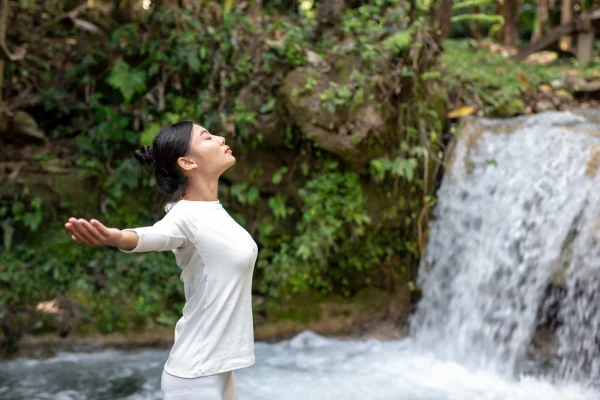
Depression changes the physical structure and function of your brain. One of the most significant changes happens in the prefrontal cortex, specifically the subgenual prefrontal cortex (sgPFC). This area is the engine room for rumination, that loop of negative self-talk and worry that you cannot seem to turn off. In a depressed brain, this engine runs hot and fast, burning through your energy reserves.
Nature acts as a coolant for this overheated engine. The psychologists Rachel and Stephen Kaplan developed Attention Restoration Theory (ART) to explain this. They argue that modern life demands "directed attention," which drains the brain. Nature, however, provides "soft fascination." Clouds moving across the sky or leaves rustling in the wind capture your attention without effort. This gives your executive control center a chance to rest and reboot.
Science backs this up with hard data. A skeptical reader might ask, " Does nature therapy actually work? The answer lies in neuroimaging studies, such as the one led by Gregory Bratman at Stanford, which showed that participants who walked in nature for 90 minutes had significantly reduced activity in the subgenual prefrontal cortex compared to those who walked in a city. The urban walkers showed no improvement, proving that the environment itself, not just the walking, changed the brain.
Why Nature Therapy Accelerates Mental Recovery
The strongest reason to adopt this practice is speed. Research available through the National Institutes of Health states that traditional treatments like antidepressants often take four to six weeks to build up in the system. Nature Therapy induces physiological changes within minutes. A study referenced by the National Institutes of Health on young women demonstrated that just 15 minutes of forest walking decreased anxiety, depression, and confusion scores significantly compared to walking in a city. The body responds to the environment instantly.
This rapid response gets even stronger when you combine it with movement. This combination is often called "Green Exercise." When you move your body, you release endorphins. When you do it outside, you lower stress. It is a dual-engine approach to recovery. A study from the University of Essex found that 90% of people felt increased self-esteem after a green walk. This is a significant finding for those suffering from depression, where self-worth is often the first thing to crumble.
Furthermore, Nature Therapy breaks the numbness of depression through sensory engagement. Depression often makes you feel dissociated, as if you are floating outside your body. Nature forces you back in. You smell the pine, feel the uneven ground, and hear the birds. This creates a "grounding" effect. It pulls you out of your head and anchors you in physical reality much faster than cognitive processing alone can achieve.
Reduction of Cortisol and Stress Hormones
The most measurable of all nature therapy benefits is the drop in stress hormones. Cortisol is the body's primary stress hormone, and it is often chronically high in people with depression. This keeps the body in a constant "fight-or-flight" mode. Japanese research on Shinrin-Yoku has produced stunning data here. A study archived in the National Library of Medicine shows that spending time in a forest environment can reduce salivary cortisol concentrations by 12.4% to 15.8% compared to urban settings. The same research indicates it effectively flips the nervous system from sympathetic (stress) to parasympathetic (rest and repair) dominance.
Boosting Natural Killer Cells and Immunity
Trees do more than look good; they actively release chemicals that help us heal. Trees, especially conifers, emit airborne essential oils called phytoncides to protect themselves from rot and insects. When you breathe these oils in, your body responds by boosting its own defense system. Exposure to phytoncides increases the activity of Natural Killer (NK) cells by roughly 50%. These cells are vital for immune health and overall resilience. Remarkable research shows that a single three-day forest trip can keep your NK immunity levels elevated for up to 30 days, providing a month-long buffer for your health.
Regulating Circadian Rhythms and Sleep
Sleep disruption is a hallmark of depression. You either sleep too much or not enough. Nature Therapy addresses this by exposing you to natural light. Even on a cloudy day, outdoor light levels are often 100 times higher than indoor lighting. This intense light hits the retina and signals the brain to regulate melatonin production. Fixing your sleep-wake cycle stabilizes your mood.
Integrating Outdoor Stress Relief into Clinical Treatment
We must stop viewing nature as an "alternative" to "real" medicine. It functions alongside standard care rather than replacing it. Nature Therapy works best as a powerful partner to traditional therapy and medication. It supports the clinical work by lowering the biological barrier to healing. Doctors and therapists are increasingly recognizing this.
We are seeing a rise in "Green Prescriptions." In Canada, a program called PaRx allows doctors to prescribe free National Park passes to patients. According to NHS England, the UK government invested over £5 million in "Green Social Prescribing" pilots to tackle mental ill-health. Documents from Sports Physiotherapy New Zealand note that the country has used Green Prescriptions (GRx) since the late 90s. This is the medicalization of outdoor stress relief, treating the park as a pharmacy.
For patients trying to build a routine, the question often arises: how much time in nature is needed for mental health? A massive study of 20,000 people led by the University of Exeter established that 120 minutes per week is the "dose" required to report significantly better health and well-being. You don't need to live in the woods; two hours a week is the threshold for results.
The Art of Forest Bathing (Shinrin-Yoku)
To practice this, you must shift gears. This is not a hike to get your heart rate up. Forest bathing requires you to wander aimlessly and slowly. Put your phone away. The goal is to let nature enter through your ears, eyes, nose, mouth, hands, and feet. Pause to touch the bark of a tree or smell a leaf. Focusing entirely on your senses shuts down the ruminating brain.
Therapeutic Gardening
You can find powerful outdoor stress relief in your own backyard. Therapeutic gardening offers a unique benefit: agency. When you nurture a plant, you are responsible for a living thing. This builds a sense of purpose. A study indexed in PubMed comparing gardening to reading found that while both relaxed the participants, gardening led to significantly lower cortisol levels and fully restored a positive mood. The tactile sensation of soil contains microbes that may further stimulate serotonin production.
Urban Nature Connections
City dwellers are not excluded from this. You do not need a national park to heal. As reported in a study on ScienceDirect, research from the University of Melbourne found that looking at a "green roof" for just 40 seconds boosted concentration and reduced errors. Even small doses count. If you can't get out, bring nature in. Transplanting indoor plants has been shown to reduce blood pressure. Viewing trees through a window helped surgery patients recover a full day faster than those facing a brick wall. Find a small pocket park, a rooftop garden, or a tree-lined street and claim it as your sanctuary.
Overcoming Barriers to Getting Outside
There is a cruel irony in treating depression with nature. We call it the "Depression Paradox." The condition drains the exact energy and motivation you need to get outside and find relief. The couch feels safe, while the outside world feels overwhelming. This barrier is real, and you should not judge yourself for feeling it.
The key is to shrink the task until it feels manageable. Do not aim for a two-hour hike. Aim for five minutes of fresh air. Stand on your balcony or sit on your front porch. These "micro-doses" of Nature Therapy still count. They begin the process of lowering cortisol, which may give you just enough energy to stay out longer next time.
Accountability also helps bridge the gap. Join a walking group or an eco-volunteer corps. When you know someone is waiting for you, it overrides the internal voice telling you to stay in bed. Reframing the activity helps, too. Stop viewing outdoor stress relief as "exercise," which implies work. View it as "medicine." You take a pill because you have to; you go outside because your brain needs the oxygen and the quiet.
Your Path to Healing Through Nature Therapy
Modern medicine is miraculous, but it often ignores the biological context of who we are. Nature Therapy offers a unique path because it speaks a language your body understands instinctively. It provides a biological shortcut to a calm nervous system, bypassing the anxious thoughts that talk therapy tries to untangle and the chemical imbalances that medication tries to correct.
The barriers to entry are low. This treatment is free, it is available almost everywhere, and the nature therapy benefits begin the moment you step out the door. You do not need a prescription or a therapist to start. You simply need to step over the threshold.
So, here is your challenge. Put this screen down. Step outside, even if only for ten minutes. Look at the sky, touch a tree, and breathe. Your healing process does not start in a doctor's office; it starts in the open air.
Recently Added
Categories
- Arts And Humanities
- Blog
- Business And Management
- Criminology
- Education
- Environment And Conservation
- Farming And Animal Care
- Geopolitics
- Lifestyle And Beauty
- Medicine And Science
- Mental Health
- Nutrition And Diet
- Religion And Spirituality
- Social Care And Health
- Sport And Fitness
- Technology
- Uncategorized
- Videos

