
Flight attendant Fraud Lasted 4 Years Unnoticed
Safety networks often rely on a digital handshake rather than a physical check. When one computer fails to tell another computer that an employee quit, that person remains in the system as a legal worker. This digital oversight creates a gap where a former employee can exist as a "ghost," accessing benefits they no longer own. As reported by WAND-TV, a 33-year-old man named Dallas Pokornik allegedly exploited this exact void in the data to acquire tickets reserved for pilots and flight attendants for 4 years.
Prosecutors state high-tech hacking played no role here. The suspect appears to have used his old status and a lack of communication between airlines to bypass ticket counters. He allegedly presented himself as active crew to board flights across the US without paying a dime. This massive flight attendant fraud case highlights a startling vulnerability in how airlines verify their own people.
The "Ghost" in the Jump Seat
Trust works differently when competitors share resources; they assume the other side did the homework. Airlines operate on reciprocal agreements, allowing crew members from one carrier to fly on another if seats are open. This system relies on professional courtesy and the assumption that anyone holding a badge is currently employed.
Court documents cited by Pax News show that from 2017 -2019, the defendant worked legally as a flight attendant for a Toronto-based airline. Authorities identified the carrier as a Toronto-based company, likely Porter Airlines or potentially Air Canada, though records remain unverified. He left that job, but the privileges apparently did not leave him.
According to the indictment filed in Hawaii federal court, the alleged flight attendant fraud began in January 2020. It continued until October 2024. For nearly five years, the suspect traveled using his old credentials. He allegedly fabricated an employee ID badge to look like current crew. He used this badge to convince gate agents at three different U.S. carriers to let him on board.
The scheme worked because gate agents see thousands of faces. They look for the uniform and the badge. When a polite, well-dressed crew member asks for a ride home, agents often wave them through. This social engineering played a massive role in the longevity of the deception.
Pushing the Limits of Access
Most scammers get caught when they stop aiming to blend in and start aiming for the best view. The defendant might have continued flying unnoticed if he had stuck to the passenger cabin. Instead, court documents reveal he began requesting access to the "jump seat."
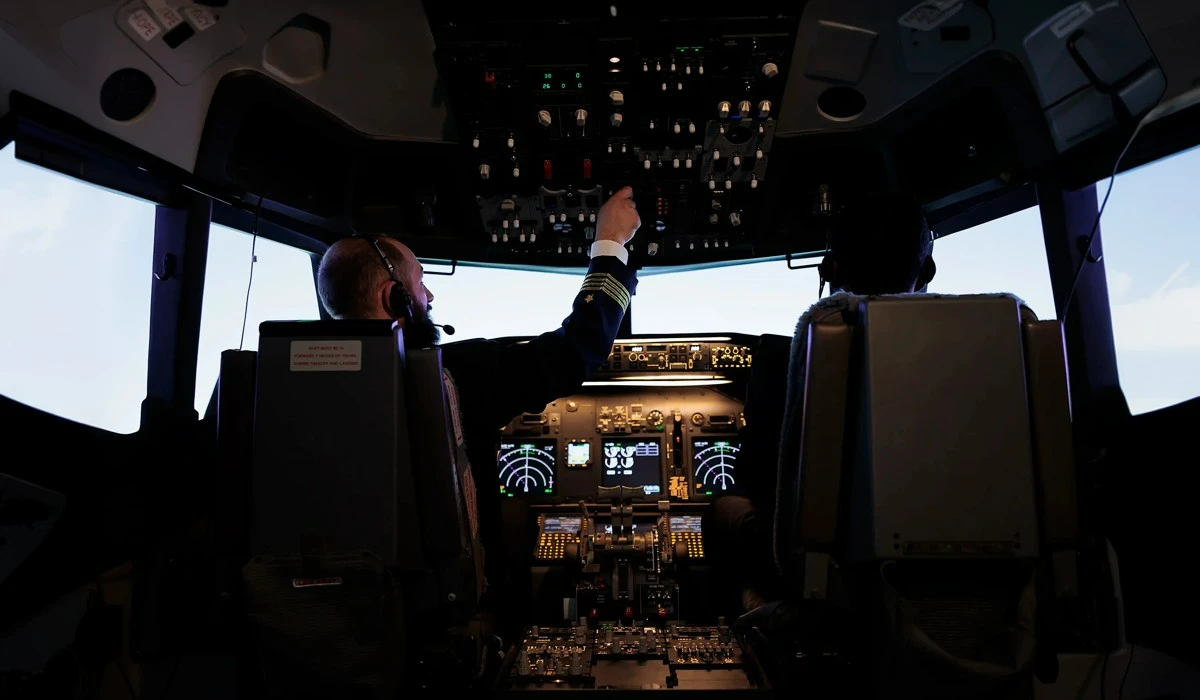
A jump seat is a specific auxiliary seat used by crew members. There are jump seats in the cabin, but there are also jump seats in the cockpit. Access to the cockpit requires much higher clearance. Typically, only off-duty pilots or flight deck personnel with a valid airman certificate and medical clearance sit there.
The suspect allegedly requested cockpit access during his travels. This request likely triggered alarm bells. Flight attendants rarely sit in the cockpit jump seat unless specific conditions are met. Asking for this restricted spot drew attention to his credentials. A standard gate agent might glance at a badge, but a captain protecting their flight deck checks the paperwork thoroughly.
What is a jump seat on an airplane?
A jump seat is a collapsible seat used by crew members during takeoff and landing, available to off-duty staff when no passenger seats are open.
This overreach suggests a confidence that grew over time. After years of successful free travel, the boundaries likely felt nonexistent to him. This specific request for the cockpit seat became a pivotal point in the investigation. It shifted the situation from a ticket scam to a potential safety concern.
The Database Disconnect
A badge is just a piece of plastic; the real authority lives in a server room somewhere else. The success of this flight attendant fraud points to a failure in the backend data systems. Aviation expert John Cox suggests the primary failure happened when the former employer did not update the personnel database.
When an employee leaves an airline, the company must mark them as "inactive" in the universal systems. If they fail to click that button, the employee’s profile remains valid in the eyes of other airlines. When a gate agent types the name into the system, the computer says "Active." The agent believes the computer.
This creates a reality where the physical badge matters less than the digital status. The suspect's ability to fly on carriers based in Honolulu, Chicago, and Fort Worth depended on this database error. If the system had flagged him as "terminated" or "inactive" in 2019, the first gate agent would have confiscated his badge in 2020.
How do flight attendants fly for free?
Airlines have "reciprocal travel" agreements that allow active crew members to fly standby on partner airlines for free or a nominal fee. Experts believe the system erroneously displayed his status as active during gate checks. This single clerical error allowed the pattern of misconduct to span 4 years. The defendant avoided hacking the computer. He walked through a door that someone forgot to lock.

Security Protocols vs. Reality
`Security protocols often look backward at past threats rather than sideways at internal gaps. The aviation industry uses the "Known Crew Member" (KCM) system to speed up screening. This database allows pilots and flight attendants to bypass the long lines at regular security checkpoints.
However, access to KCM requires an active status. Bruce Rodger, a pilot and aviation consultant, notes that leisure travel via the KCM lane is strictly prohibited even for active crew. Standby tickets usually require normal security screening. If the defendant used KCM, it implies the database failure extended to government-level screening tools as well.
This case draws comparisons to the famous Frank Abagnale "Catch Me If You Can" narrative. Abagnale famously deadheaded on flights by posing as a pilot. However, Abagnale operated in an era before digital databases. This modern flight attendant fraud occurring in a highly digital age is far more concerning. It shows that even with strong cross-checks, bad data leads to bad security decisions.
Is lying about being a flight attendant illegal?
Yes, presenting false credentials to attain free flights or access secure areas constitutes wire fraud and can lead to severe federal prison sentences. The prosecution argues the fraud went beyond just stealing rides. Entering secure areas and boarding planes under false pretenses compromised the integrity of the flight manifest. Airlines need to know exactly who is on board for safety reasons. A "ghost" passenger creates a liability nightmare.
The Legal Fallout
Federal charges ignore the cleverness of a trick to focus entirely on the wire that carried the lie. According to Total News, the Department of Justice filed an indictment against the defendant in Hawaii federal court following his capture in Panama. The charge is wire fraud.
The timeline of the legal action moved quickly once authorities connected the dots. A press release from US Attorney Ken Sorenson confirmed the indictment dropped in October. By January, authorities located the suspect in Panama, arresting and extraditing him to the United States.
Business Insider reports that the stakes are incredibly high, with the defendant facing a potential sentence of 20 years in federal prison and fines up to $250,000. The judge ordered detention, meaning the suspect remains in custody while the legal process unfolds.
Despite the pattern of evidence spanning 4 years, the DOJ spokesperson noted the indictment specifically limits the charges to incidents in 2024. However, they emphasized that the evidence suggests a pattern of misconduct covering the full period. The defendant has entered a plea of Not Guilty.
A Pattern of Impersonation
Scammers often rely on the sheer volume of daily operations to hide their individual actions. This is not the first time the industry has seen this type of flight attendant fraud. Legal precedent exists. Just last year, Tiron Alexander faced conviction in Florida for a similar scheme.
Alexander took over 120 flights using a similar method of impersonation. His conviction set a standard for how prosecutors handle these cases. They treat the theft of services as a serious federal crime, not a minor prank.
The industry is also on high alert due to recent safety incidents. The 2023 Horizon Air incident involving Joseph Emerson heightened scrutiny on who gets into the cockpit. In that case, an off-duty pilot riding in the jump seat allegedly attempted to disrupt the flight.
That context makes the current defendant’s request for a cockpit seat even more critical. Airlines are no longer lenient about jump seat protocols. Any irregularity in credentials now triggers an immediate and aggressive response. The tolerance for "clerical errors" regarding cockpit access is zero.
The Cost of Reciprocal Trust
Systemic convenience always comes with a tax of potential exploitation. The entire airline industry relies on reciprocal agreements to function. Flight crews often live in one city and base in another. They need to commute.
If airlines make the verification process too difficult, they hurt their own employees. If they leave it too open, they invite flight attendant fraud. The balance is delicate. This case forces carriers to re-evaluate how they share employee data.
The discrepancy in the timeline adds another layer of confusion. Some sources cite an indictment date with a typo of "Oct 2, 2025," while the main timeline places the end of the scheme in October 2024. These small details in the record mirror the small details in the database that allowed the fraud to happen.
Ultimately, the prosecution claims the defendant exploited a "reciprocal travel" privilege he no longer held. He used the industry's culture of professional courtesy as a weapon against it.
The Mechanics of Deception
Successful lies usually require a prop that anchors the story in reality. The defendant’s primary tool was a fabricated employee ID badge. He used this physical item to back up the digital error.
When he approached a gate, he presented the badge. The agent checked the computer. The computer confirmed the lie. This two-step validation loop is hard to break. The agent had no reason to doubt the screen, and the screen had no way to check the physical reality of the man standing there.
This reveals the flight attendant fraud involved more than a badge. It exploited the gap between a human checking a card and a server checking a status. The fraud lived in that gap. Prosecutors allege he used this method on carriers based in Honolulu, Chicago, and Fort Worth. These are major hubs with high traffic. The chaos of a busy airport likely helped him blend in. Agents under pressure to close a flight are less likely to scrutinize a badge that looks real.
The Glitch in the System
The success of this scheme came from a slow administrative update rather than a master disguise. A simple failure to change a database status from "active" to "inactive" allegedly allowed a man to fly free for 4 years. The system trusted the default setting more than it scrutinized the individual.
This case of flight attendant fraud serves as a wake-up call for aviation security. It proves that physical badges and uniforms are only as secure as the data behind them. As the defendant faces twenty years in prison, the airlines must close the digital cracks that let a ghost passenger travel the world on their dime.
Recently Added
Categories
- Arts And Humanities
- Blog
- Business And Management
- Criminology
- Education
- Environment And Conservation
- Farming And Animal Care
- Geopolitics
- Lifestyle And Beauty
- Medicine And Science
- Mental Health
- Nutrition And Diet
- Religion And Spirituality
- Social Care And Health
- Sport And Fitness
- Technology
- Uncategorized
- Videos

