

Try Dental Herbalism To Stop Bad Breath
You know the feeling. You just finished a garlic-heavy lunch and have a meeting in twenty minutes. You pop a sugary mint, feel a burst of artificial frost, and assume you are safe. But thirty minutes later, that "frost" fades, and the smell returns with a vengeance. You didn't actually fix the problem; you just fed the bacteria causing it.
Commercial products often act like a coat of paint over a crumbling wall. They mask odors temporarily while ignoring the bacterial colony thriving on your tongue. Dental Herbalism offers a completely different approach. It uses plant-based antimicrobials to chemically alter the environment inside your mouth instead of relying on synthetic flavors to trick your nose.
Shifting your focus to botanical solutions stops the losing battle against odor. You start building an oral ecosystem that naturally resists smell. Dental Herbalism prioritizes balancing your oral microbiome so bad breath lacks a chance to start, rather than merely covering it up.
What is Dental Herbalism and How Does It Work?
Think of your mouth as a garden. Most alcohol-based mouthwashes act like a scorched-earth weed killer. They wipe out everything—the weeds (bad bacteria) and the flowers (good bacteria). This leaves the soil (your gums) dry and vulnerable, often leading to even worse breath later because the bad bacteria grow back faster than the good ones. Dental Herbalism is the skilled gardener. It selectively suppresses the pathogens while nourishing the tissues that keep your teeth healthy.
Rather than being a modern "wellness" trend, this is ancestral science. The Sumerians were using myrrh to treat tooth infections as far back as 1100 BC. They understood what modern science has now confirmed: plants contain potent bioactive compounds. Using herbs like clove or goldenseal involves deploying specific chemical agents, like phenolic compounds, that, according to a study in Frontiers in Pharmacology (PMC8036490), damage the cytoplasmic membrane of gram-negative bacteria by penetrating their defenses.
These plant compounds stop bacteria from adhering to your teeth and gums. Preventing this adhesion allows Dental Herbalism to stop plaque from forming a stronghold. It shifts the power balance in your mouth from chemical dependency to botanical strength, allowing your body’s natural defenses to work correctly.
The Root Causes of Bad Breath (And Why Herbs Help)
To stop the smell, you have to understand exactly what it is. Halitosis is rarely just "smelly food." As noted in Scientific Reports (Nature), the coating on the tongue acts as a primary habitat for the microbiome responsible for producing these odors. These bacteria feast on leftover proteins and dead cells. Research published in the International Journal of Environmental Research and Public Health (PMC7215946) confirms that the predominant substances in bad breath are volatile sulfur compounds (VSCs) excreted as the bacteria digest waste.
These VSCs are the villains. The same study identifies hydrogen sulfide and methyl mercaptan as specific culprits; hydrogen sulfide smells like rotten eggs, while methyl mercaptan smells like a barnyard. The problem gets worse when you have dry mouth, or xerostomia. Saliva is rich in oxygen, which naturally kills these anaerobic bacteria. The Mayo Clinic advises against using mouthwashes containing alcohol because they can dry your mouth. This dryness is problematic because, as highlighted in StatPearls (NCBI), areas like the tonsils house bacteria that produce VSCs, and a lack of saliva allows this production to spike.
This is where plants intervene. Can herbal remedies really cure chronic bad breath? Yes, because herbs like parsley and peppermint actively neutralize volatile sulfur compounds and stimulate oxygen-rich saliva production, effectively treating the bacterial source rather than just masking the odor. Targeting the VSCs directly and increasing saliva flow removes the environment the bacteria need to survive.
Top Power Herbs in Dental Herbalism for Fresh Breath
If you want to practice Dental Herbalism, you need to know your tools. Not all herbs are created equal when it comes to oral hygiene. Here are the heavy hitters you should look for in products or buy for your home kit.
Peppermint and Spearmint
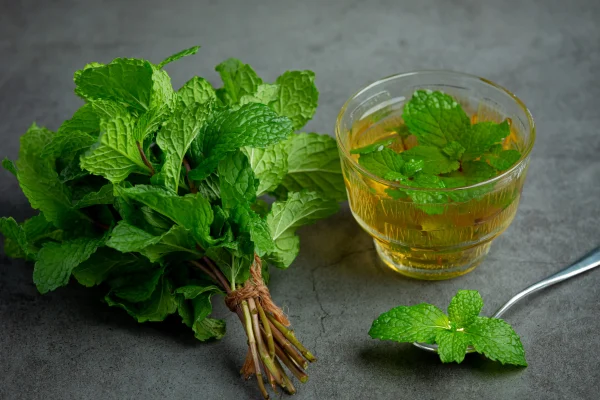
There is a reason mint is the standard, but the synthetic stuff is useless. Real Peppermint (Mentha piperita) contains high levels of menthol. Research in Current Pharmaceutical Biotechnology (PMC3778045) explains that menthol activates the TRPM8 ion channel in cold-sensitive neurons to induce a sensation of cooling that reduces inflammation. Spearmint (Mentha spicata) is the gentler cousin. It is less intense but highly effective against Streptococcus mutans, a primary bacterium responsible for tooth decay.
Clove and Cinnamon
Clove (Syzygium aromaticum) is the heavyweight champion of tooth pain and bacteria. It contains eugenol, a compound that ScienceDirect notes is still widely applied in dentistry, particularly in zinc oxide-eugenol mixtures for endodontic sealers. It numbs tissue and destroys bacterial cell walls on contact. Cinnamon is its perfect partner. It contains cinnamaldehyde, which studies show works cooperatively with clove to break down the sticky biofilm (plaque) that bacteria use to hide from your toothbrush.
Fennel and Parsley
These are your neutralizers. Parsley is packed with chlorophyll, a natural deodorizer that binds to odors and neutralizes them. Fennel seeds have been used in India for centuries as Mukhwas, an after-dinner digestive aid. Chewing fennel seeds mechanically scrubs the teeth and stimulates a rush of saliva, physically washing away the bacteria and acid that cause decay.
Effective Herbal Mouthwash Recipes You Can Make at Home
Store-bought natural rinses can be expensive, but you can make effective versions in your kitchen. Since these water-based herbal mouthwash recipes lack industrial preservatives, you must make them in small batches and keep them in the fridge. They typically last about a week.
Recipe 1: The "Bacteria Buster"
Best for: Morning breath and deep cleaning.
Ingredients: 1 cup filtered water, 1 teaspoon baking soda, 3 drops Tea Tree essential oil, 3 drops Peppermint essential oil.
Why it works: A study in the Journal of Clinical and Diagnostic Research (PMC5773983) found that rinsing with sodium bicarbonate significantly increases salivary pH. This is vital because, as discussed in FEMS Microbiology Letters (ScienceDirect), dental plaque bacteria are not well-adapted to survive in highly alkaline conditions. Tea Tree oil is a broad-spectrum antiseptic that wipes out the stragglers.
Recipe 2: The "Soothing Swish"
Best for: Sore gums and evening maintenance.
Ingredients: 1 cup strong brewed Chamomile tea (cooled), 10 drops Myrrh tincture (alcohol-free if possible).
Why it works: According to a review in Molecular Medicine Reports (PMC12269088), chamomile components like apigenin provide significant anti-inflammatory effects for puffy gums. Myrrh contains furan sesquiterpenes, which act like an astringent to tighten gum tissue and heal micro-abrasions from brushing.
Recipe 3: The "Spicy Fresh"
Best for: Breaking down plaque and long-lasting freshness.
Ingredients: 1 cup boiling water poured over 1 cinnamon stick and 5 whole cloves. Cover and steep until cool. Strain.
Why it works: This infusion extracts the cinnamaldehyde and eugenol gently. It’s a potent biofilm buster that leaves your mouth feeling clinically clean without the burn of alcohol.
Safety First: Using Essential Oils in Dental Herbalism
While Dental Herbalism is natural, it is also powerful. Essential oils are highly concentrated plant medicine, not flavor drops. Safety is paramount. The most important rule involves Tea Tree oil. It is incredible for killing bacteria, but a case report in PubMed highlights that swallowing tea tree oil can lead to toxicity, resulting in ataxia and unresponsiveness.
You must treat these rinses as therapeutic tools, not beverages. Is it safe to swallow homemade herbal mouthwash? Generally, no, especially if it contains essential oils; while ingredients like herbal tea are safe, concentrated oils can cause stomach upset or toxicity and should always be expelled immediately after rinsing.
Always dilute your oils. A safe ratio for oral use is usually less than 1% concentration. If you apply oils directly to your gums, you risk chemical burns. Start with the recipes above, which are diluted for safety, and perform a patch test on your arm if you have sensitive skin or known allergies to specific plants.
How to Integrate Dental Herbalism into Your Routine
You don't need to overhaul your entire life to see results. The best approach is to weave these practices into your existing habits. Start your morning with tongue scraping. This removes the "carpet" of dead cells and mucus where bacteria sleep. Follow that immediately with the "Bacteria Buster" rinse to alkalize your mouth before breakfast.
In the evening, focus on healing. After flossing and brushing, use the "Soothing Swish" to calm your gums while you sleep. How often should I use herbal mouthwash? Most natural water-based rinses are gentle enough for daily use, typically recommended morning and night after brushing to maintain a balanced oral microbiome.
For those wanting to go deeper, consider adding "oil pulling" to your Dental Herbalism routine. This involves swishing a tablespoon of coconut or sesame oil in your mouth for 10–15 minutes before brushing. The oil attracts the lipid (fat) outer layer of bacteria, effectively pulling them out of hiding spots your brush can't reach.
When to See a Dentist
Herbs are incredible, but they cannot fix a broken bone or fill a cavity. Dental Herbalism is a tool for prevention and maintenance, not emergency surgery. If you have persistent bad breath that won't go away despite good hygiene and herbal rinses, it could be a "red flag."
The Cleveland Clinic notes that halitosis can also stem from acid reflux (GERD) or dry mouth, in addition to advanced periodontal disease, where pockets of infection sit deep below the gum line. It can also indicate tonsil stones. Use these herbal methods to upgrade your daily care, but view them as a complement to your professional dental visits, not a replacement. If you feel pain or see bleeding that lasts more than a few days, see a professional.
Embrace the Power of Dental Herbalism Today
You don't have to settle for the cycle of bad breath and sugary mints. Understanding the science behind Dental Herbalism allows you to take control of your oral health. You are swapping harsh chemicals for bioactive compounds like menthol, eugenol, and chlorophyll that work with your body, not against it.
Your mouth is the gateway to your overall health. Treating it with the respect of natural, effective ingredients pays off in confidence and vitality. Pick one of the herbal mouthwash recipes above, perhaps the "Spicy Fresh" infusion, and make a batch this weekend.
Recently Added
Categories
- Arts And Humanities
- Blog
- Business And Management
- Criminology
- Education
- Environment And Conservation
- Farming And Animal Care
- Geopolitics
- Lifestyle And Beauty
- Medicine And Science
- Mental Health
- Nutrition And Diet
- Religion And Spirituality
- Social Care And Health
- Sport And Fitness
- Technology
- Uncategorized
- Videos

