
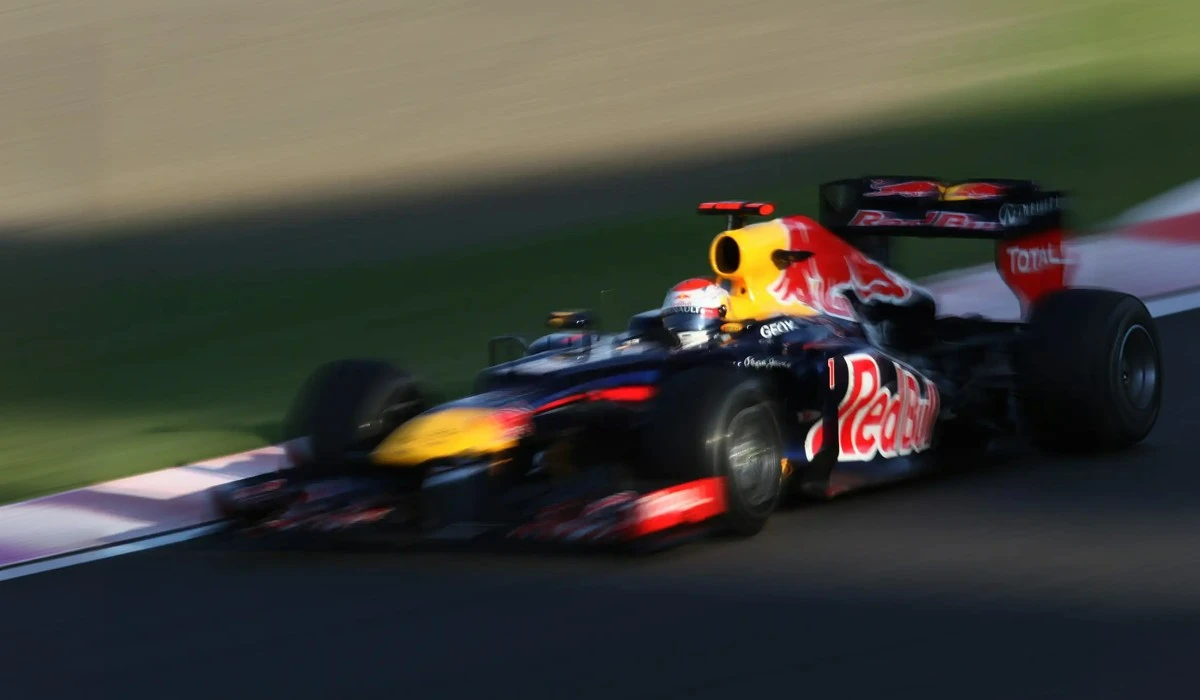
Image Credit - by Takayuki Suzuki from Kanagawa, Japan, CC BY-SA 2.0, via Wikimedia Commons
F1 Car Red Bull 2026: A Bold Move Into Unknown
Building a factory while chasing a title forces a team to prioritize future dominance over current comfort. The Red Bull’s 2026 F1 Car represents a massive shift in how the team approaches the sport. Red Bull finished two points behind Lando Norris last season, losing the title in a very close race. This narrow loss pushed the team to rethink every part of their operation. Now, they face the largest rule shift in over ten years. A report from Formula One Forever indicates that this overhaul changes the car's power delivery and physical scale.
Red Bull revealed their new look in Detroit, showing off a glossy blue and white design. This event marked the start of a period of technical uncertainty. Max Verstappen must now lead the team through a shift into in-house production. The team wants to win, but they must first build their own engines from scratch. Every decision now centers on the first race in Melbourne on March 8. The Red Bull’s 2026 F1 Car will determine if the team can remain at the top without their old partners.
A Visual Reset for a New Phase
A change in color often signals a deeper reset in how a team views its own history. The team chose Detroit, USA, for their livery reveal event on a recent Thursday. They moved away from the matte navy look they used for years. The new Red Bull’s 2026 F1 Car features glossy blue on a white base. This design pays tribute to the team’s 2005 debut appearance. Max Verstappen personally requested a visual update for a long time. He likes the blue color palette and the sleek logo contours.
He believes the modernized appearance gives the team a fresh identity. A report from The Race clarified that the team used a show car at the Detroit launch to display the new colors instead of the physical RB22 racing machine. The real development happens behind the scenes in Milton Keynes. The team focused on nostalgia to connect their past success with their future goals. Verstappen expressed great enthusiasm for this aesthetic change. He feels it represents a new phase for his career and the team.
Controlling the 50/50 Power Split
Equalizing electrical and fuel power forces a driver to think like a computer programmer while cornering. As explained by Formula1.com, the new regulations demand a near-equal ratio between electrical energy and internal combustion. The report notes this 50/50 split changes how the Red Bull’s 2026 F1 Car handles on the track. Drivers must manage involved electrical modes at high speeds. This requires a high level of cognitive bandwidth. Max Verstappen noted that the future scene remains unclear because of these radical powertrain modifications.
He knows he must adapt to a different scale of car and power delivery. What are the new 2026 F1 engine rules? According to technical details on Formula1.com, the regulations mandate a massive increase in electrical power and require teams to harvest more energy during braking and deceleration. This shift makes energy management as important as raw speed. Verstappen prioritizes high lap counts during trials to help his body adjust. He wants to understand the new systems before the first race begins. The team believes his mental capacity will give them a competitive edge.
Building the Future In-House
Starting a development cycle later than rivals creates a state of permanent chase that actually speeds up innovation. A statement on Formula1.com confirms Red Bull is moving away from its partnership with Honda to shift toward in-house power unit production through a strategic partnership with Ford. They are building the Red Bull’s 2026 F1 Car engine in a brand-new facility. Ben Hodgkinson leads this effort after spending 20 years at Mercedes. He brought a wealth of knowledge to the project. The team is constructing the factory and the engine at the same time.
This creates a very tight schedule compared to established manufacturers like Ferrari. Hodgkinson rejects overconfidence and assumes the team currently trails its rivals. He uses this underdog status to fuel faster progress. Is Red Bull building its own engine for 2026? Red Bull Racing announced the formation of Red Bull Powertrains to manufacture their own engines in-house for the first time. They aim for maximum performance despite their newcomer status. Laurent Mekies admitted that the team expects struggles and difficulties in the early months.
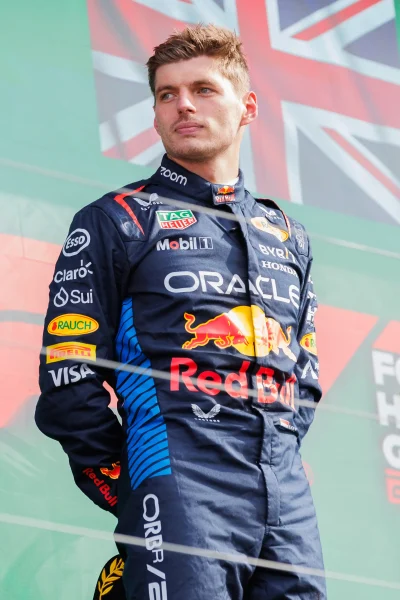
Image Credit - by Steffen Prößdorf, CC BY-SA 4.0 , via Wikimedia Commons
The Psychological Shift of Number Three
Relinquishing the number one plate transforms a champion’s mindset from defensive pride to aggressive hunting. Max Verstappen will use car number 3 on the Red Bull’s 2026 F1 Car. He forfeited the number 1 after Lando Norris won the 2025 Championship. Daniel Ricciardo previously used number 3 at Red Bull, giving the number historical weight within the team. Verstappen feels a high internal drive to reclaim his top position. He views the upcoming phase with eagerness.
This change in car numbers reflects the two-point deficit from the previous season. Why did Max Verstappen change his car number to 3? He chose number 3 because Lando Norris won the title, and Verstappen previously used this number in his early career. The shift reminds the entire team that they are now the challengers. Verstappen wants to turn the frustration of a narrow loss into speed on the track. He sees the new car as his best chance to return to the top. The team supports this aggressive mindset as they head into testing.
Navigating the Thermal Expansion Dispute
Metal expands differently under pressure, turning a basic law of physics into a tool for political influence. A major technical controversy has already emerged before the first race. As reported by The Race, rival teams like Honda have raised concerns about the Red Bull’s 2026 F1 Car engine, specifically pointing to a potential thermal expansion loophole. They accused Red Bull and Mercedes of seeking an unfair advantage through this engineering detail. Ben Hodgkinson dismissed these grievances as basic engineering knowledge.
He stated that regulation clarity is absolute. The team understands how heat affects engine components and plans to use that knowledge legally. This dispute shows how high the stakes are for the new regulations. Every manufacturer looks for a way to slow down their competition. Red Bull remains confident in their personnel and their facilities. They believe their infrastructure meets the industry standard. The team focuses on performance while their rivals focus on the rulebook.
A New Partner in the Garage
Success in a new period depends on a rookie's ability to process data as quickly as a veteran. Red Bull promoted 21-year-old Isack Hadjar to the main team for the 2026 season. He replaces Yuki Tsunoda, who currently does not have a seat. Hadjar comes from the Racing Bulls program and has already shown great promise. He achieved his maiden podium at the Dutch Grand Prix last August. Now, he partners with Max Verstappen to develop the Red Bull’s 2026 F1 Car. Hadjar set a goal to win his first career race as a baseline for the season.
Who is Red Bull's new driver for 2026? Isack Hadjar is the new rookie driver joining Max Verstappen at Red Bull for the upcoming season. Verstappen must now act as a leader for the young driver. The team needs both drivers to provide accurate data during the development phase. Hadjar’s promotion shows that Red Bull still trusts its youth academy. They believe a fresh perspective will help them learn the new rules faster.
The High Stakes of the Exit Clause
Performance benchmarks in a contract act as a countdown clock for a team’s engineering department. Max Verstappen’s future with the team depends on the success of the Red Bull’s 2026 F1 Car. His contract includes a clause that allows him to leave if the car is not competitive. His agent, Raymond Vermeulen, is currently exploring other options based on the car's performance. This puts extreme pressure on Red Bull Powertrains to deliver a winning engine.
The team knows they could lose their star driver if they fail to meet his expectations. Verstappen expressed a preference for the new blue color palette, but he cares more about lap times. He wants to see the team's investment in the Ford partnership pay off. The 2026 season serves as a test of loyalty for the triple world champion. If the car struggles in the early months, the driver market will react immediately. Red Bull must prove they can build a championship-winning machine entirely on their own.
Testing the Limits in Bahrain
Winning the first race depends on how many failures a team can trigger in the desert before the season starts. The team has a strict schedule to prepare the Red Bull’s 2026 F1 Car. Formula 1 confirmed that the team starts with a private shakedown in Barcelona from January 26 to January 30. The schedule also shows the team moves to Bahrain for two blocks of pre-season testing, with the first session taking place from February 11 to February 13 and the second following from February 18 to February 20.
These five days in Bahrain are the most important days of the year. The team must find every flaw in the new 50/50 power unit. Max Verstappen wants to maximize his time in the car during these sessions. He believes high mileage is the only way to prepare for the season opener. The heat of Bahrain will test the engine's cooling and electrical systems to their limits.
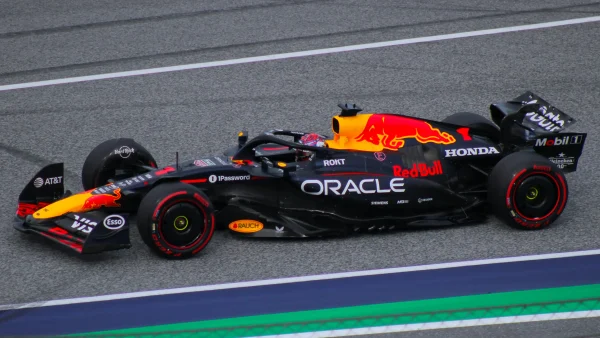
Image Credit - by Lukas Raich, CC BY-SA 4.0, via Wikimedia Commons
The Road to Melbourne
The final move from the drawing board to the track reveals whether a team’s gamble will pay off. All eyes are on the season opener in Melbourne on March 8. The Red Bull’s 2026 F1 Car will finally face its rivals in a competitive race. The team spent years preparing for this moment of radical change. They built a factory, hired new experts, and partnered with a global giant like Ford. They also dealt with technical controversies and internal pressure from their lead driver. Max Verstappen enters the season as a challenger rather than a champion.
He wants to overcome the two-point gap that defined his last season. Isack Hadjar wants to prove he belongs at the front of the grid. The largest rule shift in a decade has arrived, and Red Bull is ready to meet it. They have traded their old stability for a chance to control their own future. The result of this gamble will become clear when the lights go out in Australia.
A New Beginning for Red Bull
The Red Bull’s 2026 F1 Car marks the most important chapter in the team’s history. They have moved from being a customer to being a manufacturer. This change required a massive investment in people and technology. Ben Hodgkinson and his team have built a modern infrastructure to rival the best in the world. Max Verstappen has embraced a new identity with the number 3 and a glossy blue livery. He remains the central figure in the team’s quest to return to the top.
The partnership with Ford adds a new layer of expertise to the engine project. While the path ahead includes technical uncertainty and political disputes, the team remains focused. They have handled the thermal expansion controversy and the pressure of contract clauses with confidence. The tests in Barcelona and Bahrain will provide the final answers before the first race. Red Bull has built a new racing chapter, producing a machine that exceeds the limits of a standard car. The Red Bull’s 2026 F1 Car is their statement to the world that they can win on their own terms.
Recently Added
Categories
- Arts And Humanities
- Blog
- Business And Management
- Criminology
- Education
- Environment And Conservation
- Farming And Animal Care
- Geopolitics
- Lifestyle And Beauty
- Medicine And Science
- Mental Health
- Nutrition And Diet
- Religion And Spirituality
- Social Care And Health
- Sport And Fitness
- Technology
- Uncategorized
- Videos

