
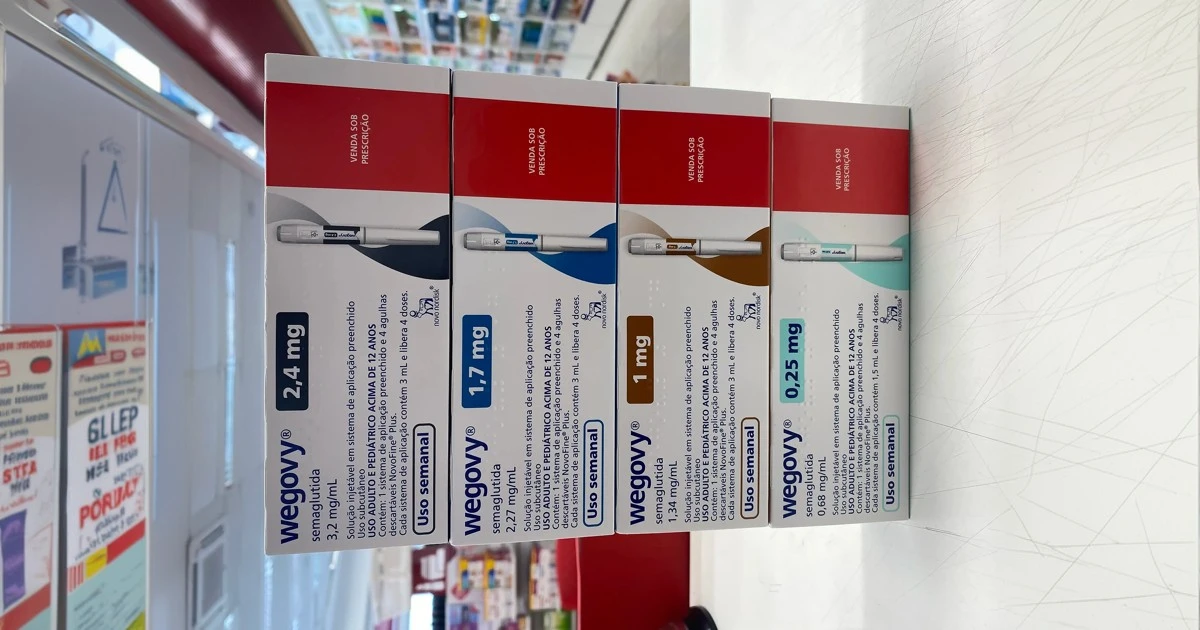
Image by- Nelson R. de Lima Filho, CC BY 4.0
MHRA Approves 7.2mg Wegovy Amid Rebound Trap
Treating obesity with medication operates as a biological lease instead of true ownership of your metabolic health. You pay the rent weekly with an injection, and the body allows you to occupy a smaller frame; stop paying, and the landlord—your original biology—evicts your progress with aggressive speed. The Medicines and Healthcare products Regulatory Agency (MHRA) recently altered the terms of this lease by approving the 7.2mg Wegovy dose for use in the UK. This regulatory shift changes the situation for patients who hit a plateau on lower concentrations.
According to a report by Reuters, the approval introduces a therapy three times stronger than the previous 2.4mg maximum, expanding options for patients and physicians. Clinical trials suggest this escalation forces the body to surrender weight it previously defended, offering hope to millions. However, this potency comes with a catch. Data indicates that while the drug induces rapid loss, the cessation of treatment triggers a biological recoil that outpaces natural diet recovery. The 7.2mg Wegovy dose represents a powerful tool, but it also deepens the dependency between patient and prescription.
The Science of Escalation: Breaking the Plateau
Increasing the chemical signal to the brain forces the appetite centers to surrender, even when they have adapted to lower levels of suppression. The 7.2mg Wegovy dose operates on this principle of overwhelming force. Previous treatments capped out at 2.4mg, a level where many patients eventually saw their weight loss stall as their metabolism adjusted. The new authorization allows physicians to triple that limit, shattering the biological floor that previously halted progress.
Understanding the Step Up Trial Data
As detailed in a Novo Nordisk press release, the MHRA based its decision on the Step Up clinical trial, a randomized 72-week study involving 1,407 adults. The results painted a stark picture of chemical dominance over willpower. Participants on the 7.2mg Wegovy dose achieved an average body weight reduction of 20.7%. In contrast, the placebo group managed only a 2.4% reduction. This massive disparity confirms that for many patients, lifestyle changes alone cannot compete with this level of hormonal intervention.
The Super Responder Phenomenon
A specific subset of patients reacts to this medication with extreme sensitivity, shedding weight at rates typically reserved for bariatric surgery. The trial data revealed that approximately 33% of participants qualified as "Super Responders," achieving weight loss of 25% or more. These individuals possess a specific physiological receptivity to GLP-1 mimicry, allowing the drug to rewrite their metabolic coding more effectively than the general population.
Logistics of the High Dose
Delivering this amount of medication presents a temporary logistical hurdle. While the manufacturer prepares a single-use pen for the 7.2mg Wegovy dose, current patients must administer three separate 2.4mg injections to achieve the prescribed level. This interim solution requires higher patient compliance and increases the physical burden of treatment.
The Rebound Trap: Speed of Regain
Artificial weight suppression creates a vacuum that the body attempts to fill the moment the chemical barrier disappears. The most concerning data point from recent obesity studies involves the horizon of regain. A study summarized by the University of Oxford indicates that patients who stop using these medications face an average time to weight regain of just 20 months. This stands in sharp contrast to the four-year timeline typically observed in cohorts who lose weight through diet and exercise alone.
Why Drug Cessation Accelerates Regain
When you rely on the 7.2mg Wegovy dose to control appetite, the primary behavioral drivers of hunger remain dormant but undefeated. The drug masks these signals instead of retraining them. Once the medication exits the system, hunger returns with compensatory force. Traditional dieters spend years building new habits that offer some structural defense against regain. Drug users often lack this behavioral scaffold, leading to a collapse in progress once the prescription ends.
How long does it take to regain weight after stopping Wegovy?
Research published in The BMJ and highlighted by Oxford suggests the average time to significant weight regain is roughly 20 months, which is significantly faster than the four-year average for diet-only approaches.
Metabolic Metric Reversal
The benefits of the drug extend beyond the scale, but these victories are equally fragile. Improvements in blood pressure, cholesterol levels, and blood sugar regulation degrade rapidly post-drug. The health markers revert to their pre-treatment state, suggesting that the 7.2mg Wegovy dose acts as a continuous physiological crutch instead of a cure. The improvement persists only as long as the treatment continues.
Safety Profile and Biological Friction
Suppressing a primal survival drive like hunger inevitably causes friction within the digestive system. The body resists the command to stop eating, and this resistance manifests as physical symptoms. The safety profile for the 7.2mg Wegovy dose mirrors that of lower doses but maintains consistent risks given the increased potency.
Gastrointestinal Distress
Data published in The Lancet Diabetes & Endocrinology notes that the most common complaints involve the gastrointestinal tract. The FDA prescribing information confirms that this disruption leads to nausea, vomiting, and diarrhea in many users. The medication functions partly by slowing gastric emptying, keeping food in the stomach longer to induce fullness. While these side effects often subside as the body acclimatizes, the initial adjustment period for such a high dose can be severe.

What are the main side effects of the 7.2mg Wegovy dose?
According to clinical data, the primary side effects are gastrointestinal issues like nausea and vomiting, though serious risks like pancreatitis and gall bladder disease also exist.
Serious Medical Risks
Beyond daily discomfort, the drug carries potential for severe complications. Medical literature highlights risks of pancreatitis and gall bladder disease. For patients with pre-existing conditions, these risks require careful monitoring. Furthermore, the FDA label includes warnings regarding diabetic retinopathy; it notes that in some cases, the rapid improvement in blood sugar control can unexpectedly worsen vision problems initially.
Cardiovascular Protection: Beyond the Scale
Weight loss usually serves as the primary goal, but this medication forces the cardiovascular system to improve independently of body mass changes. The MHRA approval includes provisions acknowledging the drug's role in heart health. New permissions allow the treatment for patients with a BMI of 27 or higher who also suffer from established cardiovascular disease.
Reducing Heart Attack and Stroke
Data from a massive trial involving 17,604 participants demonstrated a 20% reduction in major adverse cardiovascular events, including death, heart attack, and stroke. This benefit elevates the 7.2mg Wegovy dose from a cosmetic or metabolic aid to a critical component of cardiac care. Dr. Mihir Sanghvi notes that this is the first obesity medication permitted specifically for heart protection, marking a pivot in how we categorize these treatments.
Nuance in Effectiveness
The drug targets brain receptors to curb hunger while simultaneously promoting insulin release to control sugar. This dual action protects the heart by reducing the systemic inflammation and metabolic strain associated with obesity. However, these benefits rely on consistent usage. The protection is active rather than passive; it requires the continuous presence of the drug in the system to maintain the shield against cardiovascular events.
Market Forces: Pricing and Competition
Pricing strategies in the pharmaceutical industry often mimic biological competition, where the strongest contender forces rivals to adapt or lose territory. The introduction of the 7.2mg Wegovy dose places it in direct conflict with other GLP-1 agonists like Mounjaro. Industry analysts expect the pricing for this high-dose regimen to undercut Mounjaro in the private sector, aggressively positioning it to capture the 3.3 million potential new users projected over the next 12 months.
The Contraceptive Conflict
While Wegovy strengthens its market position, competitors face specific pharmacological hurdles. According to its FDA label, Mounjaro, a key rival, has been shown to interfere with the absorption of oral contraceptives. This interaction forces female patients to use barrier methods to ensure protection against pregnancy. UK clinical guidance clarifies that Wegovy does not share this specific drug interaction, giving it a distinct advantage for women of childbearing age who rely on oral birth control.
Current User Base
The scale of adoption is already massive. Last year, combined usage of Wegovy and Mounjaro hit 1.6 million users. Surveys indicate that 2.9% of total respondents now use some form of GLP-1 medication. A significant portion of this usage—approximately 15%—occurs off-label, meaning patients without a specific license for diabetes or obesity are sourcing the drugs. The arrival of the 7.2mg Wegovy dose will likely expand this authorized user base, pulling more off-label users into official treatment protocols.
Defining the Patient: Who Qualifies?
BMI charts flatten human biology into a single number, often ignoring how ethnicity significantly alters risk thresholds. The new guidelines attempt to correct this by offering nuance in eligibility. While the main approval targets general obesity, the supporting frameworks adjust the criteria for specific ethnic groups.
Ethnicity-Adjusted BMI
For most of the population, eligibility begins at a higher BMI. However, for patients of Asian and Black African descent, the risk of metabolic disease rises at lower body weights. Consequently, the cut-off for these groups drops to a BMI range of 27.5 to 32.5. This adjustment acknowledges that the "standard" healthy weight range is a statistical average that fails to protect all genetic backgrounds equally.
Who is eligible for the 7.2mg Wegovy dose?
Eligibility typically requires a high BMI classification, but thresholds are lower (BMI 27.5+) for Asian and Black African backgrounds due to higher metabolic risks.
The NHS Tier System
Despite the MHRA approval, access through the National Health Service (NHS) remains restricted. Primary care physicians generally cannot prescribe the 7.2mg Wegovy dose directly. Instead, the rollout occurs through specialist services and tiered weight management programs. This bottleneck ensures that only patients with the most severe clinical needs access the drug initially, leaving many to seek private prescriptions.
The Reality of "Lifestyle Essential"
Marketing narratives often frame these drugs as a replacement for diet and exercise, but the biological reality demands a partnership between chemistry and behavior. Support data emphasizes that the drugs require a calorie deficit and exercise to function initially. The medication opens the door, but the patient must still walk through it.
Contradiction in the Narrative
A tension exists between the main article's focus on the drug's standalone power and the supporting advice labeled "Lifestyle Essential." While the 20.7% efficacy figure is impressive, it occurred in a trial setting where participants likely received counseling and diet support. The rapid regain statistics further prove that without a lifestyle foundation, the chemical solution is temporary. The drug fails to fix the environment or habits leading to obesity, merely suspending their consequences.
Manufacturer and Medical Perspectives
Sebnem Avsar Tuna, a manufacturer representative, frames the regulatory nod as a milestone for "treatment customization," emphasizing the need for higher strengths to tailor care. Conversely, Dr. Earim Chaudry views the approval as a critical component of a "national obesity strategy." Both perspectives align on the necessity of the drug but gloss over the long-term discontinuation from the medication.
The High-Stakes Trade-Off
The MHRA approval of the 7.2mg Wegovy dose offers a powerful weapon against obesity, but it is a weapon that must be wielded indefinitely. The data confirms superior efficacy compared to lower doses, with one in three users achieving massive weight loss. Yet, the same data reveals a precarious future for those who stop. The rapid horizon of regain—less than two years compared to four for dieters—suggests that this higher dose creates a deeper physiological reliance. Patients gain control over their weight, but they lose the ability to maintain it independently. For millions of potential users, this is a worthy trade, but it is a trade that should be made with eyes wide open.
Recently Added
Categories
- Arts And Humanities
- Blog
- Business And Management
- Criminology
- Education
- Environment And Conservation
- Farming And Animal Care
- Geopolitics
- Lifestyle And Beauty
- Medicine And Science
- Mental Health
- Nutrition And Diet
- Religion And Spirituality
- Social Care And Health
- Sport And Fitness
- Technology
- Uncategorized
- Videos

