

Church Attendance Rises As Gen Z Men Fill Pews
We assumed the internet would kill religion. Experts predicted that unlimited information would destroy the need for ancient mysteries. That prediction failed because it ignored a basic human craving for limits. When the world offers too many choices, people run back to rules. A generation drowning in freedom is now swimming toward the safety of structure.
This shift reveals a massive crack in the secular world. Society removed community spaces and stripped away clearly defined roles. Young people looked at the empty void left by modern culture and decided to go backward. They seek God, but they also search for a place to stand. The "The Quiet Revival" report from 2024 exposes this change. As reported by the Religion Media Centre, data indicates that 5.8 million people now attend monthly—representing 12 percent of the population—compared to just 3.7 million in 2018. This proves the experts wrong. Gen Z church attendance occurs as a direct reaction to a chaotic, lonely world.
The Numbers Defy the Narrative
We usually treat the decline of religion as a straight line down. Most people believe churches are emptying out and turning into condos. The data reveals a sharp U-turn. Church attendance in England and Wales rose by fifty percent in just six years. This represents a massive shift rather than a small blip. We are talking about 5.8 million monthly attendees in 2024, up from 3.7 million in 2018.
The age breakdown tells a surprising story. You might expect the pews to be filled with the elderly. The 65-plus crowd is still the largest group, but the 18-to-24 age group now holds the second-place spot. This demographic is showing up in numbers that secular society cannot explain. Gen Z church attendance has jumped from 4 percent to 16 percent since 2018. The "death of God" narrative ignores this reality. Young people are walking through church doors while sociologists are still writing their obituaries.
Gen Z Church Attendance Is Fueled by Men
Women usually lead religious revivals, but this wave looks completely different. In almost every previous era, women filled the pews while men stayed home. Today, young men are driving the numbers. According to Christian Daily's summary of the YouGov data, 21 percent of men aged 18 to 24 now attend church monthly, while young women trail behind at 12 percent.
This gender flip changes everything we know about modern faith. The report highlights that while only 4 percent of young men attended in 2018, that figure surged to 21 percent by 2024. Ruth Graham from the NYT suggests these men feel outpaced in education and the workplace. They see the church as a place where traditional hierarchy still exists. They find validation in structures that the modern world calls outdated. The church offers a clear path to status and respect that feels out of reach elsewhere.
The Vacuum Left by Austerity
You can trace the spiritual revival directly to the closure of local libraries and community halls. Government austerity measures over the last decade decimated public spaces. "Third places"—spots that aren't work or home—vanished from British towns. Libraries locked their doors. Community centers ran out of funding. Youth clubs disappeared.
Churches remained open. They became the sole surviving social space in many neighborhoods. When a young person wants to sit somewhere without spending money, the church is often the only option. The community deficit created a practical need for physical gathering. Humans require connection. When the state stops providing space for that connection, religious institutions step in to fill the gap.
How does austerity increase church attendance?
Austerity cuts funding for public spaces like libraries and clubs, leaving churches as the only free, accessible places for community gathering.
This external drive matches an internal one. The last few years brought immense instability. The pandemic disrupted education and socialization for millions. Political chaos makes the future look grim. Young people crave something that doesn't change every news cycle. The church offers continuity. It provides a feeling of permanence in a world that feels like it is constantly falling apart.
The Online Pipeline to the Pews
Conversion now begins with a 15-second algorithm rather than at the altar. Dr. Edward David from King's College notes that social media snippets often spark the initial interest in religion. A user scrolls through TikTok and sees a video about Aquinas or a clip of a Latin Mass. The algorithm takes note. Soon, their feed fills with religious content.
The numbers on social media are staggering. The hashtag #ChristianTikTok has amassed over 25 billion views. These videos package deep theology into bite-sized clips. They make faith look aesthetic and mysterious. A student might not walk into a church building on a whim, but they will watch a video. That video plants a seed. Curiosity grows. Eventually, the digital interest translates into physical attendance.
Why is Christianity trending on TikTok?
Short, aesthetic videos of rituals and theology appeal to young people seeking meaning and identity in a fragmented digital world.
This digital pipeline explains why Bible sales are surging. In the UK, Bible sales hit over 5 million pounds in 2024, nearly double the 2019 figure. In the US, Publishers Weekly notes that a Wall Street Journal report attributes a 22 percent sales jump to rising anxiety and a search for hope. Even non-religious students are getting involved. Reports show that 50 percent of students, regardless of their faith status, express interest in reading the Bible. The phone screen acts as the new church bell, calling a digital generation to an analog tradition.
A Shift Toward Ancient Rituals
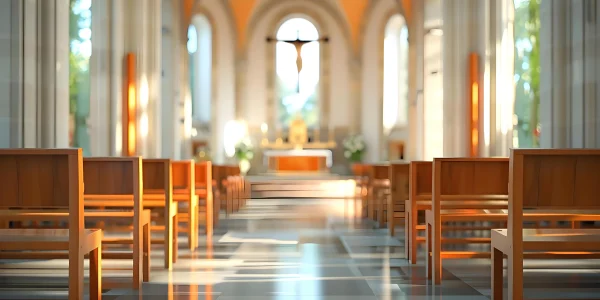
Young people bypass cool, modern churches with rock bands in favor of the smell of incense and old Latin. A strange trend is emerging within the data. Gen Z is bypassing the approachable, modern Anglican church. They are heading straight for the rigid, traditional structure of Roman Catholicism.
The numbers confirm this preference. Among young adults aged 18 to 34, 41 percent identify as Catholic. Only 20 percent choose Anglicanism. The overall market share reflects this too. Anglicanism has dropped to 34 percent, while Catholicism sits at 31 percent and is rising. The gap is closing fast.
This rejection of "modern" religion connects to a rejection of "cool atheism." In the early 2000s, figures like Richard Dawkins made atheism seem intellectual and rebellious. To Gen Z, that version of atheism feels empty and unchallenging. Holly Baines, a Gen Z commentator, argues that secularism promised freedom but delivered a divided culture. Young people hunger for truth rather than a simple social club. They want a faith that demands something from them. They prefer the high demands of Catholicism over the flexible nature of modern Protestantism.
The Darker Side of the Gen Z Church Attendance Spike
A portion of this growth comes from young men looking for permission to be rigid rather than righteous. We cannot ignore the influence of the "manosphere" on these numbers. Online figures like Tristan Tate and Andrew Tate heavily promote a specific brand of Christianity. They use faith to validate traditional gender roles and hierarchical power.
Tristan Tate credits his conversion to the piety he saw in Romania. He adopted an anti-abortion stance immediately after converting. For some young men, the church serves as a means to find a divine stamp of approval for their lifestyle rather than humility. They see the church as a bastion against progressive values. Radicalization experts warn that some misogynistic online spaces mask alt-right views as "Christian values." These converts often look for an argument against modern gender equality instead of salvation.
Is the rise in church attendance linked to radicalization?
Yes, experts warn that some online influencers use Christian aesthetics to promote misogynistic and alt-right ideologies to young men.
This complicates the narrative. The main article might fear this influence, but the reality is mixed. While some are drawn in by the Tates of the world, others find genuine community. The church creates a space where different motivations collide. A young man might enter because of an online video about "tradition," but he sits next to someone seeking genuine spiritual peace.
Mental Health and the Search for Surrender
Constant autonomy creates exhaustion, making submission to a higher power feel like a relief. The mental health crisis among the youth is undeniable. Suicide rates for children aged 10 to 14 rose 167 percent between 2010 and 2015. A recent global review paper found that the incidence of anxiety disorders among those aged 10 to 24 increased by 52 percent between 1990 and 2021. This generation is anxious, depressed, and tired of being in charge of their own destiny.
Harry Clark, winner of "The Traitors," describes faith as a remedy for feeling lost. He finds comfort in the idea of divine omniscience. He believes a deity understands his personal struggles better than he does. This act of surrender lifts the weight off his shoulders. Lizzie, another interviewee, echoes this. She says anxiety fades when she surrenders to a higher power. Unconditional love reduces her mental burden.
Supporting studies from Oxford and Swansea back this up. They cite faith as an antidote to anxiety. The main narrative might focus on politics, but the personal experience is often about peace. In a world that demands you constantly curate your own identity, the church says you are already known. That offer is incredibly attractive to a stressed-out generation. Gen Z church attendance provides a mental break from the pressure of self-creation.
Beyond Sunday Service
Belief translates to action more than secular peers realize. Coverage by Christian Daily on the Bible Society report highlights a strong link between church membership and social contribution. It notes that churchgoers are significantly more likely to volunteer, donate to food banks, and support charitable causes than non-members. This contradicts the idea that these new converts are only interested in selfish salvation or political posturing.
The data shows high rates of charity work among young churchgoers. They are active in their communities. They vote. They engage. While some motivations might be questionable, the output often benefits society. The "Quiet Revival" creates a workforce for social good while filling seats. Helen Coffey, an investigator, noted that congregations are shifting from elderly groups to diverse spectrums of people. Toddlers and teenagers are visible in the pews. This diversity brings energy back to community service.
What Modernity Forgot
The experts expected religion to fade away, but they missed the core human need for belonging. Gen Z church attendance proves that secular society failed to provide a compelling alternative to faith. Young men are returning to the pews because the outside world offers chaos, while the church offers order.
This revival is complex. It mixes genuine spiritual hunger with a reaction against modern culture. It includes those seeking mental peace and those seeking political validation. But the result is undeniable. The doors are open, and a generation is walking through them. They are leaving the digital void to find something real, solid, and ancient. The quiet revival is the loudest signal yet that the modern world left something important behind.
Recently Added
Categories
- Arts And Humanities
- Blog
- Business And Management
- Criminology
- Education
- Environment And Conservation
- Farming And Animal Care
- Geopolitics
- Lifestyle And Beauty
- Medicine And Science
- Mental Health
- Nutrition And Diet
- Religion And Spirituality
- Social Care And Health
- Sport And Fitness
- Technology
- Uncategorized
- Videos

