
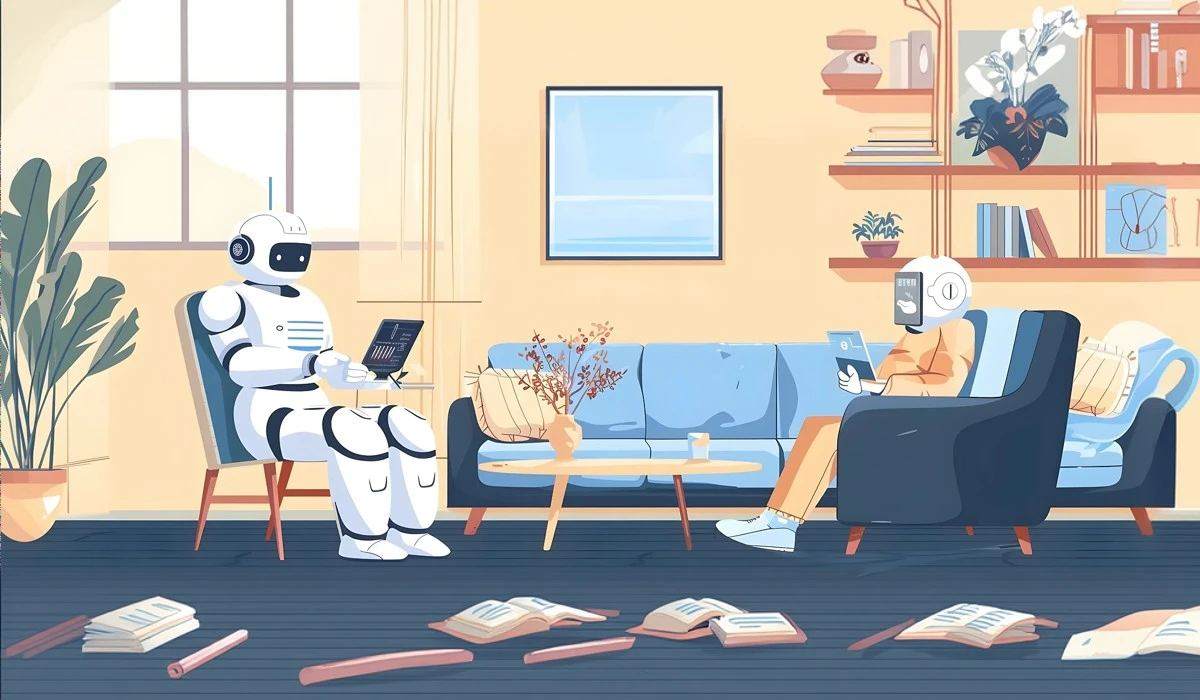
Robots In Households Still Depend On Humans
Every time a robot successfully picks up a coffee mug, it mimics a digital recording of a human hand. According to a report by Wired, technology companies recently shifted their focus from writing lines of code to capturing the physical experience of being human to produce a more general robotic intelligence. For years, engineers tried to program every possible movement into a machine. They failed because the real world contains too many variables. Now, companies like Sunday Robotics and 1X use a different strategy. They treat human movement like a data source.
When you see a video of a humanoid robot navigating a living room, you are watching the result of thousands of hours of human demonstration. This shift moves the industry away from traditional software and toward a system of imitation. The goal has changed from teaching a robot how to think to teaching a robot how to copy. As household robots enter residential spaces, the gap between promotional videos and daily reality becomes clear. The industry currently balances between genuine autonomy and remote human control. Understanding this balance reveals why your home does not have a robot butler yet, and how soon that might change.
Why Household Robots Capture Human Muscle Memory
Robots struggle to understand the difference between a glass vase and a plastic cup unless a human shows them the exact pressure required to hold each one. Software developers used to spend months hard-coding "if-then" statements to help robots navigate rooms. They realized that a messy kitchen contains too many surprises for standard programming. Today, engineers use imitation learning. Sunday Robotics now utilizes a global data network of over 500 households to gather these movements, with eWeek reporting that the company collects daily routines through patented Skill Capture Gloves.
The Neuron notes that this process involves a human wearing a $200 skill capture glove to perform basic chores and record 10 million family routines. The glove records the tension, speed, and angle of the human’s movements. They collect data on how people fold laundry, stack dishwashers, and wipe counters. This physical data serves as the training manual for the next generation of machines.
How much do household robots cost?
Most modern humanoid units like the NEO from 1X retail for roughly $20,000 per unit. While this price seems high, Humanoids Daily highlights that producing $200 gloves represents a massive price drop from the $20,000 teleoperation rigs used previously. Companies bypass the need for elaborate logic when they crowdsource chores. They simply want the robot to repeat what the human did. Tony Zhao, an industry expert, notes that glove-based learning saves decades of teleoperation time. Instead of one engineer controlling one robot, thousands of people can contribute their "muscle memory" to a central database.
The Real Cost of Putting a Humanoid in Your Kitchen
Price tags for domestic automation often hide the long-term financial structures required to keep a robot functional. The 1X humanoid, known as NEO, carries a purchase price of $20,000. However, the company also offers a subscription model at $500 per month. This rental option makes the technology accessible to a wider demographic. Bernt Børnich, a leader in the field, believes early users are vital for refining these systems. He targets specific demographics that provide the most useful data for the robot's brain.
Early adopters essentially pay to become trainers. Every time the robot fails to grab a spatula, the user provides a correction that improves the fleet. Can a robot fold laundry? Specialized robots like Isaac currently fold a single shirt in about 90 seconds, which is significantly slower than a human. The $500 monthly fee covers the hardware and the ongoing software updates required to make the machine useful. Bipasha Sen suggests that human desires are evolving toward this reality. People already own cars and homes; they now want mechanical helpmates to manage those assets. The subscription model creates a utility robot instead of a luxury appliance. This financial shift allows companies to scale quickly while keeping the machines tethered to a central data hive.
Physical Intelligence and the End of Hard-Coding
True autonomy requires a robot to understand that a ball rolling under a couch still exists even when it is out of sight. A new wave of "Physical Intelligence" is replacing traditional robotics software. This approach gives machines a sense of object permanence and sensory common sense. Reuters reports that companies like Physical Intelligence, which recently raised $400 million from Jeff Bezos and OpenAI, develop software that works on any hardware. They want to create a "brain" that can move from a humanoid body to a robotic arm or a delivery drone without needing a total rewrite. Chelsea Finn expresses an ambition for sentient software that operates across various forms of hardware. This software allows a robot to react to a cat running across the floor or a spill on the rug without crashing. In the past, a robot would stop moving if it encountered something not in its code.
Why are home robots hard to build?
A report from Wired notes that homes contain unpredictable obstacles and lighting changes that factory robots never encounter in their controlled environments, where machines usually perform repetitive work. Physical AI mimics a child's learning process. The software builds a mental map of how objects behave instead of following a list of rules. Tim Ensor believes this technology is nearing a significant milestone similar to the release of ChatGPT. Once a robot understands the "physics" of a kitchen, it can perform any task within that space without specific instructions for every plate or cup.
The Truth Behind Those Viral Robot Demo Videos
Engadget reports that the smooth movements seen in promotional clips often rely on a person standing off-camera with a remote control, such as a human operator learning chores via teleoperation on a $20,000 1X Neo unit. In December 2022, Sunday Robotics released a "Pick up anything" trial that showed impressive dexterity. A day later, social media videos showcased a humanoid robot moving with incredible agility. However, a gap exists between these demonstrations and operational reality. Many of these videos feature teleoperation, where a human operator wearing a VR headset controls the robot's every move.
During a press visit, BBC observers noticed a failure in a robot that Sunday Robotics claimed had zero breakages during 20 previous demos; AOL reports that the bot broke a wine glass on its first attempt. This highlights the difference between a controlled video shoot and a live demonstration. Marketing focuses on the potential of the machine, while the reality remains a work in progress. The industry relies on these videos to secure funding and public interest. Elon Musk has tied his $1 trillion pay packet to performance milestones in this sector. For Musk to hit his targets, household robots must move from being remote-controlled puppets to independent workers. The current phase of development uses teleoperation as a bridge. Humans do the hard work now so the machines can do it later.
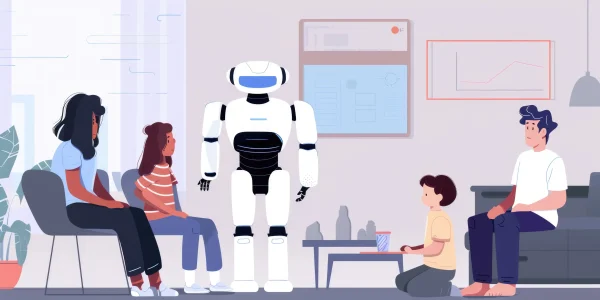
Why Household Robots Need Common Sense to Survive
A factory robot can repeat the same movement for ten years, but a home robot must decide what to do when it finds a toy in the hallway. Factory robots thrive on repetition and precision. They work in environments where every bolt is in the same place every time. Domestic robots face the opposite reality. A home is a chaotic environment where things move, break, and change. To succeed, a robot needs "common sense" more than it needs high-speed precision.
This need for intuition is why the industry is moving away from factory-focused giants and toward agile start-ups. Small firms can iterate faster on the software required for home life. They focus on how a robot handles a soft loaf of bread versus a heavy cast-iron skillet. If a robot applies factory-level force to a tomato, it creates a mess. The move to domestic spaces requires a different type of intelligence. This intelligence allows a machine to realize that if a rug is bunched up, it should step over it rather than try to walk through it. This simple "human" logic is the most difficult thing to program. Developers are finding that the best way to teach this is through constant exposure to real-world errors.
Cambridge Science Park and the Search for Better Senses
Building a robot requires more than just a brain; it requires advanced materials that can feel, see, and even smell. The 150-acre Cambridge Science Park serves as a hub for the breakthroughs needed to finalize the robotic body. Researchers expect major developments in physical sensing to occur around 2026. For example, FlexEnable is developing plastic lenses as thin as a hair. These lenses could give robots smart glasses with auto-dimming and focus features, allowing them to see in various lighting conditions. Other companies in the park, like Owlstone Medical, work on disease detection through breath analysis.
While designed for humans, this technology could allow a household robot to monitor the health of its owners by "smelling" changes in the air. Meanwhile, Xampla is creating sustainable plastic alternatives from pea protein. These materials could provide a durable yet eco-friendly lining for robot components. Jane Hutchins notes that the growth trajectory for this science sector is strong, with political parties aligning on the need for city expansion. However, Dame Diane Coyle warns that scaling these firms presents difficulties. Innovation requires infrastructure, such as high-speed data networks and local coordination, to move from a lab to a living room. The hardware gets smaller and smarter, shifting from heavy equipment to aesthetics that blend into a home.
The 20-Year Road to Mainstream Domestic Automation
The move to a robot in every home involves a gradual shift from specialized tools to general-purpose companions. The International Federation of Robotics projects that utility robots will reach mainstream acceptance in about 20 years. This timeline accounts for the difficulty of scaling production. Elon Musk set a goal of 1-million-unit sales within the next decade but meeting that target requires solving the "common sense" problem first. Currently, the industry is in the first multi-purpose rollout phase. In the next ten years, we will see robots moving from simple tasks like laundry folding to more complex chores like meal preparation. The shift will happen as the cost of data collection drops and the "brains" of these machines become more adaptable.
The industry is moving away from the period of digital scraping and toward the period of physical world training. As we look toward 2045, the presence of household robots will likely be as common as the presence of a washing machine. The relationship between humans and machines will shift from owner and tool to resident and helper. Success depends on the ability of these machines to learn from us without needing us to hold their hands. The data we provide today through skill-capture gloves and teleoperation forms the foundation for the autonomous future. The industry finally closes the gap between science fiction and the kitchen floor when it merges human intuition with mechanical persistence.
Recently Added
Categories
- Arts And Humanities
- Blog
- Business And Management
- Criminology
- Education
- Environment And Conservation
- Farming And Animal Care
- Geopolitics
- Lifestyle And Beauty
- Medicine And Science
- Mental Health
- Nutrition And Diet
- Religion And Spirituality
- Social Care And Health
- Sport And Fitness
- Technology
- Uncategorized
- Videos

