
Running Shoes Robot Revolution Worth 16bn
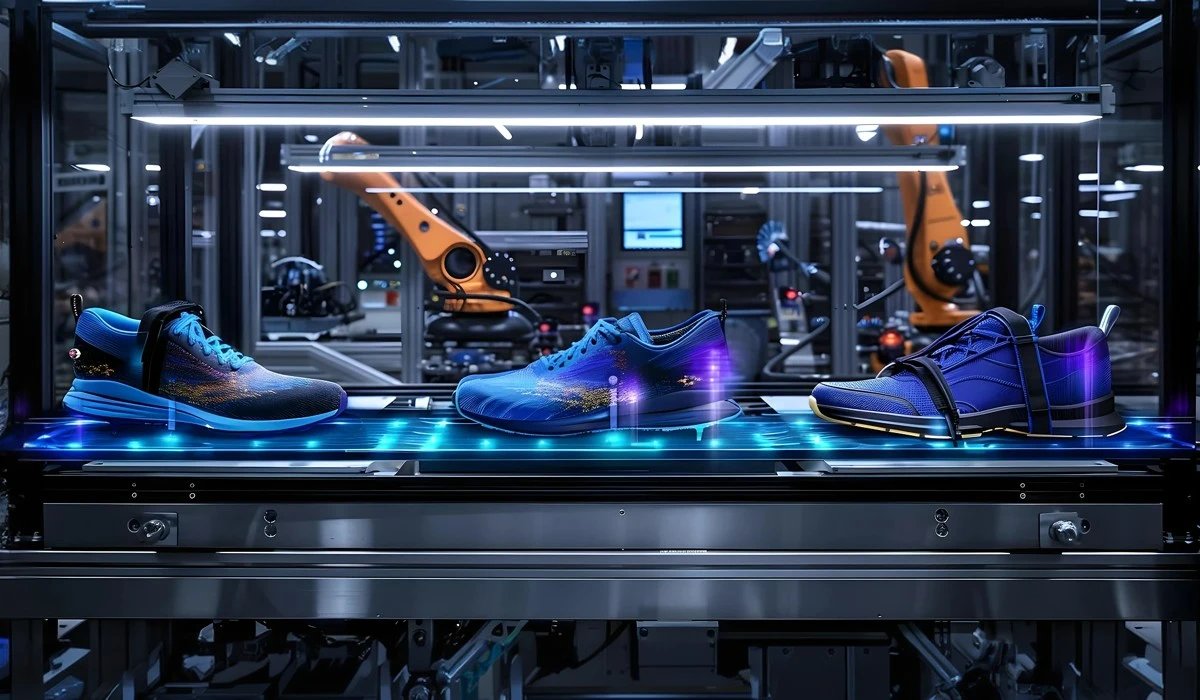
Legacy brands usually spend decades building their reputation before they challenge the kings of the industry. On, a Swiss newcomer, bypassed that slow climb by gluing garden hoses to the bottom of sneakers. This strange experiment survived and then exploded into a $16 billion valuation that terrifies the establishment. The founders ignored the standard playbook of celebrity endorsements and massive ad spends. They focused entirely on a weird, physical sensation under your feet. Now, with On running shoes taking over city streets, the company is replacing sweatshop assembly lines with robots that spray shoes into existence in three minutes. This represents more than a fashion trend. It is a radical rewrite of how we make, buy, and think about footwear.
The Numbers Behind the Takeover
Financial success usually follows a predictable curve, but this company skipped the slow climb and jumped straight to the heavyweights.
The math suggests that Nike and Adidas should not worry about a newcomer with only 1% of the global market share. That safety is an illusion. A World Economic Forum profile notes that in specific European sectors, On running shoes command significant market shares, reaching 40% in Switzerland and 10% in Germany. They hit a $16 billion valuation faster than almost anyone expected. When they listed on the NYSE in 2021, they raised $750 million instantly. According to The Guardian, the founders cashed out about $120 million during the IPO, but they didn't stop there.
They project revenue will hit roughly £2.8 billion (3 billion Swiss Francs) by 2026. This rapid ascent creates a real threat to the old guard. They target sales of 30 million pairs in the near future. People often wonder, how much is On running worth? The company currently boasts a market capitalization of roughly $16 billion. This valuation reflects their aggressive growth strategy and premium positioning in the market.
From Garden Hoses to Global Status
Great engineering often looks ridiculous until it proves everyone wrong on the track. Innovation starts with messy experiments. In 2010, the founders—David Allemann, Caspar Coppetti, and Olivier Bernhard—cut up garden hoses and glued them to shoe soles to see what would happen. They wanted shock protection without losing speed. This crude prototype evolved into "CloudTec," the squishy pods that define the brand's look. It looked weird, but it worked. Co-founder David Allemann admits they focus on "enduring novelty" rather than quick trends. They prioritize invention over safety. This refusal to look "normal" became their biggest asset. While other brands chased sleek, minimal designs, On leaned into the technical, bumpy aesthetic. It signaled to runners that something different was happening under their feet.
The Spider-Web Technology
Optimization usually means cutting corners, yet here it means mimicking nature’s most sophisticated designs.
A student named Johannes Voelchert noticed how hot glue formed strings when he pulled a trigger at a design fair. That small observation led to the LightSpray technology that now defines the brand’s future. He saw a spider-web pattern and wondered if it could hold a foot. On brought him in and funded the idea for a year to see if it had legs. The result is a shoe upper made from a single 1.5-kilometer thermoplastic filament. Industry coverage from Reflawn describes how a robot sprays the material onto a helix-patterned mold. There are no seams to rub against your skin. There is no glue weighing you down. The shoe feels like a second skin because it essentially is one. Consumers ask, what is LightSpray technology? It is a robotic process that sprays a single filament to create a seamless shoe upper in minutes.
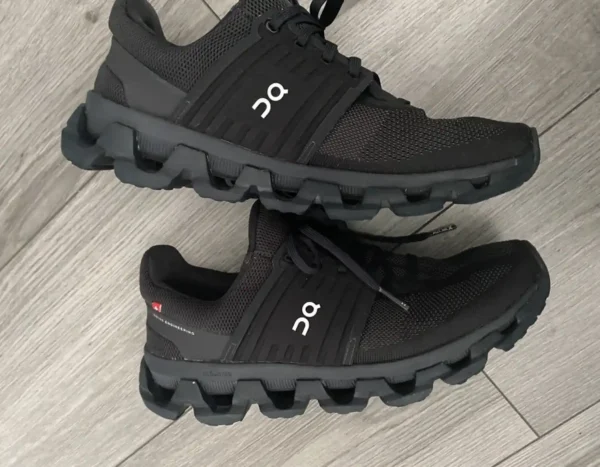
Image Credit - by Goodreg3, CC BY-SA 4.0, via Wikimedia Commons
Robots Replacing Assembly Lines
Traditional manufacturing relies on cheap labor and long shipping routes, while local automation changes the economic map.
Most sneakers take a trip around the world before they reach your door. On running shoes are bringing the factory closer to the customer. Their new facility in Zurich uses robots to build uppers in just three minutes. Reports from Outside Online indicate that a standard shoe requires nearly 200 steps and 30 components, whereas the LightSpray method uses only seven components and one step. This speed allows them to react to trends instantly. It also cuts carbon emissions by 75% because they don't ship parts across oceans. The Zurich lab opened in July 2025 with four robots, but the plan is to scale. While humans still outnumber robots in the lab, the shift toward automation is undeniable. This localization strategy reduces waste and proves that high-performance gear does not need a heavy carbon footprint.
Validated by Olympic Metal
Marketing claims crumble under pressure; gold medals provide proof that no slogan can match.
A weird shoe must perform, or athletes will reject it. The Guardian reports that Hellen Obiri proved the tech works on the world's hardest stages. She won the Boston and NYC Marathons wearing the Cloudboom Strike LS, and the publication notes she even took bronze at the Paris Olympics. Other runners like Olli Hoare and Luke McCann use them too. The design weighs only 170 grams for men and 158 grams for women. It eliminates distractions. The upper alone weighs just 30 grams. This elite validation trickles down to casual joggers who want that same speed. Innovation Lead Hullegie describes the fit as "glove-like." When a shoe disappears on your foot, you run faster.
Strategy Built on Risk
Corporate stability typically kills creativity, but this brand enforces a culture where safety is the enemy.
Comparison to Apple or Dyson is intentional. On combines high-end tech with bold marketing, or "chutzpah." The culture encourages "unmapped risk-taking." Allemann describes it as an "explorer spirit" where teams have permission to get lost. They go beyond selling shoes to build social catalysts. Their stores in London and soon Los Angeles act as community hubs. This approach keeps them agile while giants like Nike struggle to pivot. They treat physical retail as a place for community formation, not just transactions. This mindset attracts a demographic ranging from late teens to 30s who want to belong to a "village" of disruptors.
Future Targets and Friction
Rapid expansion exposes cracks in the foundation that even the best engineering cannot hide.
Growth brings scrutiny. As they expand retail into Kensington and aim for the 2028 LA Olympics, they face legal hurdles. A class-action lawsuit claims the CloudTec soles squeak on hard surfaces. It is a growing pain for a brand priced between £120 and £495, according to retail listings. They position themselves as premium, so defects matter more. Outside Online notes the Cloudboom Strike LS sits at a steep £310. Buyers expect perfection at that price point. Despite the friction, the company presses forward. They aim to open accessible versions of the LightSpray tech to the public soon. Buyers want to know, are On shoes expensive? Yes, they fit a premium price range between £120 and £495 depending on the model.
The Shift to Speed
The industry is watching a Swiss underdog rewrite the rules. On running shoes moved from glued hoses to robotic webs in just over a decade. They proved that performance and sustainability can coexist if you abandon traditional methods. The 3-minute LightSpray production line makes the old 200-step process look ancient. Speed and innovation define the new standard. The giants must adapt or get left in the dust.
Recently Added
Categories
- Arts And Humanities
- Blog
- Business And Management
- Criminology
- Education
- Environment And Conservation
- Farming And Animal Care
- Geopolitics
- Lifestyle And Beauty
- Medicine And Science
- Mental Health
- Nutrition And Diet
- Religion And Spirituality
- Social Care And Health
- Sport And Fitness
- Technology
- Uncategorized
- Videos

