
Accelerated Learning Builds A Sharp Memory
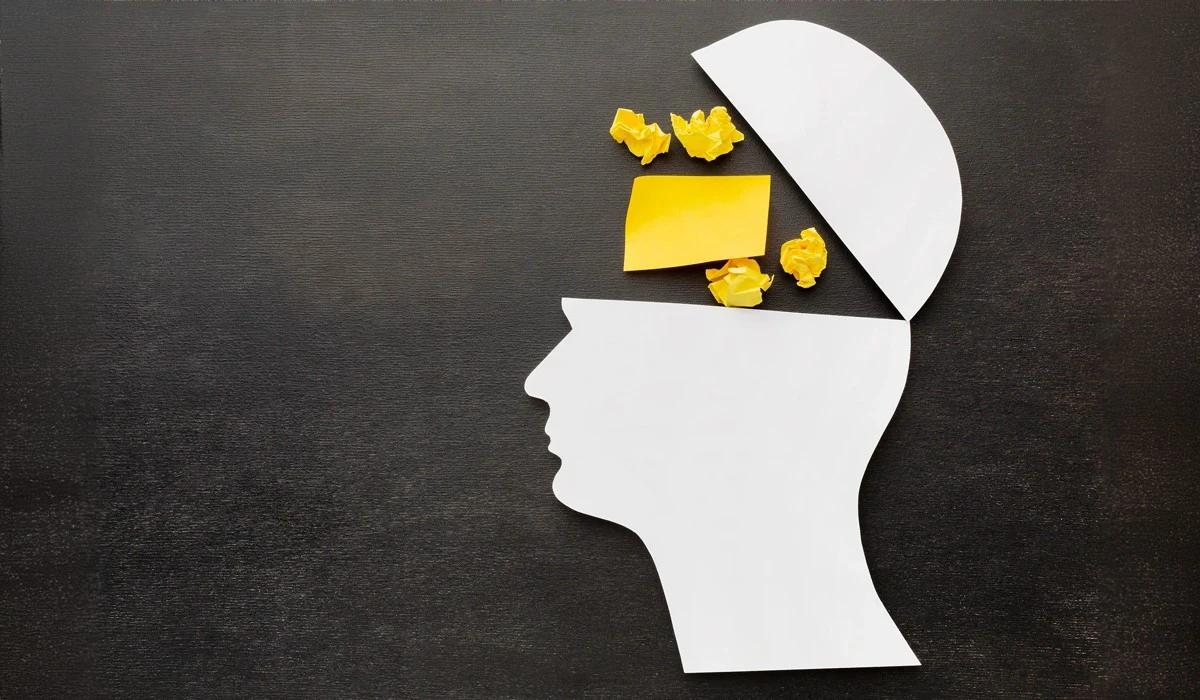
Every time you close a book, your brain starts a countdown to delete your progress. Within sixty minutes, half of those new facts vanish. Seventy percent of your effort disappears before the next morning. You spend hours building knowledge only to watch the tide wash it away. While many people attribute forgetfulness to a "bad memory," the issue is actually the way the brain is fed. You can stop this cycle. Accelerated Learning changes the rules through alignment with your brain's natural sorting process. This approach ensures that instead of treating your mind like a bucket, you treat it like a web. This method turns you into an active participant in your own cognitive growth.
Why Traditional Study Fails and How Accelerated Learning Fixes It
Traditional education relies on passive consumption. Students sit, listen, and highlight text. This approach ignores how the human brain actually prioritizes data. In 1885, psychologist Hermann Ebbinghaus found the "Forgetting Curve." According to his research, humans lose the majority of new information within 24 hours without immediate reinforcement. Accelerated Learning solves this through immediate engagement with data.
The Myth of Rote Memorization
Repeating facts in a vacuum offers the lowest return on your time. Rote memorization treats information as isolated islands. Without a bridge to what you already know, your brain classifies the data as "trash" and clears it during sleep. This "linear" approach fails as the brain relies on associations rather than repetition. Dr. Georgi Lozanov proved this in 1966 when he established the Research Institute of Suggestology. He found that traditional, high-stress memorization actually blocks the brain's ability to absorb data.
The Role of Cognitive Engagement
High-speed acquisition requires you to manipulate information. You must touch, change, and question the facts as they enter your mind. How can I learn things faster and remember them better? The most productive way is to switch from passive consumption to active retrieval, where you force your brain to reconstruct the information rather than just re-reading it. This process creates physical changes in your head. Donald Hebb’s 1949 "Hebbian Theory" explains that "neurons that fire together, wire together." As noted by Hebb, active engagement increases the density of these synaptic connections.
Perfect Your Environment with the Encoding Specificity Principle
Your surroundings act as a hard drive for your memories. Most people think their brain holds information in a central vault. In reality, your memory scatters parts of that information into the environment where you first learned it. Matching your study environment to your performance environment allows you to use Accelerated Learning to your advantage.
Matching Learning Context to Retrieval Context
Endel Tulving and Donald Thomson defined the encoding specificity principle in 1973. They proved that your ability to remember depends on "cues" present during the learning phase. If those cues go missing during the test, the memory remains locked. A famous 1975 study by Godden and Baddeley tracked scuba divers. According to their results, divers who learned word lists underwater recalled them 40% better while submerged than they did on land. The water served as a retrieval cue. You should study in a place that mimics the room where you will eventually use the knowledge.
State-Dependent Learning
Your internal world also stores memory cues. Research by James Eric Eich in 1975 demonstrated that your physical state—like your caffeine levels or mood—becomes part of the memory trace. As noted in his study, he used a state-dependent learning model where subjects encoded and recalled conceptual lists. This implies that if you drink coffee while studying, you will likely recall that information better if you have caffeine in your system during the exam. Meanwhile, as reported in research by Rachel Herz, smells provide significant emotional cues. Her findings on odor-evoked memories showed they were consistently more emotional than other types of recall. The use of a specific scent while learning and then smelling it again during a big project can initiate faster, more vivid recall.
Strengthening Neural Links via Elaborative Rehearsal
Context gets the information into your head, but connection keeps it there. You must tie new data to old memories to make them permanent. This process builds a dense network of meaning that resists the forgetting curve.
Building Bridges to Existing Knowledge
The most durable memories result from "deep" processing. In 1972, Fergus Craik and Robert Lockhart developed the "Levels of Processing" framework. They argued that the more you think about the meaning of a fact, the deeper it sinks into your long-term storage. This is an elaborate rehearsal. Instead of saying a phone number ten times, you might notice that the digits match the year your brother was born. You are building a bridge from the unknown to the known. Craik and Tulving’s 1975 study showed that this semantic processing leads to significantly higher recall than just looking at the shape of words.
The Power of Analogy and Metaphor
Your brain loves vivid, strange images. Allan Paivio’s 1971 "Dual-Coding Theory" suggests the brain has two systems: one for words and one for images. According to research published by Paivio and Clark, when you use a metaphor, you activate both verbal and non-verbal systems because these codes function independently. This creates two separate paths to the same memory, which the study suggests produces an additive effect on your ability to recall information. What is an example of elaborative rehearsal? Visualizing a literal power plant inside a microscopic room helps you learn that "mitochondria are the powerhouse of the cell," thereby linking a new biological concept to a familiar industrial image. This creates two separate paths to the same memory. If you forget the word, you might still remember the image of the power plant.
Strategic Feedback Loops in Accelerated Learning
You cannot improve what you do not measure. Feedback loops provide the friction necessary to sharpen your mind. High-level learners use constant testing to find their "knowledge gaps" before they become a problem in the real world.
The Feynman Technique for Mental Clarity
Nobel physicist Richard Feynman created a four-step method to ensure deep understanding. First, you pick a concept. Second, you explain it as if you were talking to a six-year-old. This forces the use of plain language. Third, you identify the parts of your explanation that felt shaky. Fourth, you go back to the source material to fix those gaps. This technique turns Accelerated Learning into a search-and-destroy mission for confusion. It prevents you from hiding behind complicated jargon that you don't actually understand.
Immediate Correction vs. Delayed Review
Timing your feedback changes how well you retain skills. Research from Zemke in 1995 showed that AL techniques reduce training time by 50% because learners receive immediate feedback. Ironically, waiting too long to check your answers allows the brain to "save" the wrong information. You want to hit the "sweet spot" of difficulty. If a task is too easy, you learn nothing. If it is too hard, you quit. You need enough struggle to activate neuroplasticity, but enough success to keep going.
Designing a Sustainable Daily Routine for Accelerated Learning
Productive learning is a marathon of short sprints. You should organize your day to maximize how your brain saves and sorts information. This requires moving away from "massed practice"—the habit of studying one thing for five hours straight.
Interleaving and Spaced Repetition
Mixing different topics together actually improves long-term results. Doug Rohrer’s 2012 research on "interleaving" showed that students who jumped between different types of math problems outperformed those who practiced one type at a time. In a classroom-based experiment, researchers concluded that interleaving improves math learning through improved discrimination between problem types and strengthened associations between problems and their strategies. In a review of the data, Rohrer reported that students using interleaving scored 77% on a test one day later, compared to only 38% for those using standard methods.
The same review highlighted that the interleaved group outscored the blocked-spaced group on the final test, achieving a 68% success rate over the 61% seen in the control group. Combine this with the Pareto Principle. Focus on the 20% of core concepts that provide 80% of the value. Then, use a spaced repetition schedule—reviewing at 1, 3, 7, and 30-day intervals allows you to interrupt the forgetting curve at its weakest point.
Sleep and the Consolidation Phase

Learning continues after you close your eyes. While you are awake, your hippocampus holds temporary files. According to research on sleep and memory consolidation published in PubMed Central, this process occurs primarily while you rest. During REM sleep, your brain "replays" the day's lessons by reverberating activity patterns and propagating them into the neocortical areas. The research also suggests that REM sleep is particularly relevant for the consolidation of procedural and other non-declarative memory types as they move to the long-term neocortex. Skipping sleep is like hitting "delete" on the last eight hours of work.
Measuring the Success of Your Accelerated Learning
You must distinguish between feeling smart and actually being smart. Many people fall into the trap of "fluency," where they think they know a topic because it looks familiar.
Indicators of Deep Fluency
True high-level performance is evidenced by recall rather than recognition. Recognition is seeing a term in a multiple-choice list and knowing it is correct. Recall is producing that information from a blank slate. Accelerated Learning aims for recall. You know you have succeeded when you can use the information in a new context or explain it to a stranger without looking at your notes. This indicates that the elaborative rehearsal has successfully woven the data into your permanent mental environment.
Avoiding the Illusion of Competence
Re-reading your notes creates a false sense of security. It feels easy, so you think you are learning. In reality, ease is the enemy of retention. You need the friction of "active retrieval" to make progress. If your brain has to work hard to remember a fact, it marks that fact as important. The struggle itself is the signal to your brain to build more synaptic density. Testing yourself early and often helps you avoid the "fluency trap."
Realize Your Potential with Accelerated Learning
Building a sharp memory is a physical act of construction. You are not born with a set "brain capacity." Instead, you use the encoding specificity principle to anchor your thoughts and elaborative rehearsal to glue them together. These tools turn information from a brief shadow into a permanent asset.
As you apply Accelerated Learning, your mental web grows thicker. Every new fact you lock in provides a "hook" for the next piece of information. This compounding effect means you learn faster next month than you do today. You stop fighting your biology and start using it to build a mind that remembers everything it needs. Start with one small analogy today and watch your memory transform.
Recently Added
Categories
- Arts And Humanities
- Blog
- Business And Management
- Criminology
- Education
- Environment And Conservation
- Farming And Animal Care
- Geopolitics
- Lifestyle And Beauty
- Medicine And Science
- Mental Health
- Nutrition And Diet
- Religion And Spirituality
- Social Care And Health
- Sport And Fitness
- Technology
- Uncategorized
- Videos

